


Deutsche Oper Berlin 7 June 2020 - La sonnambula | GoComGo.com

La sonnambula

Deutsche Oper Berlin, Berlin, Germany
All photos (11)
Select date and time
7:30 PM
Request for Tickets
Important Info
Type: Opera
City: Berlin, Germany
Starts at: 19:30
Acts: 2
Intervals: 1
Duration:
Sung in: Italian
Titles in: German,English

E-tickets: Print at home or at the box office of the event if so specified. You will find more information in your booking confirmation email.

You can only select the category, and not the exact seats.
If you order 2 or 3 tickets: your seats will be next to each other.
If you order 4 or more tickets: your seats will be next to each other, or, if this is not possible, we will provide a combination of groups of seats (at least in pairs, for example 2+2 or 2+3).

Overview

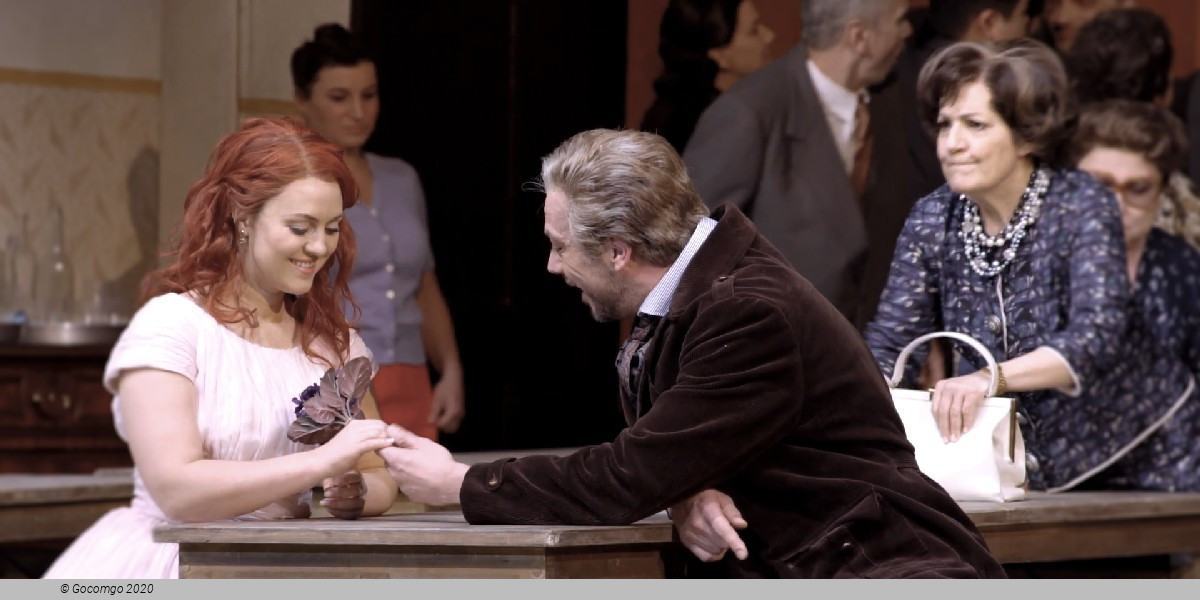
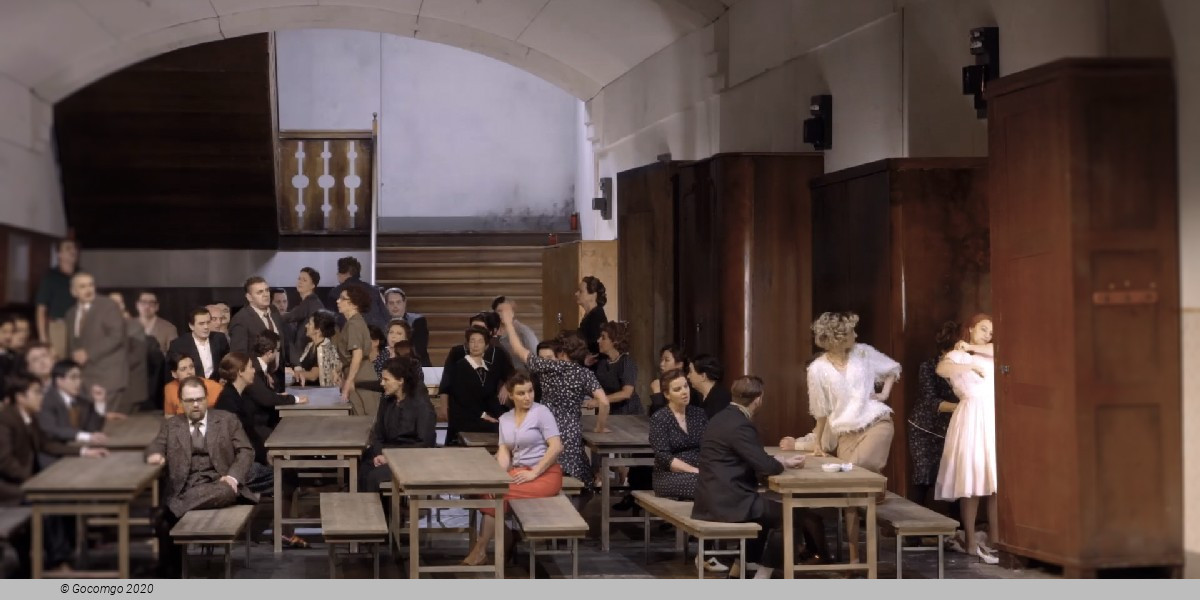
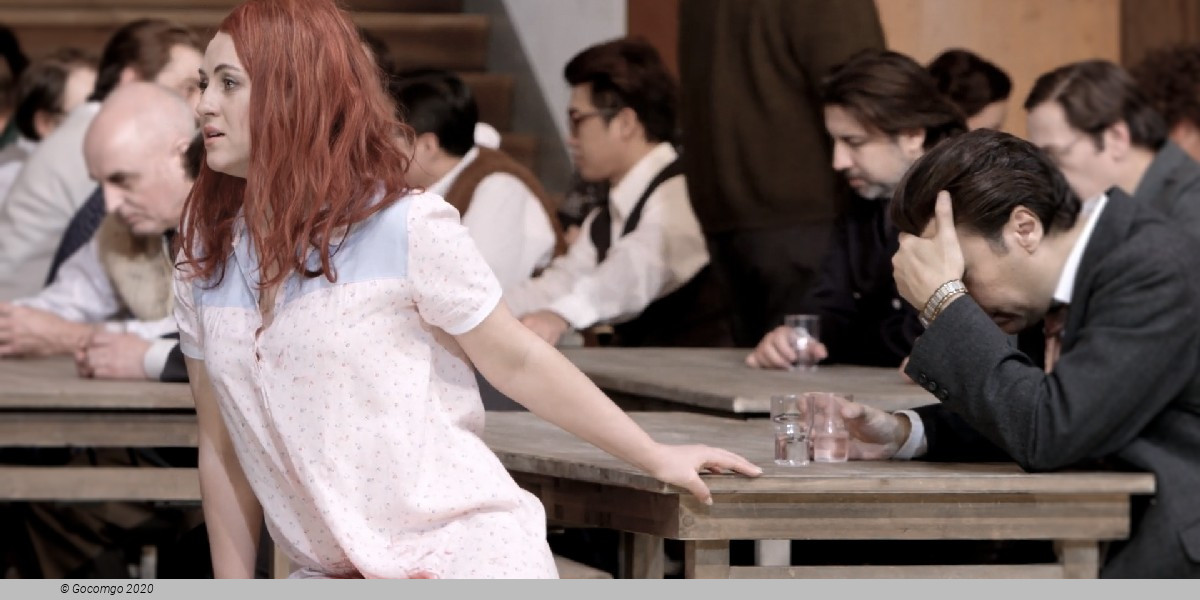
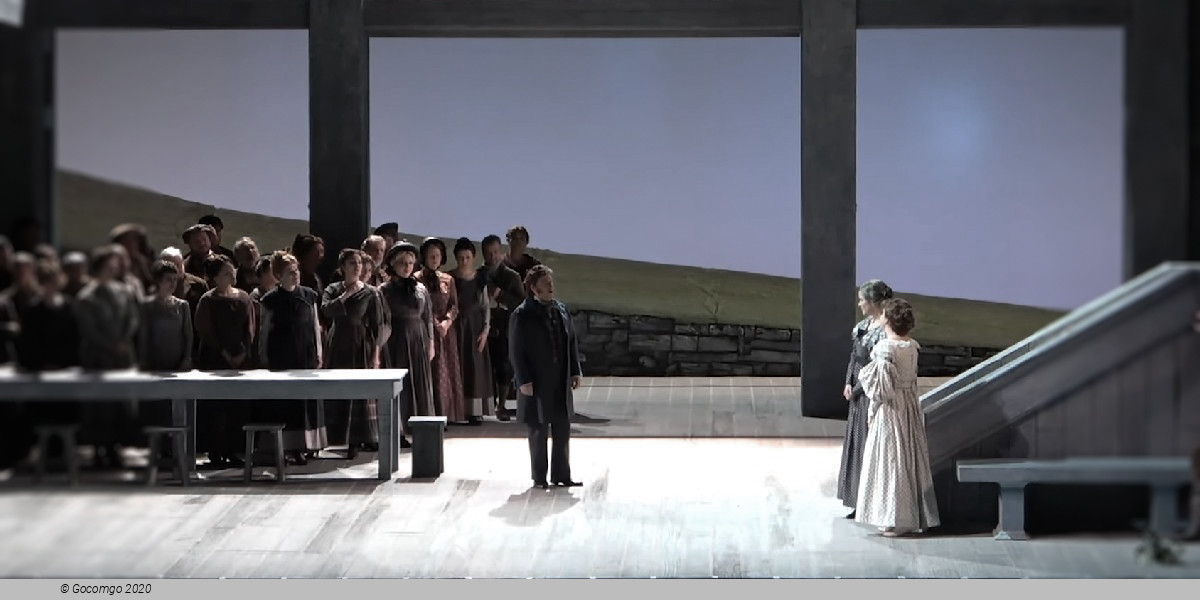
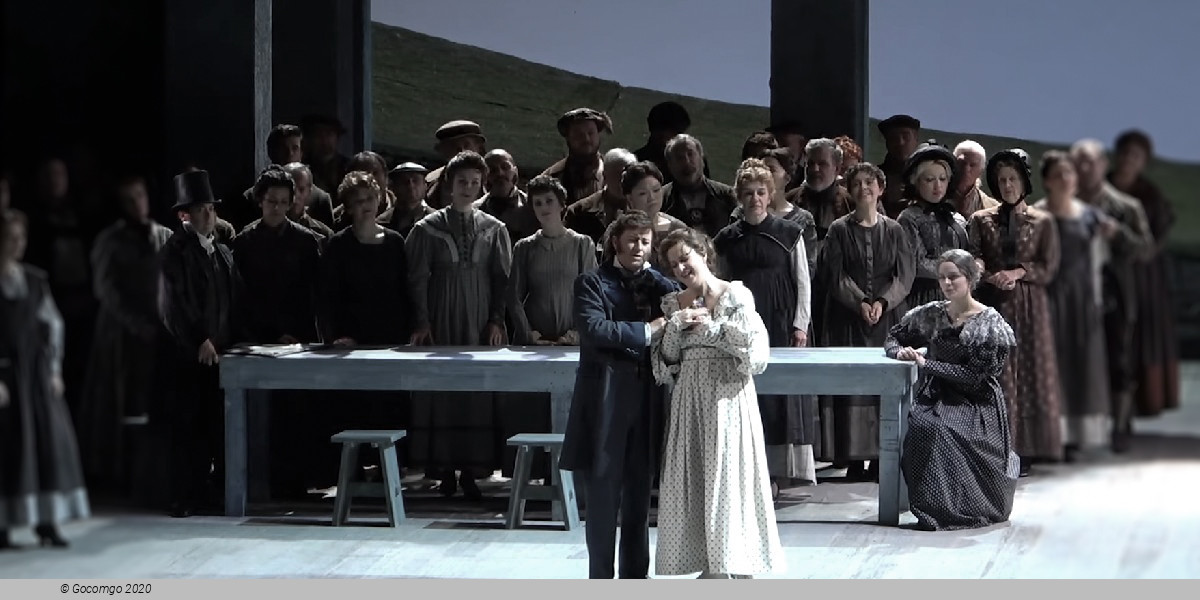
In a brilliant collaboration with set and costume designer Anna Viebrock, Jossi Wieler and Sergio Morabito have adapted for the Deutsche Oper Berlin a production that they wrote in 2012 for the Staatsoper Stuttgart. The romantic idyll of an alpine village has been swapped for the stuffy confines of a village inn.

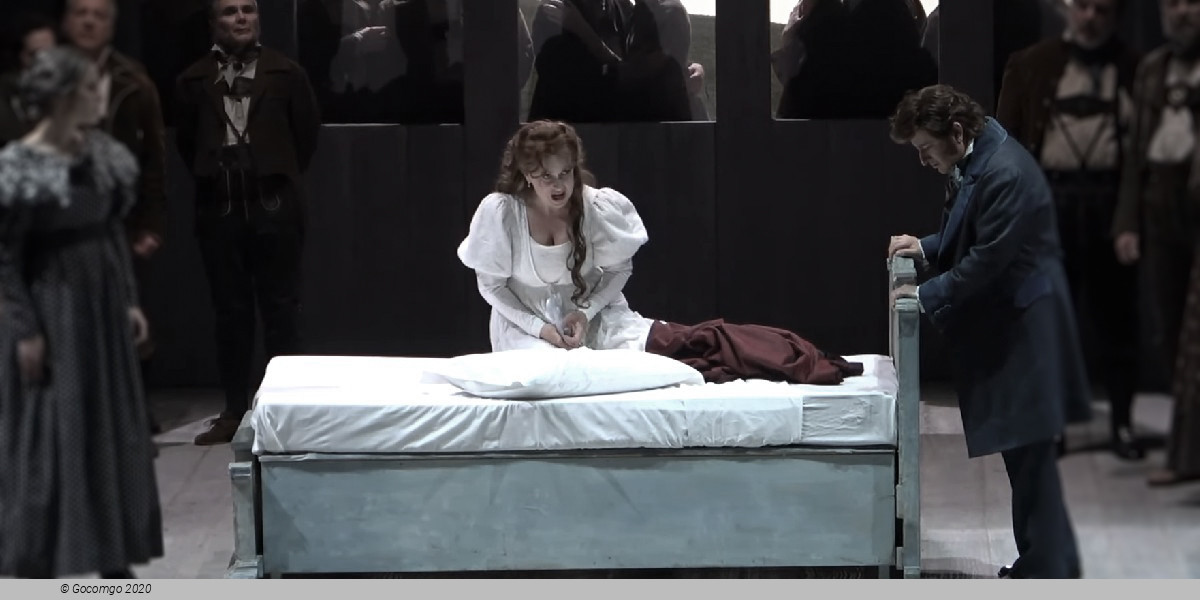
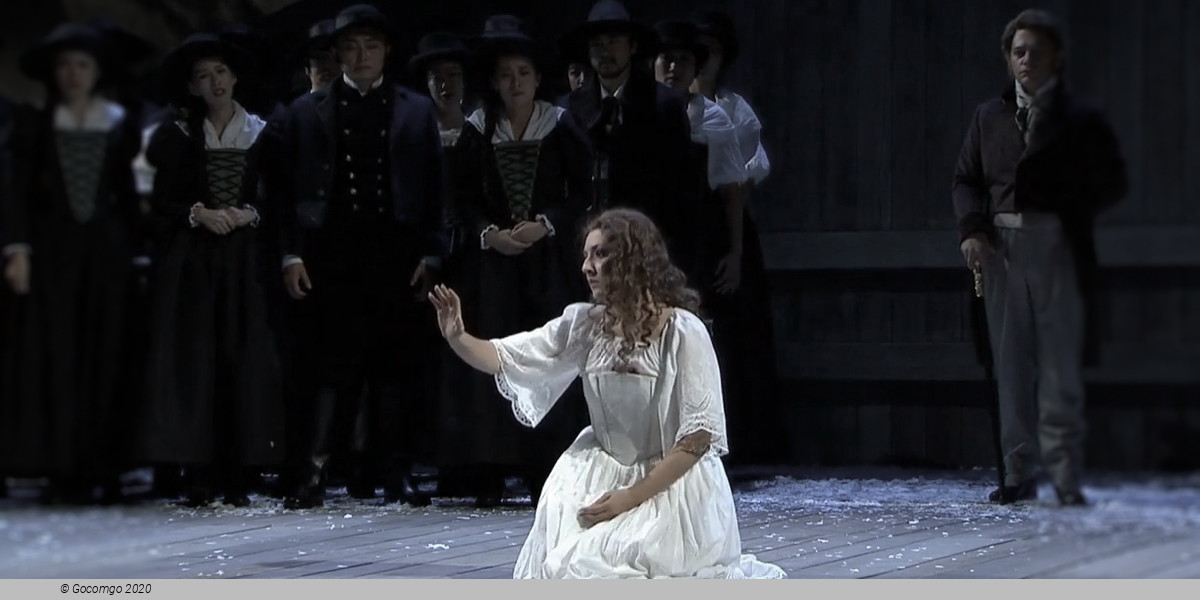
Amina, a poor orphan, and Elvino, the richest farmer in the village, are looking forward to their wedding. But when Amina is caught in the room of Count Rodolfo, who has recently returned after a long absence, this idyll in the Swiss Alps collapses. Elvino breaks off the engagement and returns to Lisa, his former lover. Only when Amina appears as the village phantom, somnambulating at a vertiginous height, is her innocence clear to all. While sleep walking she was not the mistress of her senses, but once out of her trance she finds herself again the betrothed of Elvino. Bellini and his librettist, Romani, opted for lyrical, romantic material for their fifth collaboration and have ventured into semiseria territory, operas with a happy ending that are partly serious, partly frivolous. They place Amina’s spiritual life at the heart of the piece, with the music accompanying the two sleep-walking scenes exploring the psyche of a young woman torn between love, jealousy and supposed guilt. These stand-out moments inspired the composer to some of his most touching “melodie lunghe, lunghe, lunghe” [Verdi].

History
Premiere of this production: 06 March 1831, Teatro Carcano, Milan

La sonnambula is an opera semiseria in two acts, with music in the bel canto tradition by Vincenzo Bellini set to an Italian libretto by Felice Romani, based on a scenario for a ballet-pantomime written by Eugène Scribe and choreographed by Jean-Pierre Aumer called La somnambule, ou L'arrivée d'un nouveau seigneur. The ballet had premiered in Paris in September 1827 at the height of a fashion for stage works incorporating somnambulism.

Synopsis

Place: Switzerland
Time: Indeterminate

Act 1

Scene 1: A village, a mill in the background

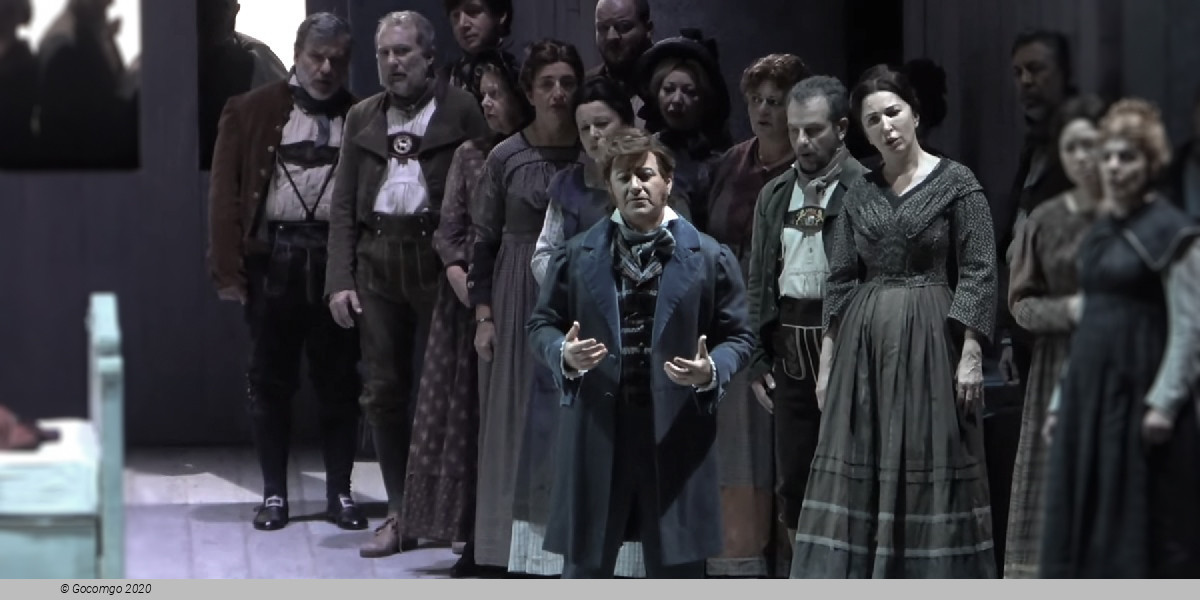
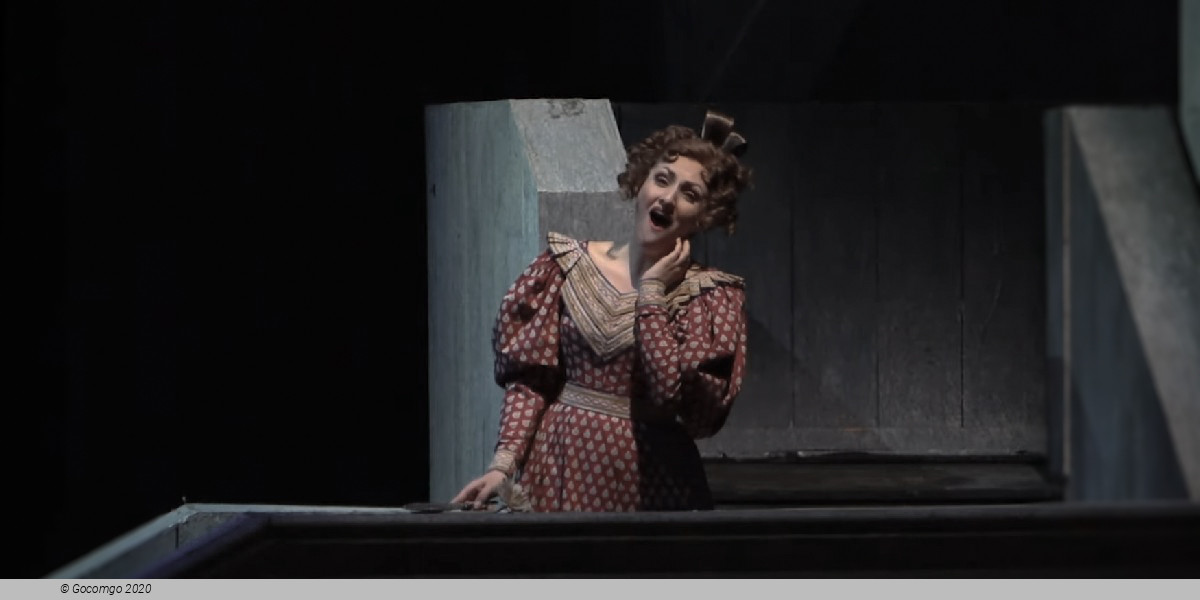
As the betrothal procession of Amina and Elvino approaches, the villagers all proclaiming joy for Amina, Lisa, the proprietress of the inn, comes outside expressing her misery: Tutto è gioia, tutto è festa...Sol per me non non v'ha contento / "All is joy and merriment... I alone am miserable". She is consumed with jealousy for she had once been betrothed to Elvino and had been abandoned by him in favour of Amina. The lovelorn Alessio arrives, but she rejects his advances. All assembled proclaim the beauty of Amina: In Elvezia non v'ha rosa / fresca e cara al par d'Amina / "In Switzerland there is no flower sweeter, dearer than Amina". Then Amina comes out of the mill with her foster-mother, Teresa. She is the owner of the mill and had adopted Amina many years before. Amina thanks her, also expressing her thanks to her assembled friends for their kind wishes. (Aria: Come per me sereno / oggi rinacque il di! / "How brightly this day dawned for me".) Additionally, she thanks Alessio, who tells her that he has composed the wedding song and organised the celebrations; she wishes him well in his courtship of Lisa, but Lisa cynically rejects the idea of love. Elvino arrives, exclaiming Perdona, o mio diletta / "Forgive me my beloved", and explaining that he had to stop on his way at his mother's grave to ask her blessing on Amina. As they exchange vows, the notary asks what she brings to the partnership: "Only my heart" she answers at which Elvino's exclaims: "Ah the heart is everything!". (Elvino's aria, then Amina, then all express their love and their joy: Prendi: l'anel ti dono / che un dì recava all'ara / "Here, receive this ring that the beloved spirit who smiled upon our love wore at the altar".)

The sound of horses' hooves and a cracking whip is heard. A stranger arrives, asking the way to the castle. Lisa points out that it is getting late and he will not reach it before dark and she offers him lodging at her inn. When he says that he knows it, all are surprised. (Rodolfo's aria: Vi ravviso, o luoghi ameni, / in cui lieti, in cui sereni / "O lovely scenes, again I see you, / where in serenity I spent the calm and happy days of my earliest youth".) The newcomer, who surprises the villagers by his familiarity with the locality, asks about the celebrations and admires Amina, who reminds him of a girl he had loved long ago. (Tu non sai con quei begli occhi / come dolce il cor mi tocchi / "You can't know how those dear eyes gently touch my heart, what adorable beauty".) He admits to having once stayed in the castle, whose lord has been dead for four years. When Teresa explains that his son had vanished some years previously, the stranger assures them that he is alive and will return. As darkness approaches the villagers warn him that it is time to be indoors to avoid the village phantom: A fosco cielo, a notte bruna,/ al fioco raggio d'incerta luna / "When the sky is dark at night, and the moon's rays are weak, at the gloomy thunder's sound a shade appears." Not being superstitious, he assures them that they will soon be free of the apparition. Elvino is jealous of the stranger's admiration of Amina; he is jealous even of the breezes that caress her, but he promises her he will reform. (Duet finale, Elvino and Amina: Son geloso del zefiro errante / che ti scherza col crin e col velo / "I envy the wandering breeze that plays with your hair, your veil..")

Scene 2: A room in the inn

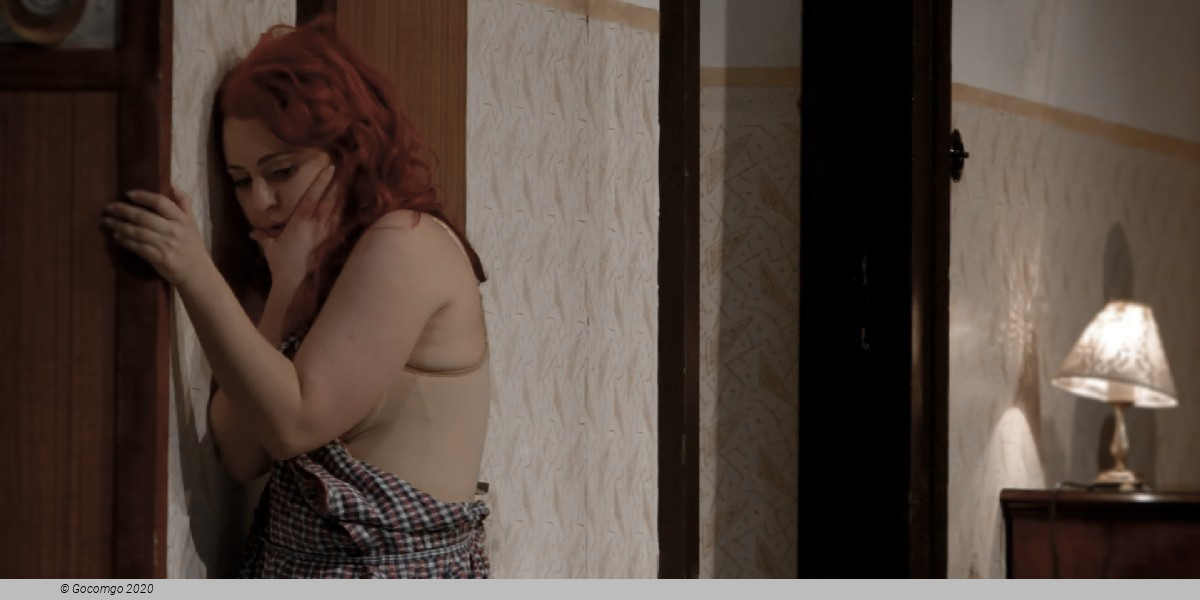
Lisa enters Rodolfo's room to see if all is well. She reveals that his identity is known to all as Rodolfo, the long-lost son of the count. She advises him that the village is preparing a formal welcome; meanwhile she wishes be the first to pay her respects. She is flattered when he begins a flirtation with her, but runs out at the sound of people approaching, dropping her handkerchief which the Count picks up. He sees the approaching phantom who he recognises as Amina. She enters the room, walking in her sleep, all the while calling for Elvino and asking where he is. Realising that her nocturnal wanderings have given rise to the story of the village phantom, Rodolfo is about to take advantage of her helpless state. But then he is struck by her obvious innocence and refrains: (Scene: first Rodolfo: O ciel! che tento / "God! What am I doing?"; then, separately, Amina: Oh! come lieto è il popolo / "How happy all the people are, accompanying us to the church"; then together.) As Amina continues her sleepwalk, Rodolfo hears the sound of people approaching and, with no other way out, he climbs out of the window.

Amina continues to sleep on the sofa as the villagers arrive at the inn. Lisa enters and points to Amina, who wakes up at the noise. Elvino, believing her faithless, rejects her in fury. Only Teresa believes in her innocence: Ensemble finale, first Amina D'un pensiero e d'un accento / "In my thought or in my words never , never have I sinned"; then Elvino: Voglia il cielo che il duol ch'io sento / "Heaven keep you from feeling ever the pain that I feel now!"; then the people and Teresa, the former proclaiming her treachery, Teresa pleading for her to be allowed to explain. Elvino then exclaims that there will be no wedding, and each expresses his or her emotional reaction to this discovery.

Act 2

Scene 1: A wood

On their way to ask the count to attest to Amina's innocence, the villagers rest in the woods and consider how they will express their support to him: (Chorus: Qui la selva è più folta ed ombrosa / "Here the wood is thick and dark"). Amina and Teresa arrive and are on a similar mission, but Amina is despondent, although Teresa encourages her daughter to continue. They then see Elvino coming in the wood looking downcast and sad. He continues to reject Amina, even when the townspeople come in with the news that the count says that she is innocent. Elvino is not convinced and takes back the ring, though he is unable to tear her image from his heart: (Aria, then chorus: Ah! Perché non posso odiarti, infedel, com'io vorrei! / "Why cannot I despise you, faithless, as I should?")

Scene 2: The village, as in act 1

Lisa, Alessio, Elvino and the villagers are in the square. Elvino declares that he will renew his vows and proceed to marry Lisa. She is delighted. As they are about to go to the church, Rodolfo enters and tries to explain that Amina is innocent because she did not come to his room awake – she is a somnambulist, a sleepwalker: (Duet, first Elvino Signor Conte, agli occhi miei / negar fede non poss'io / "I cannot deny, my lord, what my eyes have seen"; then Rodolfo V'han certuni che dormendo / "Certain people when they sleep go about as if awake".) Elvino refuses to believe him and calls upon Lisa to leave, but at that moment Teresa begs the villagers to be quiet, because Amina has at last fallen into an exhausted sleep.

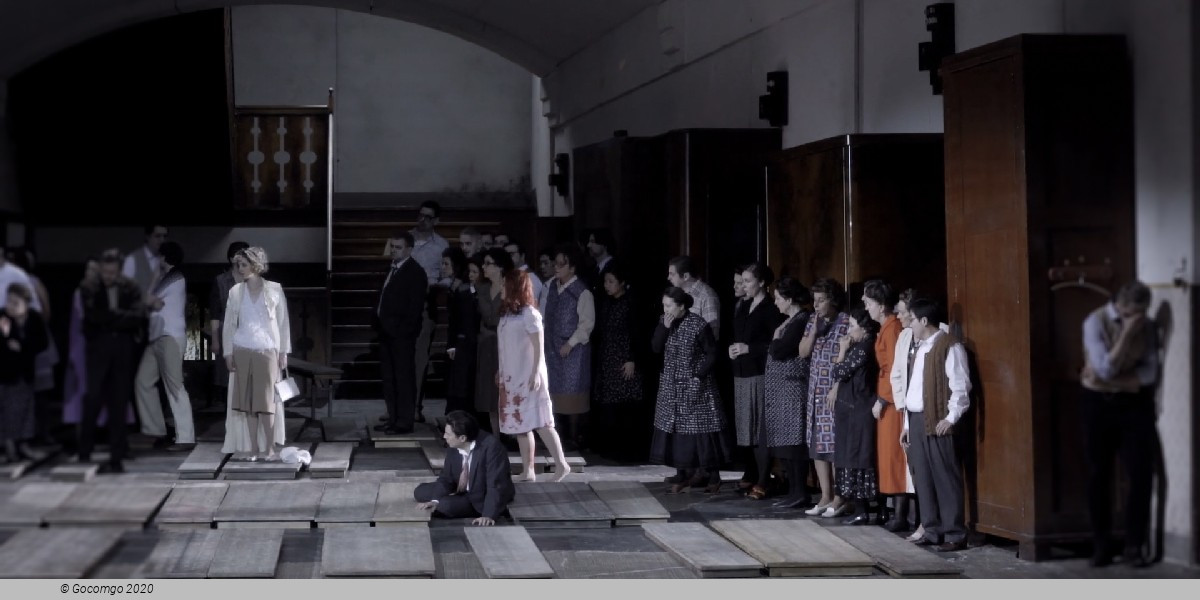
Learning of the impending marriage, Teresa confronts Lisa, who says that she has never been found alone in a man's room. Teresa produces the handkerchief Lisa had dropped. The Count is unwilling to say what he thinks of this, but continues to insist on Amina's virtue. Elvino demands proof and Rodolfo, seeing the sleeping Amina walking across the high, dangerously unstable mill bridge, warns that to wake her would be fatal. All watch as she relives her betrothal and her grief at Elvino's rejection, taking the withered flowers in her hand. (Aria: Amina Ah! non credea mirarti / sì presto estinto, o fiore / "I had not thought I would see you, dear flowers, perished so soon".) Then as she reaches the other side safely, the distraught Elvino calls to her and she is taken into his arms. Rodolfo hands him the ring which he places on her finger, at which time she awakens and is amazed by what has happened. All rejoice. In an aria finale, Amina expresses her joy: Ah! non giunge uman pensiero / al contento ond'io son piena / "Human thought cannot conceive of the happiness that fills me".

Venue Info

Deutsche Oper Berlin - Berlin
Location   Bismarckstraße 35

Venue's Capacity: 1698

The Deutsche Oper Berlin is an opera company located in the Charlottenburg district of Berlin, Germany. The resident building is the country's second-largest opera house and also home to the Berlin State Ballet. Since 2004 the Deutsche Oper Berlin, like the Staatsoper Unter den Linden (Berlin State Opera), the Komische Oper Berlin, the Berlin State Ballet, and the Bühnenservice Berlin (Stage and Costume Design), has been a member of the Berlin Opera Foundation.

The company's history goes back to the Deutsches Opernhaus built by the then independent city of Charlottenburg—the "richest town of Prussia"—according to plans designed by Heinrich Seeling from 1911. It opened on November 7, 1912 with a performance of Beethoven's Fidelio, conducted by Ignatz Waghalter. In 1925, after the incorporation of Charlottenburg by the 1920 Greater Berlin Act, the name of the resident building was changed to Städtische Oper (Municipal Opera).

With the Nazi seizure of power in 1933, the opera was under control of the Reich Ministry of Public Enlightenment and Propaganda. Minister Joseph Goebbels had the name changed back to Deutsches Opernhaus, competing with the Berlin State Opera in Mitte controlled by his rival, the Prussian minister-president Hermann Göring. In 1935, the building was remodeled by Paul Baumgarten and the seating reduced from 2300 to 2098. Carl Ebert, the pre-World War II general manager, chose to emigrate from Germany rather than endorse the Nazi view of music, and went on to co-found the Glyndebourne opera festival in England. He was replaced by Max von Schillings, who acceded to enact works of "unalloyed German character". Several artists, like the conductor Fritz Stiedry and the singer Alexander Kipnis, followed Ebert into emigration. The opera house was destroyed by a RAF air raid on 23 November 1943. Performances continued at the Admiralspalast in Mitte until 1945. Ebert returned as general manager after the war.

After the war, in what was now West Berlin, the company, again called Städtische Oper, used the nearby Theater des Westens; its opening production was Fidelio, on 4 September 1945. Its home was finally rebuilt in 1961 but to a much-changed, sober design by Fritz Bornemann. The opening production of the newly named Deutsche Oper, on 24 September, was Mozart's Don Giovanni.

Past Generalmusikdirektoren (GMD, general music directors) have included Bruno Walter, Kurt Adler, Ferenc Fricsay, Lorin Maazel, Gerd Albrecht, Jesús López-Cobos, and Christian Thielemann. In October 2005, the Italian conductor Renato Palumbo was appointed GMD as of the 2006/2007 season. In October 2007, the Deutsche Oper announced the appointment of Donald Runnicles as their next Generalmusikdirektor, effective August 2009, for an initial contract of five years. Simultaneously, Palumbo and the Deutsche Oper mutually agreed to terminate his contract, effective November 2007.

On the evening of 2 June 1967, Benno Ohnesorg, a student taking part in the German student movement, was shot in the streets around the opera house. He had been protesting against the visit to Germany by the Shah of Iran, who was attending a performance of Mozart's The Magic Flute.

In 1986 the American Berlin Opera Foundation was founded.

In April 2001, the Italian conductor Giuseppe Sinopoli died at the podium while conducting Verdi's Aida, at age 54.

In September 2006, the Deutsche Oper's Intendantin (general manager) Kirsten Harms drew criticism after she cancelled the production of Mozart's opera Idomeneo by Hans Neuenfels, because of fears that a scene in it featuring the severed heads of Jesus, Buddha and Muhammad would offend Muslims, and that the opera house's security might come under threat if violent protests took place. Critics of the decision include German Ministers and the German Chancellor Angela Merkel. The reaction from Muslims has been mixed — the leader of Germany's Islamic Council welcomed the decision, whilst a leader of Germany's Turkish community, criticising the decision, said:

This is about art, not about politics ... We should not make art dependent on religion — then we are back in the Middle Ages.

At the end of October 2006, the opera house announced that performances of Mozart's opera Idomeneo would then proceed. Kirsten Harms, after announcing in 2009 that she would not renew her contract beyond 2011, was bid farewell in July of that year.

Important Info
Type: Opera
City: Berlin, Germany
Starts at: 19:30
Acts: 2
Intervals: 1
Duration:
Sung in: Italian
Titles in: German,English
Top of page