
Deutsche Oper Berlin 25 September 2020 - Best of: La Gioconda (concertant version) | GoComGo.com

Best of: La Gioconda (concertant version)

Deutsche Oper Berlin, Berlin, Germany
All photos (11)
Select date and time
7:30 PM
Important Info
Type: Opera
City: Berlin, Germany
Starts at: 19:30
Duration:
Sung in: Italian
Titles in: German,English

E-tickets: Print at home or at the box office of the event if so specified. You will find more information in your booking confirmation email.

You can only select the category, and not the exact seats.
If you order 2 or 3 tickets: your seats will be next to each other.
If you order 4 or more tickets: your seats will be next to each other, or, if this is not possible, we will provide a combination of groups of seats (at least in pairs, for example 2+2 or 2+3).

Overview

Arias and ensembles from Amilcare Ponchielli 's LA GIOCONDA

Great singers present excerpts from the masterpieces of Italian opera: 90 minutes of love and hate, hope and despair - the new concert format of Deutsche Oper Berlin

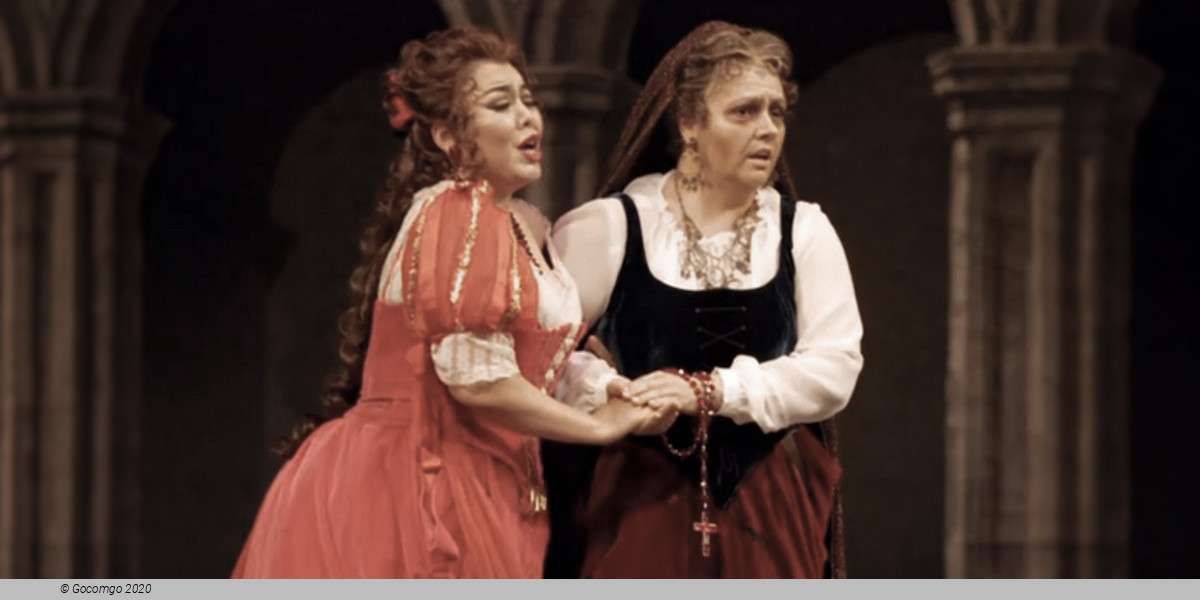
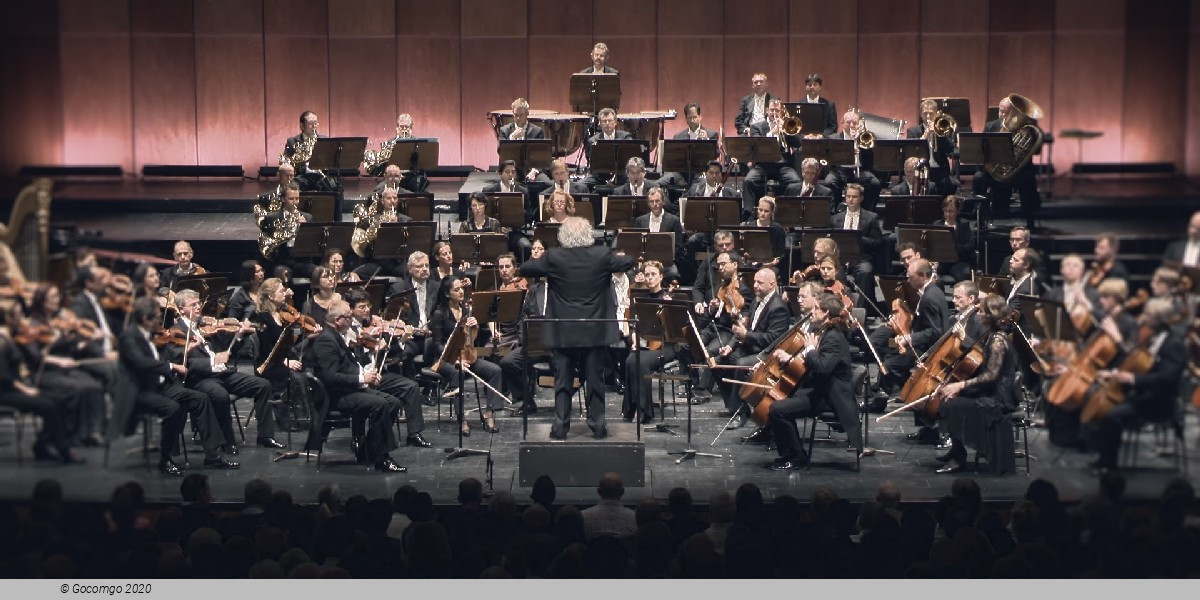
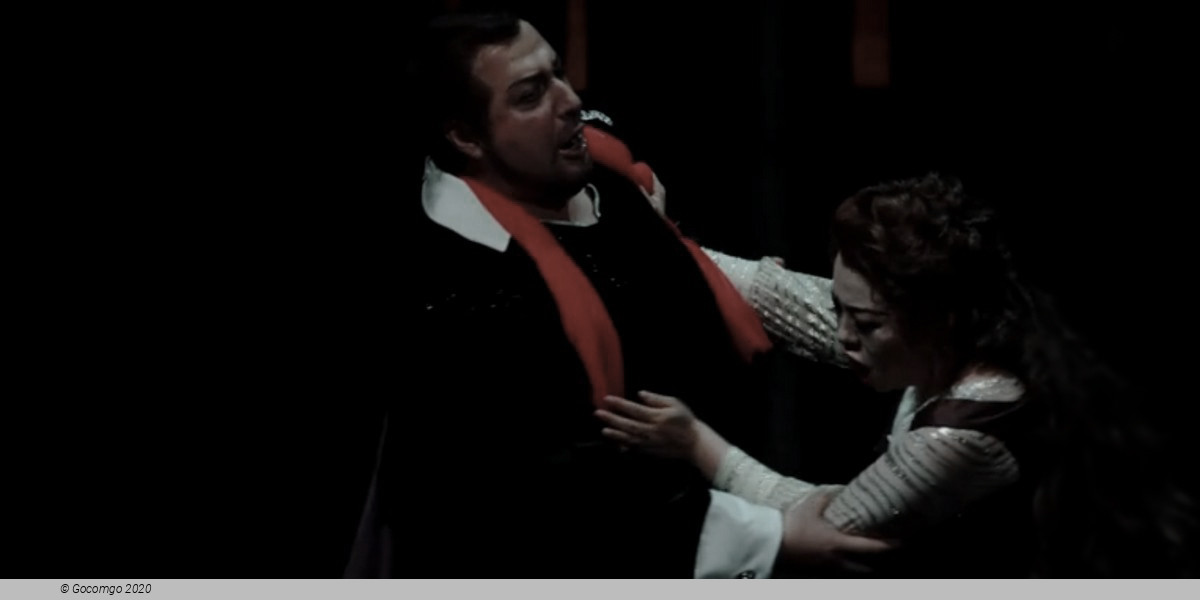
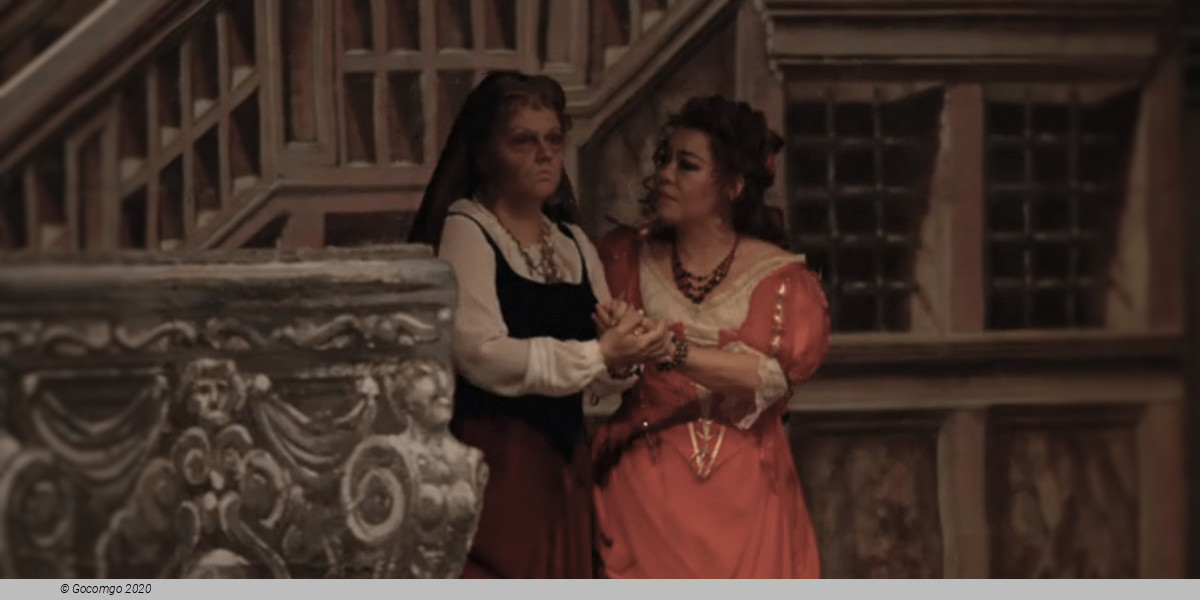
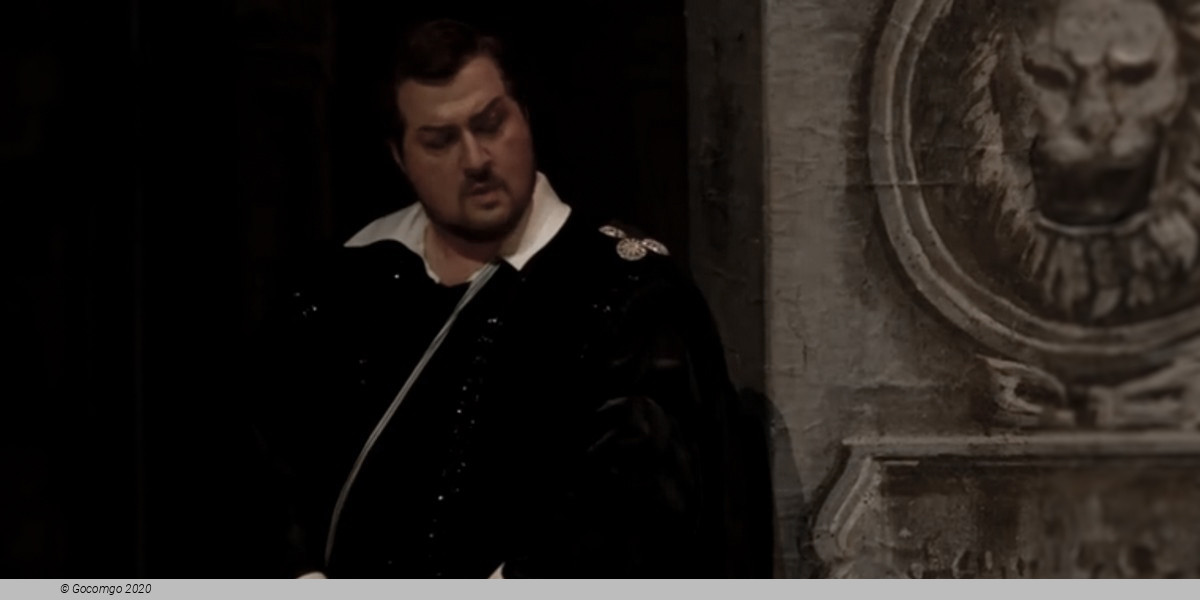
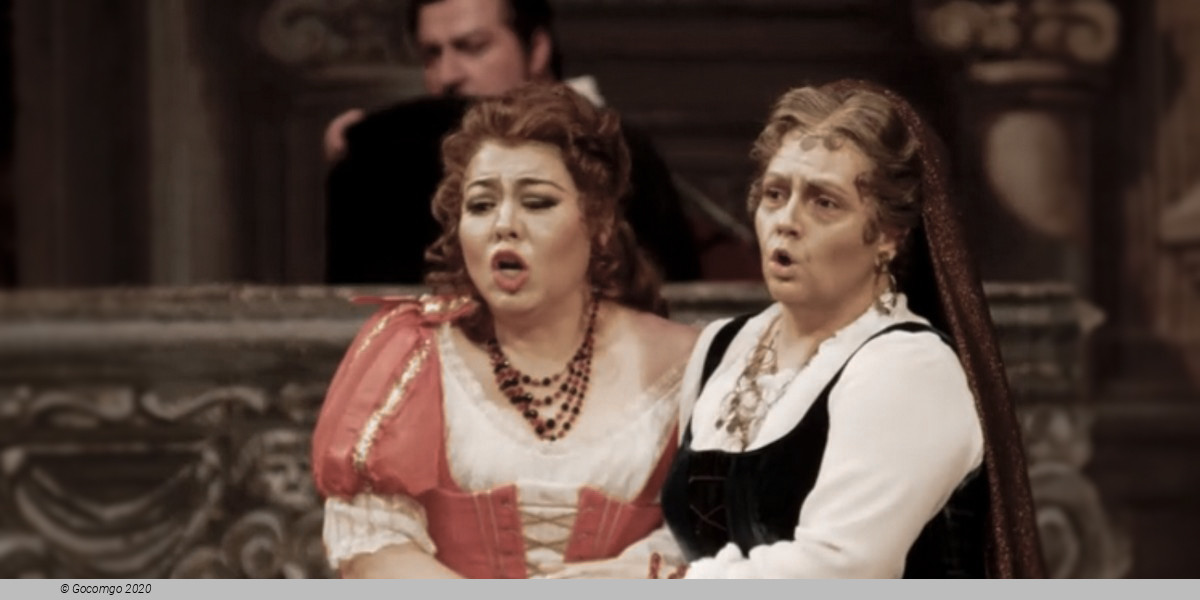
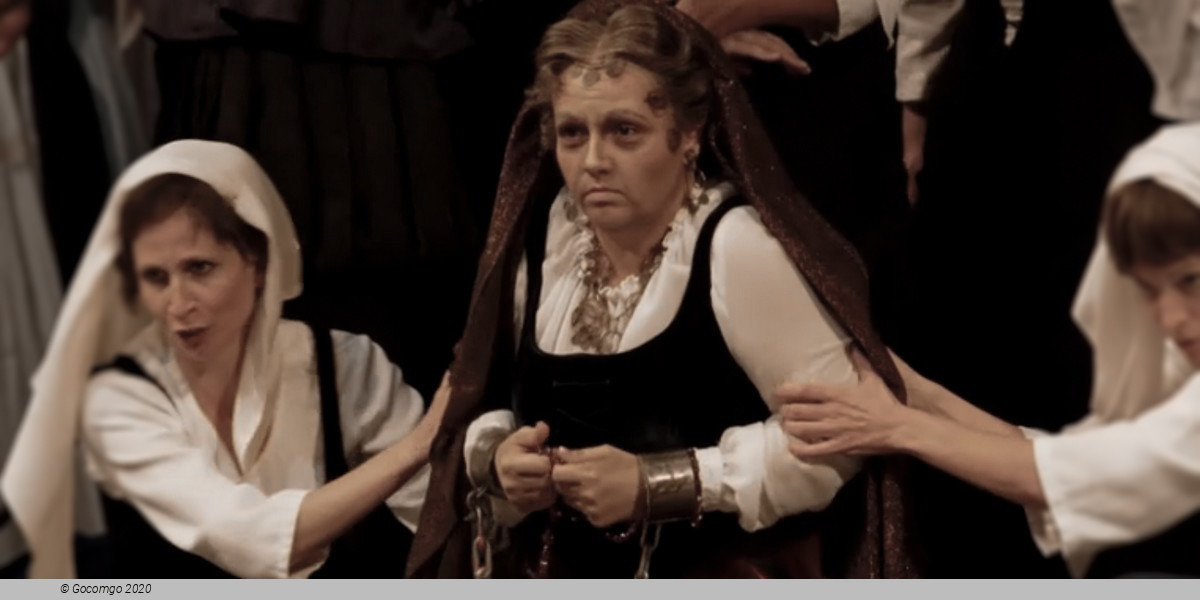
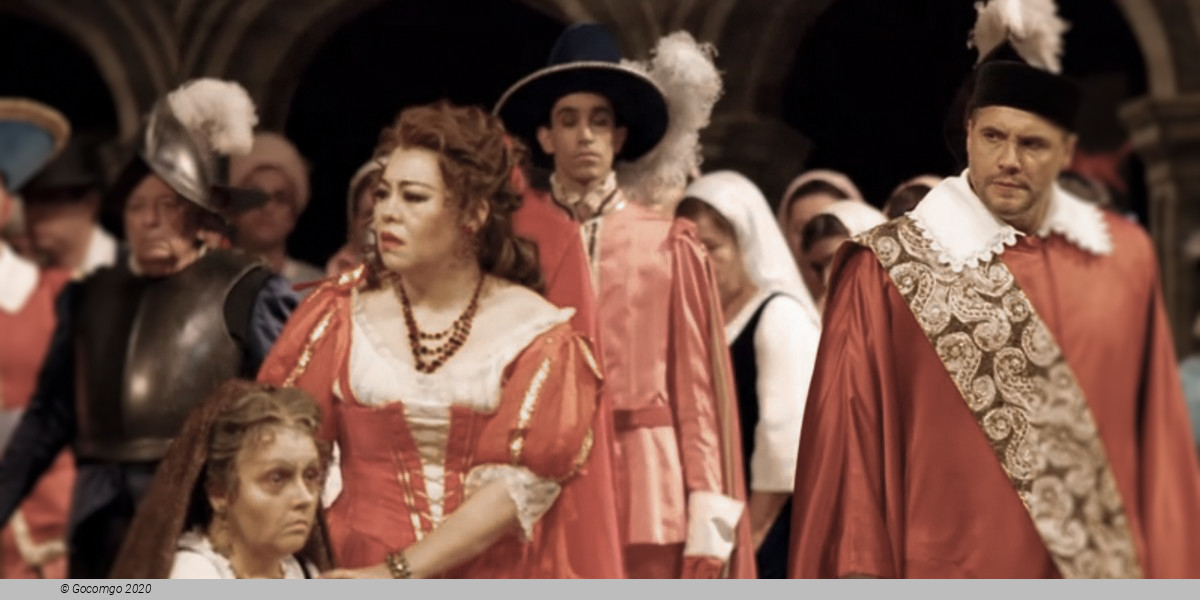
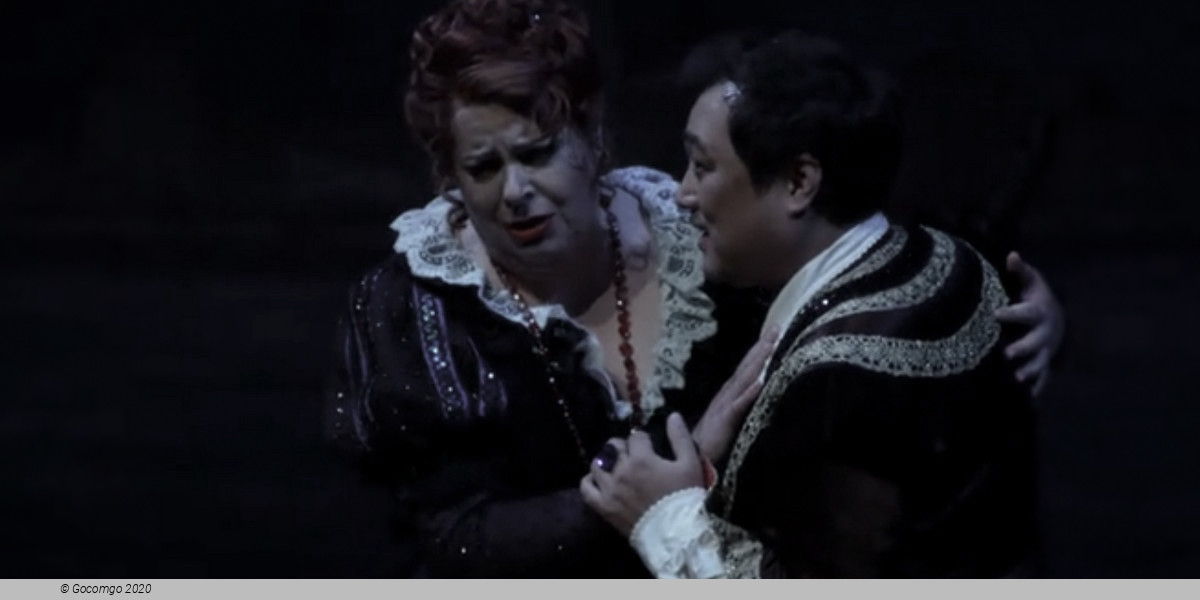
LA GIACONDA is Amilcare Ponchielli's only permanently successful opera. Yet with it, he wrote music history: the piece tells of a singer named La Giaconda, "the jovial woman", who ultimately sacrifices herself to allow her unhappy beloved Enzo to start a new life with an already married woman named Laura, the wife of Venetian politician Alvise Badoero. It is a central masterpiece of Italian opera between Verdi and Puccini, between melodrama and verismo, rich with melody and yet dramatically arresting. And this opera's most popular number, "Dance of the Hours", is the ballet music in the third act. It is played as a concertante performance along with other excerpts, including Giaconda's aria "Suicidio!" or Enzo's "Mare e ciel". Enzo will be performed by one of the most in-demand tenors of our time, Joseph Calleja, who is returning to the Deutsche Oper Berlin for this performance. He is joined by baritone Roman Burdenko, a regular guest at the opera on Bismarckstraße, as intriguing adversary Barnaba – along with two young singers who number among the up-and-coming stars in the opera world: Judit Kutasi as Laura, and Russian soprano Irina Churilova in the title role. The orchestra of the Deutsche Oper Berlin under Ivan Repusic will be playing, and Jörg Schörner will be moderating through the evening.

History
Premiere of this production: 08 April 1876, Teatro alla Scala, Milan

La Gioconda is an opera in four acts by Amilcare Ponchielli set to an Italian libretto by Arrigo Boito (as Tobia Gorrio), based on Angelo, Tyrant of Padua, a play in prose by Victor Hugo, dating from 1835. (This is the same source as Gaetano Rossi had used for his libretto for Mercadante's Il giuramento in 1837).

Synopsis

The opera's title translates as The Happy Woman, but is usually given in English as The Ballad Singer. However, as this fails to convey the irony inherent in the original, the Italian is usually used. Each act of La Gioconda has a title.

Place: Venice
Time: 17th century
The story revolves around a woman, Gioconda, who so loves her mother that when Laura, her rival in love for the heart of Enzo, saves her mother's life, Gioconda puts aside her own romantic love to repay her. The villain Barnaba tries to seduce Gioconda, but she prefers death.

Act 1 The Lion's Mouth

The courtyard of the Doge's Palace

During Carnival celebrations before Lent, while everyone else is preoccupied with a regatta, Barnaba, a state spy, lustfully watches La Gioconda as she leads her blind mother, La Cieca, across the Square. When his amorous advances are firmly rejected, he exacts his revenge by denouncing the old lady as a witch whose evil powers influenced the outcome of the gondola race. It is only the intervention of a young sea captain that keeps the angry mob at bay.

Calm is restored at the approach of Alvise Badoero, a member of the Venetian Inquisition, and his wife, Laura. Laura places La Cieca under her personal protection, and in gratitude the old woman presents her with her most treasured possession, a rosary. The sharp-eyed Barnaba notices furtive behaviour between Laura and the sea captain indicating a secret relationship. Recalling that Laura was engaged to the now banished nobleman Enzo Grimaldo before her forced marriage to Alvise, Barnaba realises that the sea captain is Enzo in disguise.

Barnaba confronts Enzo, who admits his purpose in returning to Venice is to take Laura and begin a new life elsewhere. Barnaba knows that Gioconda is also infatuated with Enzo and he sees an opportunity to improve his chances with her by assisting Enzo with his plan of elopement.

When Enzo has gone, Barnaba dictates a letter to Alvise revealing his wife's infidelity and the lovers' plan of escape. He is unaware that he has been overheard by Gioconda. The act ends with Barnaba dropping the letter into the Lion's Mouth, where all secret information for the Inquisition is posted, while Gioconda laments Enzo's perceived treachery, and the crowd returns to its festivities.

Act 2 The Rosary

The deck of Enzo's ship

Enzo waits for Barnaba to row Laura out from the city to his vessel. Their joyful reunion is overshadowed by Laura's fears as she does not trust Barnaba. Gradually Enzo is able to reassure her, and he leaves her on deck while he goes to prepare for their departure.

La Gioconda has been following Laura with the intention of exacting revenge from her rival. Alvise and his armed men are also in hot pursuit, but as Gioconda is about to stab Laura she sees her mother's rosary hanging round her neck and has an instant change of heart. She hurries Laura into her boat so that she can evade her pursuers.

Enzo returns to the deck to find that Laura has fled leaving Gioconda triumphant. Furthermore, Alvise's men are rapidly approaching. He sets fire to the ship rather than let it fall into the hands of his enemies before diving into the lagoon.

Act 3 The Ca' d'Oro (House of Gold)

Alvise's palace

Laura has been captured, and her vengeful husband insists she must die by poisoning herself (effectively committing suicide and condemning herself to Hell). Once again Gioconda has followed and has found her way into the palace, this time with the intention of saving her rival. Finding Laura alone Gioconda replaces the phial of poison with a powerful drug which creates the appearance of death. The second scene begins with Alvise welcoming his fellow members of the nobility to the palace; Barnaba and Enzo are amongst those present. Lavish entertainment is provided and the act ends with the famous ballet Dance of the Hours. The mood of revelry is shattered as a funeral bell begins to toll and the body of Laura is revealed awaiting burial. A distraught Enzo flings off his disguise and is promptly seized by Alvise's men.

Act 4 The Orfano Canal

A crumbling ruin on the island of Giudecca

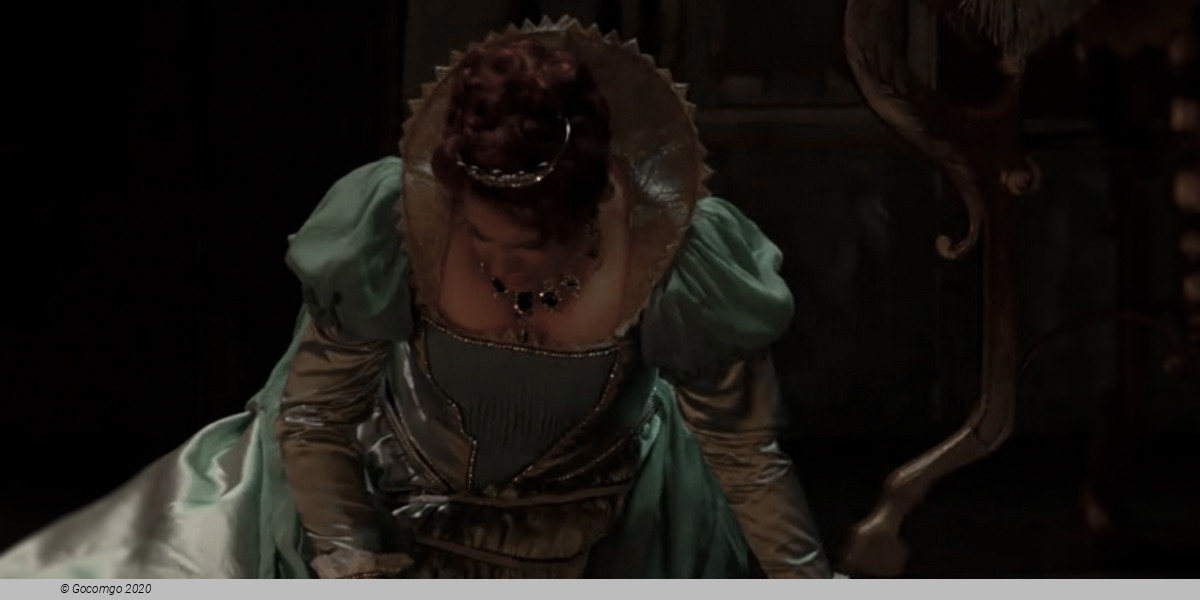
In exchange for Enzo's release from prison, La Gioconda has agreed to give herself to Barnaba. When Enzo is brought in, he is initially furious when Gioconda reveals that she has had Laura's body brought from its tomb. He is about to stab her when Laura's voice is heard and Gioconda's part in reuniting the lovers becomes clear. Enzo and Laura make their escape, leaving La Gioconda to face the horrors awaiting her with Barnaba. The gondoliers' voices are heard in the distance telling that there are corpses floating in the city. When Gioconda tries to leave, she is caught by Barnaba. She then pretends to welcome his arrival, but under cover of decking herself in her jewellery, seizes a dagger and stabs herself to death. In frustrated rage Barnaba tries to perpetrate one last act of evil, screaming at the lifeless body "Last night your mother offended me. I drowned her!"

Famous arias and excerpts
"Voce di donna o d'angelo" (La Cieca)
"O monumento" (Barnaba)
"Cielo e mar" (Enzo)
"Stella del Marinar" (Laura)
"E un anatema!... L'amo come il fulgor creato" (duet Gioconda with Laura)
"Si! Morir ella de!" (Alvise)
Dance of the Hours
"Suicidio!" (Gioconda)
"Ora posso morir... Vo' farmi più gaia" (final duet Gioconda with Barnaba)

Venue Info

Deutsche Oper Berlin - Berlin
Location   Bismarckstraße 35

Venue's Capacity: 1698

The Deutsche Oper Berlin is an opera company located in the Charlottenburg district of Berlin, Germany. The resident building is the country's second-largest opera house and also home to the Berlin State Ballet. Since 2004 the Deutsche Oper Berlin, like the Staatsoper Unter den Linden (Berlin State Opera), the Komische Oper Berlin, the Berlin State Ballet, and the Bühnenservice Berlin (Stage and Costume Design), has been a member of the Berlin Opera Foundation.

The company's history goes back to the Deutsches Opernhaus built by the then independent city of Charlottenburg—the "richest town of Prussia"—according to plans designed by Heinrich Seeling from 1911. It opened on November 7, 1912 with a performance of Beethoven's Fidelio, conducted by Ignatz Waghalter. In 1925, after the incorporation of Charlottenburg by the 1920 Greater Berlin Act, the name of the resident building was changed to Städtische Oper (Municipal Opera).

With the Nazi seizure of power in 1933, the opera was under control of the Reich Ministry of Public Enlightenment and Propaganda. Minister Joseph Goebbels had the name changed back to Deutsches Opernhaus, competing with the Berlin State Opera in Mitte controlled by his rival, the Prussian minister-president Hermann Göring. In 1935, the building was remodeled by Paul Baumgarten and the seating reduced from 2300 to 2098. Carl Ebert, the pre-World War II general manager, chose to emigrate from Germany rather than endorse the Nazi view of music, and went on to co-found the Glyndebourne opera festival in England. He was replaced by Max von Schillings, who acceded to enact works of "unalloyed German character". Several artists, like the conductor Fritz Stiedry and the singer Alexander Kipnis, followed Ebert into emigration. The opera house was destroyed by a RAF air raid on 23 November 1943. Performances continued at the Admiralspalast in Mitte until 1945. Ebert returned as general manager after the war.

After the war, in what was now West Berlin, the company, again called Städtische Oper, used the nearby Theater des Westens; its opening production was Fidelio, on 4 September 1945. Its home was finally rebuilt in 1961 but to a much-changed, sober design by Fritz Bornemann. The opening production of the newly named Deutsche Oper, on 24 September, was Mozart's Don Giovanni.

Past Generalmusikdirektoren (GMD, general music directors) have included Bruno Walter, Kurt Adler, Ferenc Fricsay, Lorin Maazel, Gerd Albrecht, Jesús López-Cobos, and Christian Thielemann. In October 2005, the Italian conductor Renato Palumbo was appointed GMD as of the 2006/2007 season. In October 2007, the Deutsche Oper announced the appointment of Donald Runnicles as their next Generalmusikdirektor, effective August 2009, for an initial contract of five years. Simultaneously, Palumbo and the Deutsche Oper mutually agreed to terminate his contract, effective November 2007.

On the evening of 2 June 1967, Benno Ohnesorg, a student taking part in the German student movement, was shot in the streets around the opera house. He had been protesting against the visit to Germany by the Shah of Iran, who was attending a performance of Mozart's The Magic Flute.

In 1986 the American Berlin Opera Foundation was founded.

In April 2001, the Italian conductor Giuseppe Sinopoli died at the podium while conducting Verdi's Aida, at age 54.

In September 2006, the Deutsche Oper's Intendantin (general manager) Kirsten Harms drew criticism after she cancelled the production of Mozart's opera Idomeneo by Hans Neuenfels, because of fears that a scene in it featuring the severed heads of Jesus, Buddha and Muhammad would offend Muslims, and that the opera house's security might come under threat if violent protests took place. Critics of the decision include German Ministers and the German Chancellor Angela Merkel. The reaction from Muslims has been mixed — the leader of Germany's Islamic Council welcomed the decision, whilst a leader of Germany's Turkish community, criticising the decision, said:

This is about art, not about politics ... We should not make art dependent on religion — then we are back in the Middle Ages.

At the end of October 2006, the opera house announced that performances of Mozart's opera Idomeneo would then proceed. Kirsten Harms, after announcing in 2009 that she would not renew her contract beyond 2011, was bid farewell in July of that year.

Important Info
Type: Opera
City: Berlin, Germany
Starts at: 19:30
Duration:
Sung in: Italian
Titles in: German,English
Top of page