Balanchine’s deep affection for his adopted home animates this program of ballets all set to American music.
Western Symphony is a vivacious suite of dances taking inspiration from the mythical Wild West. A similarly buoyant spirit infuses Stars and Stripes, with Balanchine seamlessly wedding classical steps with the rhythmic marches of John Philip Sousa, orchestrated by Hershey Kay. Tarantella employs a sprightly piece of music by Louis Moreau Gottschalk for a zesty and playful pas de deux that never fails to delight. Rounding out the program is The Unanswered Question from Ivesiana, a hypnotically alluring dance that captures the haunting, otherworldly music of Charles Ives.
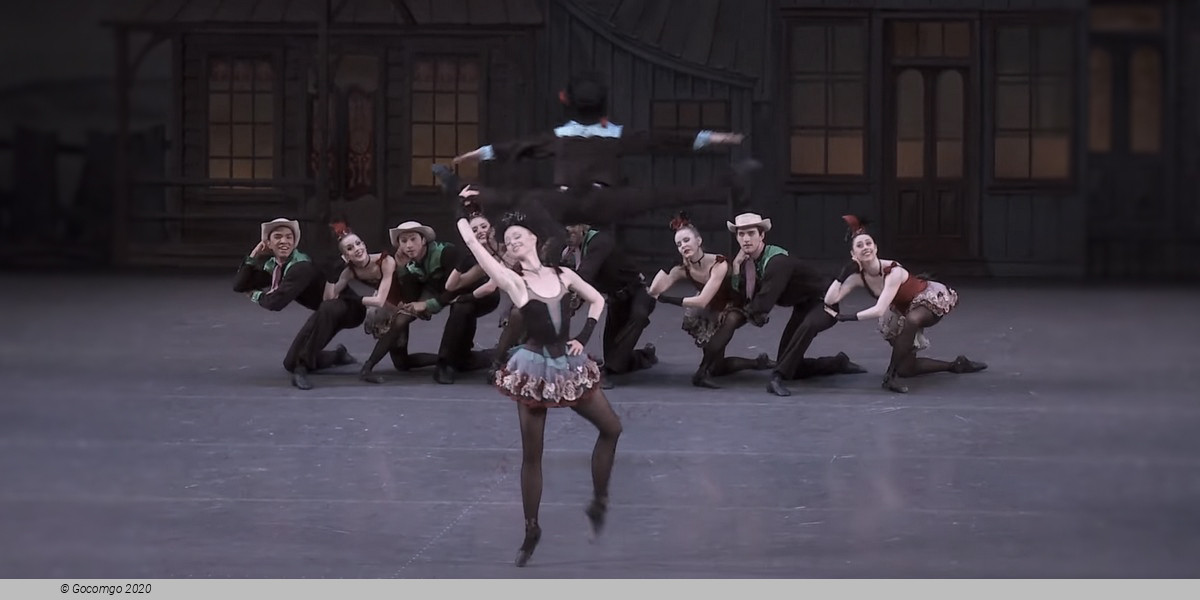
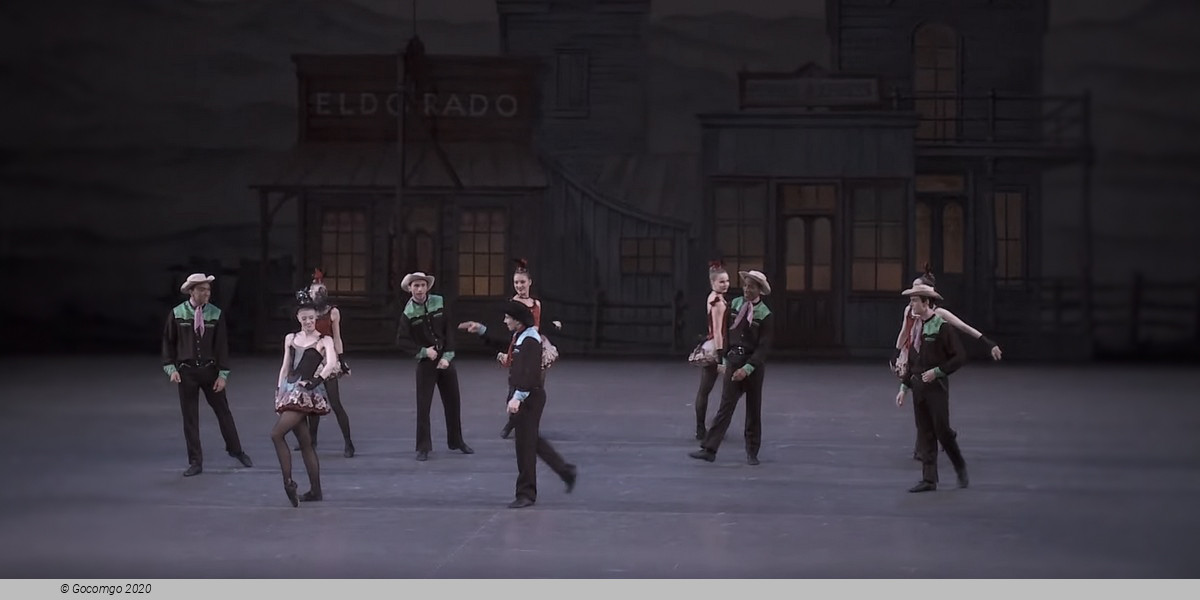
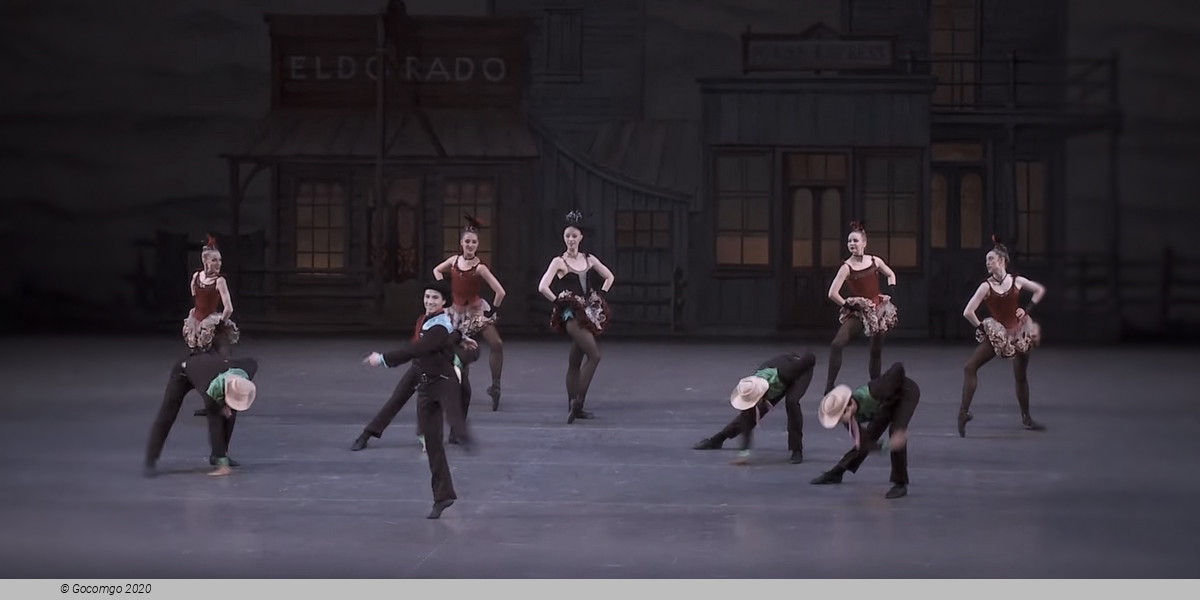
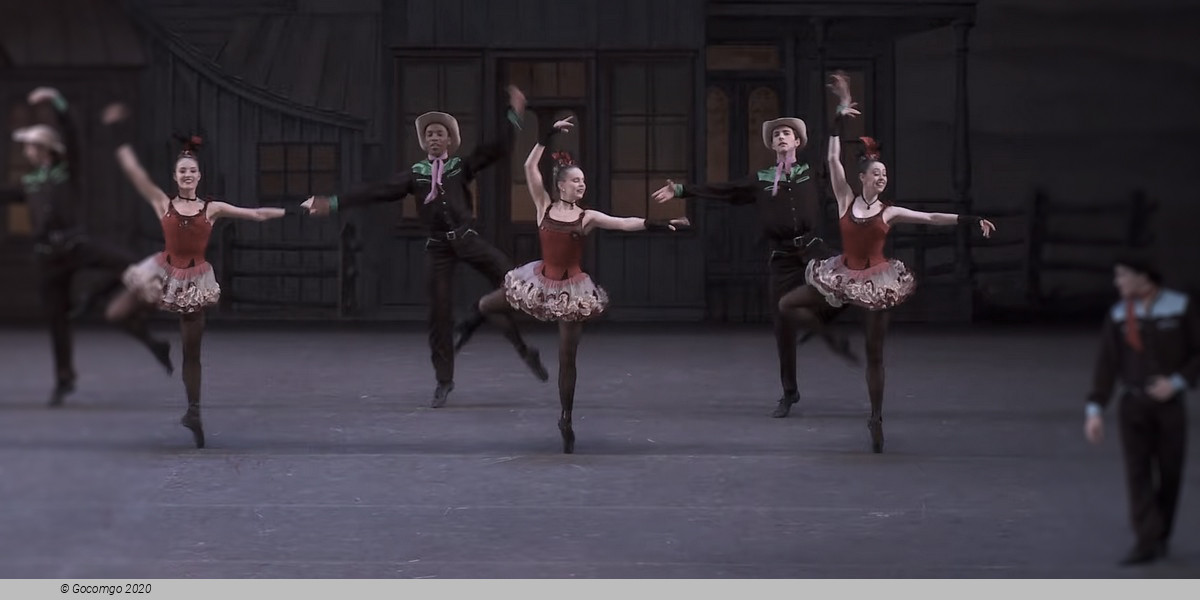
Western Symphony is a rodeo of frisky fillies and lonesome cowpokes with a rousing, non-stop finale that brings the curtain down.
Western Symphony is a striking example of Balanchine’s fascination with American themes. Set on a rugged Old West street populated by cowboys and dance hall girls, the ballet nevertheless is very much a classical work. Balanchine used steps from the traditional ballet vocabulary, but he infused them with the formations and gestures of American folk dancing. The lively and familiar score consists of Hershy Kay’s orchestrations of classic American folk songs, including “Red River Valley,” “Good Night Ladies,” and “Oh Dem Golden Slippers.”
A hypnotically alluring piece that captures the haunting, otherworldly music of Charles Ives, The Unanswered Question features a lone ballerina who is held aloft throughout the distinctive dance of subtle mystery.
“The Unanswered Question” is the second section of Balanchine’s Ivesiana, which he choreographed to a series of unrelated Charles Ives orchestral pieces shortly after the composer’s death in 1954. The complex music of this Connecticut-born artist, incorporating extensive use of atonality, clashing meters and quarter-tones, had rarely been performed prior to its use in Ivesiana.
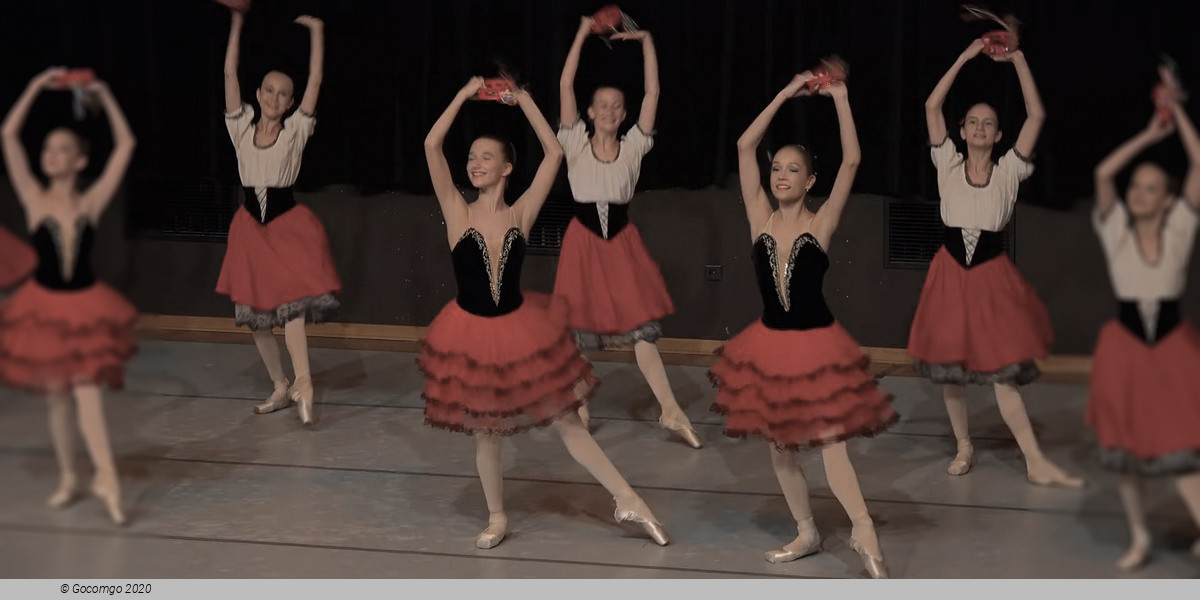
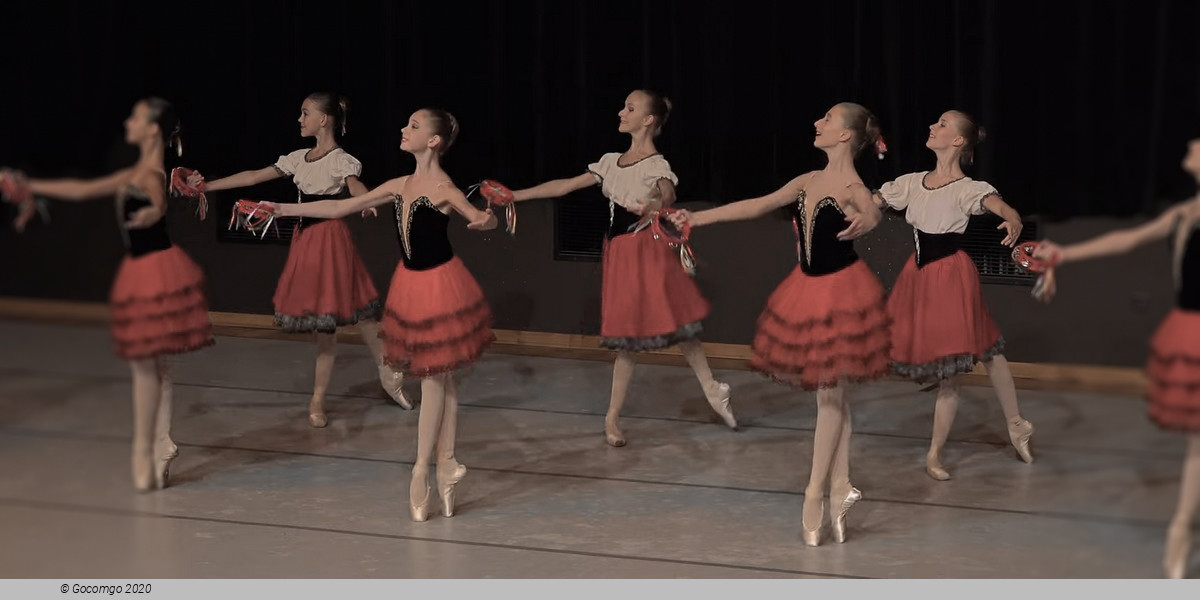
The virtuosic pas de deux Tarantella showcases two pyrotechnical dancers in an ever growing profusion of steps.
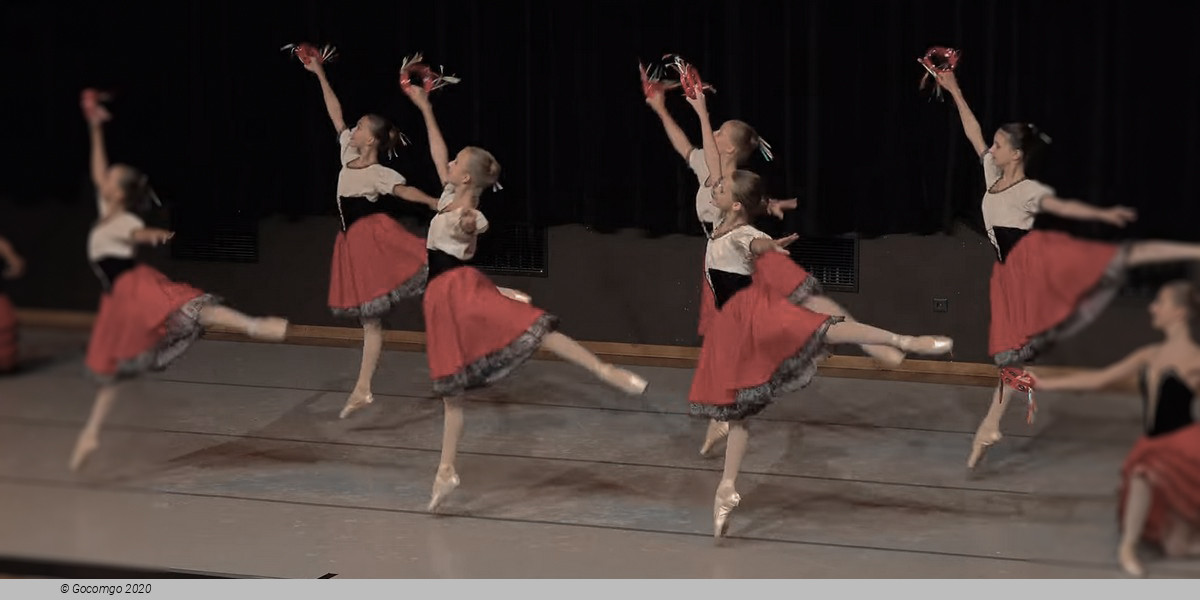
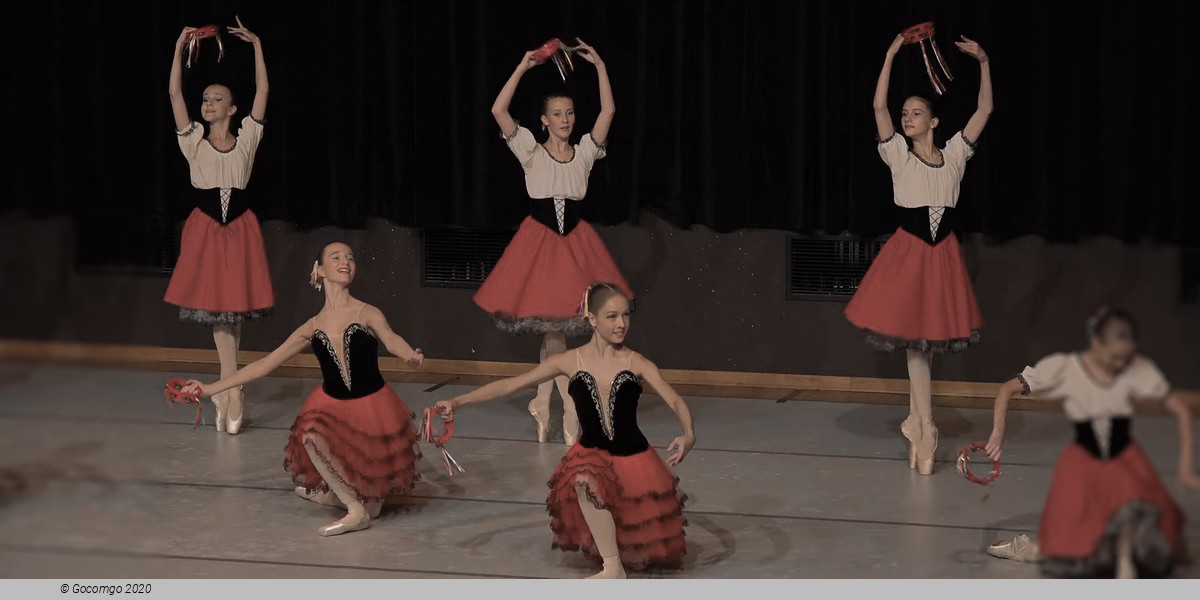
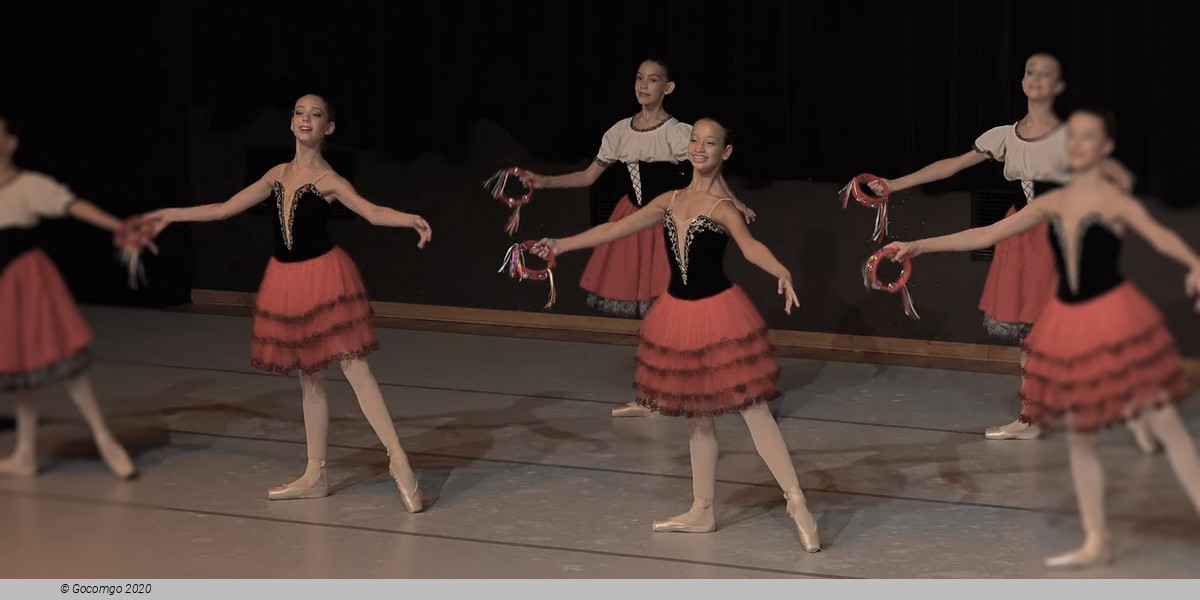
This sprightly music, despite its Italian air, was composed by Louis Moreau Gottschalk (1829-1869), a New Orleans–born composer and pianist who made a large impact in his brief life. The audacity and wit of his works, along with his brilliance at the keyboard, made his compositions immensely popular — perhaps too popular, as he fell out of favor after his death, considered old-fashioned and clichéd. But Gottschalk was a true American original, and his achievements had a great impact on composers and performers who followed. Balanchine admired this particular composition and choreographed a pas de deux for Patricia McBride and Edward Villella — two virtuosic dancers — in 1964. In his Complete Stories of the Great Ballets, Balanchine wrote of the music, “It is a dazzling display piece, full of speed and high spirits. So, I hope, is the dance, which is ‘Neopolitan’ if you like and ‘demi-caractère.’ The costumes are inspired by Italy, anyhow, and there are tambourines.”
Set to Sousa's buoyant marches and dressed in Karinska's delightful all-American costumes, Stars and Stripes contains as much pure dancing as many full-length classical ballets.
For all its exuberant patriotic touches, Stars and Stripes contains as much pure dancing as many full-length classical ballets. The work is divided into five “campaigns,” each of which uses different themes from John Philip Sousa’s marches. When asked why he chose to choreograph a ballet to Sousa, Balanchine replied, “Because I like his music.” Stars and Stripes has been performed for many memorable occasions, including Nelson Rockefeller’s inauguration as governor of New York, tributes for Presidents John F. Kennedy and Lyndon B. Johnson, and the opening ceremonies for the New York State Theater (now the David H. Koch Theater) at Lincoln Center. The ballet is dedicated to the memory of Fiorello H. LaGuardia, mayor of New York City from 1934 to 1945 and founder of the City Center of Music and Drama.


 20 Lincoln Center Plaza