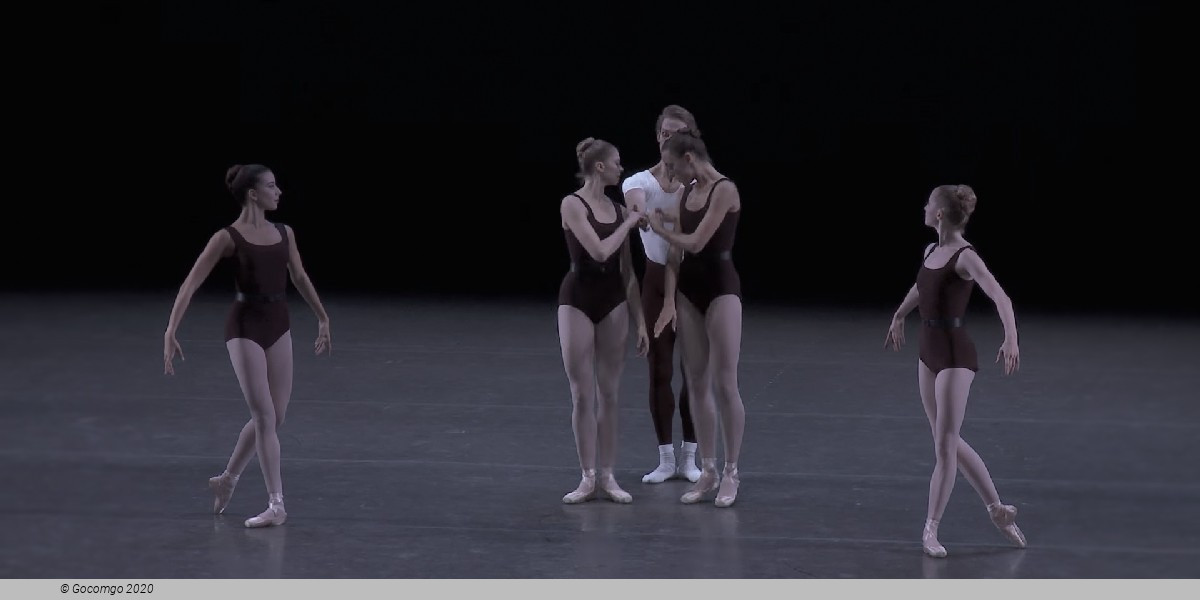
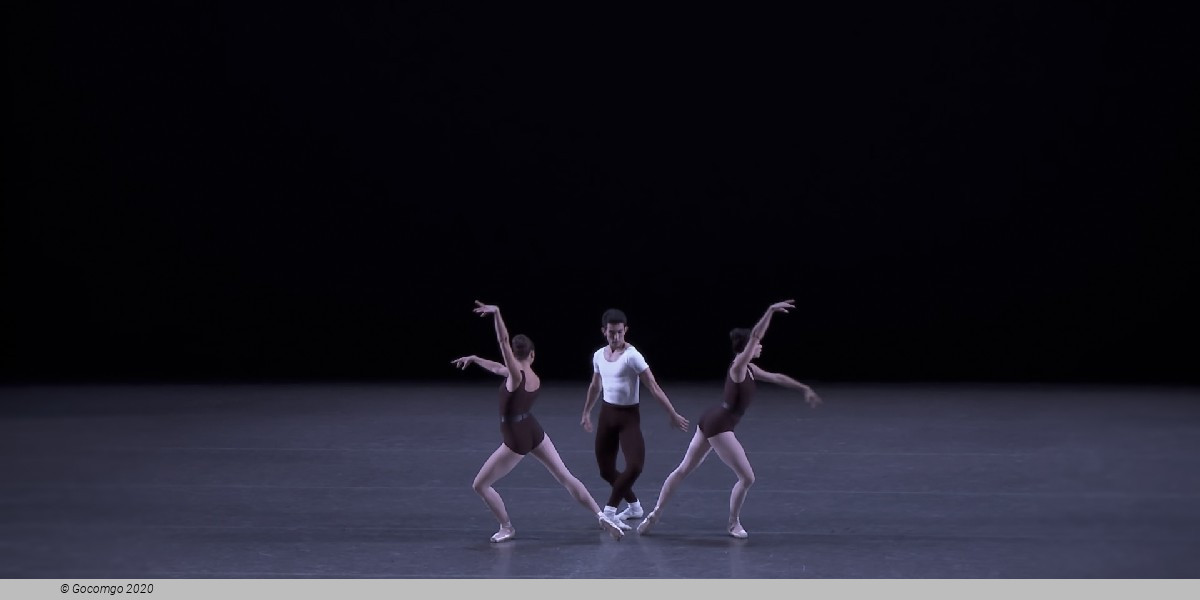
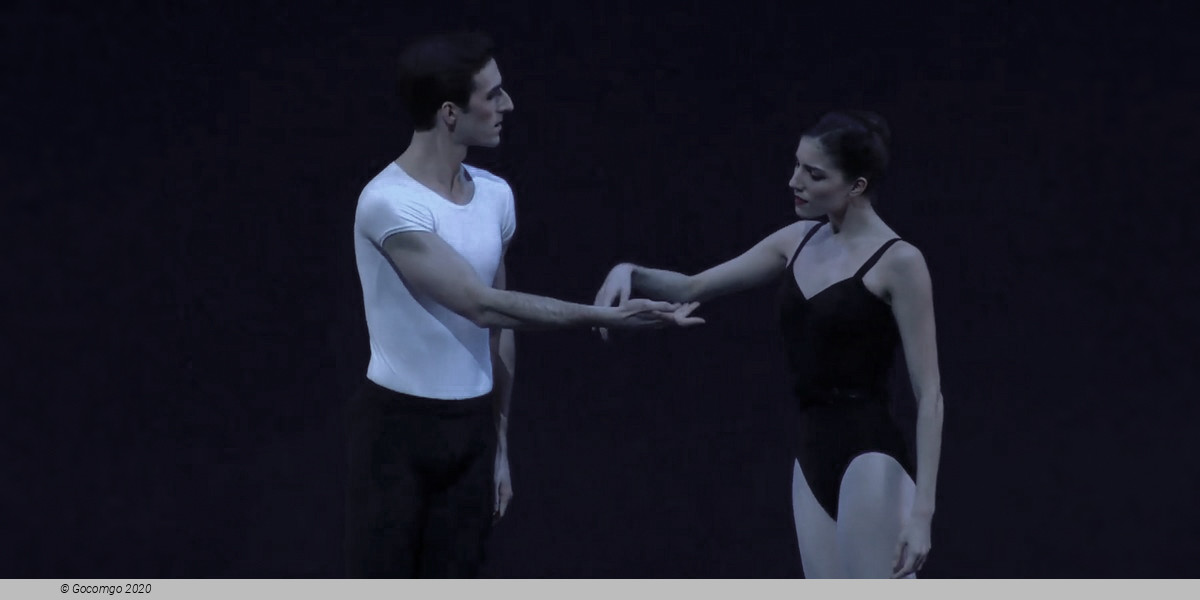
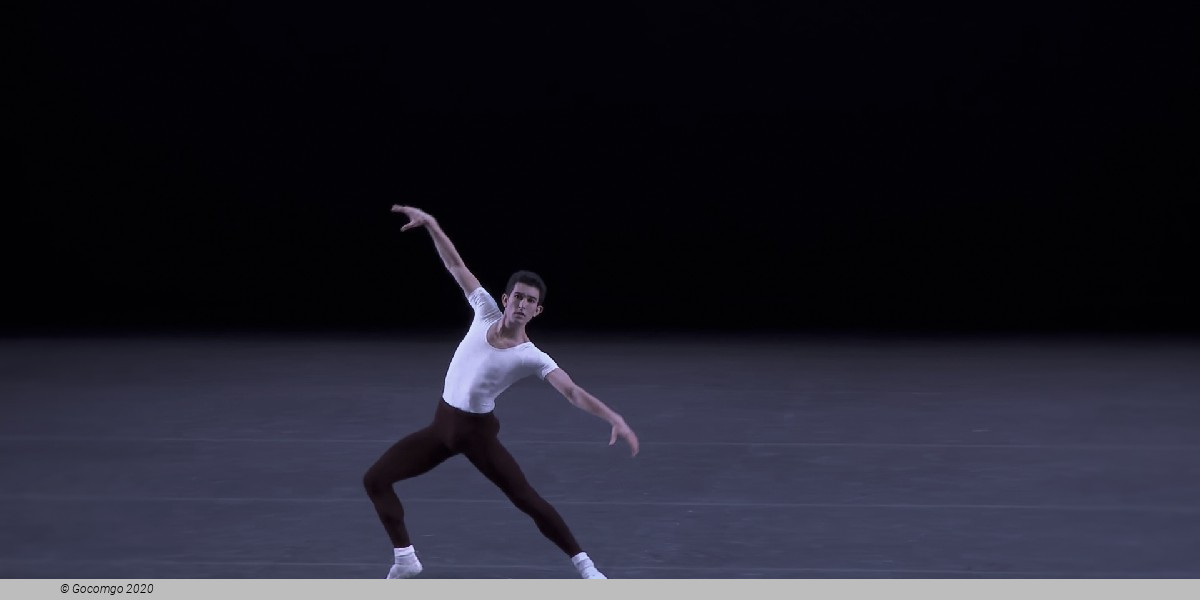
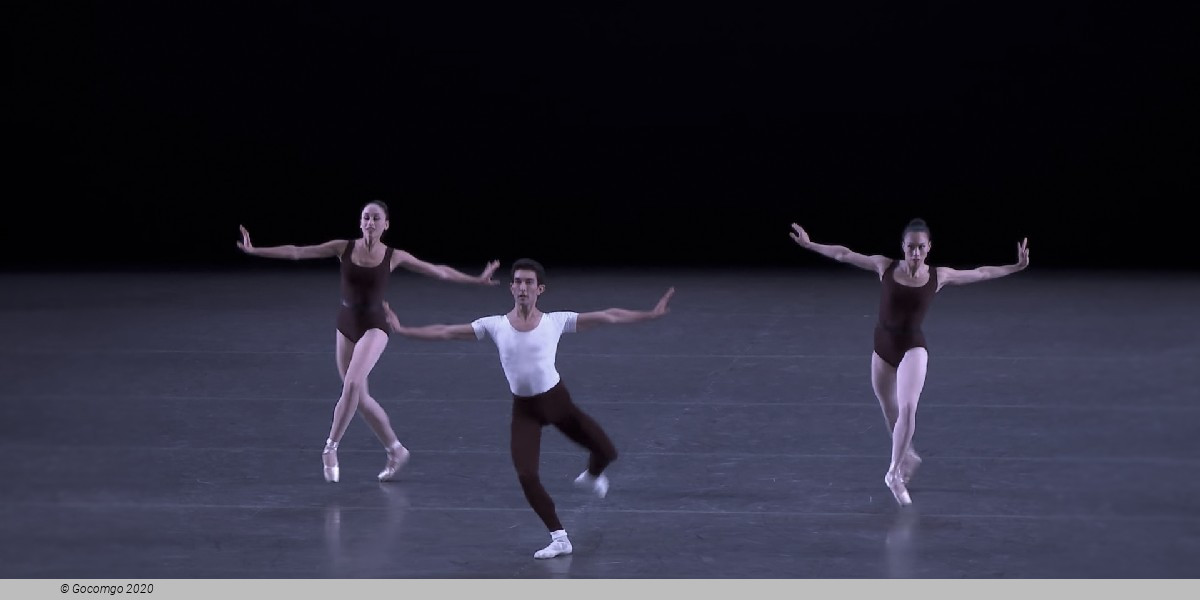
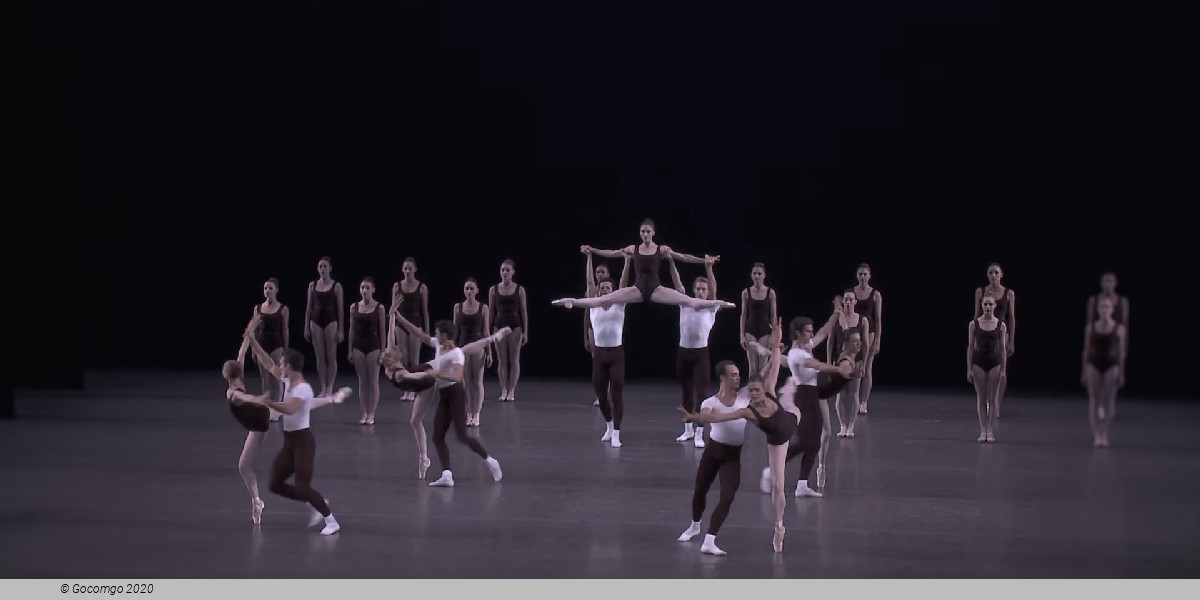
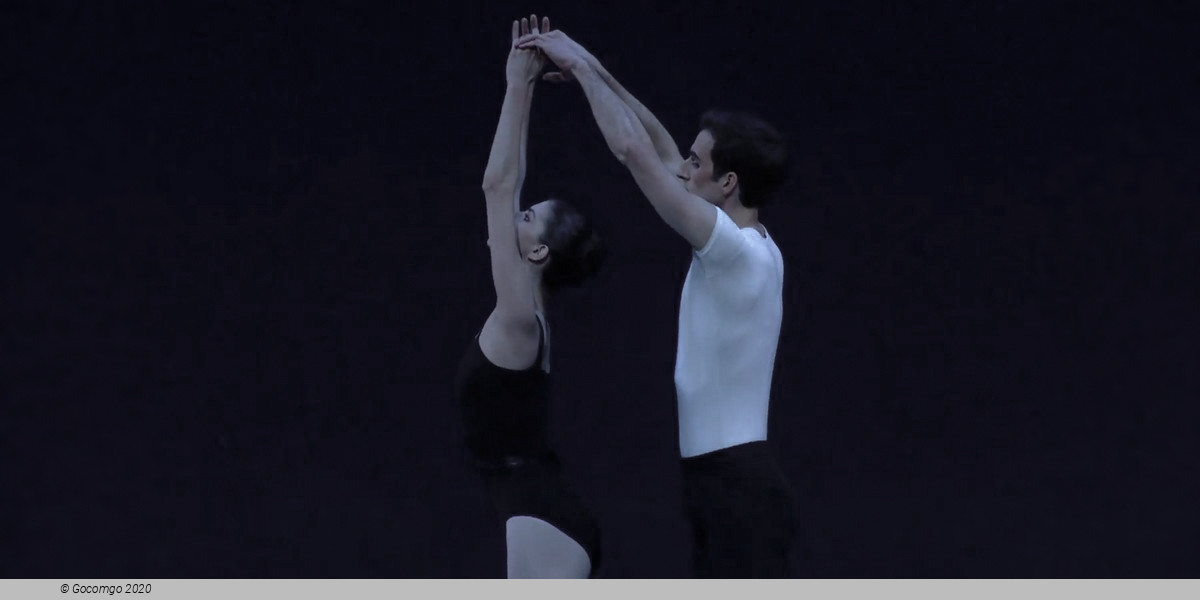
Comparative rarities from the Company’s founding choreographers lead off a program of vividly diverse ballets. Piano Pieces finds Jerome Robbins turning to a favorite Balanchine composer, Tschaikovsky, for one of the dance-maker’s last ballets. Balanchine’s Sylvia: Pas de Deux, returning to the repertory after a quarter century, features bravura steps originally created for great American ballerina Maria Tallchief, set to an excerpt from the titular Delibes ballet. Completing the program is The Four Temperaments, Balanchine’s astringently compelling exploration of complex human emotion.
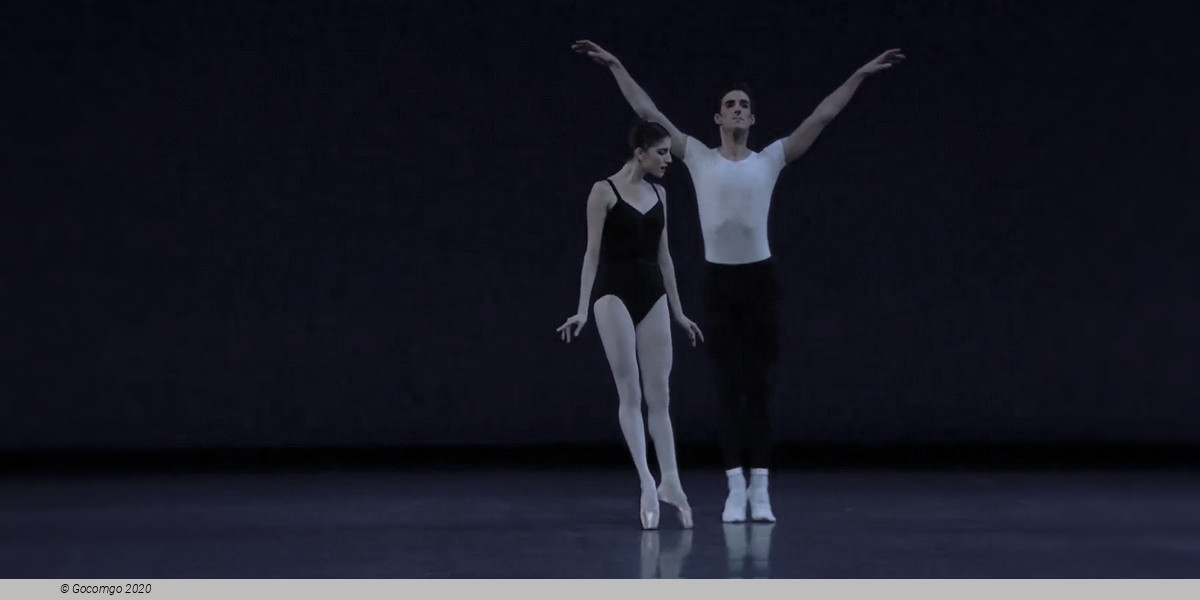
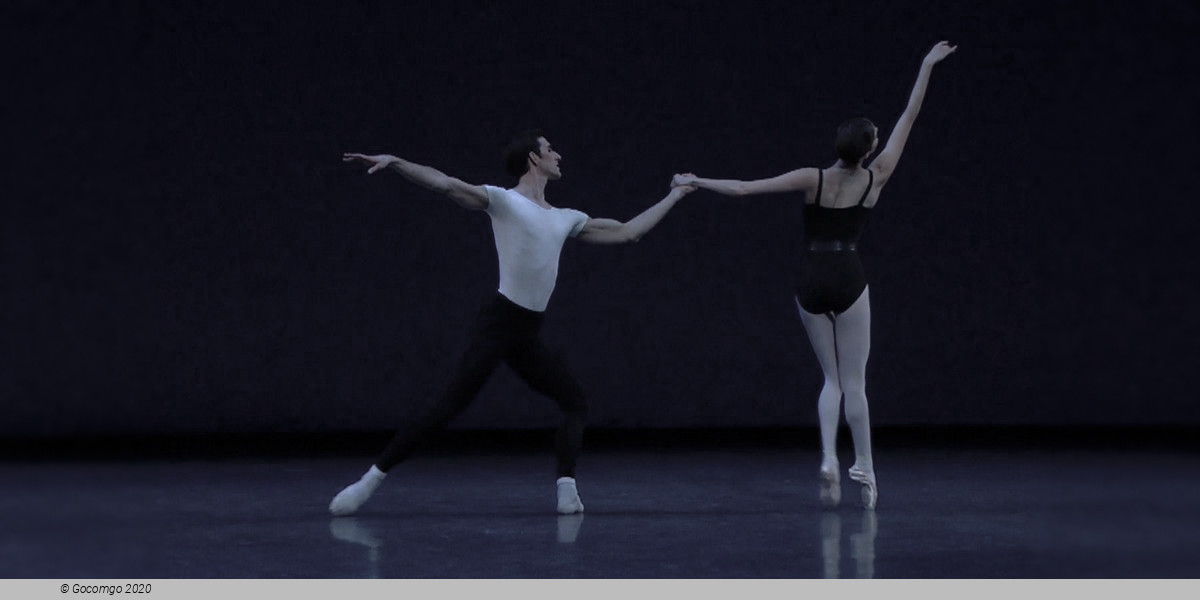
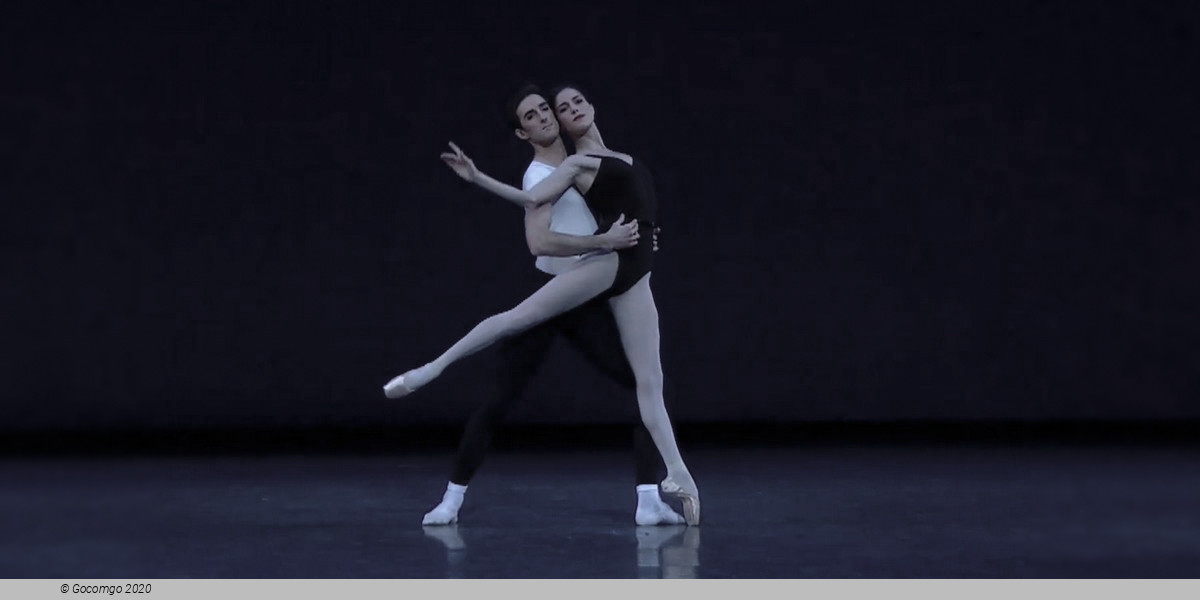
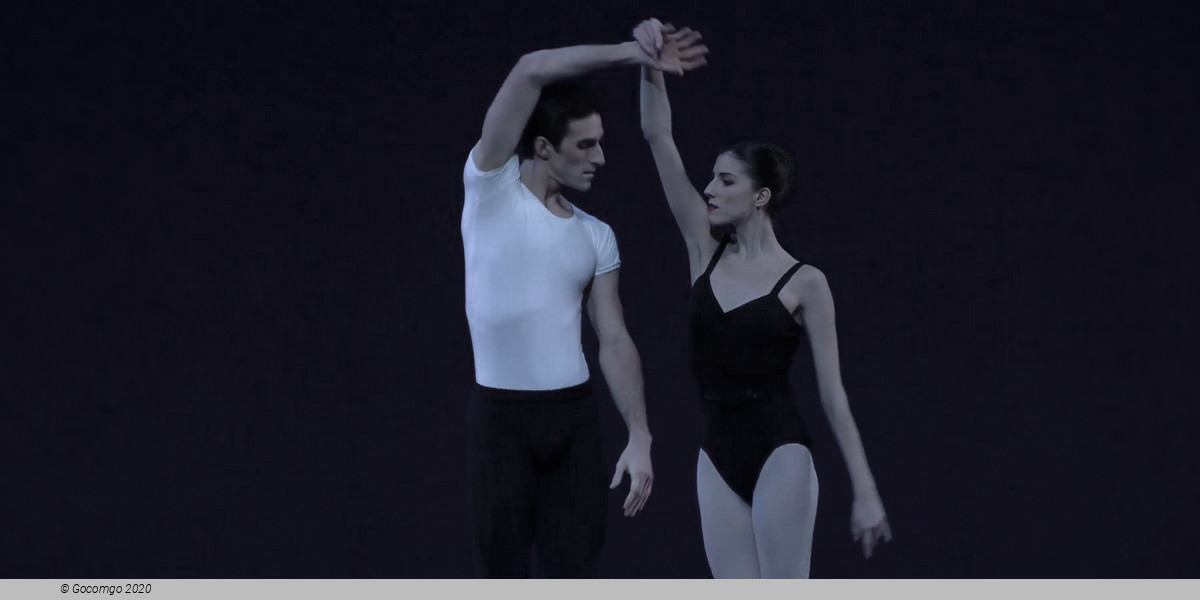
This delightfully romantic pas de deux is made all the more charming by fairy tale costumes and Léo Delibes’ soothing strings.
Sylvia: Pas de Deux is in the tradition of a grand pas de deux, with entrée, adagio, two solos, and a coda.
This ballet is in the tradition of a grand pas de deux, with “Entree,” “Adagio,” two solos, and a “Coda.”
A ballet with unceasing appeal, The Four Temperaments references the medieval concept of psychological humors through its classically grounded but definitively modern movement.
The score for this ballet was commissioned by George Balanchine from Paul Hindemith in 1940. The ballet, together with Ravel’s opera L’Enfant et les Sortilèges, constituted the opening program of Ballet Society (the direct predecessor of the New York City Ballet) on November 20, 1946. In Complete Stories of the Great Ballets, Balanchine wrote of the ballet that it “is an expression in dance and music of the ancient notion that the human organism is made up of four different humors, or temperaments. Each one of us possesses these four humors, but in different degrees, and it is from the dominance of one of them that the four physical and psychological types — melancholic, sanguinic, phlegmatic, and choleric — were derived …. Although the score is based on this idea of the four temperaments, neither the music nor the ballet itself makes specific or literal interpretation of the idea. An understanding of the Greek and medieval notion of the temperaments was merely the point of departure for both composer and choreographer.”
An accomplished pianist, Balanchine commissioned the score because he wanted a short work he could play at home with friends during his evening musicales. It was completed in 1940 and had its first public performance at a 1944 concert with Lukas Foss as the pianist.
Displaying Robbins’ penchant for crafting diverse emotional atmospheres to solo piano pieces, this folk-tinged ballet for three couples, a male soloist, and a corps de ballet contrasts delicate solemnness with congenial amusement.
For the 1981 Tschaikovsky Festival, Jerome Robbins chose 15 of the composer's piano pieces to weave into a ballet with a Russian peasant flavor. Tschaikovsky wrote such pieces because they were easily marketable to amateur musicians. Although he enjoyed composing to order, he once remarked, "I continue to bake musical pancakes. Today the tenth has been tossed." To compose these miniature musical vignettes with a great deal of character, Tschaikovsky said, "One needs a definite plot or text, a time limit, and a promise of several hundred ruble notes." The Seasons, one of the series of pieces used in the ballet, demonstrates the simplicity of form that allowed Tschaikovsky to feature his inspired talent for melodies. The ballet, a collection of group works, solos, and pas de deux, demonstrates Robbins' love for folk dances, ensemble interaction, and musical phrasing.










 20 Lincoln Center Plaza