The Festival ignites with a rousing program of singular Stravinsky-scored ballets
Stravinsky wrote the delightful, spirited Fireworks as a wedding gift for his mentor Rimsky-Korsakov’s daughter; upon hearing Fireworks, famed impresario Serge Diaghilev commissioned the original Firebird score. Firebird is presented here as restaged by Balanchine and Robbins, with evocative designs by Marc Chagall that capture the magic and mystery of the ballet’s fantastical tale, following two additional works set to eponymous Stravinsky scores: NYCB Resident Choreographer Justin Peck’s vibrant Scherzo Fantastique, with strikingly colorful costumes by frequent-Peck collaborators Reid Bartelme and Harriet Jung; and Balanchine’s bold and breathtakingly kinetic Symphony in Three Movements, choreographed for the original 1972 Stravinsky Festival.
A Summer 2016 commission marking the 50th anniversary of NYCB’s annual summer residence at the Saratoga Performing Arts Center, this work is set to Stravinsky’s Scherzo Fantastique.
Set to Stravinsky's eponymous score, Scherzo Fantastique premiered at the Saratoga Performing Arts Center in July 2016. The ballet for 10 dancers is Soloist and Resident Choreographer Justin Peck's eleventh work for New York City Ballet. Scherzo Fantastique features scenic design by French Brooklyn-based artist Jules de Balincourt, costumes by Reid Bartelme and Harriet Jung, and lighting by Mark Stanley.
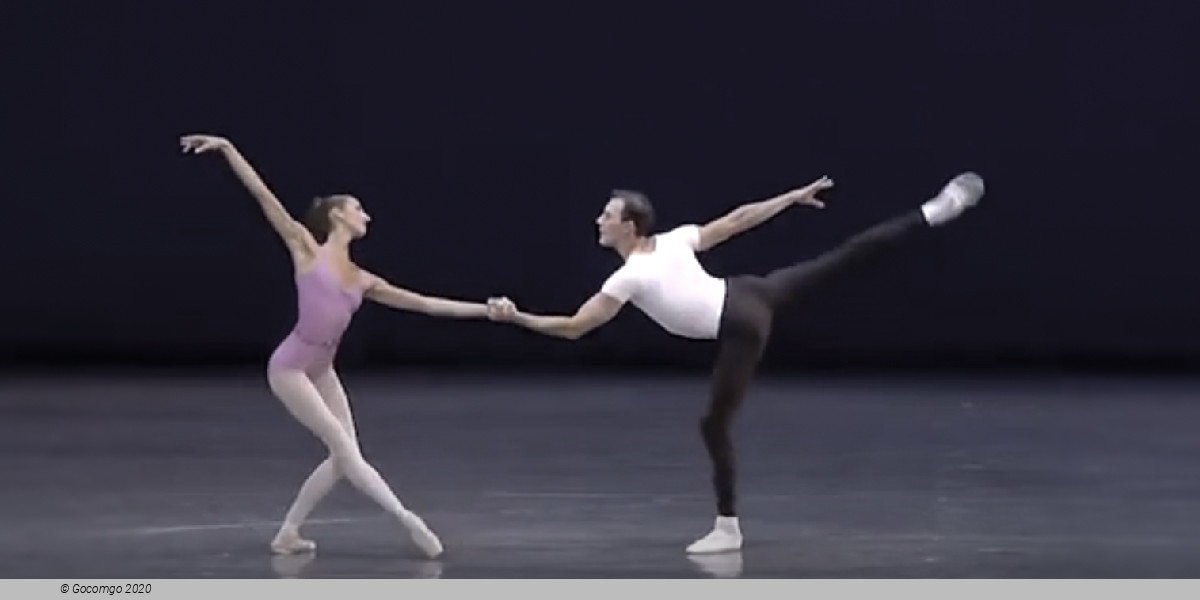
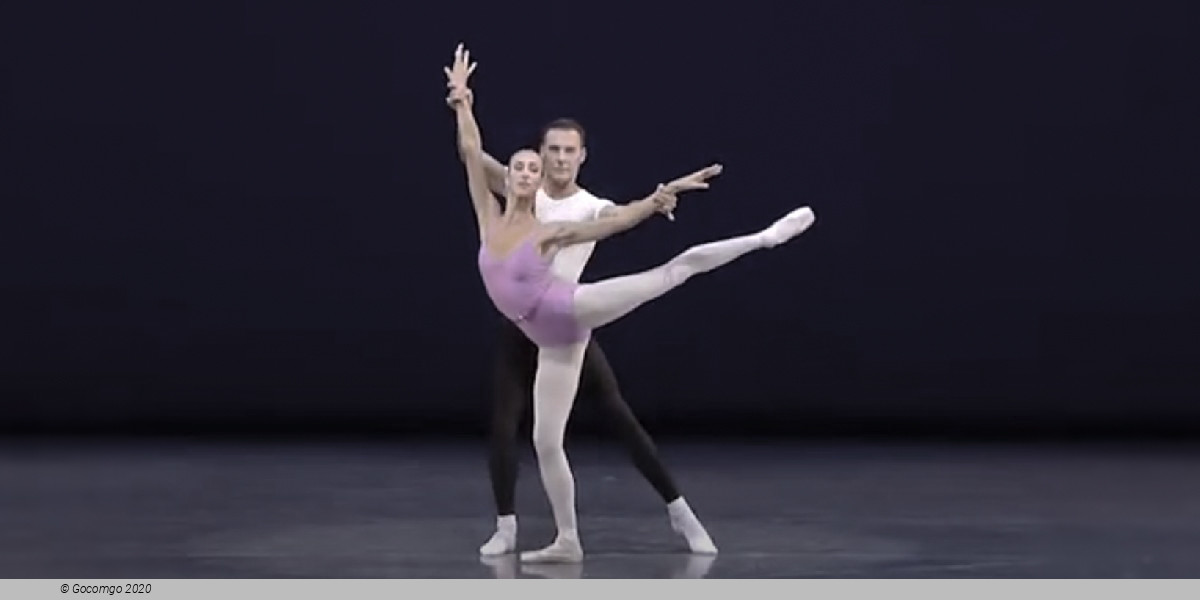
One of Balanchine’s most celebrated leotard ballets, Symphony in Three Movements is bold and breathtakingly jet-propelled, a kinetic achievement, striking for its confidence and power.
For New York City Ballet’s 1972 Stravinsky Festival, Balanchine choreographed several notable masterpieces, including the majestic Symphony in Three Movements. Stravinsky had suggested the music as a ballet when the choreographer visited the composer in Hollywood during World War II. Despite its 21 minute length, the piece evokes a fuller symphonic breadth with two instruments, the harp and piano, providing the dominant contrasts. “Each instrument has a large obbligato role in a movement to itself, and only at the turning- point fugue…do the two play together and unaccompanied,” said Stravinsky. The signature Stravinsky propulsive rhythm is mirrored by the angular, athletic choreography for soloists and a large ensemble, although the second andante movement, originally composed for an apparition scene in the movie Song of Bernadette, is reserved for a meditative pas de deux. One of Balanchine’s “leotard” ballets, the work requires no scenic or narrative distractions from the complexity of the choreography.
It was during his tenure at the legendary Ballets Russes, from 1924 until the death of Serge Diaghilev in 1929, that Balanchine met Igor Stravinsky, marking the start of a long-time artistic partnership between two kindred spirits. Balanchine's Symphony in Three Movements was created for the Stravinsky Festival in 1972. With sporty and athletic elements, this snappy, snazzy ballet is a testament to Balanchine’s pioneering spirit and exceptional musicality.
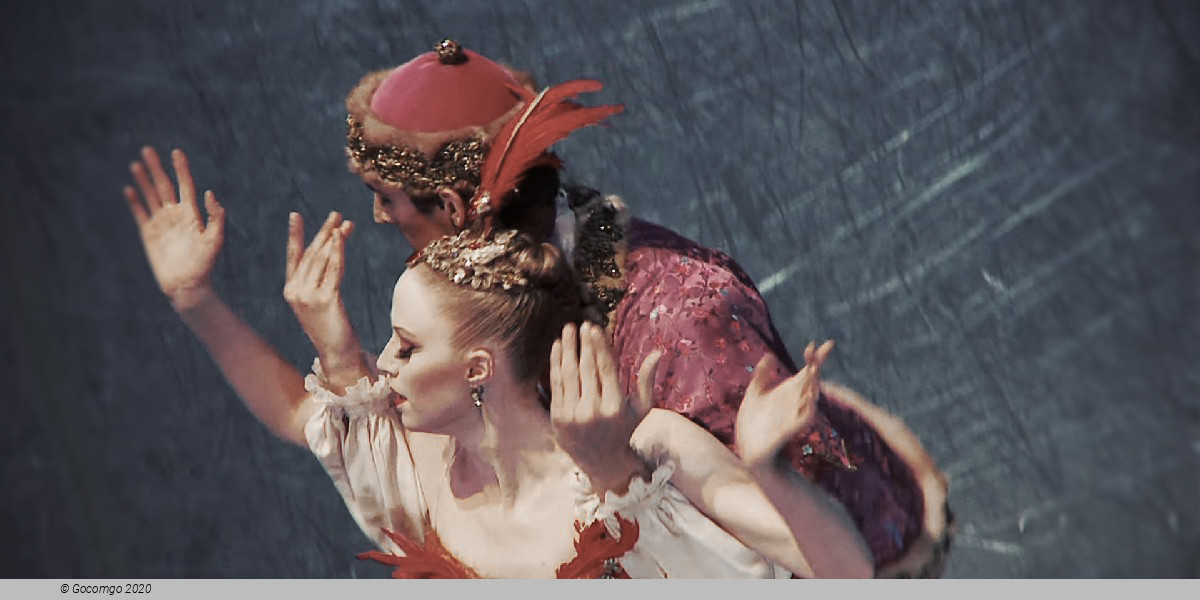
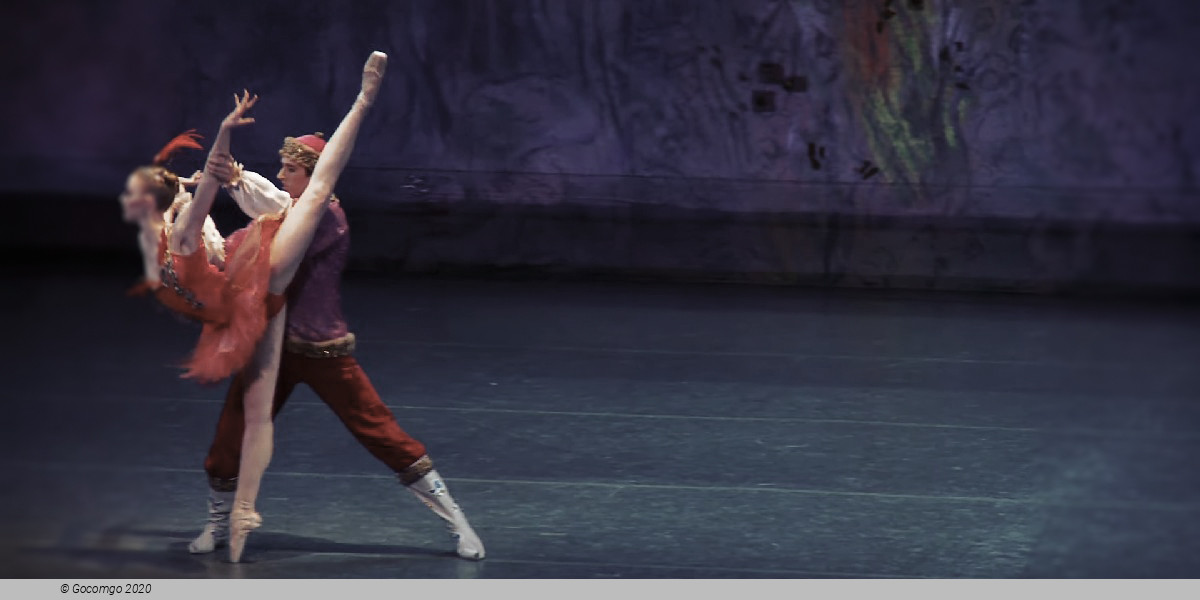
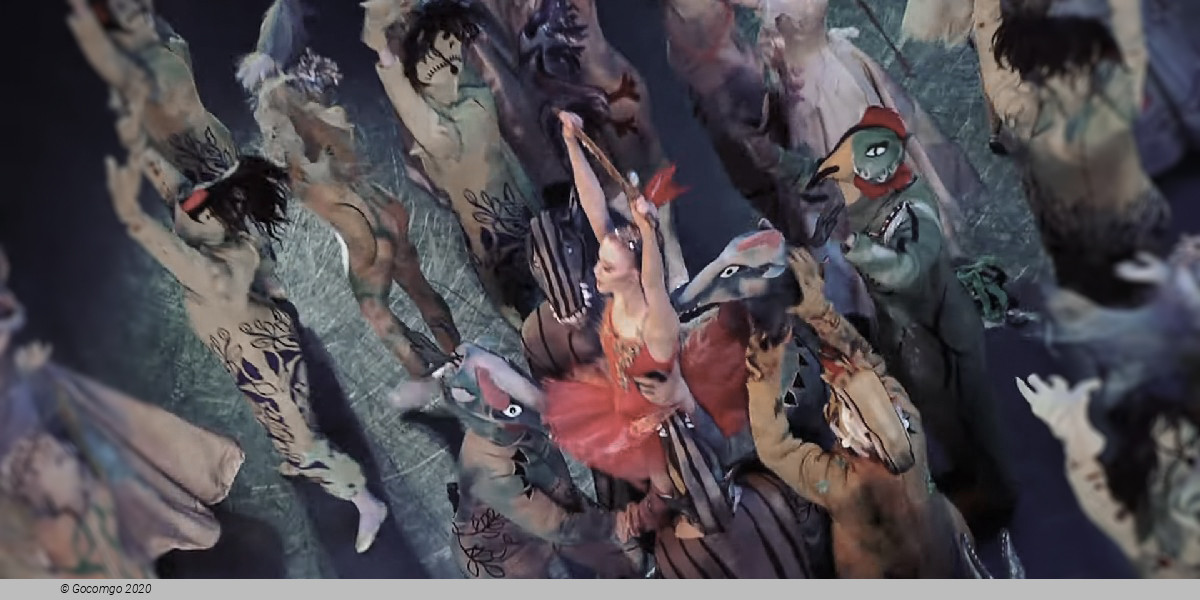
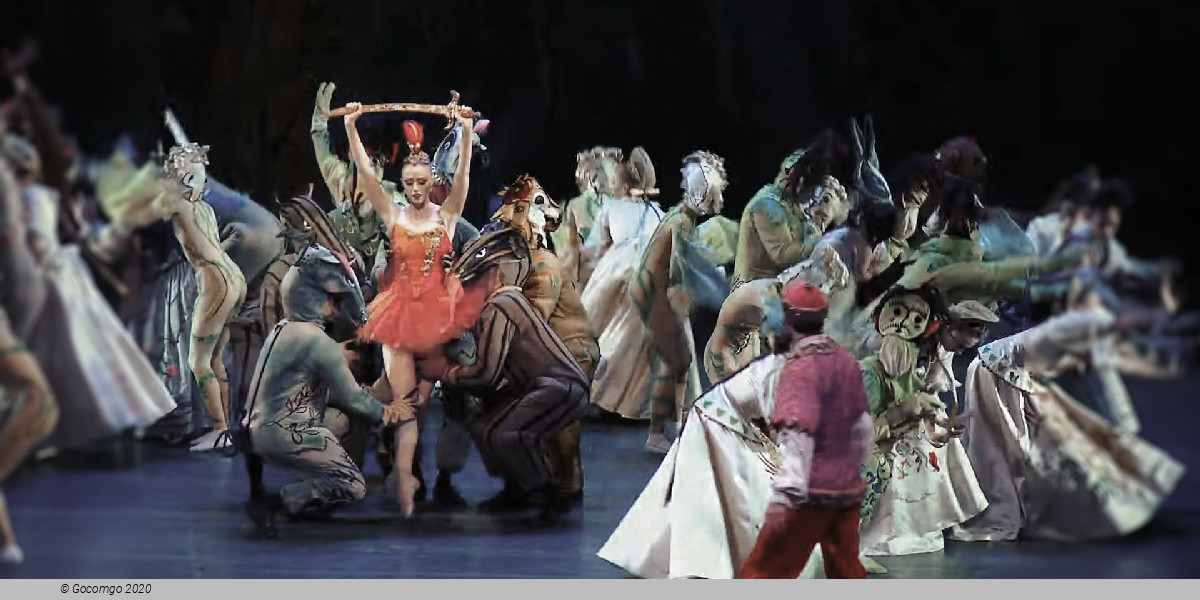
Dressed in Chagall’s exquisite sets and costumes, Firebird illustrates an enchanting Russian fairytale and the fantastical creatures of its strange world.
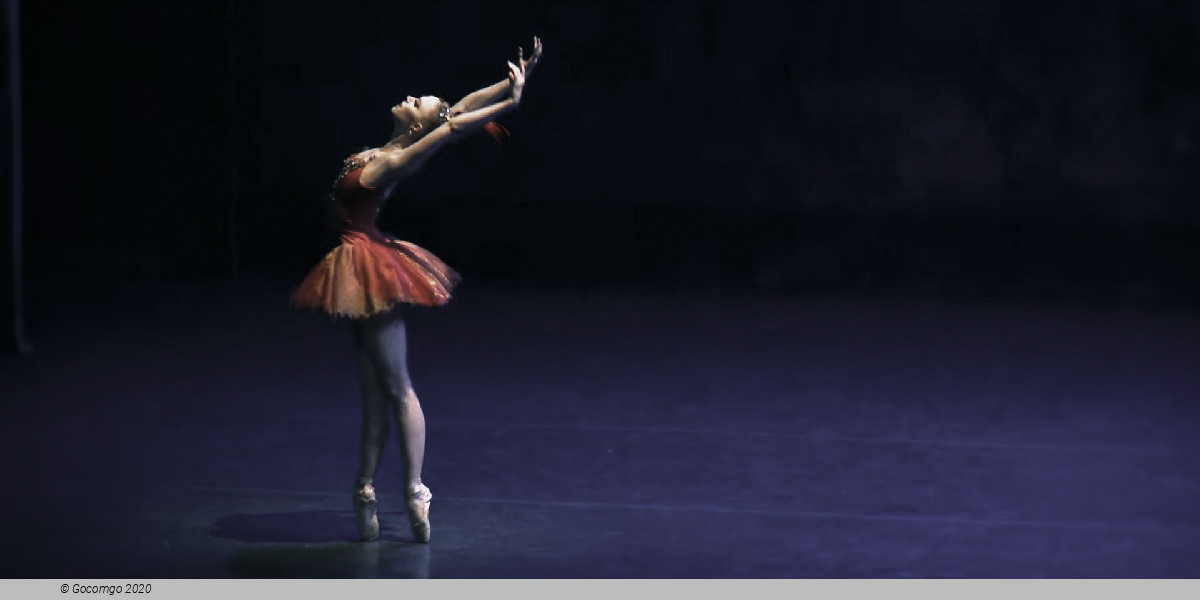
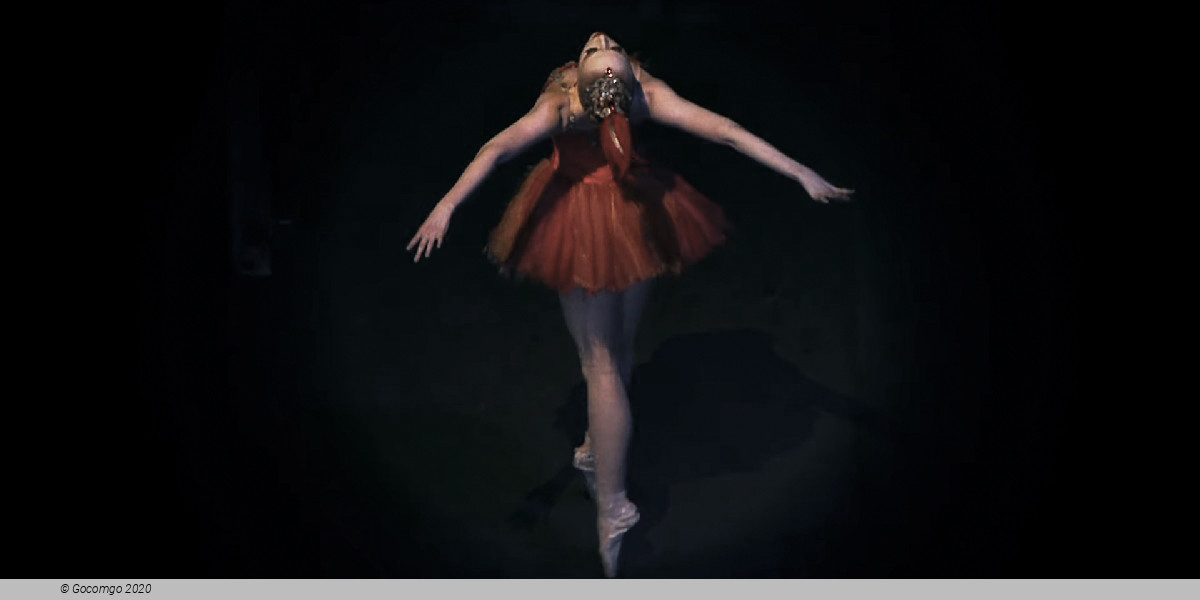
In 1910, following the first successful season of the Ballets Russes in Paris, Serge Diaghilev commissioned a full-length ballet score from a young composer, Igor Stravinsky. The result — Firebird — was Stravinsky's first ballet score, and a major critical and popular success for Diaghilev, Stravinsky and its choreographer Michel Fokine. New York City Ballet first presented Firebird in 1949 at City Center, with choreography by George Balanchine, scenery and costumes by the painter Marc Chagall, and Maria Tallchief in the leading role. Because Balanchine chose to use the orchestral suite, rather than the complete three-act score, he simplified the story and emphasized the mythical elements of the Firebird’s character. In 1970, a new production was mounted to adapt to the larger proportions of the New York State Theater (now the David H. Koch Theater). The costumes, of extraordinary complexity and fantasy, were created by Madame Karinska from Chagall’s original designs. Chagall expressed great pleasure at the devotion and inventiveness with which Madame Karinska interpreted his watercolor sketches in textiles, plastics, paint, and mineral materials. The choreography represents a collaboration between Balanchine and Jerome Robbins, the latter being responsible for the episode with Kastchei the Wizard and his subjects. Balanchine entirely redesigned his dances in light of the designs, conceiving the ballet as Chagall accompanied by music and dance. In 1972 and 1980 Balanchine again changed his choreography (as well as the costume) for the character of the Firebird to suit the qualities of the ballerina cast in the leading role.
The Firebird has been restaged by many choreographers, including George Balanchine and Jerome Robbins (co-choreographers).
The work was staged by George Balanchine for the New York City Ballet in 1949 with Maria Tallchief as the Firebird, with scenery and costumes by Marc Chagall, and was kept in the repertory until 1965. The ballet was restaged by George Balanchine and Jerome Robbins in 1970 for the New York City Ballet with elaborated scenery by Chagall, and with new costumes by Karinska based on Chagall's for the 1972 Stravinsky Festival that introduced Gelsey Kirkland as the Firebird.

 20 Lincoln Center Plaza