
New York City Ballet (David H. Koch Theater) tickets 8 October 2026 - All Balanchine I | GoComGo.com

All Balanchine I

New York City Ballet (David H. Koch Theater), Main Stage, New York, USA
All photos (7)
Select date and time
7:30 PM
From
US$ 73

E-tickets: Print at home or at the box office of the event if so specified. You will find more information in your booking confirmation email.

You can only select the category, and not the exact seats.
If you order 2 or 3 tickets: your seats will be next to each other.
If you order 4 or more tickets: your seats will be next to each other, or, if this is not possible, we will provide a combination of groups of seats (at least in pairs, for example 2+2 or 2+3).

Important Info
Type: Ballet
City: New York, USA
Starts at: 19:30
Duration: 31min

E-tickets: Print at home or at the box office of the event if so specified. You will find more information in your booking confirmation email.

You can only select the category, and not the exact seats.
If you order 2 or 3 tickets: your seats will be next to each other.
If you order 4 or more tickets: your seats will be next to each other, or, if this is not possible, we will provide a combination of groups of seats (at least in pairs, for example 2+2 or 2+3).

Cast
Performers
Ballet company: New York City Ballet
Creators
Composer: Charles Ives
Composer: Vincenzo Bellini
Choreographer: George Balanchine
Overview

Deceit, desire, and death shadow La Sonnambula's masked ball, haunting with the image of a beautiful sleepwalker and the misfortune in her wake.

Balanchine choreographed this work (then called Night Shadow) in 1946, for Ballet Russe de Monte Carlo, featuring Alexandra Danilova, Nicholas Magallanes, and Maria Tallchief. He used music by Vittorio Rieti based on themes from several of Vincenzo Bellini’s operas. The ballet was first performed by New York City Ballet in 1960, with Allegra Kent, Erik Bruhn, and Jillana in the lead roles.

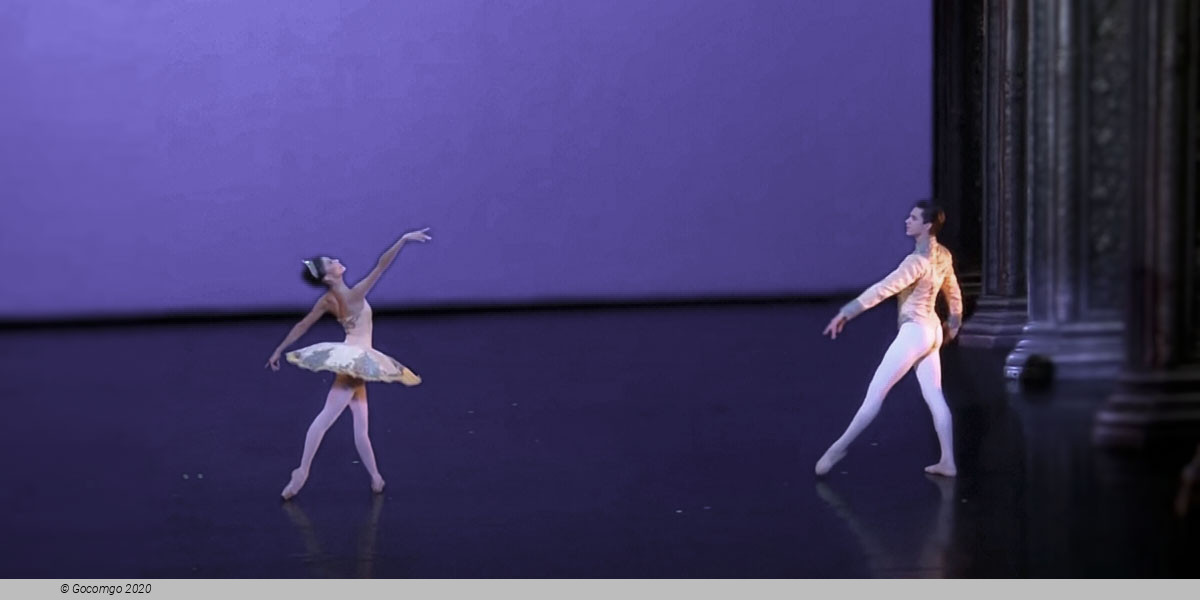
Set at a masked ball, the one-act La Sonnambula tells the story of a Coquette, a Poet, and a beautiful Sleepwalker. The story remains mysterious, inviting different interpretations of the characters’ actions and relationships; it is the moods and emotions evoked by Balanchine’s choreography that give the ballet its resonance. Its atmosphere of sinister menace brings to mind 19th-century Romantic ballets like Giselle and La Sylphide, with their haunting stories of doomed love.

A hypnotically alluring piece that captures the haunting, otherworldly music of Charles Ives, The Unanswered Question features a lone ballerina who is held aloft throughout the distinctive dance of subtle mystery.

“The Unanswered Question” is the second section of Balanchine’s Ivesiana, which he choreographed to a series of unrelated Charles Ives orchestral pieces shortly after the composer’s death in 1954. The complex music of this Connecticut-born artist, incorporating extensive use of atonality, clashing meters and quarter-tones, had rarely been performed prior to its use in Ivesiana.

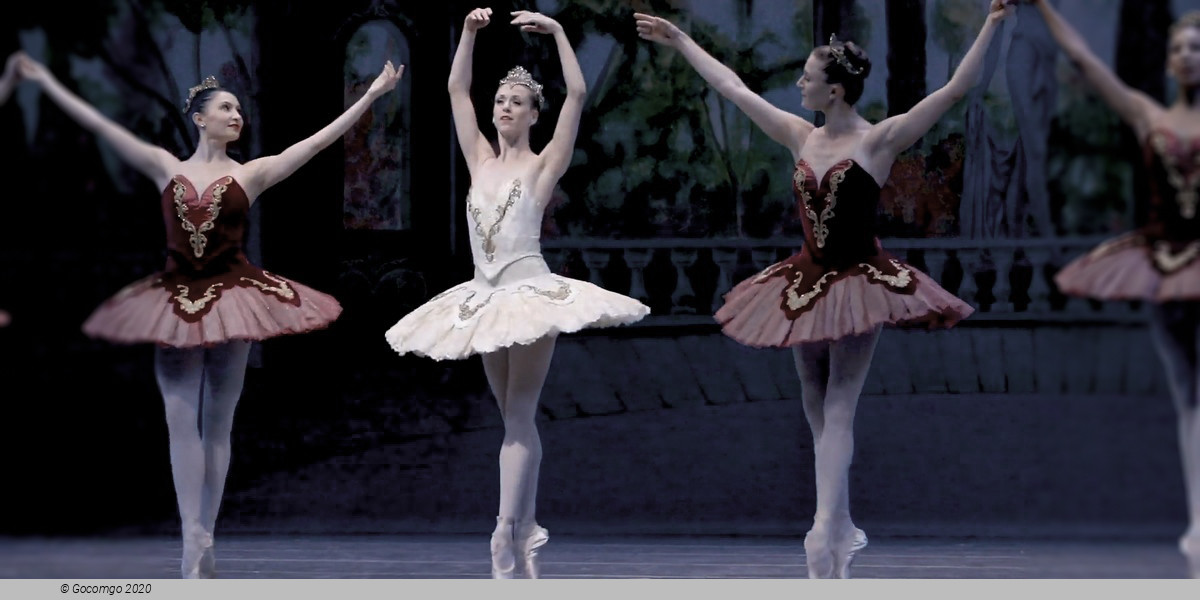
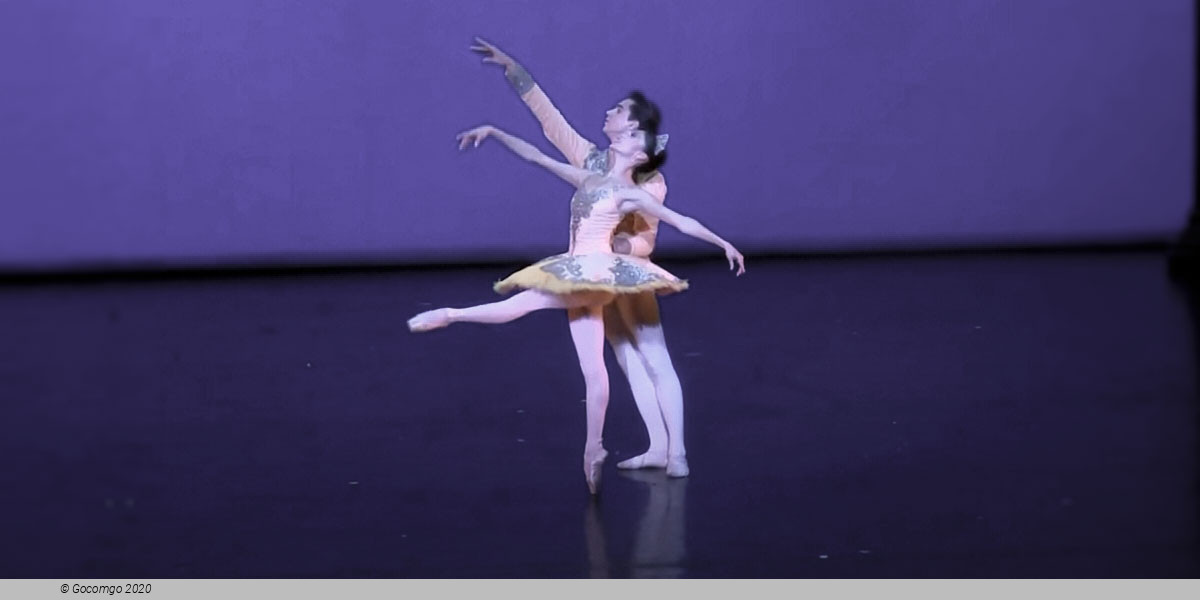
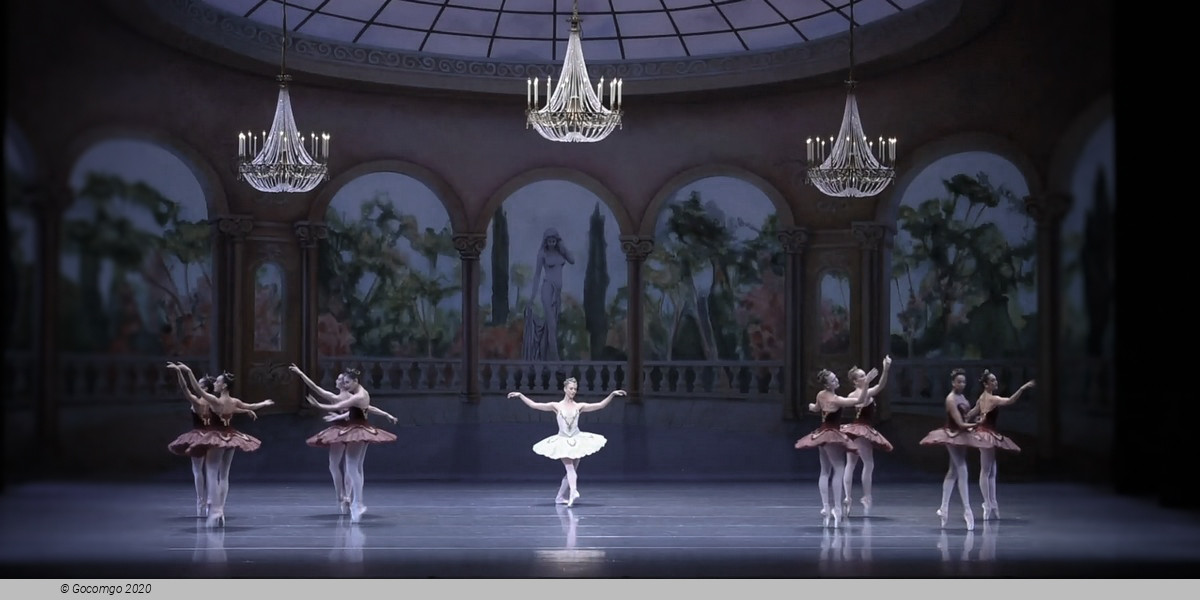
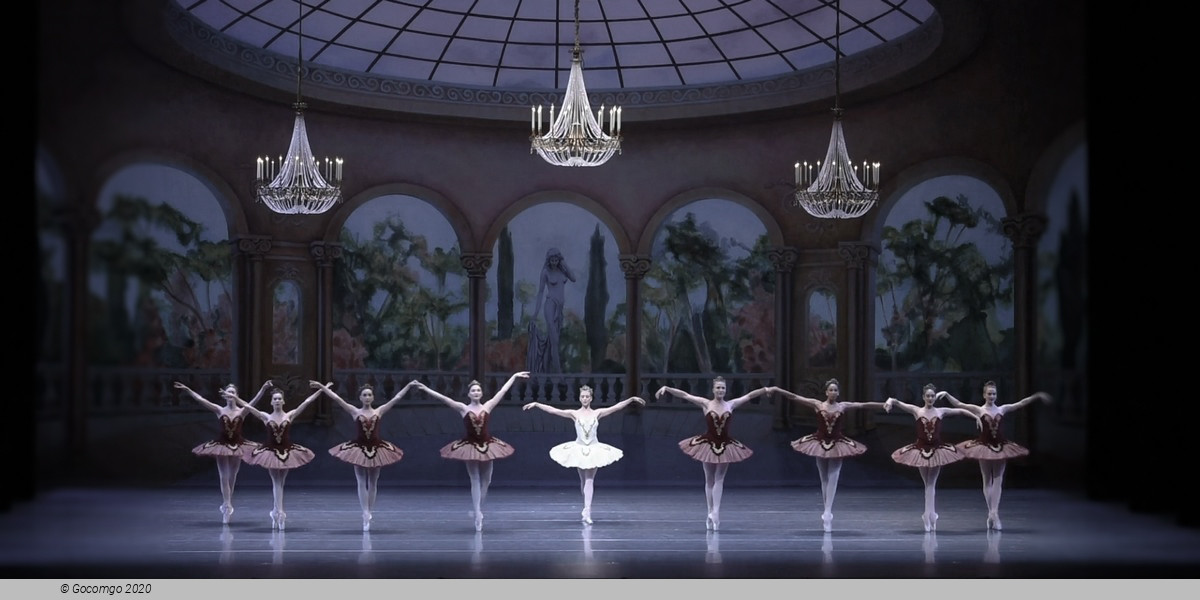
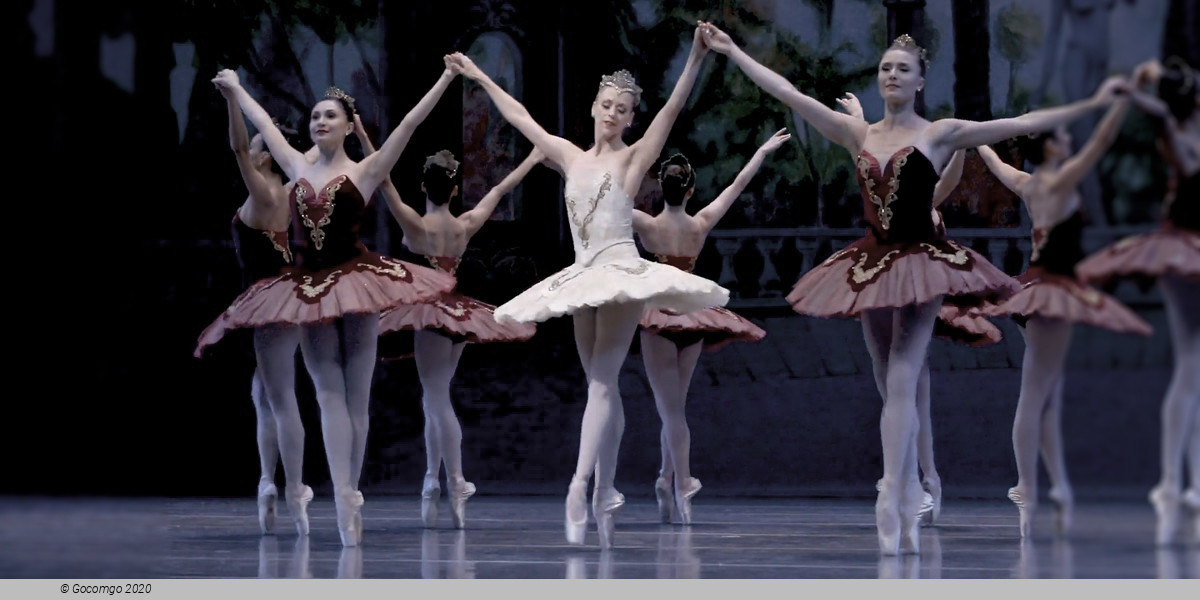
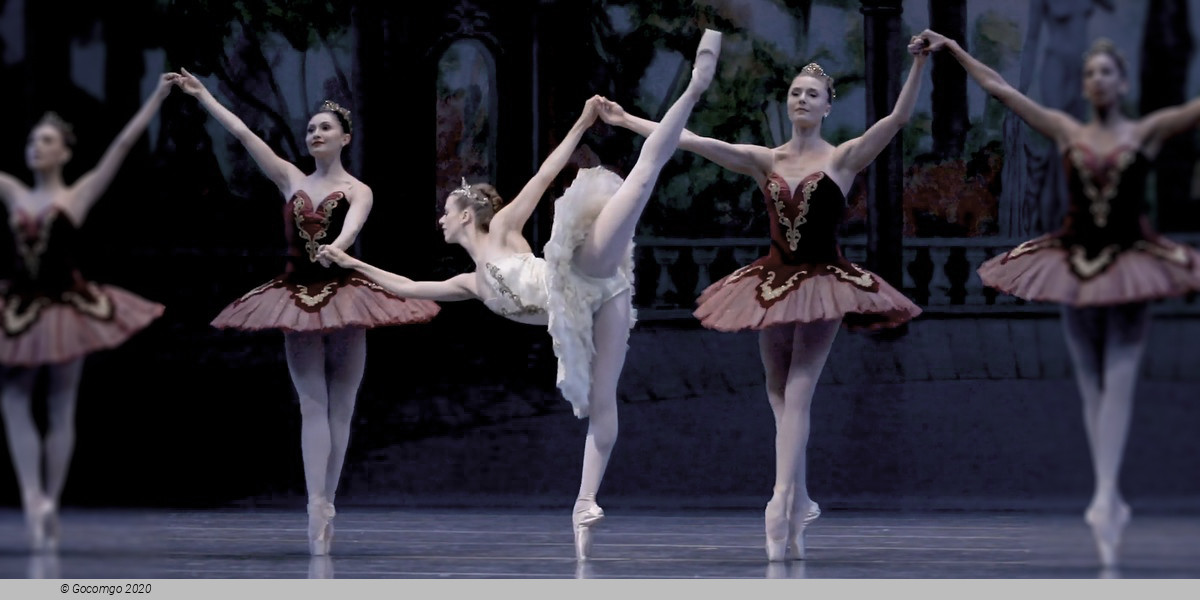
A work that drips with gilded grandeur, Theme and Variations pays tribute to Balanchine’s imperial Russia with its regal structure and sumptuous Tschaikovsky score.

An intensive display of the classical ballet lexicon, Theme and Variations was intended, as Balanchine wrote, “to evoke that great period in classical dancing when Russian ballet flourished with the aid of Tschaikovsky’s music.” Set to the final movement of Tschaikovsky’s third orchestral suite, the score consists of a theme and 12 variations, culminating in a polonaise in the Imperial style. Arguably the most substantial part of the suite, Tschaikovsky himself began the concert tradition of playing this final movement as a separate piece. Balanchine created Theme and Variations in 1947 for Ballet Theatre (now American Ballet Theatre), and it briefly entered the NYCB repertory in 1960. In 1970 Balanchine used the complete orchestral suite to create Tschaikovsky Suite No. 3, and Theme and Variations, with a few minor revisions, returned to the repertory as the fourth and final movement of the ballet.

Pithoprakta is a groundbreaking work that merges music, mathematics, and movement into a strikingly original theatrical experience. Composed by Iannis Xenakis in 1956, the score is built on principles of probability and statistical mechanics, translating the unpredictable motion of particles into sound. The result is a dense, shimmering sonic landscape—at once chaotic and rigorously structured.


In its ballet form, Pithoprakta becomes a physical exploration of these same ideas. Dancers embody shifting patterns, collisions, and dispersions, moving as both individuals and as part of a larger, ever-evolving system. The choreography often emphasizes group dynamics over narrative, creating a visual counterpart to Xenakis’s complex musical architecture. Abstract yet deeply immersive, Pithoprakta challenges traditional notions of ballet, offering a powerful intersection of science and art.

History
Premiere of this production: 30 April 1988, New York State Theater, Lincoln Center

The Unanswered Question: Some Intimations of the American Composer Charles Ives is a ballet made by Eliot Feld to Charles Ives' The Unanswered Question, Calcium Light Night, Fugue in Four Keys, Mists, From the Housatonic at Stockbridge, Sonata No. 2 for Piano and Violin (In the Barn), Remembrance and An Old Song Deranged.

Premiere of this production: 26 November 1947, City Center 55 Street Theater

Theme and Variations is a ballet choreographed by George Balanchine to the final movement of Tchaikovsky's Orchestral Suite No. 3. The ballet was made for Ballet Theatre (now American Ballet Theatre), and premiered on November 26, 1947, at the City Center 55 Street Theater, with the two leads danced by Alicia Alonso and Igor Youskevitch.

Venue Info

New York City Ballet (David H. Koch Theater) - New York
Location   20 Lincoln Center Plaza

The David H. Koch Theater is the major theater for ballet, modern, and other forms of dance, part of the Lincoln Center, at the intersection of Columbus Avenue and 63rd Street in the Lincoln Square neighborhood of Manhattan in New York City. Originally named the New York State Theater, the venue has been home to the New York City Ballet since its opening in 1964, the secondary venue for the American Ballet Theatre in the fall, and served as home to the New York City Opera from 1964 to 2011.

The New York State Theater was built with funds from the State of New York as part of New York State's cultural participation in the 1964–1965 World's Fair. The theater was designed by architects Philip Johnson and John Burgee, and opened on April 23, 1964. After the Fair, the State transferred ownership of the theater to the City of New York.

Along with the opera and ballet companies, another early tenant of the theater was the now defunct Music Theater of Lincoln Center whose president was composer Richard Rodgers. In the mid-1960s, the company produced fully staged revivals of classic Broadway musicals. These included The King and I; Carousel (with original star, John Raitt); Annie Get Your Gun (revised in 1966 by Irving Berlin for its original star, Ethel Merman); Show Boat; and South Pacific.

The theater seats 2,586 and features broad seating on the orchestra level, four main “Rings” (balconies), and a small Fifth Ring, faced with jewel-like lights and a large spherical chandelier in the center of the gold latticed ceiling.

The lobby areas of the theater feature many works of modern art, including pieces by Jasper Johns, Lee Bontecou, and Reuben Nakian.

Important Info
Type: Ballet
City: New York, USA
Starts at: 19:30
Duration: 31min
Top of page