A season celebrating the 75th anniversary of the founding of New York City Ballet, with the fall repertory devoted exclusively to George Balanchine works, kicks off in sumptuous style.
Balanchine’s only full-length plotless ballet, Jewels has been a perennial favorite of both connoisseurs and popular audiences since its 1967 premiere. Taking inspiration from gemstones after a visit to Van Cleef & Arpels, Balanchine created a three-part ballet that is also a tribute to disparate eras: Emeralds evokes the gracious elegance of the art form’s history in France, Rubies celebrates the jazzy energy that American dancers brought to the ballet, and the glittering finale, Diamonds, honors Balanchine’s roots in Russia and the height of the classical period.
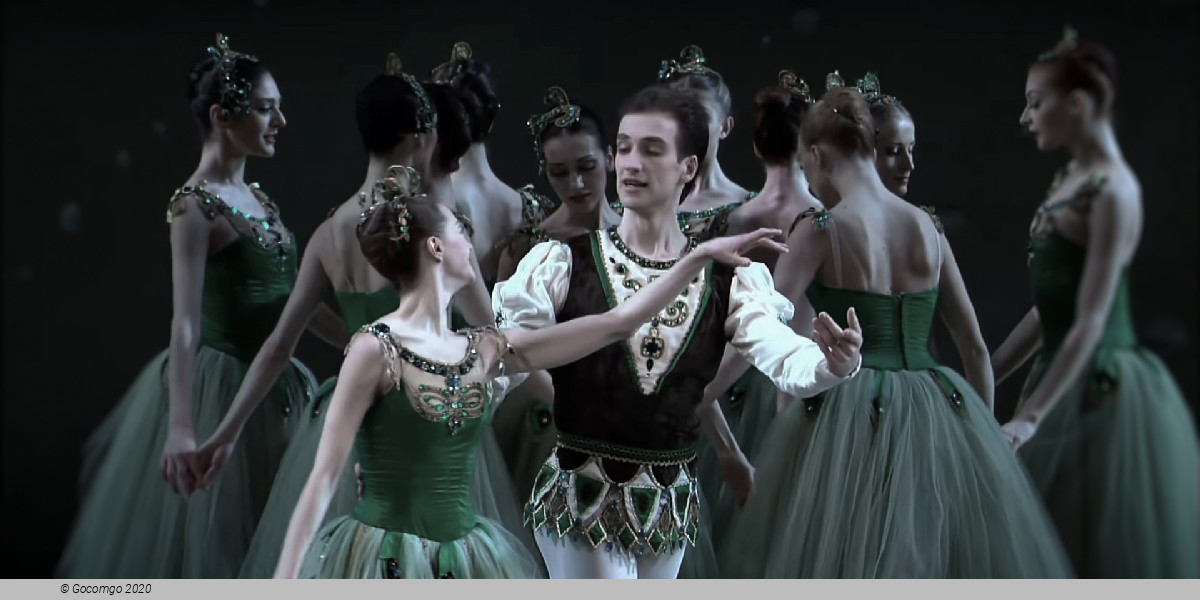
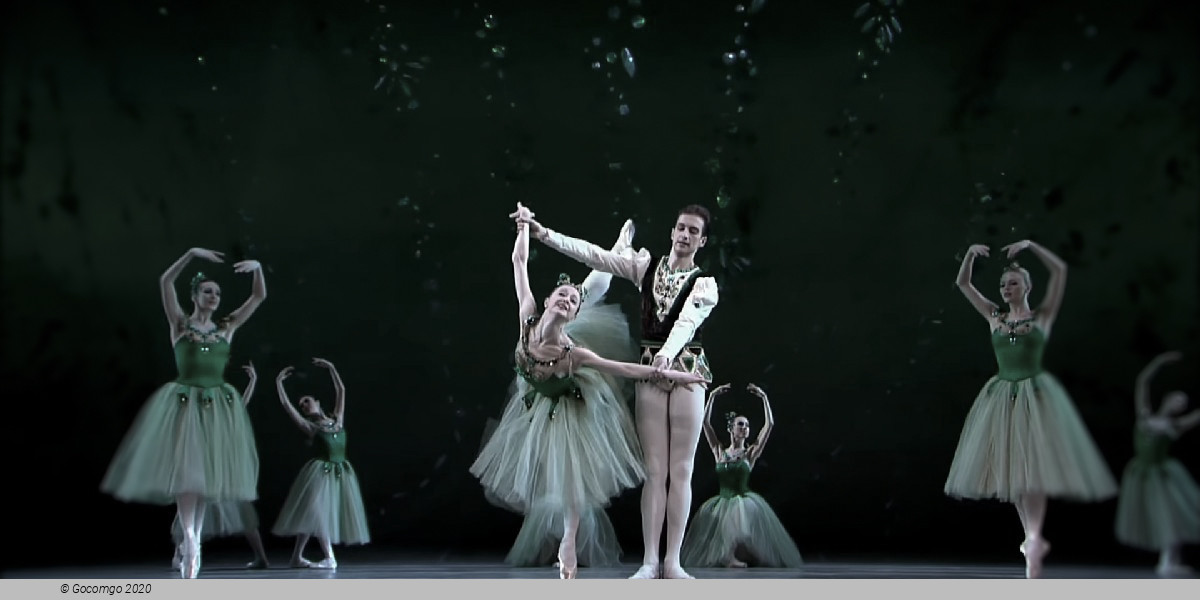
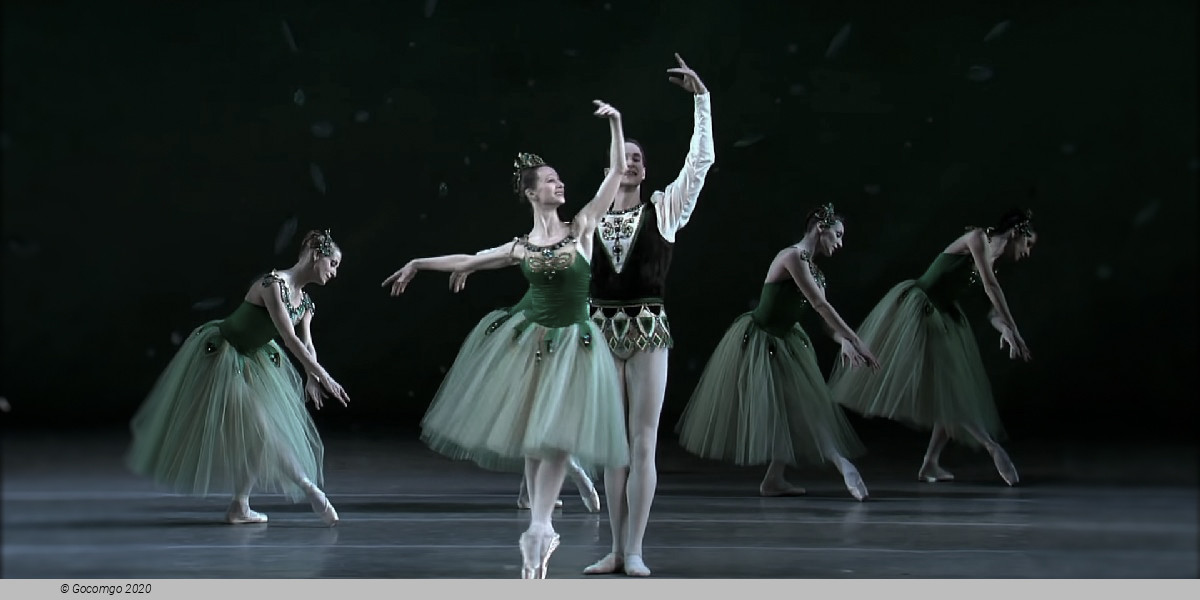
Emeralds floats at Fauré's mesmerizing pace, evoking an underwater setting with delicate and pliable movement.
The music for Emeralds, the first section of George Balanchine's three-part masterpiece Jewels, is taken from the respective concert suites Gabriel Fauré derived from the incidental music he composed in 1889 for Edmond Haraucourt's Shylock, a French verse adaptation of Shakespeare's Merchant of Venice, and in 1898 for Maurice Maeterlinck’s Pelléas et Mélisande. The order of the numbers used and their sources are as follows: "Prélude," "Fileuse," "Sicilienne"; (all from Pelléas et Mélisande), "Entr’acte," "Nocturne," "Epithalame," "Final"; (all from Shylock), and "La Mort de Mélisande" (from Pelléas et Mélisande). Balanchine added the "Nocturne" pas de deux and the final pas de sept in 1976.
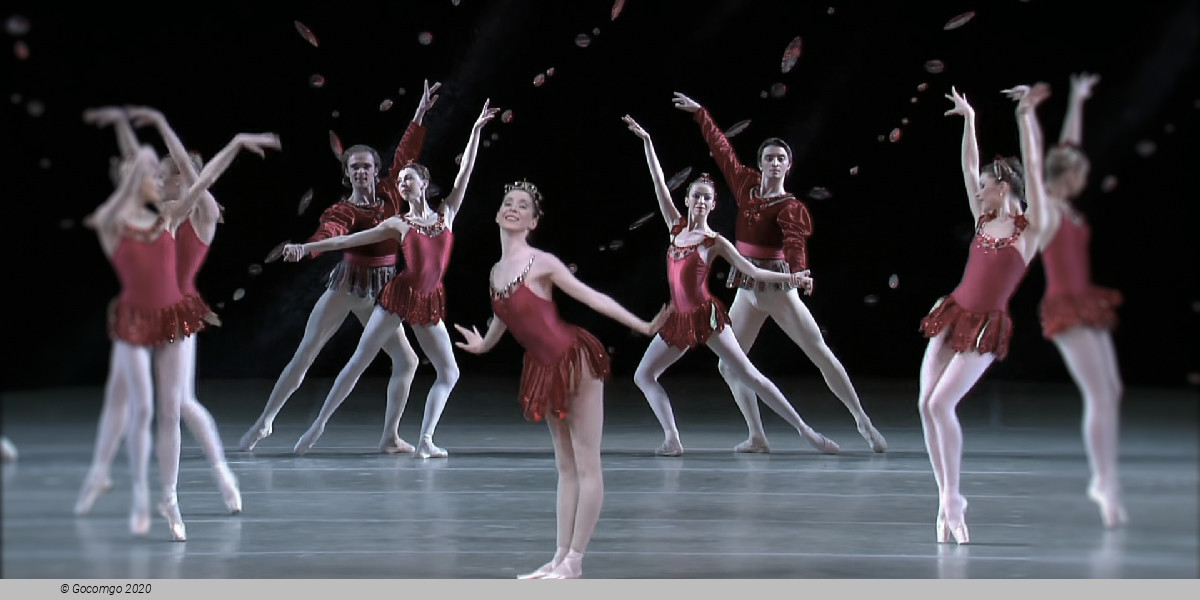
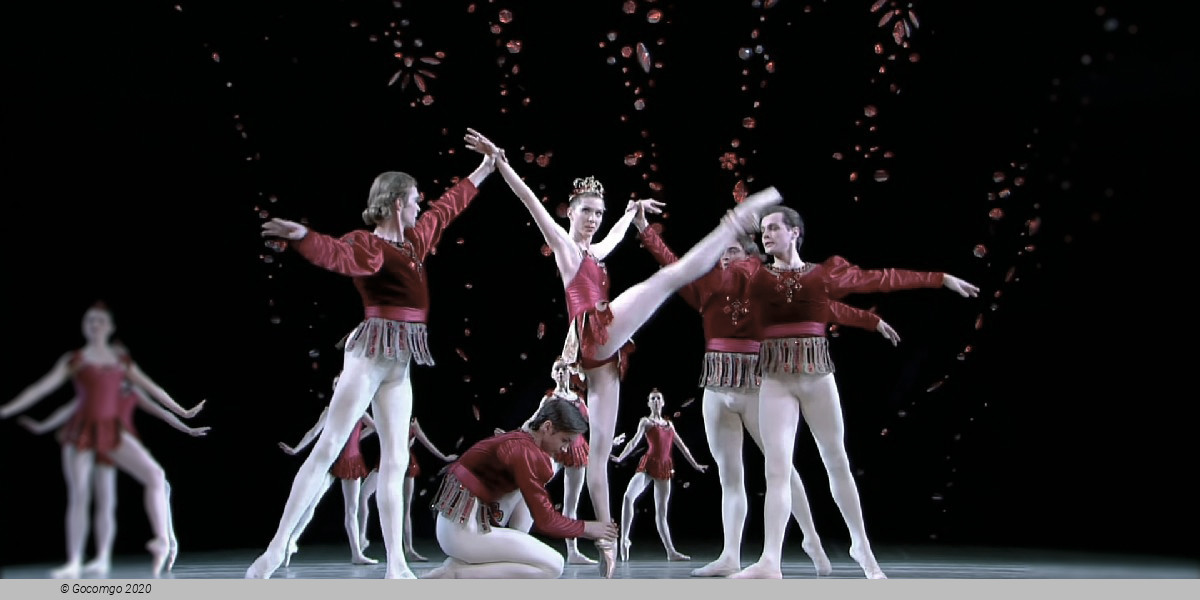
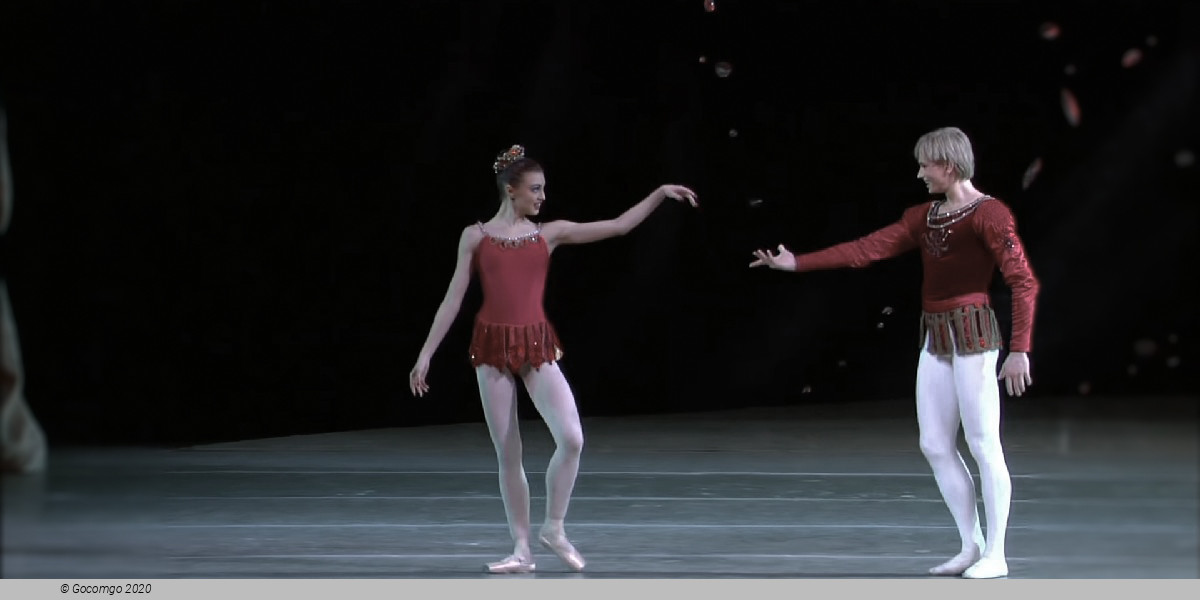
Rubies sends its dancers racing across the stage like lightning to Stravinsky’s jazz-inflected piano capriccio, emphasized by a sharp attack and sassy style.
Igor Stravinsky composed his three-movement Capriccio for Piano and Orchestra, the music for Rubies, in 1928-29. He intended it as a vehicle for his own appearances as a concert pianist and as something of a relief from his Concerto for Piano and Wind Instruments, which he had written five years before for the same purpose. The Capriccio is, in effect, a second piano concerto. Stravinsky said that as he wrote this score he had in mind Carl Maria von Weber, a composer he championed; in fact, he quotes Weber in the music. Another of Stravinsky’s enthusiasms that affects the Capriccio is the cimbalom. Figurations typical of this east European instrument are in evidence at various places in the solo piano part — in certain repeated notes and in the cadenza in the second movement, for example. Balanchine set the second movement as a pas de deux for the principal dancers, and they and a soloist dance with the corps de ballet in various combinations in the outer movements.
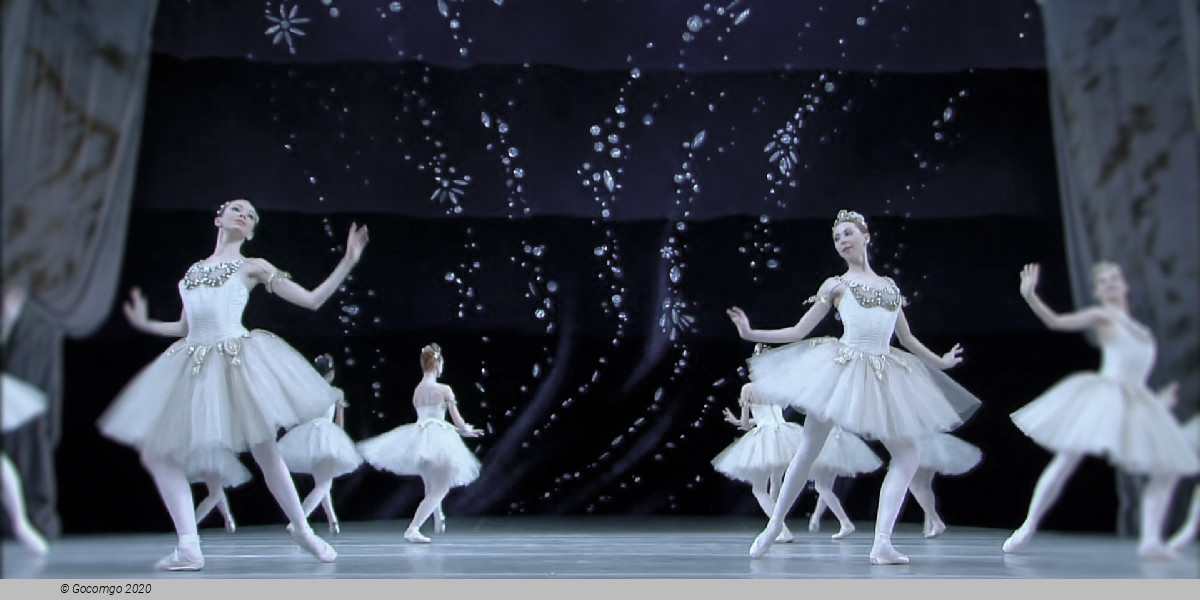
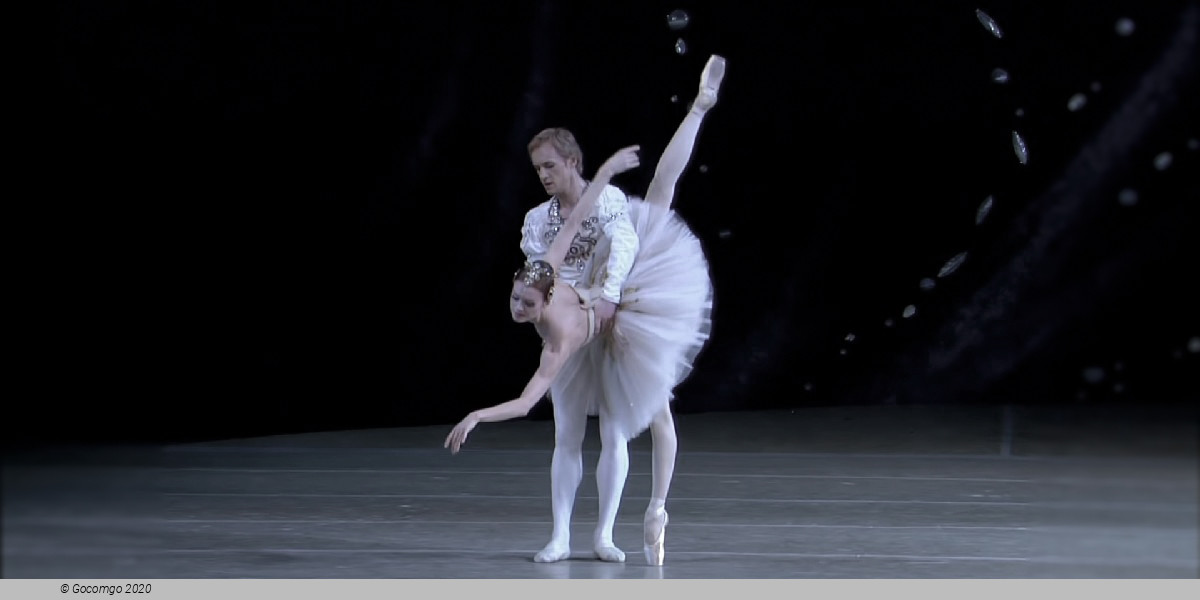
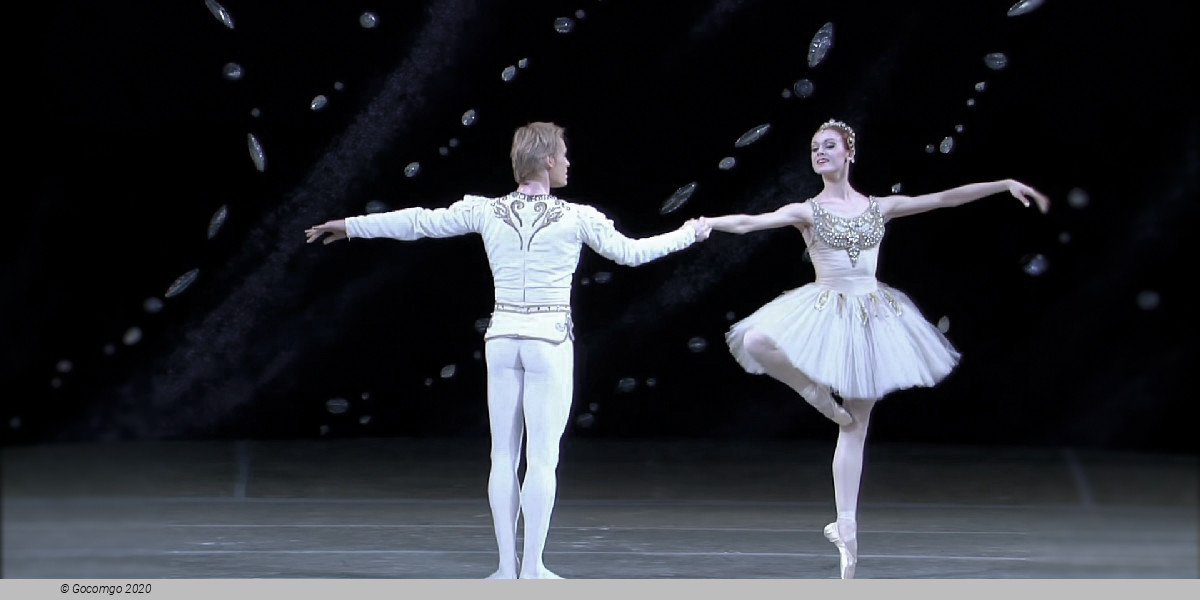
With its symphonic Tschaikovsky score, Diamonds venerates the regality of Balanchine's native Russia for an elegant and romantic experience.
Balanchine choreographed Diamonds, the third section of his three-part masterpiece Jewels, to Peter Ilyitch Tschaikovsky's Symphony No. 3 in D major, Op. 29. Tschaikovsky composed this work in 1875, just before starting to write Swan Lake. It is the only one of his six symphonies in a major key, and it is the only one to have five movements, with two scherzos setting off the central Andante elegiaco. Balanchine, however, decided to omit the symphony's first movement, deeming it unsuitable for dancing.
First performed on 13 April 1967 in New York, Jewels represents the first full-length “abstract ballet” by George Balanchine. The three parts of the ballet, „Emeralds“ (to music by Gabriel Fauré), „Rubies“ (to music by Igor Stravinsky) and „Diamonds“ (to music by Peter Ilich Tchaikovsky) are loosely connected by the idea of gems or jewels; a meeting with the jeweller Claude Arpels was a significant stimulus to Balanchine to create the work. Through the choice of the different composers, the ballet also forms a kind of geographical retrospective of the life of George Balanchine, who spent periods of time in France, the United States and Russia. Manuel Legris’ time as director is also closely connected with the work: after „Rubies“ (2010/2011) and „Diamonds“ (Pas de deux, 2017/2018), the complete work now appears on the programme as his period of office in Vienna draws to a close.
Jewels is a three-act ballet created for the New York City Ballet by co-founder and founding choreographer George Balanchine. It premièred on Thursday, 13 April 1967 at the New York State Theater, with sets designed by Peter Harvey and lighting by Ronald Bates.
Jewels has been called the first full-length abstract ballet. It has three related movements: Emeralds, Rubies, and Diamonds (usually separated by intermissions). It can also be seen as three separate ballets, linked by their jewel-colored costumes. Balanchine commented: "The ballet had nothing to do with jewels. The dancers are just dressed like jewels." Each of the three acts features the music of a different composer: Emeralds is set to the music of Gabriel Fauré, Rubies to the music of Igor Stravinsky and Diamonds to music by Pyotr Ilyich Tchaikovsky.
Costumes
The costumes were created by Balanchine's long-time collaborator Barbara Karinska, who created a distinct look for each different act: romantic, calf-length tulle skirts for Emeralds, fabric that flared at the hips of both men and women in Rubies, and the flat, classical tutu of the Imperial Russian Ballet for Diamonds. The costumes were such finely crafted pieces of art in their own right that some of them have been exhibited in museums and in theatre lobbies. Even Claude Arpels of Van Cleef & Arpels, who suggested the idea of a ballet based on gems to the choreographer, was impressed with her attention to finding the finest trim that would accurately represent the true glitter of genuine gemstones. Additionally, Karinska's painstaking work is credited with making the costumes last despite the sweat and strain of dancing in them. Her designs, needlework and choice in fabrics made them both durable and danceable, illustrating that the bodies inside the costumes were deserving of her utmost respect. When questioned about her attention to her almost extravagant detail she replied, "I sew for girls and boys who make my costumes dance; their bodies deserve my clothes."


 20 Lincoln Center Plaza