
New York City Ballet (David H. Koch Theater) 14 February 2025 - Balanchine + Wheeldon | GoComGo.com

Balanchine + Wheeldon

New York City Ballet (David H. Koch Theater), Main Stage, New York, USA
All photos (5)
Select date and time
7:30 PM

E-tickets: Print at home or at the box office of the event if so specified. You will find more information in your booking confirmation email.

You can only select the category, and not the exact seats.
If you order 2 or 3 tickets: your seats will be next to each other.
If you order 4 or more tickets: your seats will be next to each other, or, if this is not possible, we will provide a combination of groups of seats (at least in pairs, for example 2+2 or 2+3).

Important Info
Type: Ballet
City: New York, USA
Starts at: 19:30
Duration: 33min

E-tickets: Print at home or at the box office of the event if so specified. You will find more information in your booking confirmation email.

You can only select the category, and not the exact seats.
If you order 2 or 3 tickets: your seats will be next to each other.
If you order 4 or more tickets: your seats will be next to each other, or, if this is not possible, we will provide a combination of groups of seats (at least in pairs, for example 2+2 or 2+3).

Overview

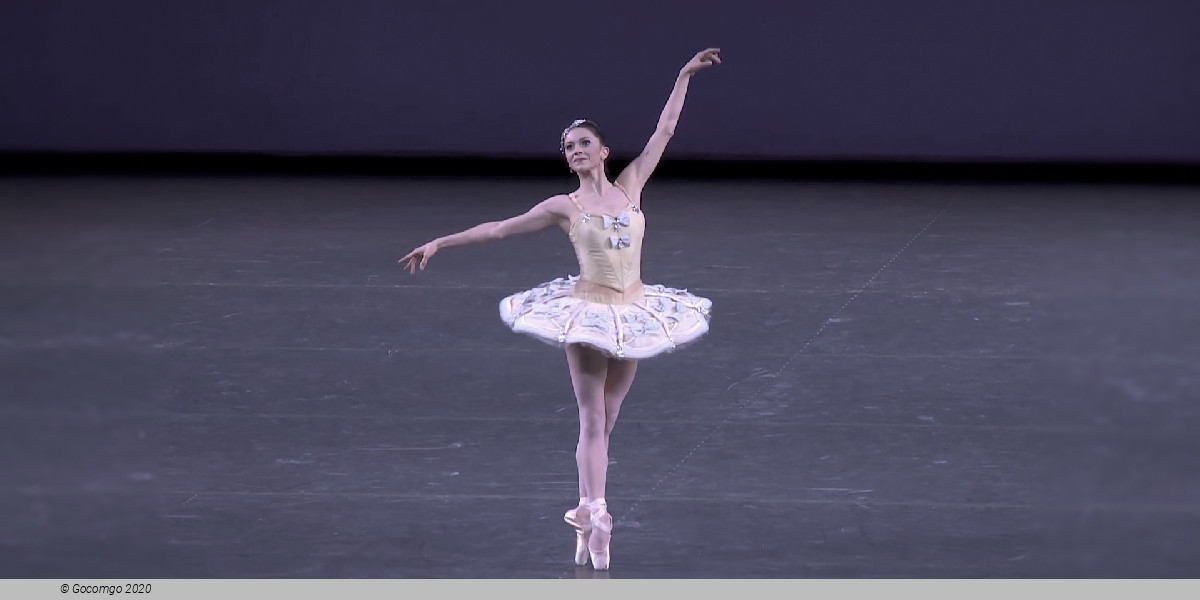
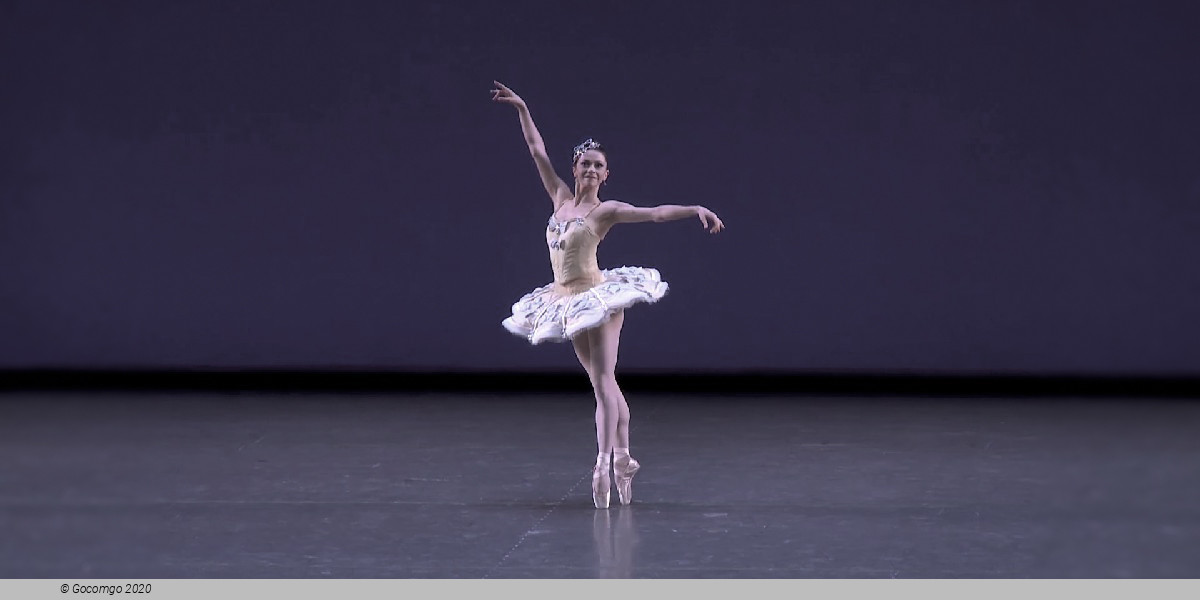
Two plotless Balanchine classics and a narrative ballet from Christopher Wheeldon comprise this program.

Divertimento No. 15 is a bravura series of variations marked by complex and captivating classical steps, while the ebullient Tschaikovsky Pas de Deux is a thrilling dance that showcases Balanchine’s ability to evoke a world of romance with just two dancers and less than ten minutes of music. Inspired by New York’s Museum of Natural History, Wheeldon’s Carnival of the Animals tells the tale of a young boy who dreams that his family and friends have all been transformed into fauna. Award-winning actor, and author of the delightful narration for this whimsical fantasy, John Lithgow returns as a guest artist to reprise the dual role of the Narrator/Elephant.

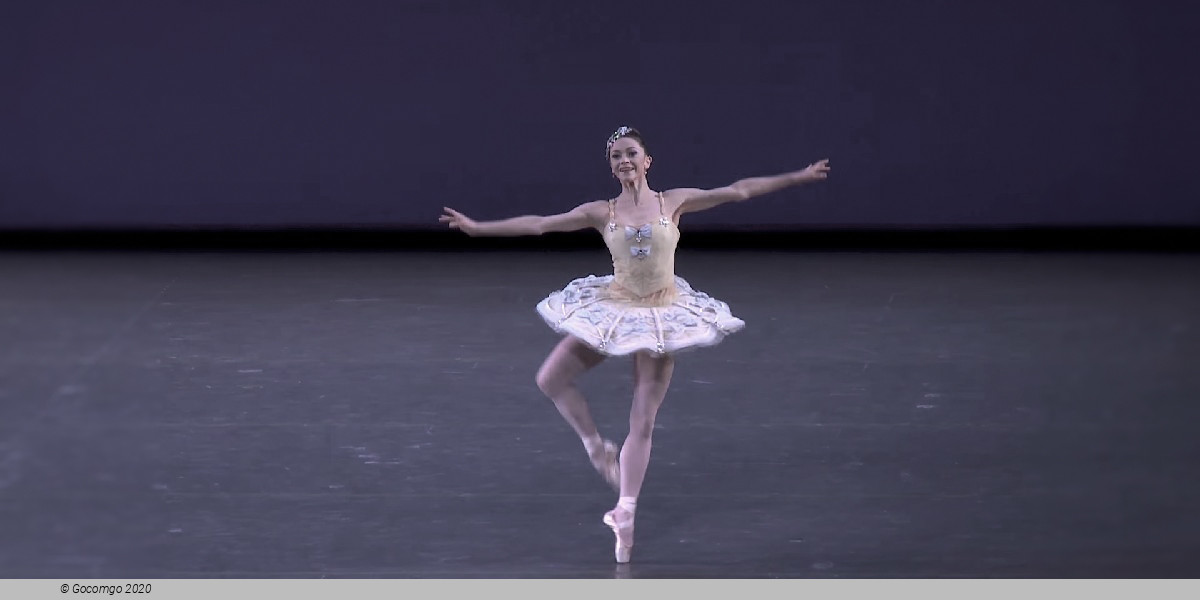
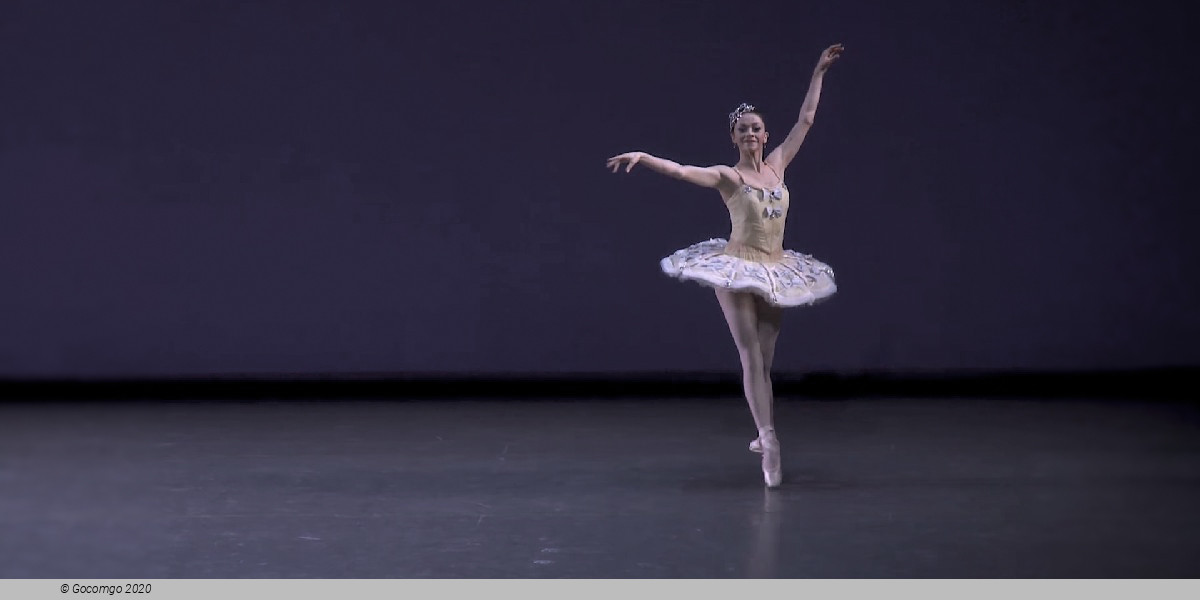
Balanchine considered Mozart’s Divertimento No. 15 the finest ever written, and to compliment the sparkling score, he created a work of prodigious ingenuity featuring a regal cast of dancers.

When asked to present a work at the Mozart Festival held at the American Shakespeare Theater in Stratford, Connecticut, in 1956, Balanchine originally planned to revive Caracole, an earlier work set to Mozart’s Divertimento No. 15. Instead, he created a new ballet that used many steps from the old, and he named the new ballet after the music, which he considered the finest divertimento ever written. The divertimento genre reached its zenith amid the parties and informal entertainments of 18th-century aristocratic life. Divertimentos did not have a fixed structure; the number of movements could vary from one to twelve, and they could be scored for one instrument or a chamber orchestra. Divertimento No. 15 is choreographed for eight principal dancers, five women and three men, with an ensemble of eight women. The ballet omits the second minuet and the andante from the sixth movement; a new cadenza for violin and viola by John Colman was added in the late 1960s.

A virtuosic ballet, Tschaikovsky Pas de Deux is brief, beautiful, and beloved – an adrenaline rush for both dancers and audiences.

For the original production of Swan Lake in Moscow in 1877, Tschaikovsky composed a pas de deux for Act III at the request of Anna Sobeshchanskaya, a Bolshoi prima ballerina who was one of the first dancers to perform the lead role. Since it was composed later than the rest of the music, it was not included in the published score and was therefore not available to Marius Petipa when he choreographed his famous Swan Lake in St. Petersburg, in 1895. In its place, Petipa moved some music from Act I to Act III, and it is this piece that is now well-known as the Black Swan pas de deux. Well over half a century later, the complete and original Swan Lake score was found, including an appendix with the lost pas de deux. Hearing of its historic discovery, George Balanchine asked for — and was granted — permission to use it for his own choreography. The result is an eight-minute display of ballet bravura and technique.

With delightful narration written by John Lithgow, Carnival of the Animals imagines a schoolboy’s night in the Museum of Natural History and the outlandish museum residents who come to life as versions of his teachers, classmates, and family members.

Created for New York City Ballet in 2003, Christopher Wheeldon’s Carnival of the Animals is set to Camille Saint-Saëns' humorous musical suite of 14 movements that the composer created for a private performance in 1886. Wheeldon’s ballet features a cast of nearly 50 dancers and tells the story of a young boy, Oliver Pendleton Percy the Third, who falls asleep in New York’s American Museum of Natural History, and dreams that the people in his life — family members, teachers, classmates — have all been transformed into animals. The production features a text written by the award-winning actor John Lithgow, who performed the narration in the original NYCB production. For the 2013 revival of Carnival of the Animals, the narration was performed by the stage and screen actor Jack Noseworthy.

History
Premiere of this production: 29 March 1960, City Center of Music and Drama, New York

Tchaikovsky Pas de Deux is a ballet choreographed by George Balanchine to a composition by Pyotr Ilyich Tchaikovsky originally intended for act 3 of Swan Lake (Op. 20, 1875–76). With costumes by Barbara Karinska and lighting by Jack Owen Brown, it was first presented by New York City Ballet at the City Center of Music and Drama, New York, on 29 March 1960. Robert Irving conducted the New York City Ballet Orchestra. The dancers were Violette Verdy and Conrad Ludlow.

Premiere of this production: 14 May 2003, New York State Theater

Carnival of the Animals is a ballet choreographed by Christopher Wheeldon to the Le Carnaval Des Animaux by Saint-Saëns, with narrations written by John Lithgow, costumes and sets designs by Jon Morrell and lighting designed by Natasha Katz. The ballet is about a little boy who falls asleep at the American Museum of Natural History and dreams of people he knew as animals.

Synopsis

Oliver Pendleton Percy III, a little boy, falls asleep during a visit to the American Museum of Natural History. In his dream, people he knows are transformed to animals, such as his great aunt who is also a former ballerina as the swan, the librarian as a kangaroo who dreams of being a mermaid, his teacher as the lion, and his worried parents as cuckoos. The narrator appears as the school nurse who transforms into a female elephant.

Venue Info

New York City Ballet (David H. Koch Theater) - New York
Location   20 Lincoln Center Plaza

The David H. Koch Theater is the major theater for ballet, modern, and other forms of dance, part of the Lincoln Center, at the intersection of Columbus Avenue and 63rd Street in the Lincoln Square neighborhood of Manhattan in New York City. Originally named the New York State Theater, the venue has been home to the New York City Ballet since its opening in 1964, the secondary venue for the American Ballet Theatre in the fall, and served as home to the New York City Opera from 1964 to 2011.

The New York State Theater was built with funds from the State of New York as part of New York State's cultural participation in the 1964–1965 World's Fair. The theater was designed by architects Philip Johnson and John Burgee, and opened on April 23, 1964. After the Fair, the State transferred ownership of the theater to the City of New York.

Along with the opera and ballet companies, another early tenant of the theater was the now defunct Music Theater of Lincoln Center whose president was composer Richard Rodgers. In the mid-1960s, the company produced fully staged revivals of classic Broadway musicals. These included The King and I; Carousel (with original star, John Raitt); Annie Get Your Gun (revised in 1966 by Irving Berlin for its original star, Ethel Merman); Show Boat; and South Pacific.

The theater seats 2,586 and features broad seating on the orchestra level, four main “Rings” (balconies), and a small Fifth Ring, faced with jewel-like lights and a large spherical chandelier in the center of the gold latticed ceiling.

The lobby areas of the theater feature many works of modern art, including pieces by Jasper Johns, Lee Bontecou, and Reuben Nakian.

Important Info
Type: Ballet
City: New York, USA
Starts at: 19:30
Duration: 33min
Top of page