The collaboration of Igor Stravinsky and George Balanchine ranks as one of the most fruitful pairings in 20th-century art. Danses Concertantes, the rare Balanchine-Stravinsky ballet not danced in leotards, is a playful work with tart suggestions of humor and bright costumes. Initially presented separately, Monumentum pro Gesualdo and Movements for Piano and Orchestra have been twinned for more than 50 years. Completing the program is the classic Stravinsky Violin Concerto, among the most celebrated of the many dances Balanchine created to the composer’s work.
Running time: 1 hr 47 min
The mercurial movements of this intoxicating ballet feature a series of witty pas de trois that are simultaneously fanciful and invigorating.
The title of Stravinsky's orchestral work makes clear his intention that it be used for dance performance. George Balanchine (1904–1983), his friend and colleague, took him at his word, creating two versions of a ballet set to his music: one for the Ballet Russe de Monte-Carlo in 1944 and one for the New York City Ballet in 1972.
Almost three decades later, Balanchine re-choreographed Danses concertantes for the New York City Ballet's Stravinsky Festival in 1972. The original designs for sets and costumes by Eugene Berman were re-created, and the structure of the piece was much the same, with beginning and ending parades, a sequence of pas de trois, and a pas de deux. The choreography was, however, largely different from the original, although it was similar in its neoclassical style. Only the fourth variation was similar in structure to the original pas de trois. The cast included Linda Yourth and John Clifford in the principal roles, supported by an ensemble of eight women and four men. The premiere was held on 20 June 1972 at the New York State Theater at Lincoln Center. Robert Irving conducted the orchestra. One critic noted that the legendary reputation of the 1944 work "promised somewhat more than [the 1972 work] delivered. Effects were made, but they quickly evaporated, generating a feeling of unease or inconclusiveness." A videorecording of a performance on 4 May 1989 by the New York City Ballet, with Darci Kistler and Robert LaFosse in the leading roles, is available in the Jerome Robbins Dance Division of the New York Public Library for the Performing Arts.
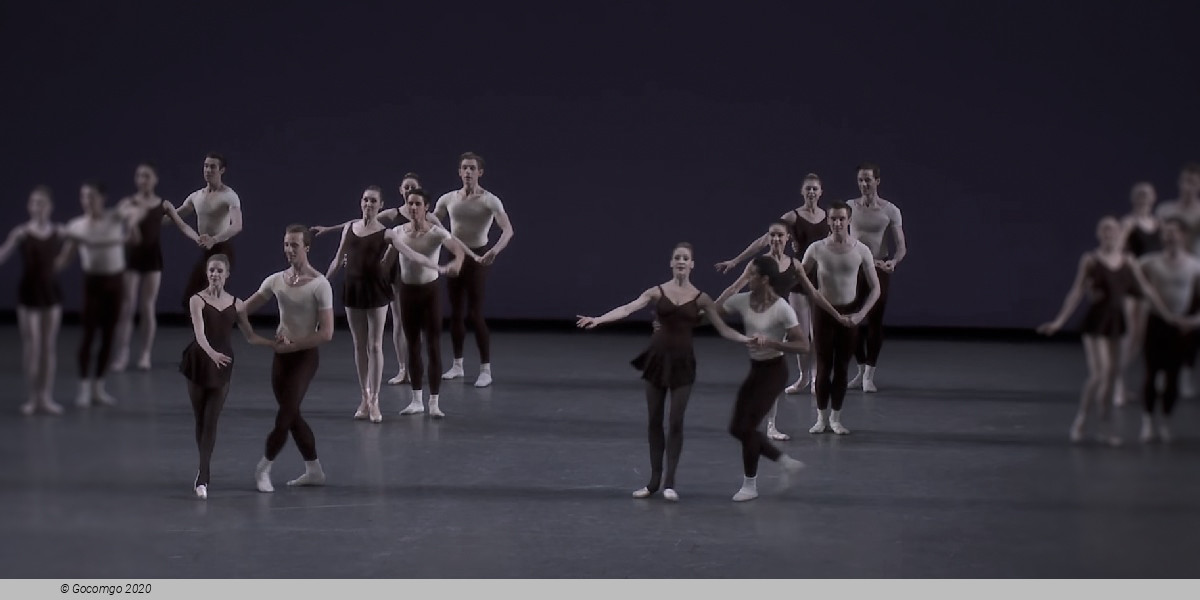
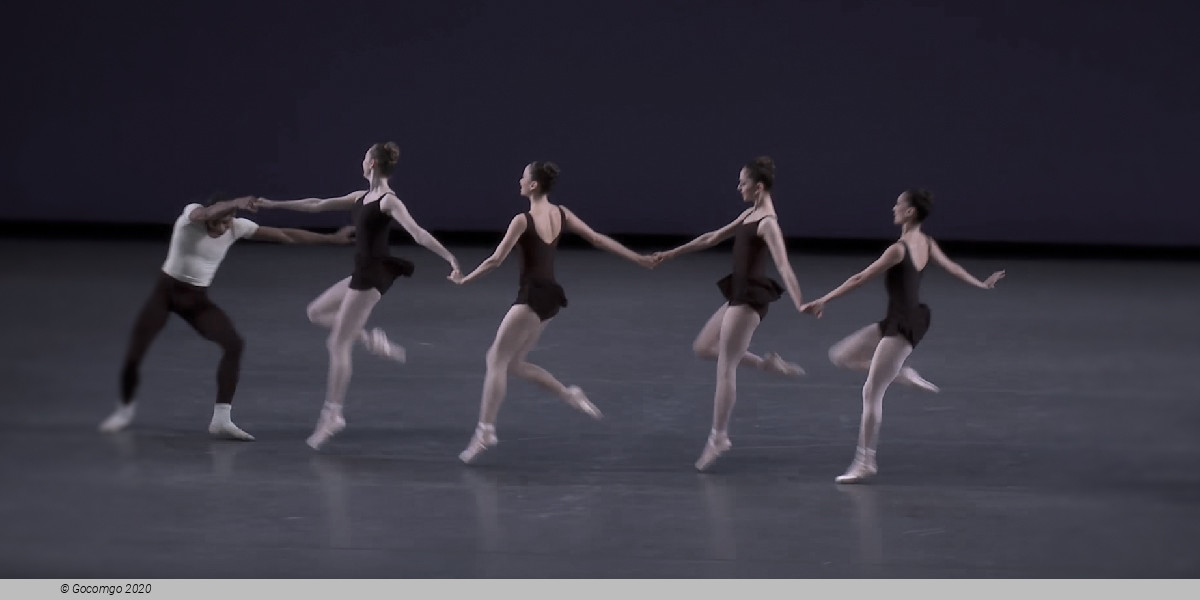
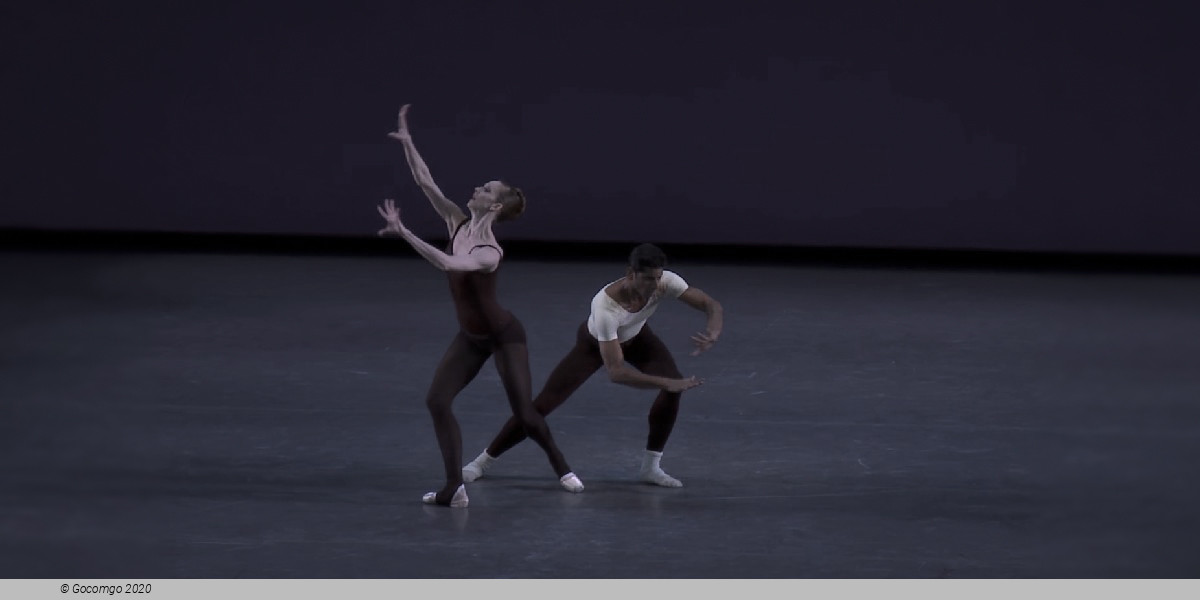
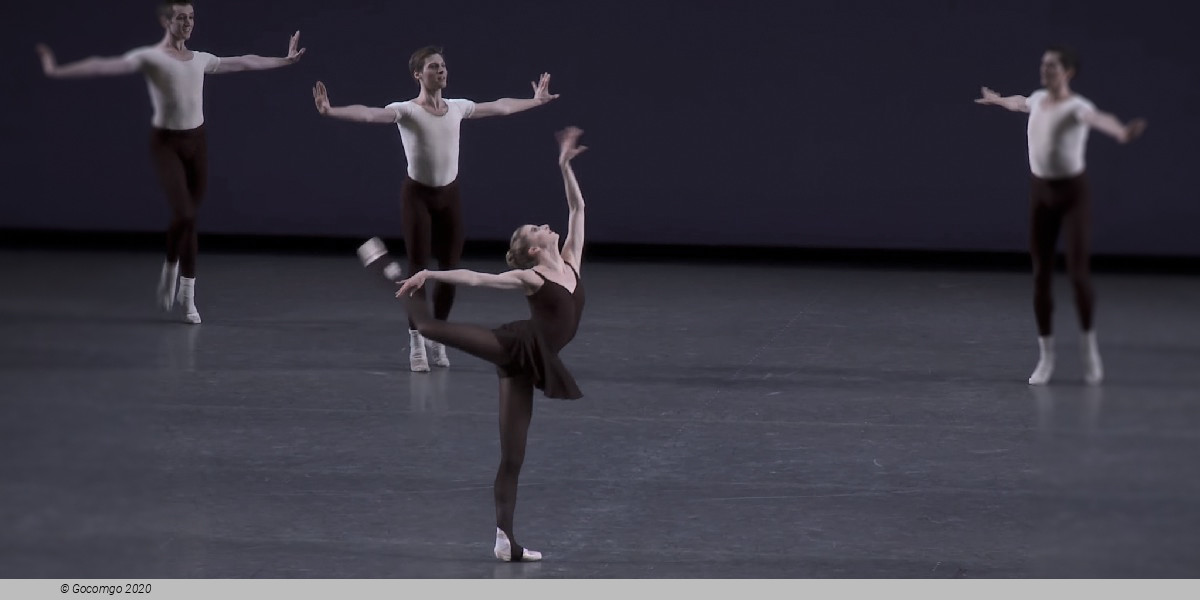
Known for its plush refinement, this streamlined leotard ballet arrests viewers with its formal beauty and simplicity.
The music for Monumentum pro Gesualdo was composed to honor the 400th birthday of Don Carlo Gesualdo, Prince of Venosa, (1560-1613), the 16th century’s most chromatic—and having been suspected of murder, most scandalous—composer. The score was first performed on September 27, 1960, at the 23rd Venice Music Festival at La Fenice, with Stravinsky conducting. Of the score, Stravinsky said, “My Monumentum was intended to commemorate the 400th anniversary of one of the most personal and original musicians ever born to my art.” Balanchine created this ballet in November 1960, less than two months after the score premiered.
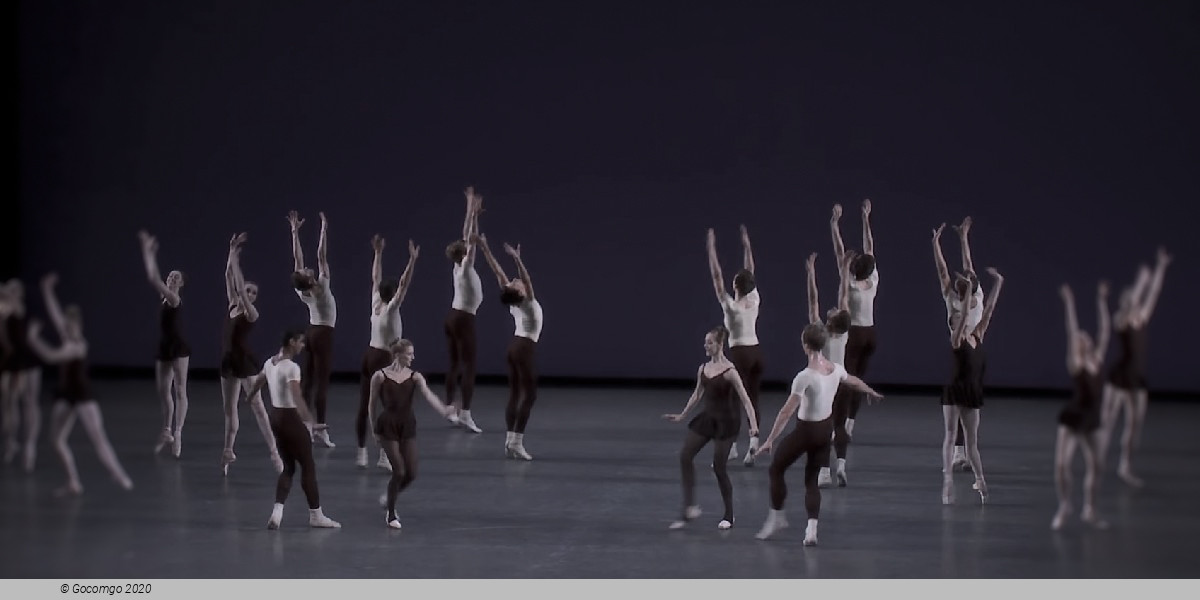
A signature leotard ballet, Movements for Piano and Orchestra's dissonance and electric currents sweep on a wave of exacting precision.
The score for this ballet, composed during 1958-59, uses the serial technique and is divided into five sections. As the title indicates it is for solo piano and orchestra, and Stravinsky told Balanchine that Movements for Piano and Orchestra might just as well have been called “Electric Currents.” Balanchine said of this intricate piece: “Nothing gave me greater pleasure afterwards than Stravinsky’s saying the performance ‘was like a tour of a building for which I had drawn the plans but never explored the result.” Although Monumentum Pro Gesualdo and Movements for Piano and Orchestra were choreographed separately, Balanchine eventually paired them for performance, an arrangement that has been retained since 1966.
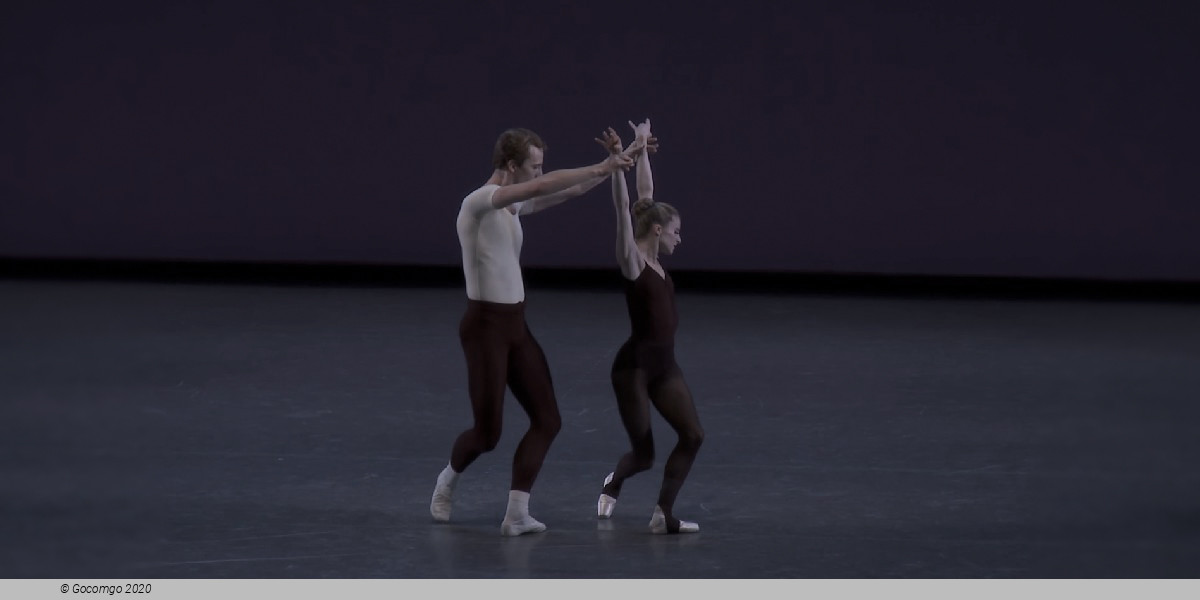
The outer sections of Stravinsky Violin Concerto are carefully woven masterpieces of symmetry that peel away to reveal two of Balanchine’s most ingenious and unique pas de deux.
Stravinsky Violin Concerto was composed in 1931 and at its premiere, conducted by Igor Stravinsky with Samuel Dushkin as the violin soloist. It was first used by Balanchine for Balustrade with the Original Ballet Russe in 1941. When Balanchine returned to this score three decades later, he could no longer remember his original choreography. “What I did then was for then,” he said, “and I wanted to do this music for our Stravinsky Festival.” Stravinsky Violin Concerto premiered on the opening night of the 1972 Stravinsky Festival, which also included the premiere of Balanchine’s Symphony in Three Movements.


 20 Lincoln Center Plaza