New York City Ballet (David H. Koch Theater) 20 May 2020 - All Balanchine III | GoComGo.com

All Balanchine III

New York City Ballet (David H. Koch Theater), New York, USA
All photos (9)
Select date and time
7:30 PM
Request for Tickets
Important Info
Type: Ballet
City: New York, USA
Starts at: 19:30
Duration:

E-tickets: Print at home or at the box office of the event if so specified. You will find more information in your booking confirmation email.

You can only select the category, and not the exact seats.
If you order 2 or 3 tickets: your seats will be next to each other.
If you order 4 or more tickets: your seats will be next to each other, or, if this is not possible, we will provide a combination of groups of seats (at least in pairs, for example 2+2 or 2+3).

Overview

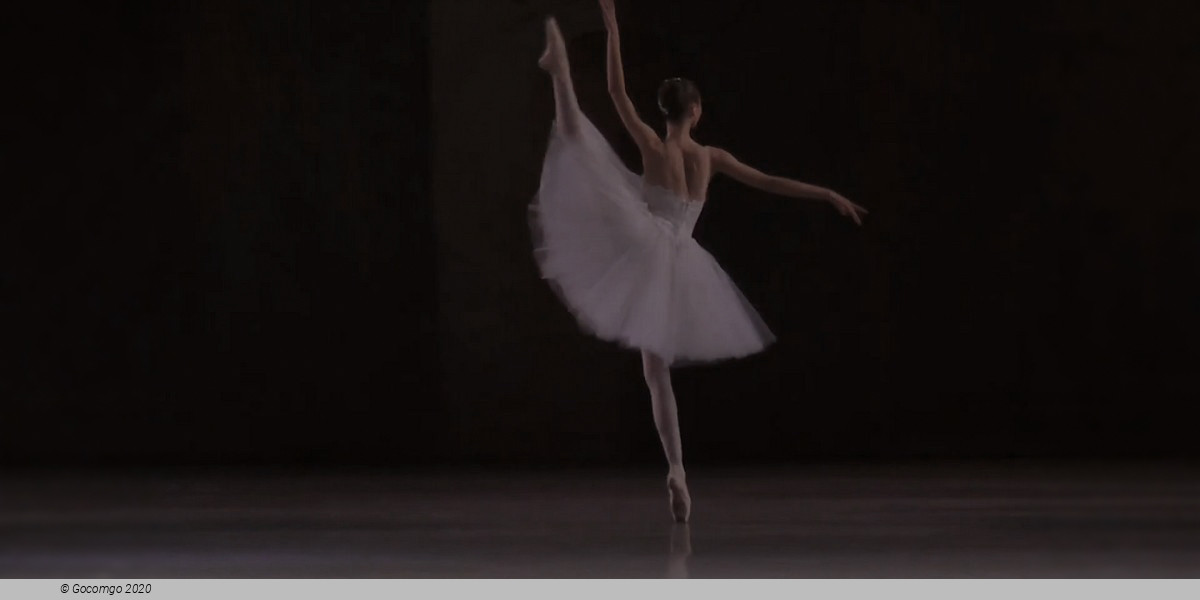
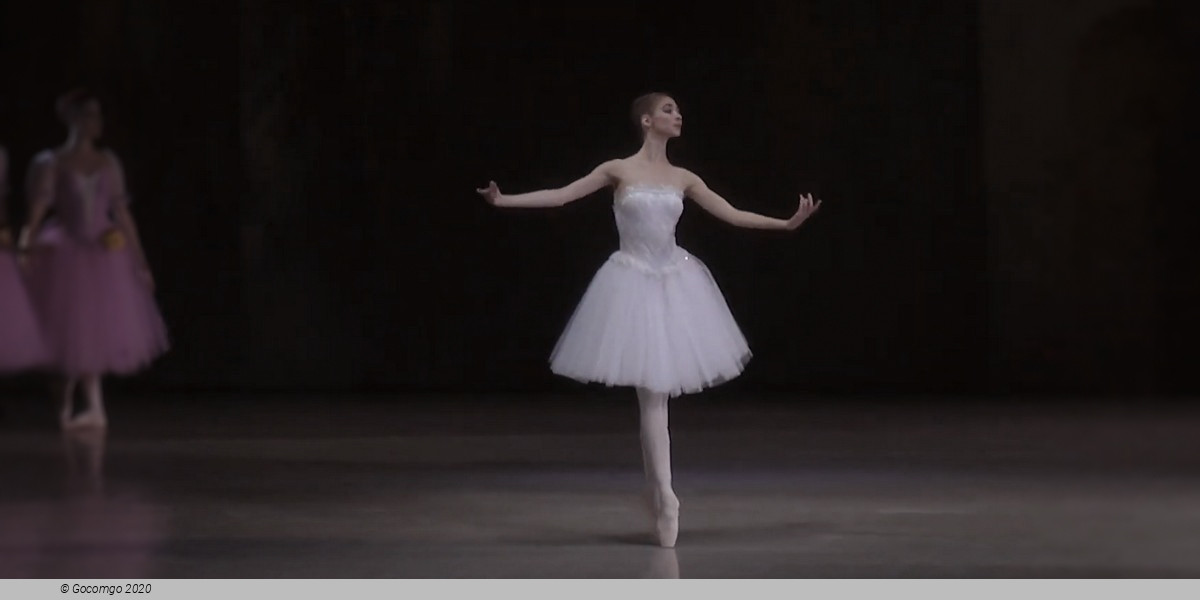
Music from three centuries illustrates the breadth of Balanchine’s tastes. The classic Concerto Barocco brings together the pristine beauty of Bach’s music with Balanchine’s own lush but spare neoclassical choreography. The 20th-century modernist Paul Hindemith provided the music for Kammermusik No. 2, a frisky dance featuring a rare all-male corps supporting two principal couples. And while waltzes were composed as early as the 16th Century, the dance in three-quarter time reached its apogee in 19th-century Vienna, inspiring Balanchine’s intoxicating celebration of its heyday.

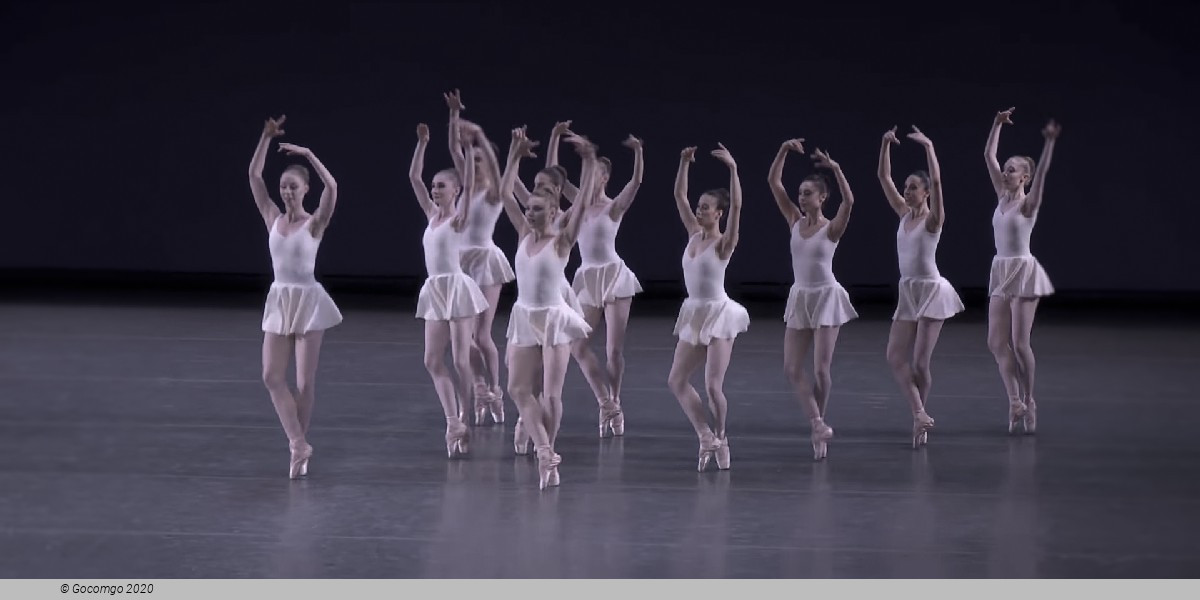
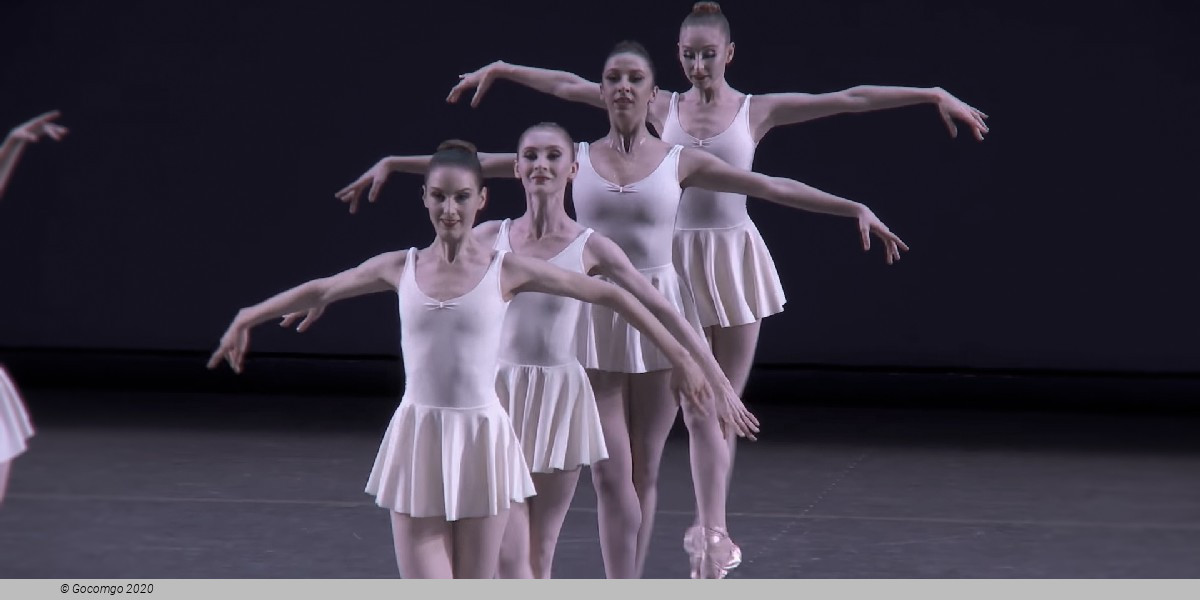
One of Balanchine’s greatest masterpieces, Concerto Barocco is music made visible as two elegant yet dynamic lead ballerinas each depict one of the instrumental soloists in a virtuosic double violin concerto.

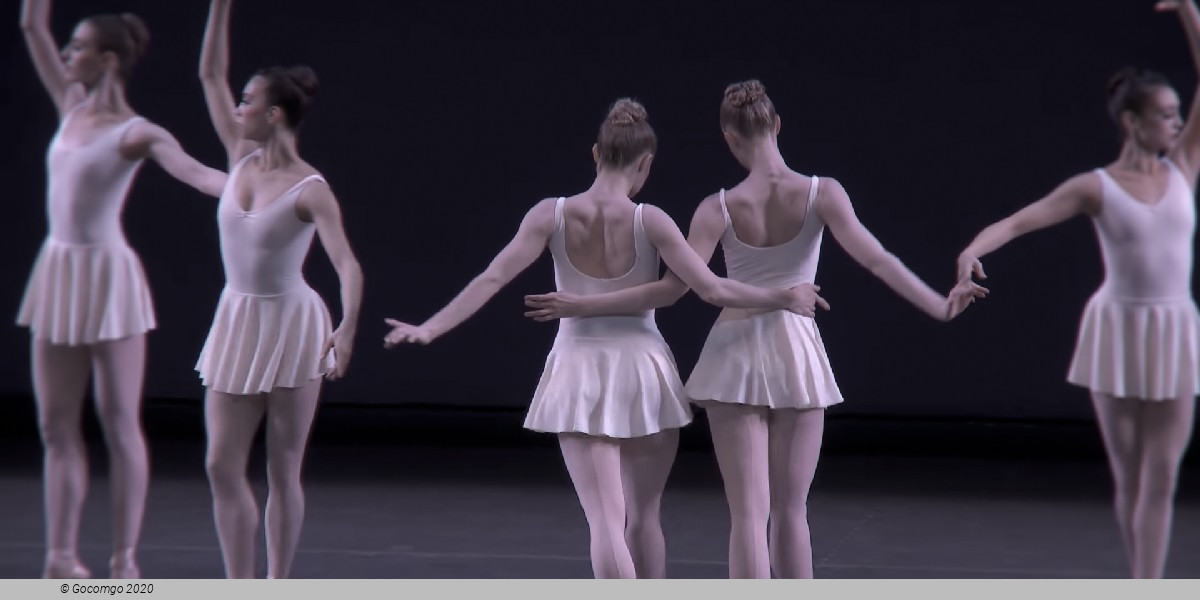
Concerto Barocco had its beginnings as a School of American Ballet exercise and was first performed for the Latin American tour of the American Ballet Caravan in 1941. When it entered the repertory of the Ballet Russe de Monte Carlo in 1945, the dancers were dressed in practice clothes, probably the first appearance of what has come to be regarded as the modern ballet costume pioneered by Balanchine.

Concerto Barocco was presented on the first performance of New York City Ballet in 1948, along with Balanchine's Orpheus and Symphony in C. It is considered the quintessential Balanchine ballet of its period, its manner entirely pure, its choreography no more, and no less, than an ideal response to its score, Bach's Double Violin Concerto in D Minor. About the ballet, the critic Clive Barnes wrote, "The three hallmarks of the American classic style are poetry, athleticism, and musicality, and these three graces are exquisitely exploited by Concerto Barocco."

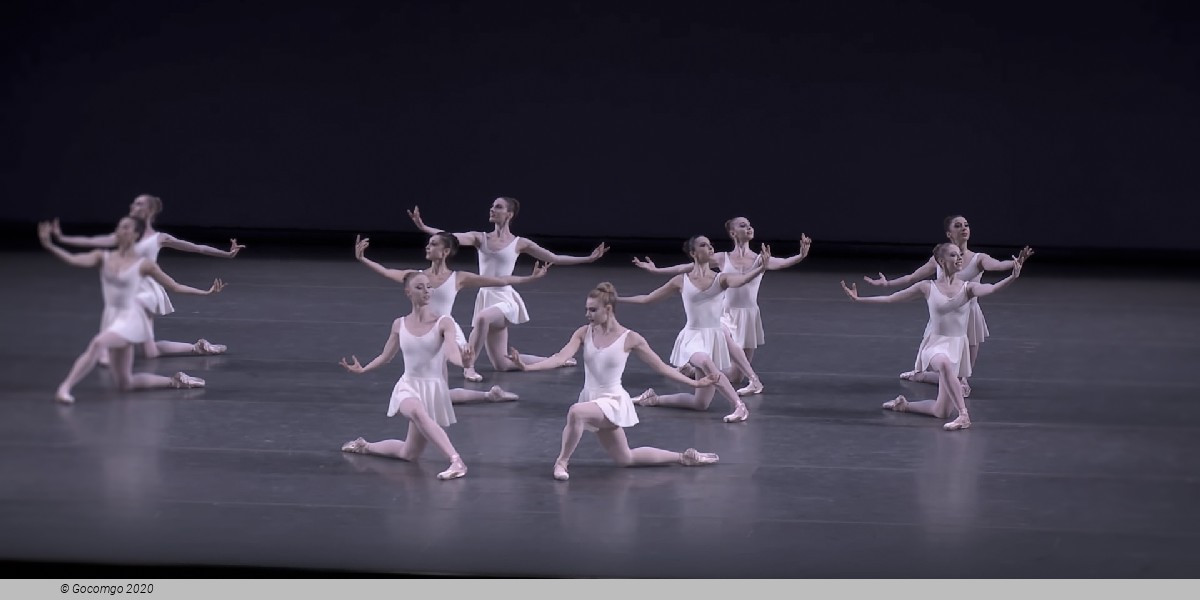
Balanchine said of this work: “If the dance designer sees in the development of classical dancing a counterpart in the development of music and has studied them both, he will derive continual inspiration from great scores.” In the first movement of the concerto, the two ballerinas personify the violins, while a corps of eight women accompany them.

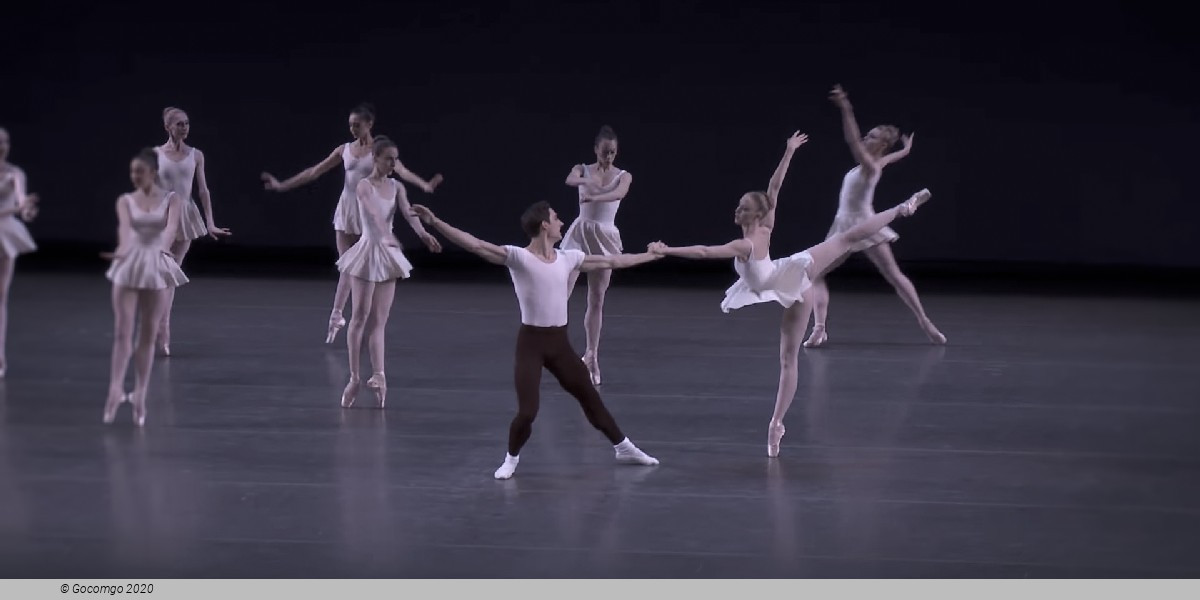
In the second movement, a largo, the male dancer joins the leading woman in a pas de deux. In the concluding allegro section, the entire ensemble expresses the syncopation and rhythmic vitality of Bach’s music.

Requiring great energy, speed, and precision, the striking choreography in Kammermusik No. 2 echoes the intricacies of its modernist score with jagged lines and stylized gestures.

A ballet requiring great energy, speed, and precision, Kammermusik No. 2 has a complex structure that echoes the music; one of the dancers in the original cast likened it to a computer. The ballet is performed by two couples and an eight-man ensemble. The men, with their jagged lines and stylized gestures, dance to the music of the orchestra. The soloists, dancing to the complex passages for piano, are in counterpoint to the ensemble. The score is one of seven kammermusik pieces — the word “kammermusik” is German for “chamber music” — written by Hindemith between 1923 and 1933, when the composer turned to a neoclassical style evoking the Baroque.

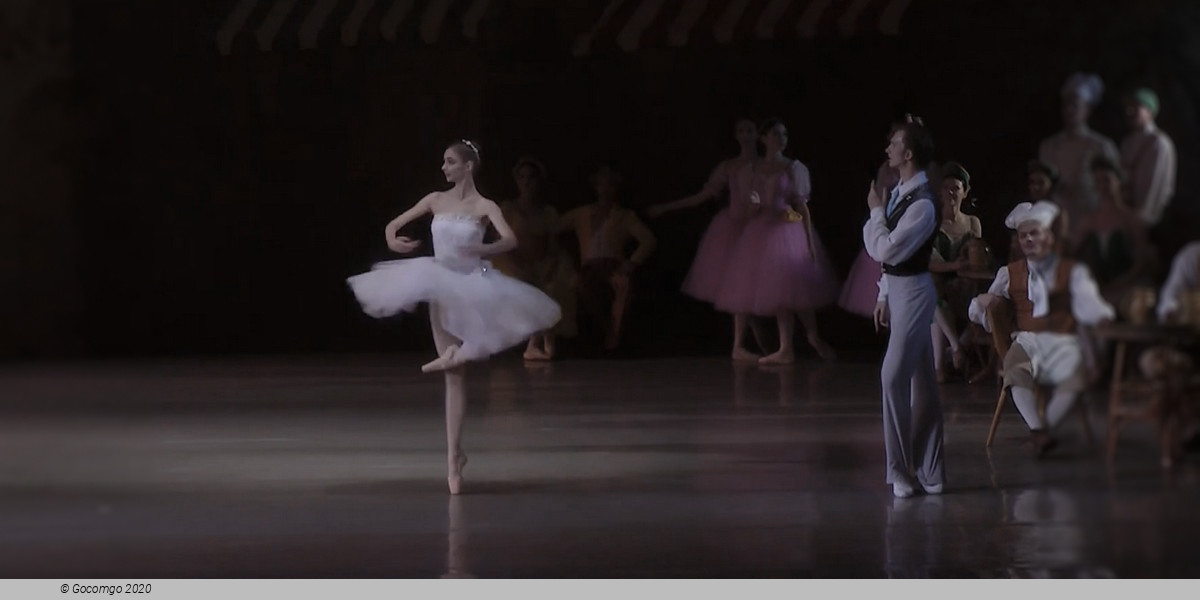
A work of monumental scale with a magnificent finale, the five-part Vienna Waltzes is set in moonlit Austrian forests and the regal ballrooms of Vienna.

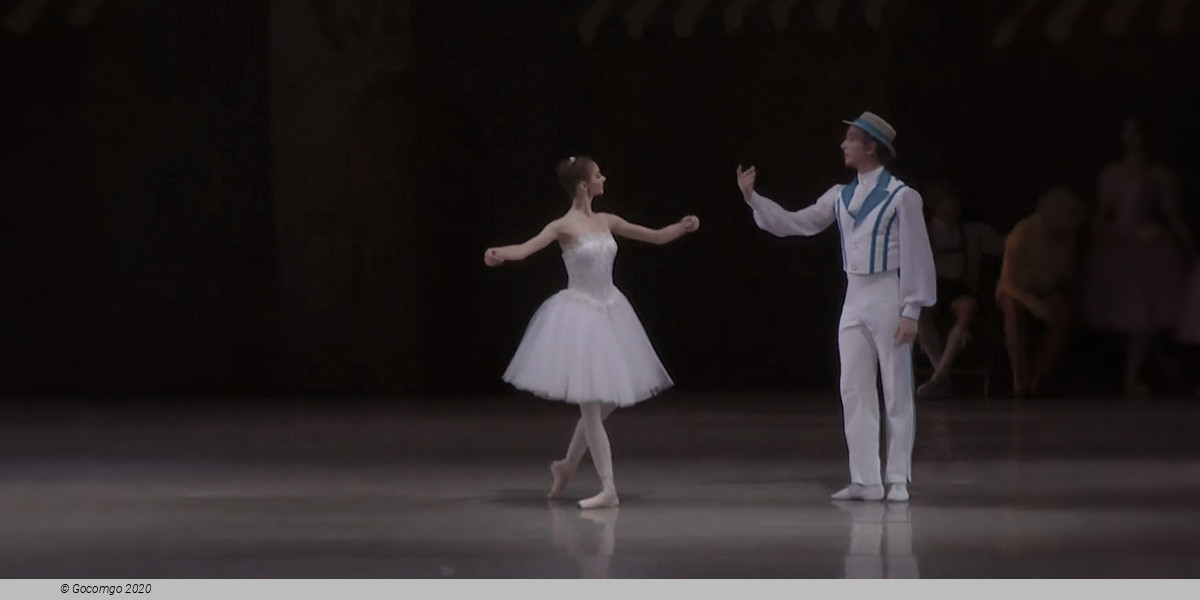
The waltz, which became popular in the late 1700s, was a dance form Balanchine revisited and explored often over his career, but never on as grand a scale as he did for the 1977 Vienna Waltzes. Through Rouben Ter-Arutunian’s evolving scenery, the ballet—Balanchine’s homage to an age of imperial grandeur—transforms from a sylvan forest glen to a dance hall to a glittering society café to, at last, a majestic mirrored ballroom. The music for each section of the ballet is associated with the gradual transformation of the waltz across society. The many elaborate costumes are the last that Barbara Karinska, NYCB’s principal costume-maker for many years and Balanchine’s longtime collaborator, created for New York City Ballet.


History
Premiere of this production: 27 June 1941, Teatro Municipal, Rio de Janeiro, Brazil

Concerto Barocco is a neoclassical ballet made for students at the School of American Ballet by George Balanchine, subsequently ballet master and co-founder of New York City Ballet, to Johann Sebastian Bach's Concerto in D minor for Two Violins, BWV 1043. After an open dress rehearsal on May 29, 1941, in the Little Theatre of Hunter College, New York, the official premiere took place June 27, 1941, at Teatro Municipal in Rio de Janeiro as part of American Ballet Caravan's South American tour.

Premiere of this production: 26 January 1978, New York State Theater, New York

A ballet requiring great energy, speed, and precision, Kammermusik No. 2 has a complex structure which echoes that of the music; one of the dancers in the original cast likens it to a computer. The ballet is performed by two couples and an eight-man ensemble. The men, with their jagged lines and stylized gestures, dance to the music of the orchestra. The soloists, dancing to the complex passages for piano, are in counterpoint to the ensemble. There are pas de deux for the couples, duets for the women, and a fast duet for the male soloists. The score is one of seven kammermusik pieces — the word “kammermusik” is German for “chamber music” — written by Hindemith between 1923 and 1933, when the composer turned to a neoclassical style evoking the Baroque.

Premiere of this production: 23 June 1977, New York State Theater, New York

Vienna Waltzes (at one time called Wiener Walzer) is a ballet made by New York City Ballet co-founder and founding choreographer George Balanchine to music by Johann Strauss, Jr., Franz Lehár, and Richard Strauss.

Venue Info

New York City Ballet (David H. Koch Theater) - New York
Location   20 Lincoln Center Plaza

The David H. Koch Theater is the major theater for ballet, modern, and other forms of dance, part of the Lincoln Center, at the intersection of Columbus Avenue and 63rd Street in the Lincoln Square neighborhood of Manhattan in New York City. Originally named the New York State Theater, the venue has been home to the New York City Ballet since its opening in 1964, the secondary venue for the American Ballet Theatre in the fall, and served as home to the New York City Opera from 1964 to 2011.

The New York State Theater was built with funds from the State of New York as part of New York State's cultural participation in the 1964–1965 World's Fair. The theater was designed by architects Philip Johnson and John Burgee, and opened on April 23, 1964. After the Fair, the State transferred ownership of the theater to the City of New York.

Along with the opera and ballet companies, another early tenant of the theater was the now defunct Music Theater of Lincoln Center whose president was composer Richard Rodgers. In the mid-1960s, the company produced fully staged revivals of classic Broadway musicals. These included The King and I; Carousel (with original star, John Raitt); Annie Get Your Gun (revised in 1966 by Irving Berlin for its original star, Ethel Merman); Show Boat; and South Pacific.

The theater seats 2,586 and features broad seating on the orchestra level, four main “Rings” (balconies), and a small Fifth Ring, faced with jewel-like lights and a large spherical chandelier in the center of the gold latticed ceiling.

The lobby areas of the theater feature many works of modern art, including pieces by Jasper Johns, Lee Bontecou, and Reuben Nakian.

Important Info
Type: Ballet
City: New York, USA
Starts at: 19:30
Duration:
Top of page