Neoclassical brilliance rooted in antiquity
The wit and humor of Stravinsky’s Suite No. 2 for Small Orchestra, arrangements the composer made of his piano exercises for young musicians, belie the complexity and innovation that would come to characterize his work. Balanchine’s expert ability to choreograph in counterpoint to Stravinsky’s dynamic inventiveness is particularly evident in this now-classic trilogy of ballets inspired by Greek mythology and concepts. The oldest of their collaborations, Apollo presents the young god’s ascension with streamlined simplicity; Orpheus recounts the doomed hero’s tale of descent into the Underworld to retrieve his beloved Eurydice; and Agonpersonifies the Greek word for ‘struggle’ with its ever-contemporary athletic competitiveness.
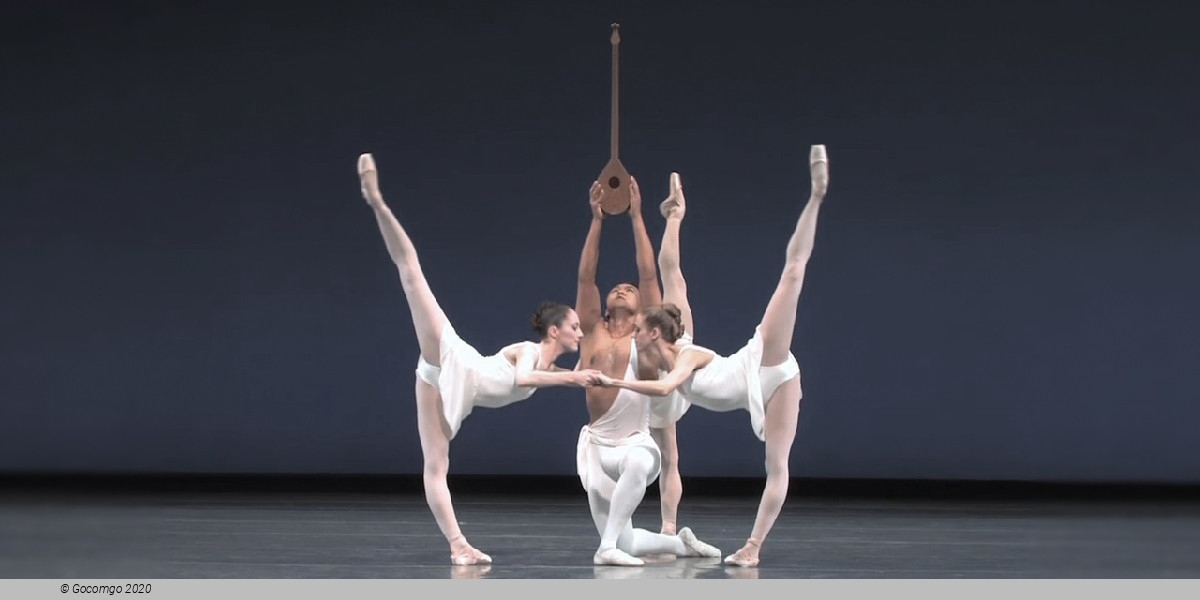
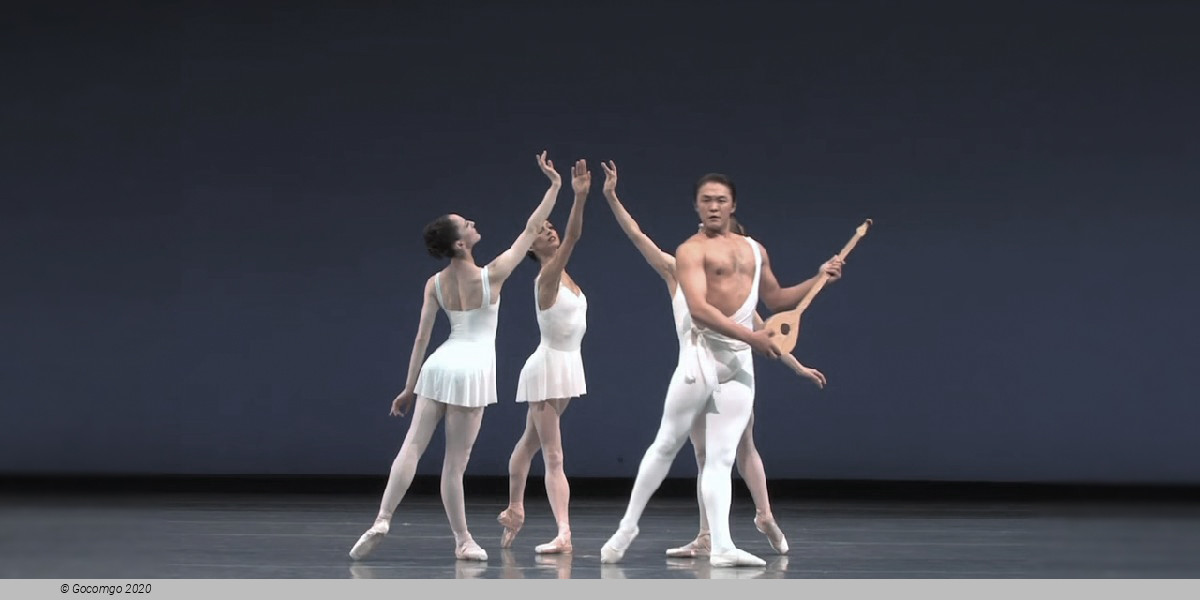
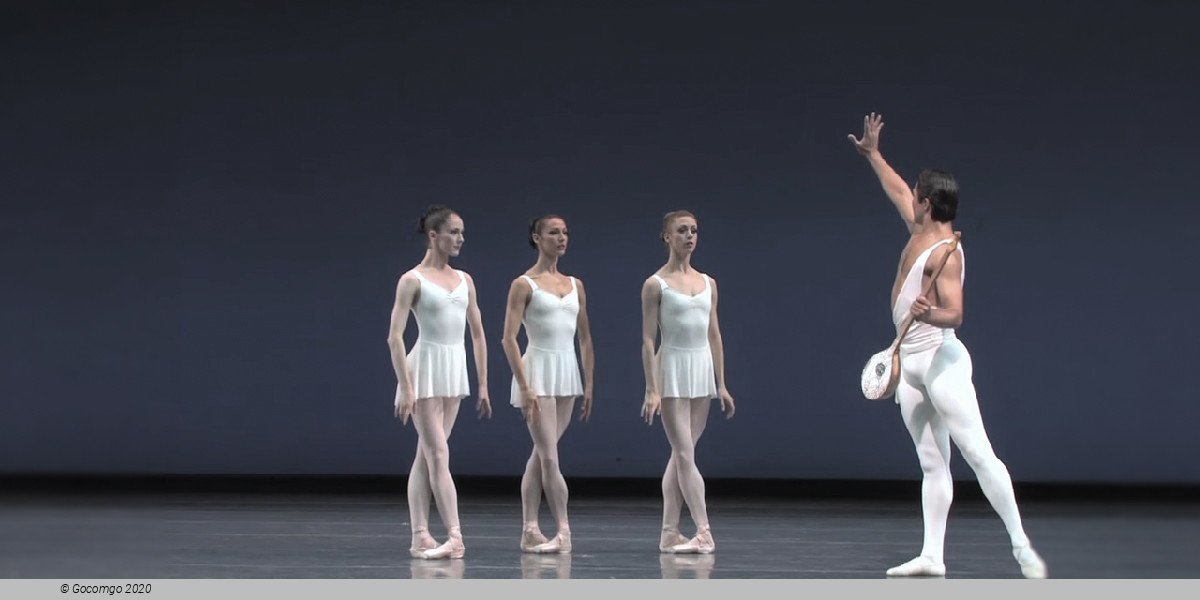
Balanchine's first collaboration with Stravinsky and one of his earliest international successes, Apollo presents the young god as he is ushered into adulthood by the muses of poetry, mime, and dance.
"Apollo I look back on as the turning point of my life. In its discipline and restraint, in its sustained oneness of tone and feeling, the score was a revelation. It seemed to tell me that I could dare not to use everything, that I, too, could eliminate."
George Balanchine
Apollo is the oldest Balanchine ballet in New York City Ballet’s repertory. Created for Serge Diaghilev’s Ballets Russes, and originally titled Apollon Musagète, the ballet premiered in Paris in 1928 and was Balanchine’s first major collaboration with composer Igor Stravinsky. With this dramatic and powerful ballet, which created a sensation when it was first performed, the 24-year-old Balanchine achieved international recognition. The 1928 premiere of the ballet featured sets and costumes by the French painter André Bauchant and in 1929 new costumes were created by Coco Chanel. The ballet was first performed by New York City Ballet in 1951, and during his lifetime Balanchine continued to revise the work, eliminating sets, costumes, and much of the ballet’s narrative content.y Ballet revival, actor Jack Noseworthy served as the narrator.
Scenery and costumes for Balanchine's production were by French artist André Bauchant. Coco Chanel provided new costumes in 1929. Apollo wore a reworked toga with a diagonal cut, a belt, and laced up. The Muses wore a traditional tutus. The decoration was baroque: two large sets, with some rocks and Apollo's chariot. In the dance a certain academicism resurfaced in the stretching out and upward leaping of the body, but the Balanchine bent the angles of the arms and hands to define instead the genre of neoclassical ballet.
An iconic Balanchine work that was part of NYCB’s inaugural performance in 1948, this highly-stylized, narrative ballet depicts Orpheus’ journey to rescue his beloved Eurydice from the underworld.
Orpheus occupies a singular place in the history of New York City Ballet. The score was commissioned from Stravinsky by Ballet Society and the composer worked in close collaboration with Balanchine on the ballet – a contemporary treatment of the story of Orpheus, the musician-poet of Greek myth, and his struggle to rescue his wife Eurydice from Hades. It was a performance of this work that led Morton Baum, chairman of the executive committee of the City Center of Music and Drama, to invite Ballet Society to become its permanent ballet company, under the new name, New York City Ballet. Orpheus was presented with Concerto Barocco and Symphony in C at the New York City Ballet’s first performance on October 11, 1948.
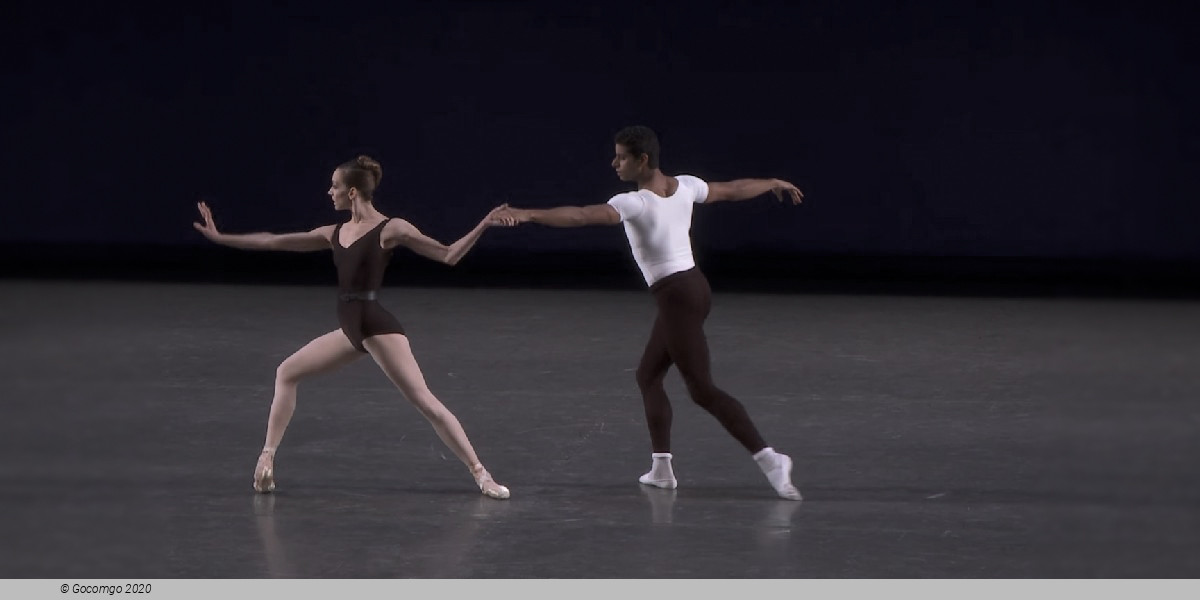
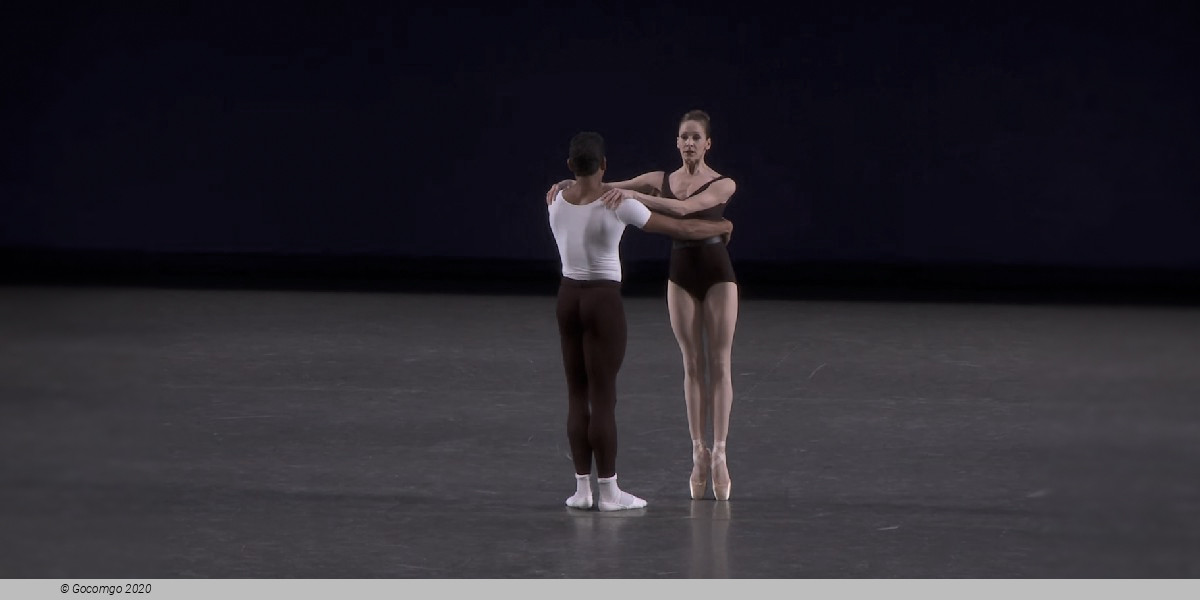
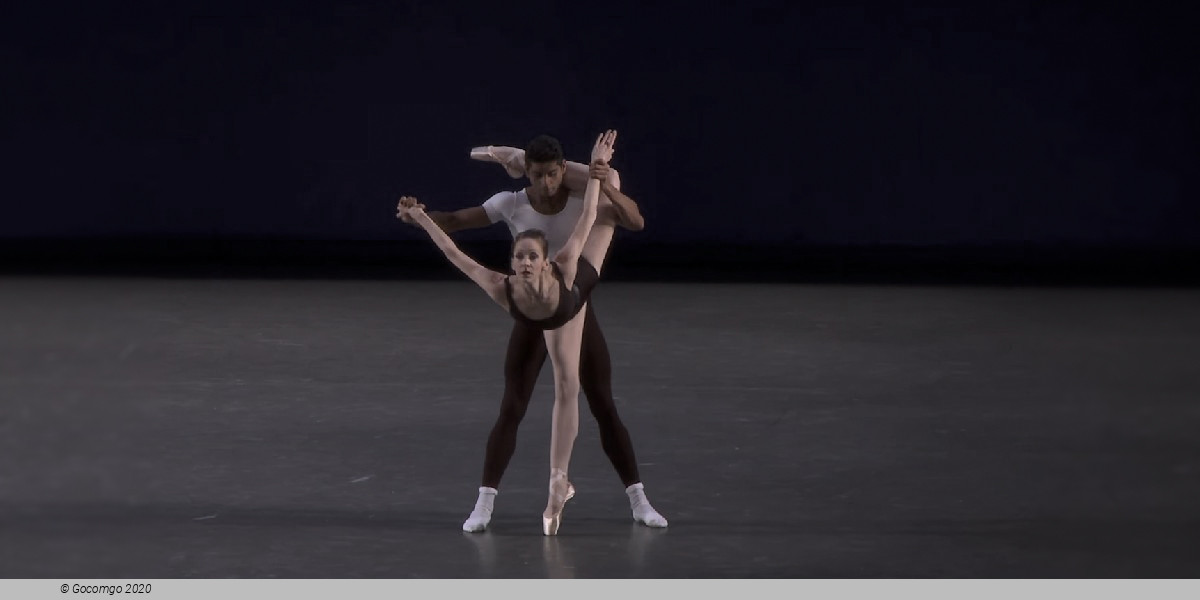
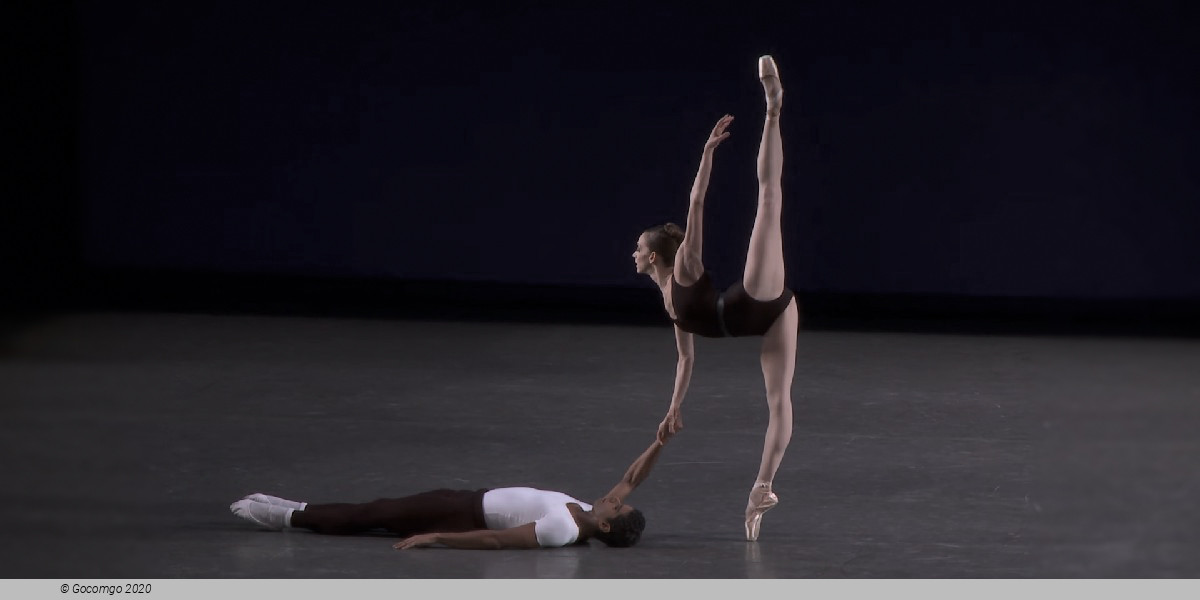
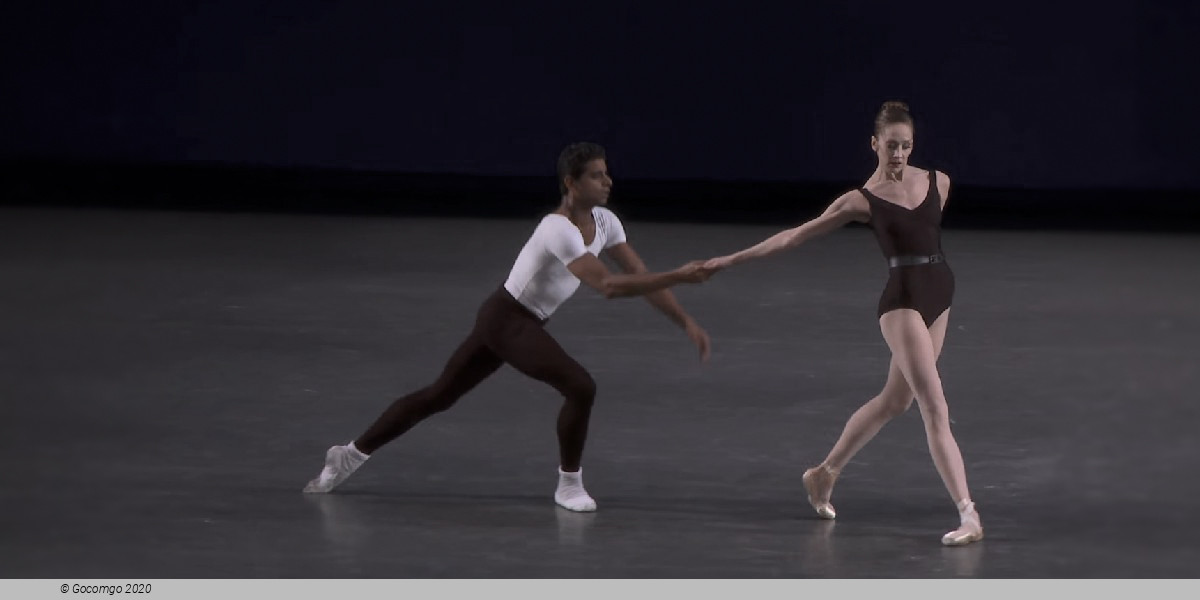
The apex of Balanchine’s collaborations with Igor Stravinsky, Agon is an intense masterpiece and signature NYCB work, ever contemporary in its athletic competitiveness.
The Agon pieces were all modeled after examples in a French dance manual of the mid-17th Century. Agon ("The Contest") is not a mythical subject piece to complete a trilogy with Apollo and Orpheus. In fact, it has no musical or choreographic subject beyond the new interpretation of the venerable dances that are its pretext. It was even conceived without provision for scenery and was independent, at least in Stravinsky’s mind, of décor, period, and style.



 20 Lincoln Center Plaza