Contrasting narratives usher in an ebullient outpouring of classical technique.
Apollo, a dance depicting the Greek god’s interaction with his muses, is the oldest Balanchine ballet in the repertory, created in 1928 in Paris. The dance marked the first significant collaboration between the choreographer and Igor Stravinsky, arguably his greatest musical muse. La Sonnambula, with its atmospheric sets and costumes, spins forth a mysterious dramatic world in its depiction of the sleepwalker of the title and the poet whom she bewitches, with tragic consequences. Completing the program is Tschaikovsky Piano Concerto No. 2, one of Balanchine’s most resplendently beautiful homages to the grand classical tradition.
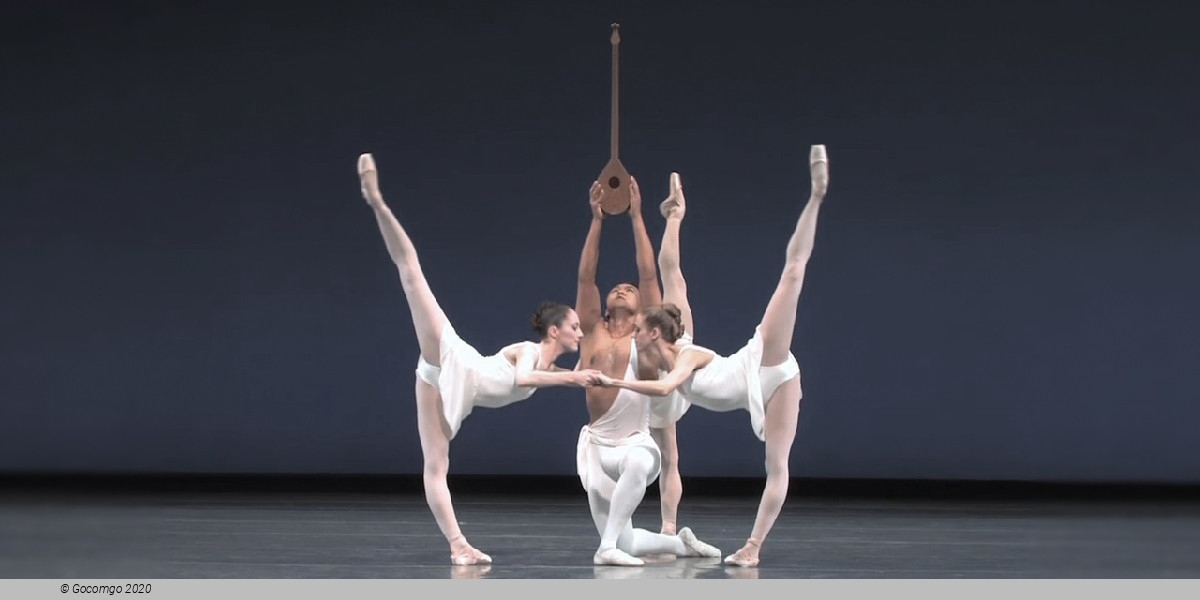
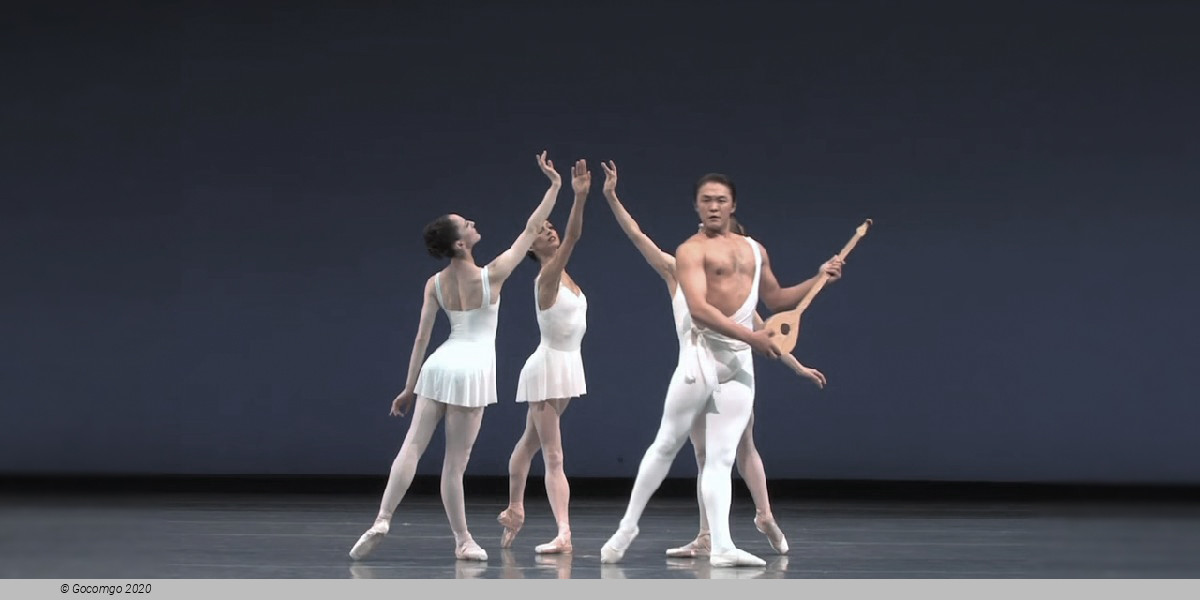
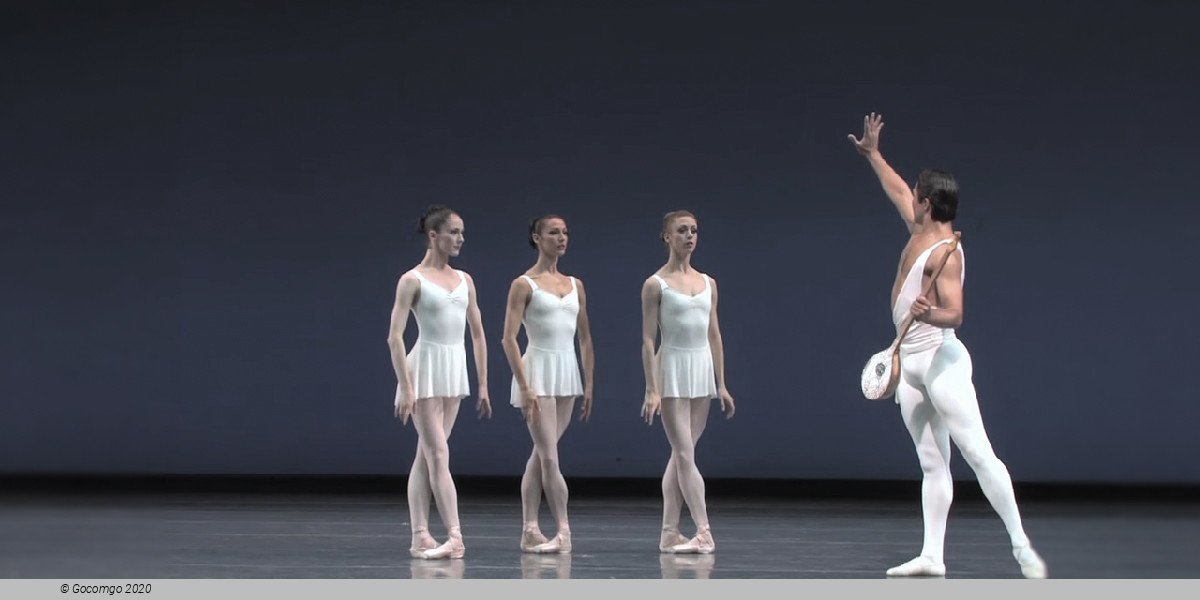
Balanchine's first collaboration with Stravinsky and one of his earliest international successes, Apollo presents the young god as he is ushered into adulthood by the muses of poetry, mime, and dance.
"Apollo I look back on as the turning point of my life. In its discipline and restraint, in its sustained oneness of tone and feeling, the score was a revelation. It seemed to tell me that I could dare not to use everything, that I, too, could eliminate."
George Balanchine
Apollo is the oldest Balanchine ballet in New York City Ballet’s repertory. Created for Serge Diaghilev’s Ballets Russes, and originally titled Apollon Musagète, the ballet premiered in Paris in 1928 and was Balanchine’s first major collaboration with composer Igor Stravinsky. With this dramatic and powerful ballet, which created a sensation when it was first performed, the 24-year-old Balanchine achieved international recognition. The 1928 premiere of the ballet featured sets and costumes by the French painter André Bauchant and in 1929 new costumes were created by Coco Chanel. The ballet was first performed by New York City Ballet in 1951, and during his lifetime Balanchine continued to revise the work, eliminating sets, costumes, and much of the ballet’s narrative content.y Ballet revival, actor Jack Noseworthy served as the narrator.
Scenery and costumes for Balanchine's production were by French artist André Bauchant. Coco Chanel provided new costumes in 1929. Apollo wore a reworked toga with a diagonal cut, a belt, and laced up. The Muses wore a traditional tutus. The decoration was baroque: two large sets, with some rocks and Apollo's chariot. In the dance a certain academicism resurfaced in the stretching out and upward leaping of the body, but the Balanchine bent the angles of the arms and hands to define instead the genre of neoclassical ballet.
Deceit, desire, and death shadow La Sonnambula's masked ball, haunting with the image of a beautiful sleepwalker and the misfortune in her wake.
Balanchine choreographed this work (then called Night Shadow) in 1946, for Ballet Russe de Monte Carlo, featuring Alexandra Danilova, Nicholas Magallanes, and Maria Tallchief. He used music by Vittorio Rieti based on themes from several of Vincenzo Bellini’s operas. The ballet was first performed by New York City Ballet in 1960, with Allegra Kent, Erik Bruhn, and Jillana in the lead roles.
Set at a masked ball, the one-act La Sonnambula tells the story of a Coquette, a Poet, and a beautiful Sleepwalker. The story remains mysterious, inviting different interpretations of the characters’ actions and relationships; it is the moods and emotions evoked by Balanchine’s choreography that give the ballet its resonance. Its atmosphere of sinister menace brings to mind 19th-century Romantic ballets like Giselle and La Sylphide, with their haunting stories of doomed love.
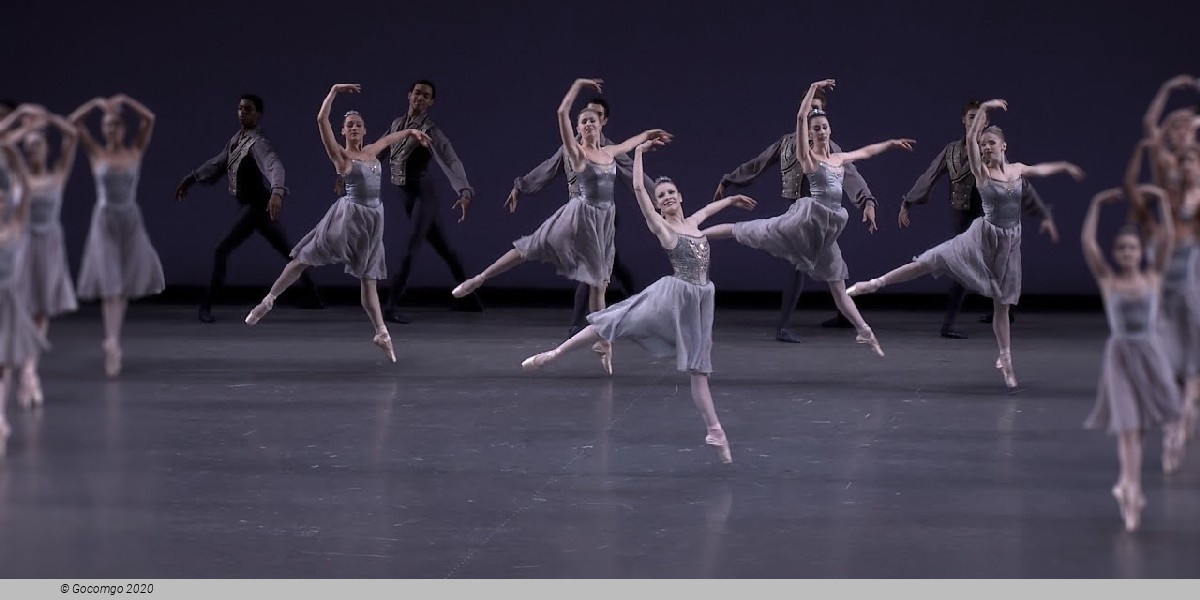
Balanchine’s Tschaikovsky Piano Concerto No. 2 is an ebullient outpouring of classical technique with tiaraed tiers of corps de ballet dancers.
Balanchine first staged Tschaikovsky’s Second Piano Concerto for the American Ballet Caravan in May 1941. Under the sponsorship of the Office of the Coordinator of Inter-American Affairs under the Roosevelt administration (Nelson A. Rockefeller, coordinator), the Caravan undertook a tour of South America, performing in every country except Paraguay and Bolivia.
It was felt that a classical ballet should be presented, but instead of reviving an existing ballet, Balanchine created a work in the style of Petipa and the Petersburg tradition. The decor, by Mstislav Dobuzhinsky, showed the Neva, with the Peter-Paul Fortress, framed in the Imperial blue and white of the Winter Palace.
Ballet Imperial was revived in 1964 by New York City Ballet with new decor by Rouben Ter-Arutunian, who followed a similar visual approach. In 1973, Balanchine felt that the allusion to Imperial Russia was outmoded, and that the ballet could stand in relation to the music alone. The title was changed, the decor eliminated, the costumes simplified, and some of the pantomime in the second movement altered—but the choreography as a whole remained the same.
For the 2019 Winter Season, NYCB Director of Costumes Marc Happel has redesigned the costumes. Created with the generous support of Swarovski, the costumes and headpieces feature thousands of Swarovski crystals.
The Ballet Imperial was first staged for New York City Ballet by Frederic Franklin on 15 October 1964 at the New York State Theater, Lincoln Center. Balanchine restaged it in 1973 with its current title. Traditional tutus and scenery in the grand Russian style were used through the 1964 NYCB revival; since 1973 it has been danced with chiffon skirts designed by Karinska and without scenery. Balanchine said that the ballet is "a contemporary tribute to Petipa, 'the father of the classical ballet,' and to Tschaikovsky, his greatest composer."


 20 Lincoln Center Plaza