




Citizens Opera House tickets 11 March 2027 - Coppélia | GoComGo.com

Coppélia

Citizens Opera House, Boston, USA
All photos (7)
Select date and time
7:30 PM
From
US$ 144

E-tickets: Print at home or at the box office of the event if so specified. You will find more information in your booking confirmation email.

You can only select the category, and not the exact seats.
If you order 2 or 3 tickets: your seats will be next to each other.
If you order 4 or more tickets: your seats will be next to each other, or, if this is not possible, we will provide a combination of groups of seats (at least in pairs, for example 2+2 or 2+3).

Important Info
Type: Ballet
City: Boston, USA
Starts at: 19:30

E-tickets: Print at home or at the box office of the event if so specified. You will find more information in your booking confirmation email.

You can only select the category, and not the exact seats.
If you order 2 or 3 tickets: your seats will be next to each other.
If you order 4 or more tickets: your seats will be next to each other, or, if this is not possible, we will provide a combination of groups of seats (at least in pairs, for example 2+2 or 2+3).

Cast
Performers
Ballet company: Boston Ballet
Creators
Composer: Léo Delibes
Choreographer: George Balanchine
Librettist: Arthur Saint-Léon
Librettist: Charles-Louis-Étienne Nuitter
Author: Ernst Theodor Amadeus Hoffmann
Choreography: Marius Petipa
Overview
History
Premiere of this production: 25 May 1870, Théâtre Impérial l Opéra, Paris

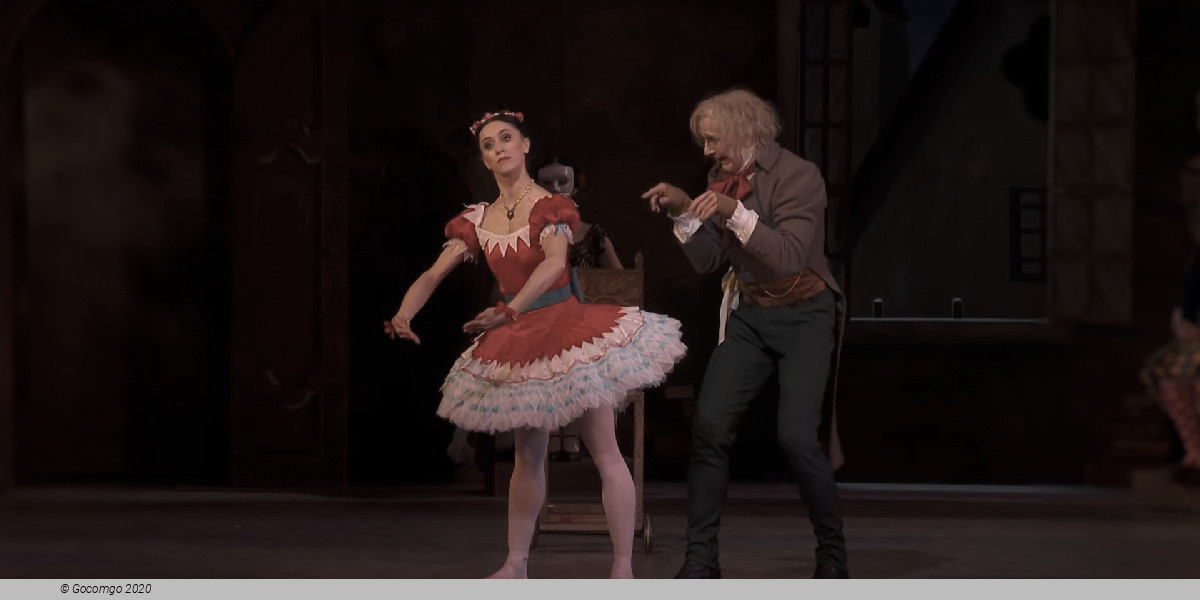
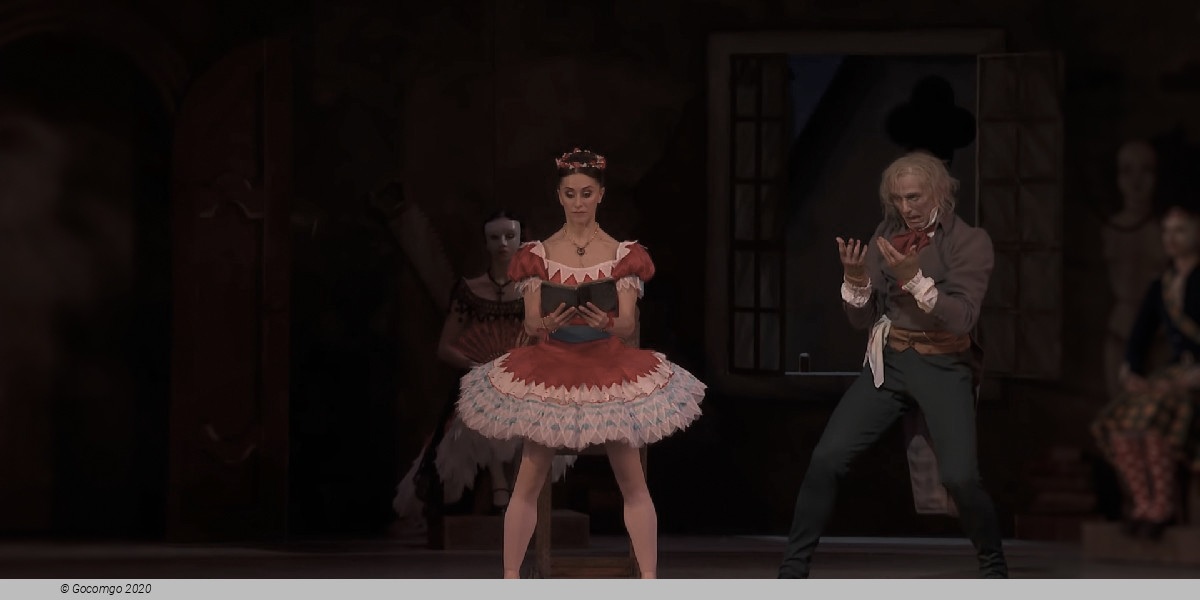
Coppélia is a comic ballet originally choreographed by Arthur Saint-Léon to the music of Léo Delibes, with libretto by Charles-Louis-Étienne Nuitter. Nuitter's libretto and mise-en-scène was based upon two stories by E. T. A. Hoffmann: Der Sandmann (The Sandman) and Die Puppe (The Doll).

Synopsis

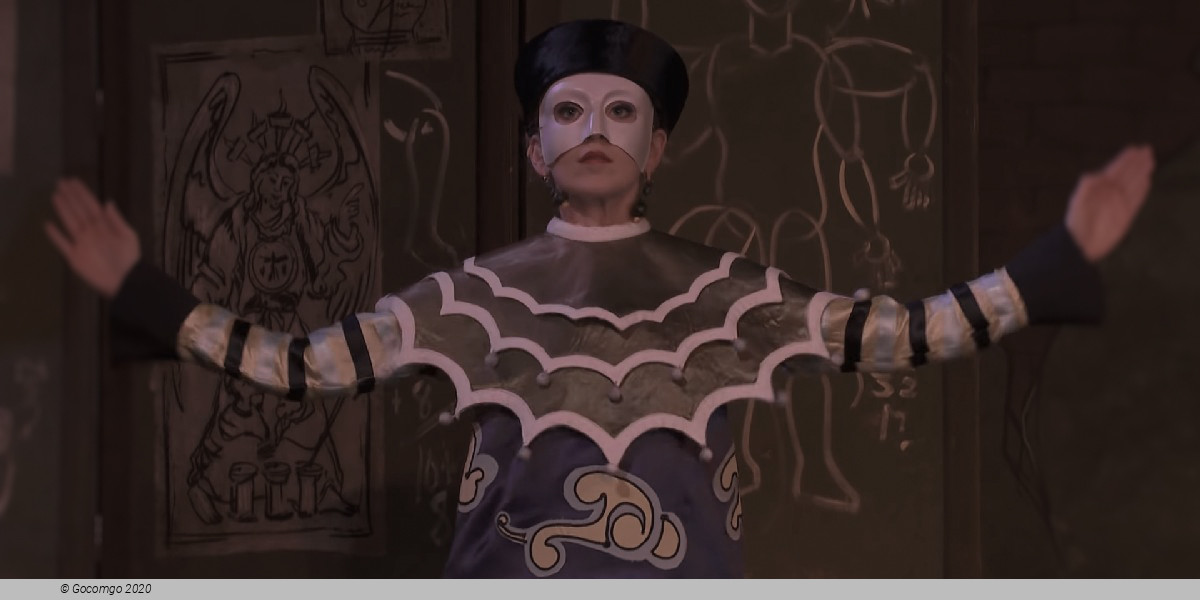
Dr. Coppélius is a doctor who has made a life-size dancing doll. It is so lifelike that Franz, a village youth, becomes infatuated with it and sets aside his heart's true desire, Swanhilda. She shows him his folly by dressing as the doll, pretending to make it come to life and ultimately saving him from an untimely end at the hands of the inventor.

Act I
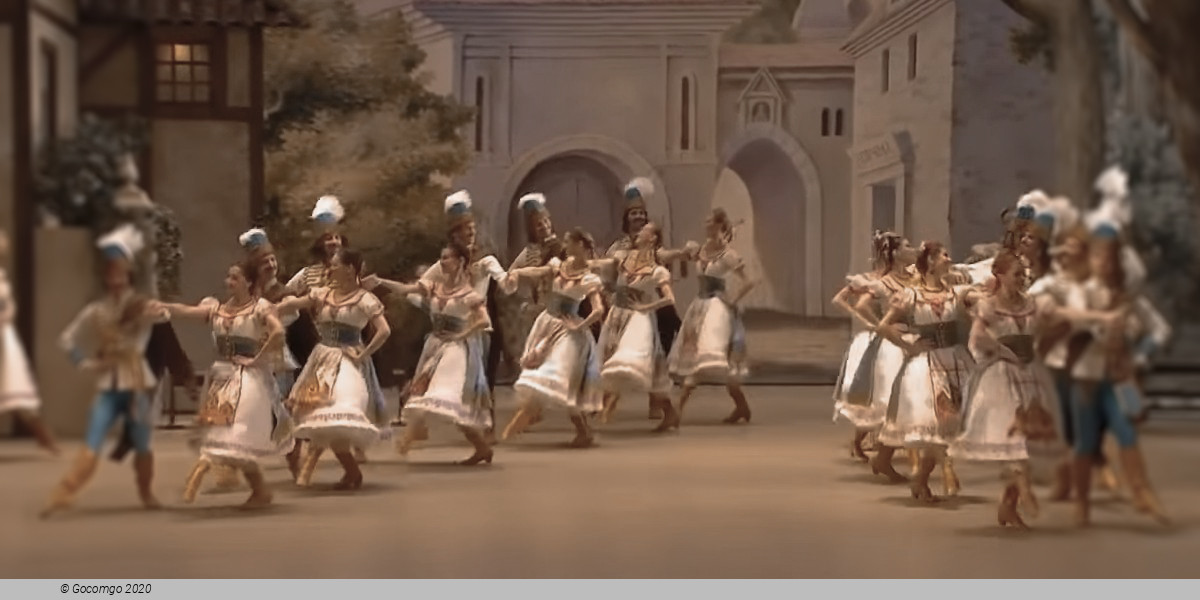
The story begins during a town festival to celebrate the arrival of a new bell. The town crier announces that, when it arrives, anyone who becomes married will be awarded a special gift of money. Swanilda and Franz plan to marry during the festival. However, Swanilda becomes unhappy with Franz because he seems to be paying more attention to a girl named Coppélia, who sits motionless on the balcony of a nearby house. The house belongs to a mysterious and faintly diabolical inventor, Doctor Coppélius. Although Coppélia spends all of her time sitting motionless and reading, Franz is mesmerized by her beauty and is determined to attract her attention. Still upset with Franz, Swanilda shakes an ear of wheat to her head: if it rattles, then she will know that Franz loves her. Upon doing this, however, she hears nothing. When she shakes it by Franz's head, he also hears nothing; but then he tells her that it rattles. However, she does not believe him and runs away heartbroken.

Later on, Dr. Coppelius leaves his house and is heckled by a group of boys. After shooing them away, he continues on without realizing that he has dropped his keys in the melée. Swanilda finds the keys, which gives her the idea of learning more about Coppélia. She and her friends decide to enter Dr. Coppelius' house. Meanwhile, Franz develops his own plan to meet Coppélia, climbing a ladder to her balcony.

Act II
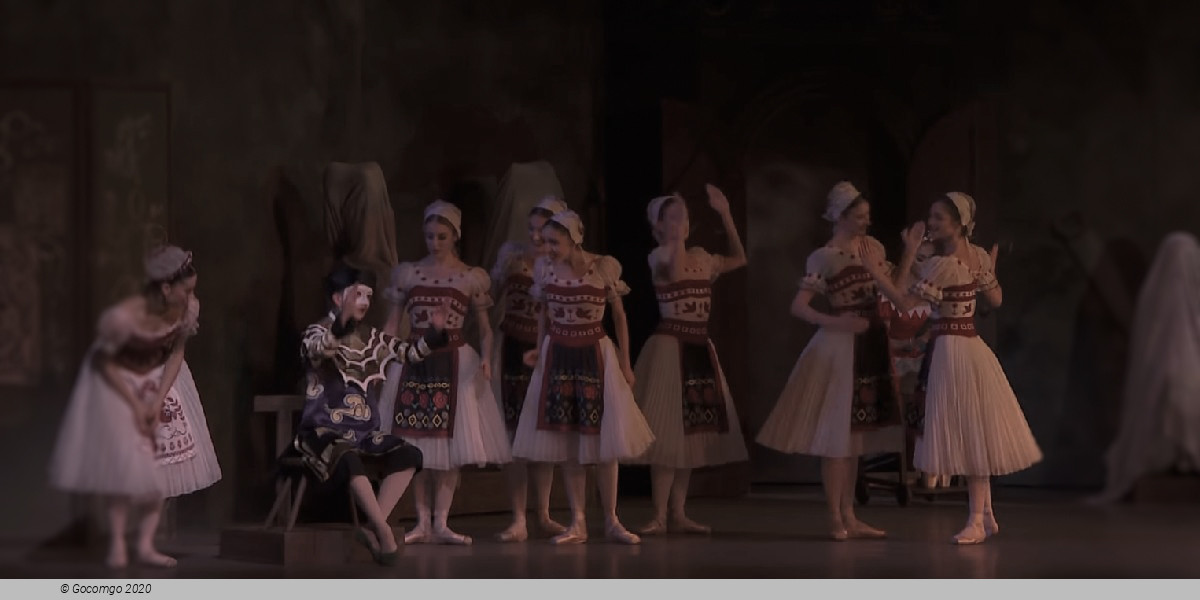
Swanilda and her friends find themselves in a large room filled with people. However, the occupants aren't moving. The girls discover that, rather than people, these are life-size mechanical dolls. They quickly wind them up and watch them move. Swanilda also finds Coppélia behind a curtain and discovers that she, too, is a doll.

Dr. Coppelius returns home to find the girls. He becomes angry with them, not only for trespassing but for also disturbing his workroom. He kicks them out and begins cleaning up the mess. However, upon noticing Franz at the window, Coppélius invites him in. The inventor wants to bring Coppélia to life but, to do that, he needs a human sacrifice. With a magic spell, he will take Franz's spirit and transfer it to Coppélia. After Dr. Coppelius proffers him some wine laced with sleeping powder, Franz begins to fall asleep. The inventor then readies his magic spell.

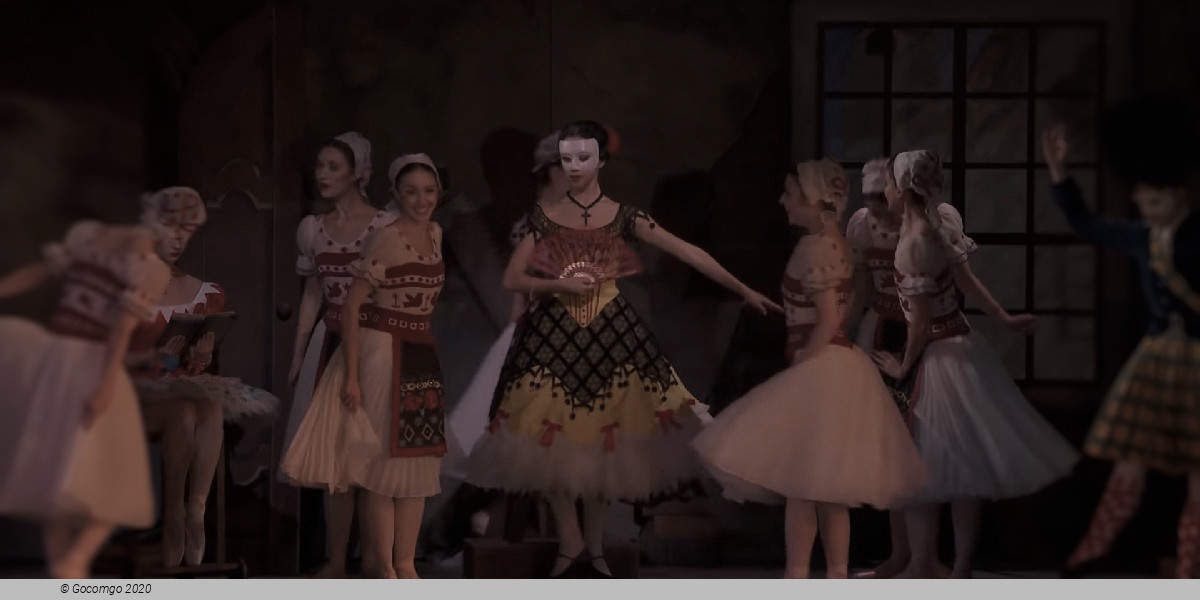
However, Dr. Coppelius did not expel all the girls: Swanilda is still there, hidden behind a curtain. She dresses up in Coppélia's clothes and pretends that the doll has come to life. She wakes Franz and then winds up all the mechanical dolls to aid their escape. Dr. Coppelius becomes confused and then saddened when he finds a lifeless Coppélia behind the curtain.

(Note: In some Russian versions of the ballet, after getting caught, Swanhilda confesses to Dr. Coppelius about what she and her friends did and her situation with Franz. Coppelius decides to forgive Swanhilda and teach her how to act like a doll coming to life to fool Franz, thus ending Act 2 on a happier note.)

Act III
Swanilda and Franz are about to make their wedding vows when the angry Dr. Coppelius appears, claiming damages. Dismayed at having caused such an upset, Swanilda offers Dr. Coppelius her dowry in return for his forgiveness. However, Franz tells Swanilda to keep her dowry and offers to pay Dr. Coppelius instead. At that point, the mayor intervenes and gives Dr. Coppelius a bag of money, which placates him. Swanilda and Franz are married and the entire town celebrates by dancing.

Venue Info

Citizens Opera House - Boston
Location   539 Washington Street, 02111

The Citizens Opera House ( Boston Opera House) is one of the finest examples of the vaudeville circuit palace at the pinnacle of its development.

Designed in a combination of French and Italian styles by Thomas White Lamb, one of the foremost theatre architects of his day, it was erected under the close personal supervision of Edward Franklin Albee to memorialize his late partner, Benjamin Franklin Keith. Because it was constructed as a memorial and tribute to vaudeville’s greatest impresario, it was built with a degree of luxury in its appointments that is almost unrivaled.

The Boston Opera House, also known as the Citizens Bank Opera House, is a performing arts and esports venue located at 539 Washington St. in Boston, Massachusetts. It was originally built as the B.F. Keith Memorial Theatre, a movie palace in the Keith-Albee chain. The chain became part of RKO when it was established just before the theater opened on October 29, 1928, and it was also known as the RKO Keith's Theater. After operating for more than 50 years as a movie theater, it was rededicated in 1980 as a home for the Opera Company of Boston, which performed there until the opera company closed down in 1990 due to financial problems. The theater was reopened in 2004 after a major restoration, and it currently serves as the home of the Boston Ballet and also hosts touring Broadway shows. The theater serves as the home arena of the Boston Uprising of the Overwatch League.

The Boston Opera House was originally designed as the B.F. Keith Memorial Theatre, a lavish movie theater in the Keith-Albee chain. The Keith's Memorial was one of his most elaborate designs of the prominent theater architect Thomas W. Lamb. It was dedicated to the vaudeville pioneer B.F. Keith. On October 23, 1928, just before the theater opened, the Radio-Keith-Orpheum (RKO) company was formed and became the owner of the theater. The theater opened on October 29, 1928, presenting first-run films along with live vaudeville. By 1929, the theater had converted to showing only films and remained a leading Boston movie showcase through the 1950s. It became known as RKO Keith's, and bore signage that said both "B.F. Keith's" and "RKO Keith's" (see the 1938 photo shown at right).

In 1965 the Sack Theaters company acquired the theater and renamed it the Savoy Theater. Sack later added a second smaller cinema in the theater's stage space, separated from the original auditorium by a masonry wall built across the proscenium.

In 1980, after closing as a movie house, the theater became the home of opera director Sarah Caldwell's Opera Company of Boston and was renamed the Boston Opera House. The theater was acquired and renovated by the opera company with the help of Boston arts patron Susan Timken. After a decade of opera productions at the house, Caldwell's company collapsed due to financial troubles in 1991. Having previously produced opera since 1958 in rented theaters, the company was not financially prepared to cope with the substantial costs of upkeep for the large theater which had previously been poorly maintained for decades. The company's failure left the theater dark and without funds to maintain it.

Unheated, the building fell prey to extensive water damage, severely damaging the electrical system and the decorative plaster interior of the auditorium. The company's costumes, collected for decades and stored under the damaged roof, were lost. In 1996, the former opera company relinquished ownership of the building.

Mayor Thomas Menino, with the aid of Senator Edward Kennedy (whose father, Joseph, was the first owner), helped to get the theater landmark status in 1999 through the Boston Landmarks Commission. After a series of failed or delayed development proposals, the Clear Channel Company agreed to renovate the theater. The need to enlarge the trapezoidal stage house into the street between buildings provoked a multi-year court fight with the neighboring Tremont on the Commons condominium building, whose concerns with fire safety were eventually overcome with the persuasion of Mayor Menino.

The Boston opera community welcomed the efforts of Mayor Menino and Clear Channel to refurbish the Opera House and the damaged interior was restored in a $38 million renovation. It reopened on July 16, 2004, with the Broadway production of The Lion King. Clear Channel kept the historic theater busy and active with long runs of touring Broadway musicals and pop concerts. While its agreement with city included a clause that opera be produced at least two weeks a year, no opera company has yet returned to make the Opera House its home.

The current owner of the theater is Boston Opera House Ventures, LLC, a partnership of local Boston businessmen Don Law and David Mugar. Its primary tenants are Broadway Across America, Boston Uprising and the Boston Ballet. Home to Boston Ballet's annual production of The Nutcracker since 2005, the theater became the company's permanent home in 2009.

Important Info
Type: Ballet
City: Boston, USA
Starts at: 19:30
Top of page