
Carnegie Hall 28 March 2023 - Concerto Köln and Jeanine De Bique | GoComGo.com

Concerto Köln and Jeanine De Bique

Carnegie Hall, Zankel Hall, New York, USA
All photos (1)
Select date and time
7:30 PM

E-tickets: Print at home or at the box office of the event if so specified. You will find more information in your booking confirmation email.

You can only select the category, and not the exact seats.
If you order 2 or 3 tickets: your seats will be next to each other.
If you order 4 or more tickets: your seats will be next to each other, or, if this is not possible, we will provide a combination of groups of seats (at least in pairs, for example 2+2 or 2+3).

Important Info
Type: Classical Concert
City: New York, USA
Starts at: 19:30

E-tickets: Print at home or at the box office of the event if so specified. You will find more information in your booking confirmation email.

You can only select the category, and not the exact seats.
If you order 2 or 3 tickets: your seats will be next to each other.
If you order 4 or more tickets: your seats will be next to each other, or, if this is not possible, we will provide a combination of groups of seats (at least in pairs, for example 2+2 or 2+3).

Programme
George Frideric Handel: Sinfonia from Partenope
Carl Heinrich Graun: "Risolvere non oso" from Rodelinda
George Frideric Handel: Rodelinda, HWV 19: Ritorna, o caro e dolce mio tesoro
George Frideric Handel: Rodrigo HWV 5: orchestral suite
George Frideric Handel: Alcina, HWV 34: Ah, mio cor!
Riccardo Broschi: "Mi restano le lagrime" from L’isola d’Alcina
Carl Heinrich Graun: "L`empio rigor del fato" from Rodelinda
Leonardo Vinci: Sinfonia from Partenope
Robert Manno: "Chi può dir che rea son io" from Achille in Sciro
George Frideric Handel: "M`hai resa infelice" from Deidamia
George Frideric Handel: "Che sento? Oh dio! ... Se pietà di me non senti" from Giulio Cesare
Carl Heinrich Graun: "Tra le procelle assorto" from Cleopatra e Cesare
Overview

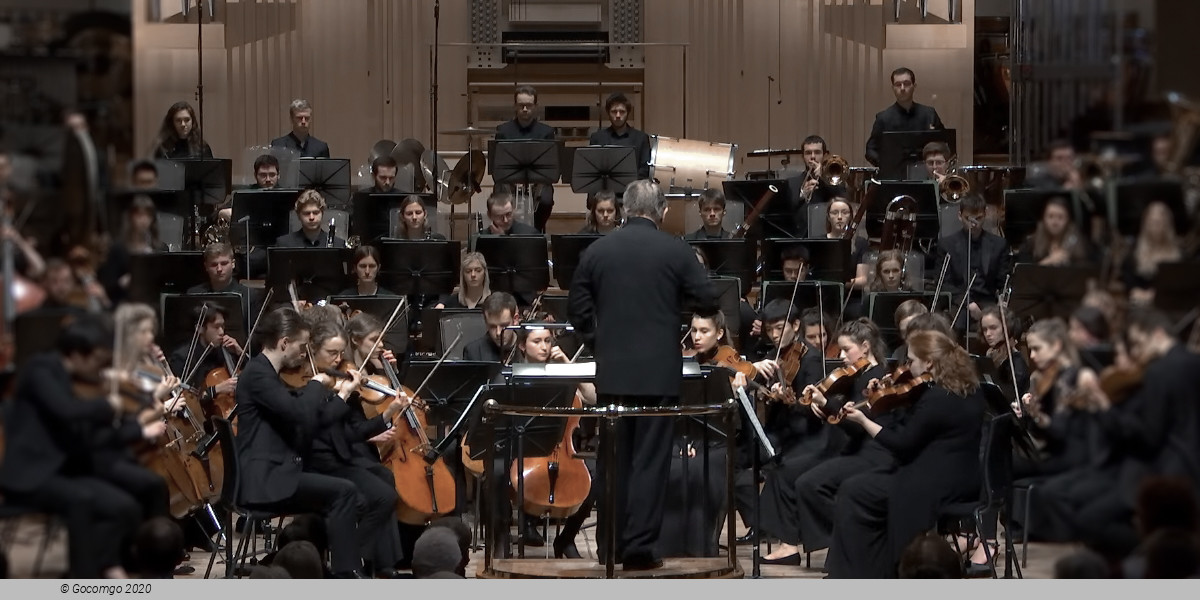
Internationally renowned soprano Jeanine De Bique makes her Zankel Hall debut alongside opera and early music ensemble Concerto Köln. The program features music from De Bique’s acclaimed debut album, Mirrors, which explores emotionally charged arias composed for heroines such as Cleopatra, Rodelinda, and Alcina. By pairing and juxtaposing Handel’s famous works with arias written by his contemporaries for these same female protagonists, the insightful project reveals the deep, multifaceted nature of these characters, even when derived from a single libretto. De Bique’s riveting interpretive gifts make these contrasting musical visions all the more profound.

Venue Info

Carnegie Hall - New York
Location   57th Street and Seventh Avenue

Carnegie Hall is a concert venue in Midtown Manhattan in New York City, United States, located at 881 Seventh Avenue, occupying the east side of Seventh Avenue between West 56th Street and West 57th Street, two blocks south of Central Park.

Designed by architect William Burnet Tuthill and built by philanthropist Andrew Carnegie in 1891, it is one of the most prestigious venues in the world for both classical music and popular music. Carnegie Hall has its own artistic programming, development, and marketing departments, and presents about 250 performances each season. It is also rented out to performing groups. The hall has not had a resident company since 1962, when the New York Philharmonic moved to Lincoln Center's Philharmonic Hall (renamed Avery Fisher Hall in 1973 and David Geffen Hall in 2015).

Carnegie Hall has 3,671 seats, divided among its three auditoriums.

Carnegie Hall contains three distinct, separate performance spaces.

Carnegie Hall is one of the last large buildings in New York built entirely of masonry, without a steel frame; however, when several flights of studio spaces were added to the building near the turn of the 20th century, a steel framework was erected around segments of the building. The exterior is rendered in narrow Roman bricks of a mellow ochre hue, with details in terracotta and brownstone. The foyer avoids typical 19th century Baroque theatrical style with the Florentine Renaissance manner of Filippo Brunelleschi's Pazzi Chapel: white plaster and gray stone form a harmonious system of round-headed arched openings and Corinthian pilasters that support an unbroken cornice, with round-headed lunettes above it, under a vaulted ceiling. The famous white and gold auditorium interior is similarly restrained. The firm of Adler & Sullivan of Chicago, noted for the acoustics of their theaters, were hired as consultant architects though their contributions are not known.

Important Info
Type: Classical Concert
City: New York, USA
Starts at: 19:30
Top of page