







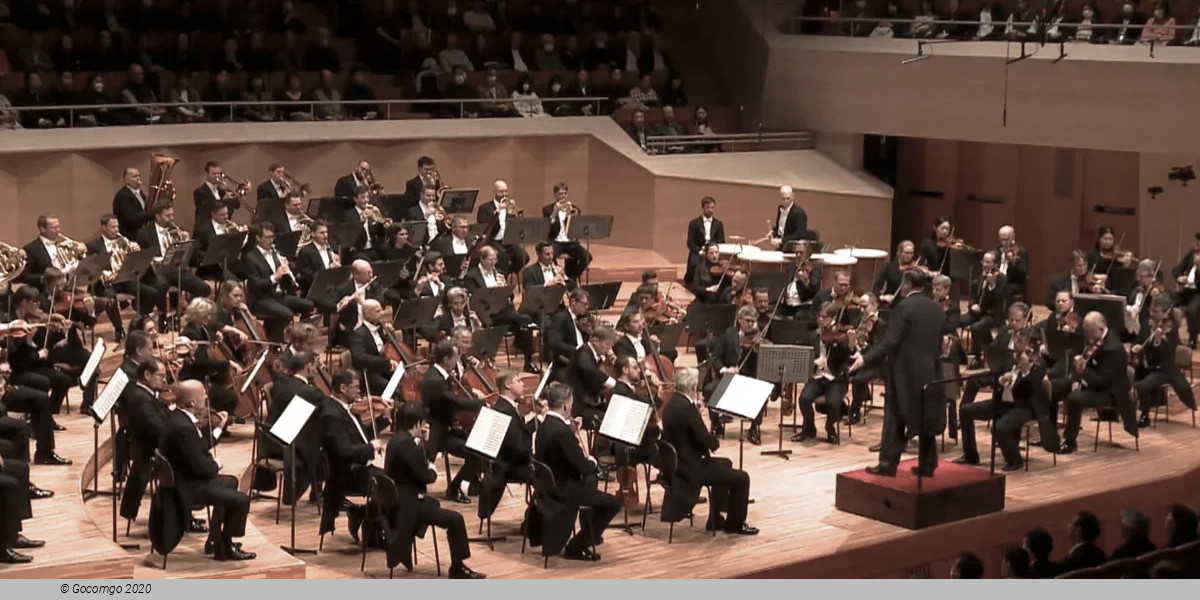
 301 Massachusetts Avenue
Symphony Hall is a concert hall located at 301 Massachusetts Avenue in Boston, Massachusetts, opened in 1900. Designed by the architectural firm McKim, Mead and White, it was built for the Boston Symphony Orchestra, which continues to make the hall its home. It can accommodate an audience of 2,625.
The hall was designated a U.S. National Historic Landmark in 1999 and is a pending Boston Landmark. It was then noted that "Symphony Hall remains, acoustically, among the top three concert halls in the world (sharing this distinction with the Amsterdam Concertgebouw and Vienna's Musikvereinsaal), and is considered the finest in the United States." Symphony Hall, located one block from Berklee College of Music to the north and one block from the New England Conservatory to the south, also serves as home to the Boston Pops Orchestra as well as the site of many concerts of the Handel and Haydn Society.
On June 12, 1899, ground was broken and construction began on Symphony Hall after the Orchestra's original home (the Old Boston Music Hall) was threatened by road-building and subway construction. The building was completed 17 months later at a cost of $771,000. The hall was inaugurated on October 15, 1900, Architects McKim, Mead and White engaged Wallace Clement Sabine, a young assistant professor of physics at Harvard University, as their acoustical consultant, and Symphony Hall became one of the first auditoria designed in accordance with scientifically derived acoustical principles. Admired for its lively acoustics from the time of its opening, the hall is often cited as one of the best sounding classical concert venues in the world.
The hall is modeled on the second Gewandhaus concert hall in Leipzig, which was later destroyed in World War II. The Hall is relatively long, narrow, and high, in a rectangular "shoebox" shape like Amsterdam's Concertgebouw and Vienna's Musikverein. It is 18.6 metres (61 ft) high, 22.9 metres (75 ft) wide, and 38.1 metres (125 ft) long from the lower back wall to the front of the stage. Stage walls slope inward to help focus the sound. With the exception of its wooden floors, the Hall is built of brick, steel, and plaster, with modest decoration. Side balconies are very shallow to avoid trapping or muffling sound, and the coffered ceiling and statue-filled niches along three sides help provide excellent acoustics to essentially every seat. Conductor Herbert von Karajan, in comparing it to the Musikverein, stated that "for much music, it is even better... because of its slightly lower reverberation time."
In 2006, due to years of wear and tear, the original concert stage floor was replaced at a cost of $250,000. In order to avoid any change to the sound of the hall, the new floor was built using same methods and materials as the original. These included tongue-in-groove, three-quarter inch, hard maple boards, a compressed wool underlayment and hardened steel cut nails, hammered in by hand. The vertical grain fir subfloor from 1899 was in excellent shape and was left in place. The nails used in the new floor were hand cut using the same size and construction as the originals and the back channeling on the original maple top boards was replicated as well.
Beethoven's name is inscribed over the stage, the only musician's name that appears in the hall since the original directors could agree on no other name but his. The hall's leather seats are the originals installed in 1900. The hall seats 2,625 people during Symphony season and 2,371 during the Pops season, including 800 seats at tables on the main floor.