
Bolshoi Theatre 6 May 2025 - Mariinsky Theatre presents: The Young Lady and the Hooligan. Leningrad Symphony | GoComGo.com

Mariinsky Theatre presents: The Young Lady and the Hooligan. Leningrad Symphony

Bolshoi Theatre, Historic Stage, Moscow, Russia
All photos (4)
Select date and time
7 PM
Request for Tickets
Important Info
Type: Ballet
City: Moscow, Russia
Starts at: 19:00
Acts: 1
Duration: 45min

E-tickets: Print at home or at the box office of the event if so specified. You will find more information in your booking confirmation email.

You can only select the category, and not the exact seats.
If you order 2 or 3 tickets: your seats will be next to each other.
If you order 4 or more tickets: your seats will be next to each other, or, if this is not possible, we will provide a combination of groups of seats (at least in pairs, for example 2+2 or 2+3).

Overview

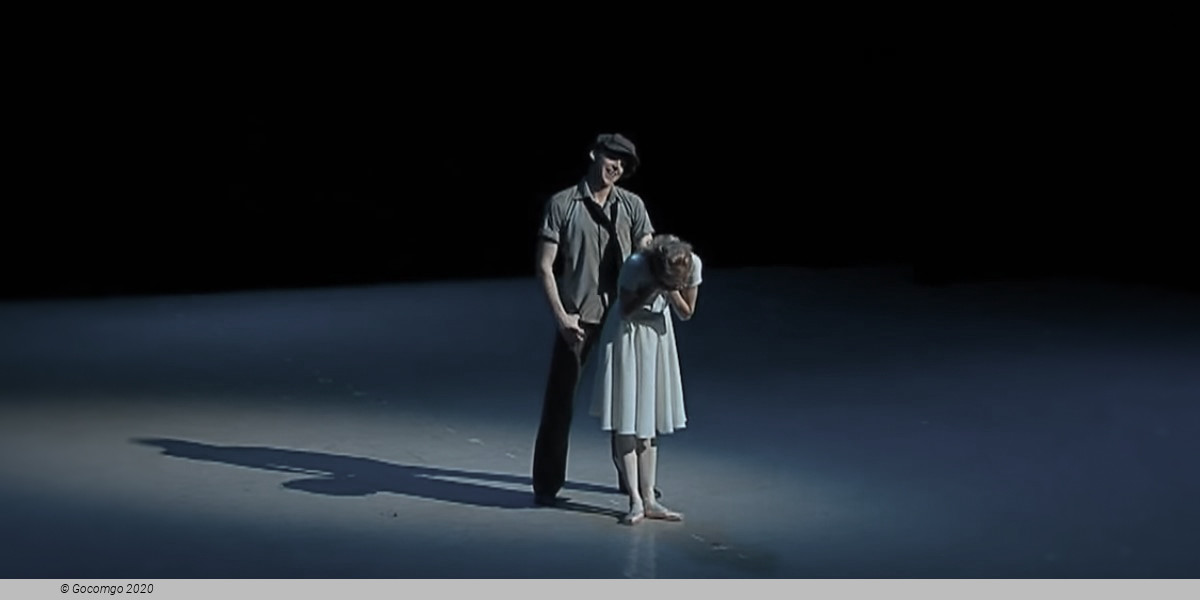
This ballet is something of an "adopted child" at the Mariinsky Theatre: created in 1962 at Leningrad's Maly Opera and Ballet Theatre and having been performed at numerous theatres in the Soviet Union, it was only in 2001 that it entered the Mariinsky Theatre's repertoire. The pre-history of this once incredibly popular production about post-revolutionary hard times is as follows; in 1918 Russian cinemas screened the art film The Young Lady and the Hooligan, staged after a scenario by Vladimir Mayakovsky. The plot was based on Italian writer Edmondo De Amicis' story La maestrina degli operai (The Workers' Young Schoolmistress). The protagonist is the Hooligan as depicted by Mayakovsky, who sees the new schoolmistress on the street and falls in love with her at first sight. Soon he begins to attend her class. One day, however, when protecting the teacher (the Young Lady), the Hooligan is fatally wounded in a brawl and dies before his beloved's eyes. In the early 1960s after motifs of the film, Alexander Belinsky produced the libretto for the eponymous ballet, while the choreographer of the Maly Theatre Konstantin Boyarsky created the choreography. The music was taken from three unfortunate ballets by Dmitry Shostakovich – The Bolt, The Golden Age and The Limpid Brook, the score also featuring highlights from Shostakovich's music for films. The premiere of the ballet The Young Lady and the Hooligan took place in 1962. Soviet audiences, who over the years of the reign of "drama-ballet" on the stage had become used to ballet plays, were transfixed by the story-in-dance about the Hooligan's moral transformation under the influence of the emotion of love which he had not known before. The ballet remained in the repertoire of the Maly Theatre as late as 1987. One of the last Hooligans there, Yevgeny Myasishchev – together with his theatre colleague Yekaterina Pavlova and Sergei Savkov who dazzled as the Hooligan at the Novosibirsk Opera and Ballet Theatre – brought Boyarsky's ballet back to life at the Mariinsky Theatre in 2001.

Olga Makarova

By the early 1960s a widely-developed mythology had sprung up around Shostakovich's Seventh Symphony: starting work on it in Leningrad when it was being bombed, the delivery of the score by plane to the besieged city (see Anna Akhmatova's Poem without a Hero), the live broadcast to the vanguard from the besieged city on the day it was supposed to be taken and so on. The composer himself – living and working – became in part a mythological character. In Zakhar Agranenko's fictional account Leningrad Symphony, which appeared on screen in 1958 and which is actually dedicated to the Leningrad premiere of the opus, Shostakovich was the only character who had a real name – and he never appeared on-screen, remaining a superhero of the myth. It is important to know all of this in order to comprehend the onus of the work undertaken by the choreographer Igor Belsky when working on the production of the ballet set to the music of the first movement of the symphony.
At the premiere, the ballet was called Seventh Symphony – a title drily generic in type and sterile. Perhaps thus Belsky hoped to distance himself from the ponderous and commital myth of this opus: there are many "Seventh Symphonies", but there is only one Leningrad. To begin with, the choreographer resolved the formal tasks. First this was to create an abstractly metaphoric and pure dance system – unlike the "realist", long-title-loving choreo-dramas of the 1930s-50s with props and antique furniture that were almost undanceable. Secondly, there was the creation of the dance structure, similar to the structure of the music, which subsequently was given the appellation of "dance symphonism".
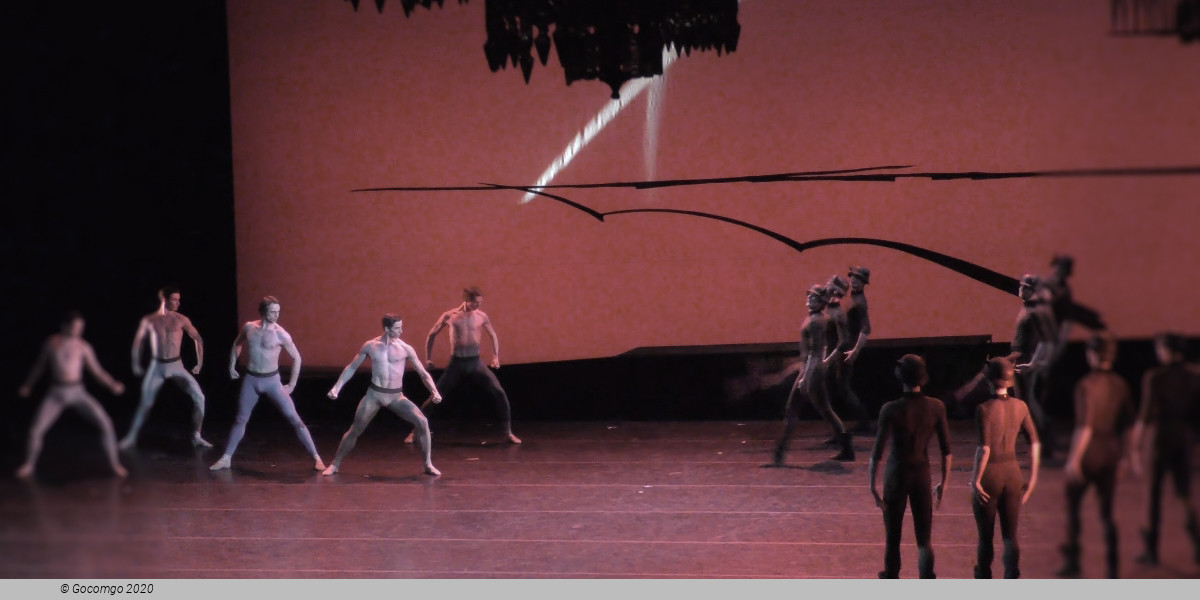
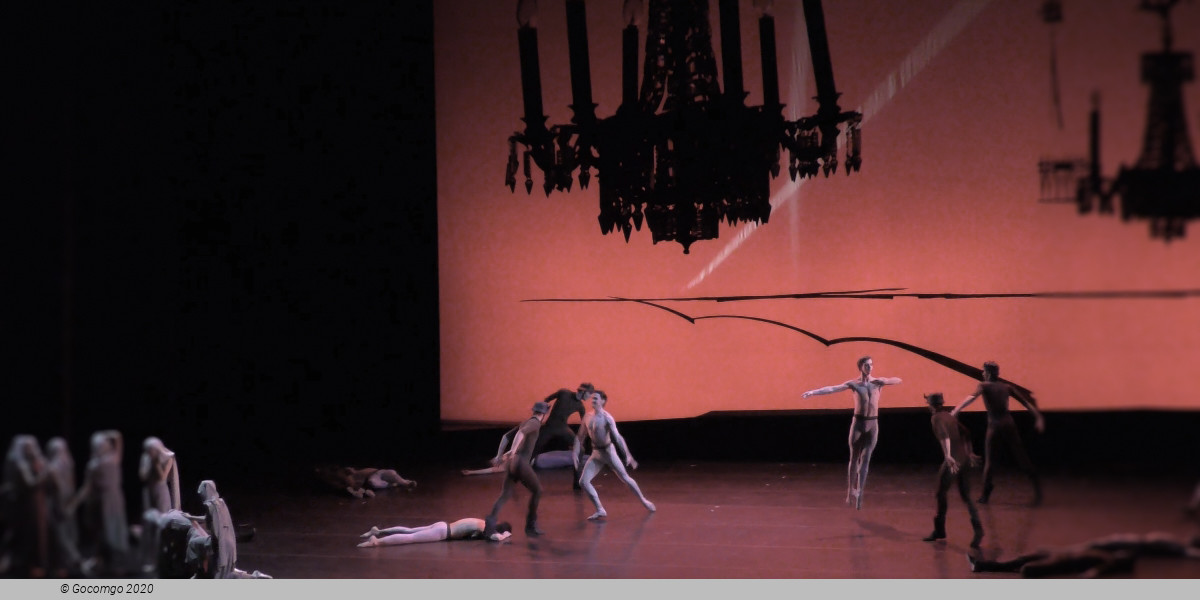
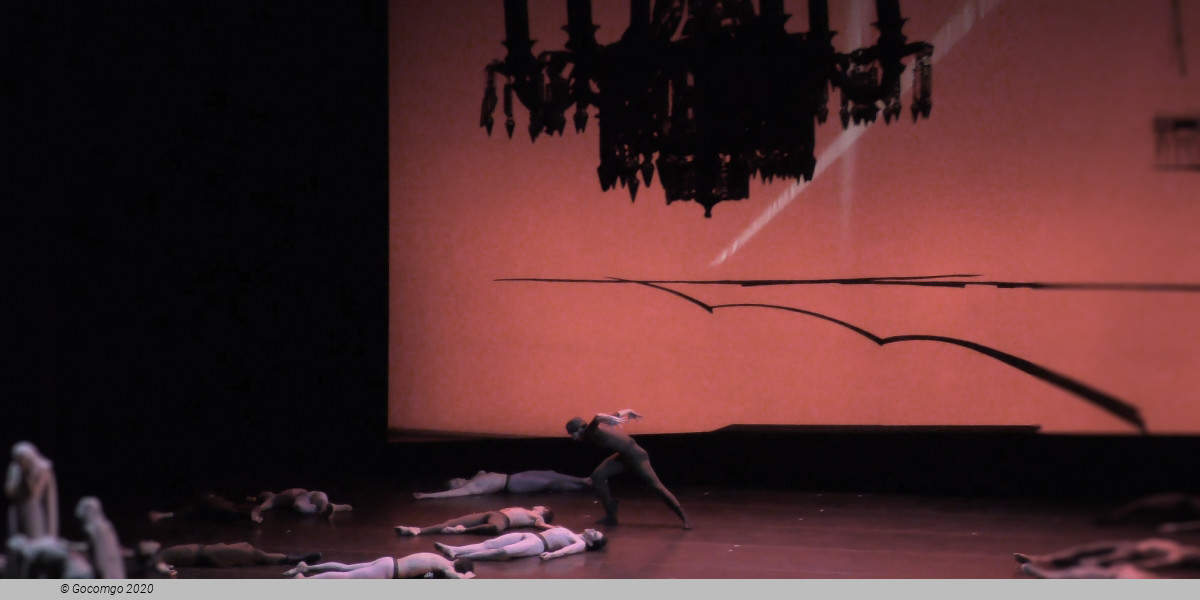
Belsky had attemped to resolve these tasks earlier in the three-act ballet Shore of Hope (1959). In the twenty-five-minute-long Seventh Symphony this principle was taken to the very edge. The ballet's characters are the Youth, the Girl and the Traitor. The powers of evil are represented by conditional Barbarians, their roots suggested only by certain gestures and the brown colour of their costumes. The specific place of the plot is hinted at by the silhouette of a tower with a spire, given in several strokes on the white back-screen. The stage is generally empty, with only capacious rear-stage posters changing one after the other; the ballet was designed not by a major set-designer but by the graphic poster designer Mikhail Gordon. There are no destroyed Leningrad façades, anti-tank barbed wire, prop weapons, swastikas or real uniforms, as it could have been in a ballet about the siege even ten years ago.
The ballet was rehearsed "outside the plan", in non-working hours and to a tape recording (an innovation at the time). The Seventh Symphony – together with Grigorovich's Stone Flower – brought a new generation of young dancers to the stage, whose names today are associated with "The Thaw". Ballet's symbol of "The Thaw" was Yuri Soloviev's jump and leap as the Youth, the leap of "cosmic Yuri" as the dancer later came to be known (it was curiously fortunate that the premiere of Belsky's ballet took place two days after Gagarin's flight into space). The role of the Youth was also performed by Anatoly Nisnevich, Oleg Sokolov and Alexander Gribov; the role of the Girl was performed by Alla Sizova, Kaleria Fedicheva, Gabriela Komleva and Natalia Makarova.
Starting from the sixth performance (6 June 1962) the ballet was called Leningrad Symphony. Having won success with the audience and Communist Party approval, the production was spread out to other theatres in the Soviet Union. At its home theatre the production was revived in 1991 and reconstructed in 2001. In line with tradition, it is performed twice each season, on dates that are vitally important for the people of St Petersburg: the Day of the Lifting of the Siege of Leningrad and Victory Day.
Belsky's Leningrad Symphony was almost immediately named a turning point in the history of Soviet ballet and a direct descendant of Magnificence of the Universe, the legendary production of Fyodor Lopukhov to the music of Beethoven's Fourth Symphony, performed just once in 1923 leaving the audience completely perplexed. Belsky later developed his idea of the ballet-symphony in the immense Eleventh Symphony, set to the music of Shostakovich's eponymous work, at Leningrad's Maly Opera Theatre (1966). The experience was not so successful, and Belsky never staged a symphony again, though choreographic symphonism as a structural model and as an artistic ideology would for long be an idée fixe of Soviet ballet theoreticians. Bogdan Korolyok

History
Premiere of this production: 28 December 1962, Maly Opera Theatre, Leningrad

The Young Lady and the Hooligant is something of an "adopted child" at the Mariinsky Theatre: created in 1962 at Leningrad's Maly Opera and Ballet Theatre and having been performed at numerous theatres in the Soviet Union, it was only in 2001 that it entered the Mariinsky Theatre's repertoire. The pre-history of this once incredibly popular production about post-revolutionary hard times is as follows; in 1918 Russian cinemas screened the art film The Young Lady and the Hooligan, staged after a scenario by Vladimir Mayakovsky. The plot was based on Italian writer Edmondo De Amicis' story La maestrina degli operai (The Workers' Young Schoolmistress). 

Premiere of this production: 14 April 1961, Kirov Theatre of Opera and Ballet (Mariinsky), Leningrad

By the early 1960s a widely-developed mythology had sprung up around Shostakovich's Seventh Symphony: starting work on it in Leningrad when it was being bombed, the delivery of the score by plane to the besieged city (see Anna Akhmatova's Poem without a Hero), the live broadcast to the vanguard from the besieged city on the day it was supposed to be taken and so on. The composer himself – living and working – became in part a mythological character. In Zakhar Agranenko's fictional account Leningrad Symphony, which appeared on screen in 1958 and which is actually dedicated to the Leningrad premiere of the opus, Shostakovich was the only character who had a real name – and he never appeared on-screen, remaining a superhero of the myth. It is important to know all of this in order to comprehend the onus of the work undertaken by the choreographer Igor Belsky when working on the production of the ballet set to the music of the first movement of the symphony.

Synopsis

Episode 1. A workers’ district. The street is ruled by the young Hooligan.
The Young Lady makes a tremendous impression on him.

Episode 2. At school. The Hooligan recognises the new pupil as the Young Lady.
She stops the "unbridled" Hooligan.

Episode 3. A park. The Hooligan wishes to tell the Young Lady of his love.
She runs away.

Episode 4. The Hooligan is in a restaurant.
The Young Lady appears to him as a vision. He runs to her.
The Leader tries to restrain him.

Episode 5. The Hooligan at the Young Lady’s house.

Episode 6. A park. Drunken youths are scaring the people walking there.
The Hooligan defends the Young Lady and her friends.
The Hooligan’s former friends take their revenge.
Fatally wounded, he heads for the Young Lady’s house.

Episode 7. The street. The Hooligan dies in the Young Lady’s arms.

Venue Info

Bolshoi Theatre - Moscow
Location   Teatralnaya Square 1

The Bolshoi Theatre is one of the world’s most iconic cultural landmarks, renowned for its grandeur, history, and artistic excellence. Located in the heart of Moscow, this legendary theatre has been home to unforgettable performances of opera and ballet for over two centuries. Its majestic architecture, world-class acoustics, and rich tradition make every event at the Bolshoi a truly unforgettable experience.

On 28 March (17 according to the old style) 1776, Catherine II granted the prosecutor, Prince Pyotr Urusov, the "privilege" of "maintaining" theatre performances of all kinds, including masquerades, balls and other forms of entertainment, for a period of ten years. And it is from this date that Moscow’s Bolshoi Theatre traces its history.

The Bolshoi building, which for many years now has been regarded as one of Moscow’s main sights, was opened on 20 October 1856, on Tsar Alexander II’s coronation day.

On 29 October 2002 the Bolshoi was given a New Stage and it was here it presented its performances during the years the Main Stage was undergoing massive reconstruction and refurbishment.

The reconstruction project lasted from l July 2005 to 28 October 2011. As a result of this reconstruction, many lost features of the historic building were reinstated and, at the same time, it has joined the ranks of most technically equipped theatre buildings in the world.

The Bolshoi Theatre is a symbol of Russia for all time. It was awarded this honor due to the major contribution it made to the history of the Russian performing arts. This history is on-going and today Bolshoi Theatre artists continue to contribute to it many bright pages.

The Bolshoi Ballet and Bolshoi Opera are among the oldest and best known ballet and opera companies in the world. It is by far the world's biggest ballet company, with more than 200 dancers.

Important Info
Type: Ballet
City: Moscow, Russia
Starts at: 19:00
Acts: 1
Duration: 45min
Top of page