Bolshoi Theatre 10 April 2025 - Katerina Izmailova | GoComGo.com

Katerina Izmailova

Bolshoi Theatre, Historic Stage, Moscow, Russia
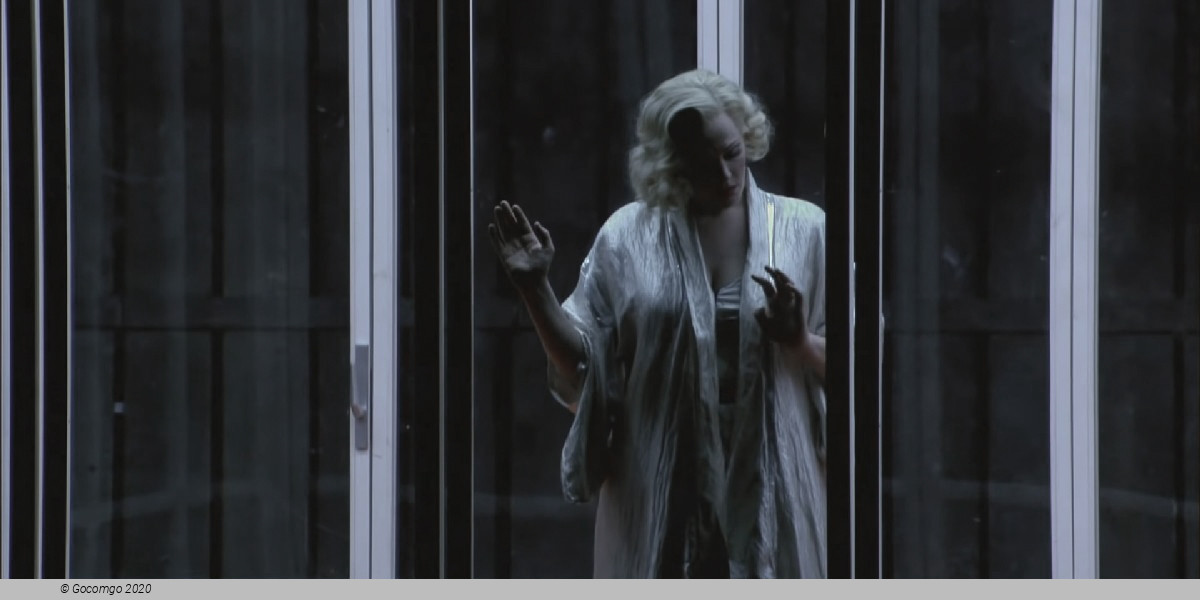
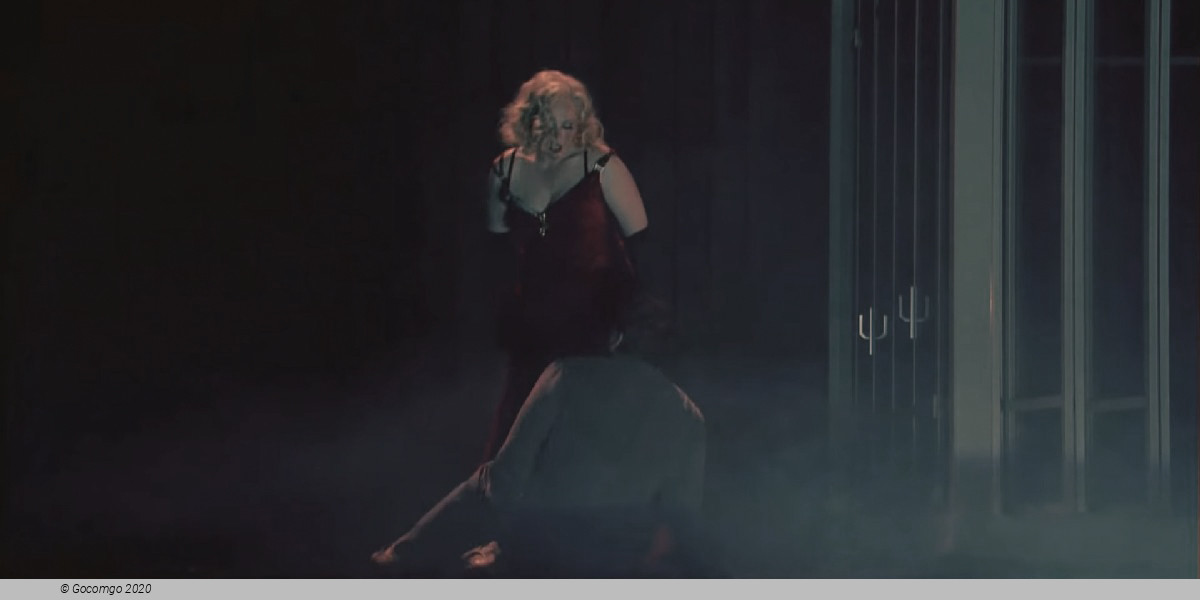
All photos (8)
Select date and time
7 PM
Request for Tickets
Important Info
Type: Opera
City: Moscow, Russia
Starts at: 19:00
Acts: 4
Intervals: 1
Duration: 3h 25min
Sung in: Russian
Titles in: English

E-tickets: Print at home or at the box office of the event if so specified. You will find more information in your booking confirmation email.

You can only select the category, and not the exact seats.
If you order 2 or 3 tickets: your seats will be next to each other.
If you order 4 or more tickets: your seats will be next to each other, or, if this is not possible, we will provide a combination of groups of seats (at least in pairs, for example 2+2 or 2+3).

Overview

Libretto by Dmitry Shostakovich and Alexander Preis after" Lady Macbeth of the Mtsensk District" by Nikolai Leskov.

“Ekaterina Lvovna — a woman who is talented, smart and exceptional”*
Lady Macbeth of the Mtsensk District is, perhaps, the most noted Russian opera of XX century. It is not only extremely vividly depicted the era, but also fell its first victim.

Shostakovich began his work on the opera on 14 December 1930. “When I read Lady Macbeth of the Mtsensk District by Leskov, I was impressed. When composing music based on literary groundwork, each time you create a whole new independent piece. There is no correlation with theatre where one or another performance is based on a certain novel. Every work in music gains absolutely independent meaning” .

Shostakovich, together with Alexander Preys who became libretto co-author, re-evaluates and redefines the storyline of Leskov’s novella.

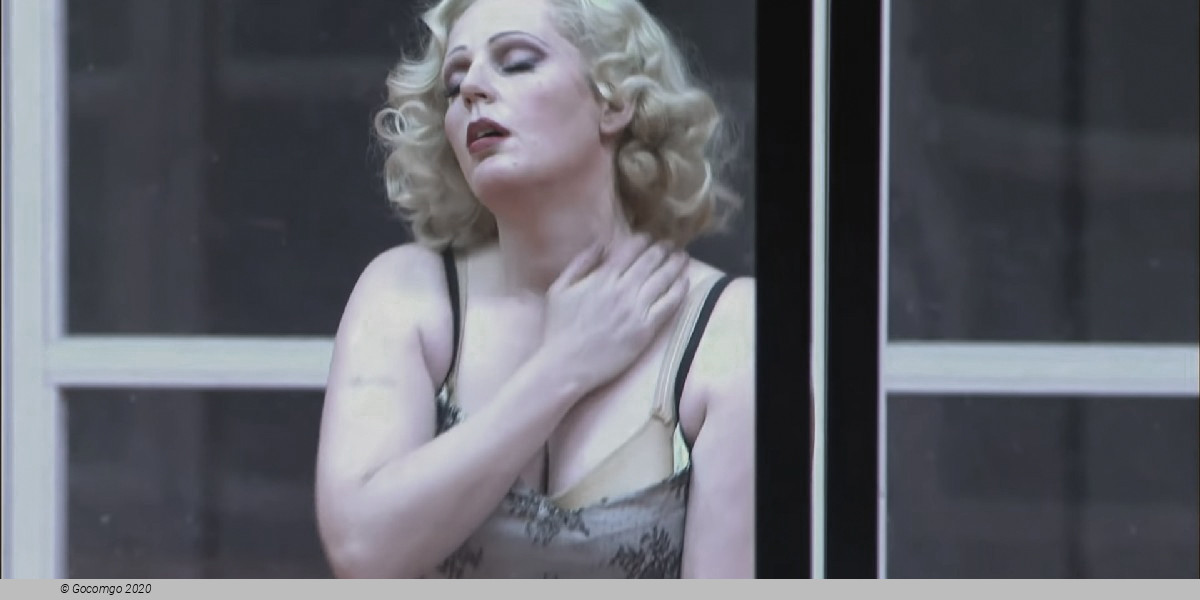
“I’m trying to interpret Ekaterina Lvovna as a good character who deserves empathy of the audience. This compassion cannot be that easily built: Ekaterina Lvovna does a series of unethical and immoral actions. This is where divergence with Leskov happens: Leskov portrays Ekaterina Lvovna as very cruel person who is all fussy and commits murders of completely innocent people, according to Leskov. I would like, on the contrary, to present this events in a different light: Ekaterina Lvovna — a woman who is talented, smart and exceptional; because of hard and terrible conditions that life puts her in, because of cruel greedy and petty merchant environment — her life becomes melancholic, uninteresting and sad... she has got no pleasures, no comfort. But here comes a workman Sergei... She falls in love, and finds happiness and whole new purpose in life in this love. Ekaterina Lvovna sacrifices herself fully to her love to Sergei. Nothing exists anymore for her besides this love to Sergei” . 

Critics often drew similarities between heroes of Shostakovich opera and The Storm by Ostrovsky. Nevertheless, Katerina Izmailova doesn’t turn into Katerina Kabanova in Shostakovich’s world. Heroine does not become ‘a ray of light in the dark realm’. Rather opposite, a tragic figure of a woman, who carries death, resembles more of Salome by Strauss or Lulu by Berg.

Totally incredible is the genre of this opera-tragic-comedy! Shostakovich illustrates image that is massive in volume and has range of meanings: it feels like the story is narrated by Leskov, Ostrovsky, Dostoevsky, Saltykov-Shchedrin, Gogol and Chekhov all at the same time.

Scope of music associations is even wider. Lady Macbeth sums up previous era of music theatre, pays the tribute to a classical opera and steps into the future (condemned and banned, it will serve as a basis for music art in Soviet Union later on). Shostakovich skillfully creates grotesque, satirical and horrible picture referring to all imaginable genres and combining something that you’d think would be impossible to combine.

Composer openly appeals to well recognized opera scenes — for example, crowd weeping in Boris Godunov by Mussorgsky, or Farewell Scene from Romeo and Juliet in Gounod opera. He even reaches out to classical opera forms (arias of revenge, heroic and lyrical arias), to dancing genres — waltz, mazurka and even jazz. This expressionist opera about fatal life and fatal passion balances on the edge of can-can and passacaille.

Score for the first edition was finished by 17 December 1932. It was premiered on 22 January 1934 at the Leningrad Maly Operny, followed by premiere at Stanislavsky and Nemirovich-Danchenko State Musical Theatre in Moscow (under name Katerina Izmailova) two days later. 

Success was unparalleled. Opera was performed almost two hundred times within two seasons. Shostakovich wrote himself: “Performance is going well. Audience listens attentively and rushes for their galoshes (type of rubber boot) only after curtain fall. Almost no one is coughing. In general, nice things are happening, and it flatters my author’s heart” . Almost immediately Lady Macbeth was recognized internationally: it was successfully premiered in Buenos Aires, Cleveland, Copenhagen, New York, Prague, Stockholm, Philadelphia, Zurich...

It was composer’s intention to make Lady Macbeth as the beginning of the whole sequence. “I want to create Soviet analogy of Der Ring des Nibelungen (English title is The Ring of the Nibelung). It will be an opera tetralogy of Lady Macbeth as a woman who personifies Das Rheingold (The Rhinegold)... This theme is leitmotif of my everyday contemplation for the next ten years” — Lady Macbeth became Shostakovich’s last (completed) opera.

After being condemned for excessive naturalism, ‘Meyerholdovschina’ (term describing Meyerhold’s style of constructivism and biomechanics in theatre), formalism, leftist deformation in the article in newspaper Pravda titled Muddle instead of Music, opera was banned and removed from repertoire.

“I went through a lot and I thought a lot during that period. And I came up with the following: I can’t cut the throat to Lady Macbeth, even with all its flaws. Perhaps I’m wrong, perhaps I lack courage. But I think you have to have courage not only to destroy your things, but also to protect them. Since second option is not possible and pointless at the moment, I don’t take any actions. Anyway, I think constantly and a lot about what happened. Important thing is to be honest. How long will it last? If you ever find out that I disassociated myself from Lady Macbeth, just know that I did it 100% honestly. It won’t happen anytime soon though, I think...”

Opera went back onstage after thirty years (!). Premiere of the second revival was on 8 January 1863 — under name Katerina Izmailova — at the Stanislavsky and Nemirovich-Danchenko Music Theatre. Eleanora Andreeva who had a title role recalled: “Dmitry Shostakovich was so happy when he went onstage for a curtain call, — applause were unbelievable, I’ve never seen anything like that before” . This is how the triumphal comeback of Shostakovich’s remarkable masterpiece to motherland opera stage have started.
* D. Shostakovich
There were three productions of this opera at The Bolshoi Theatre. First premiere (Lady Macbeth) took place on 26 December 1935. Performance conducted by Aleksander Melik-Pashaev and directed by Nikolai Smolich survived for a little over than month — until the beginning of February, 1936. After forty five years (premiered on 25 December 1980) it was back to repertoire as Katerina Izmailova (revival occurred because of creative will of maestro Gennady Rozhdestvensky and Boris Pokrovsky). 19 November 2004 maestro Peskó Zoltán and invited guest from Tovstonogov Bolshoi Drama Theatre (BDT), Temur Chxeidze, made another appearance of Lady Macbeth at the Bolshoi (it was there until 2012).

For 110th anniversary of composer The Bolshoi Theatre resumes the second edition again. Why? Tugan Sokhiev , music director of the Bolshoi and of the performance itself says: “Knowing Shostakovich as the author of symphonies, quartets, ballets, I can say that late Shostakovich is closer to me and more interesting, and this opera version allows to look deeper and further…Transparent development is what attracts me the most in Katerina Izmailova: from the start and up until the end we are tensed to the limit” .

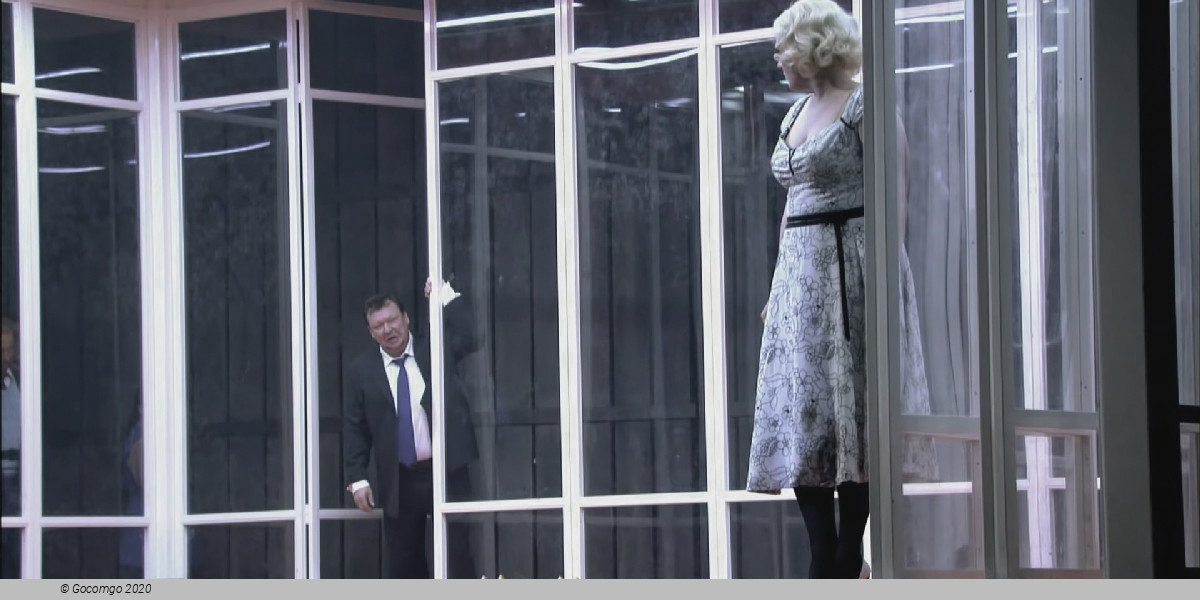
Rimas Tuminas, famous theatre director artistic director of Vakhtangov Theatre, worked on the performance. This is his opera debut in Russia. Rimas Tuminas is well-known for his interpretations of Russian classics — fresh, sudden, but surprisingly precise. He can combine irony and pathos, grotesque and tragedy, his works are always hilarious and sharp, rigid and moving, and always so human. “I want to justify everyone: and Boris and Zinoviy, and even Sergei. There are no bad or evil characters. There are simply poor”, — says the director.


History
Premiere of this production: 22 January 1934, Leningrad Maly Operny

Lady Macbeth of the Mtsensk District is an opera in four acts and nine scenes by Dmitri Shostakovich. The libretto, jointly written by Alexander Preys and the composer, is based on the novella of the same name by Nikolai Leskov. (The opera is generally translated in English as Lady Macbeth of Mtsensk.) Dedicated by Shostakovich to his first wife, physicist Nina Varzar, the roughly 160-minute opera was first performed on 22 January 1934 at the Leningrad Maly Operny, and on 24 January 1934 in Moscow. It incorporates elements of expressionism and verismo, telling the story of a lonely woman in 19th-century Russia who falls in love with one of her husband's workers and is driven to murder.

Synopsis

Although the opera shares the basic characters and outline of the play, it has a number of differences from the original story in terms of plot and emphasis. One example is in the convoy after Katerina gives Sergei her stockings: in the opera, all the women mock Katerina, whereas in the story, Sergei and Sonya mock her while Fiona and Gordyushka shame them in response to their cruelty toward her.

Act 1
Scene 1: Katerina's room

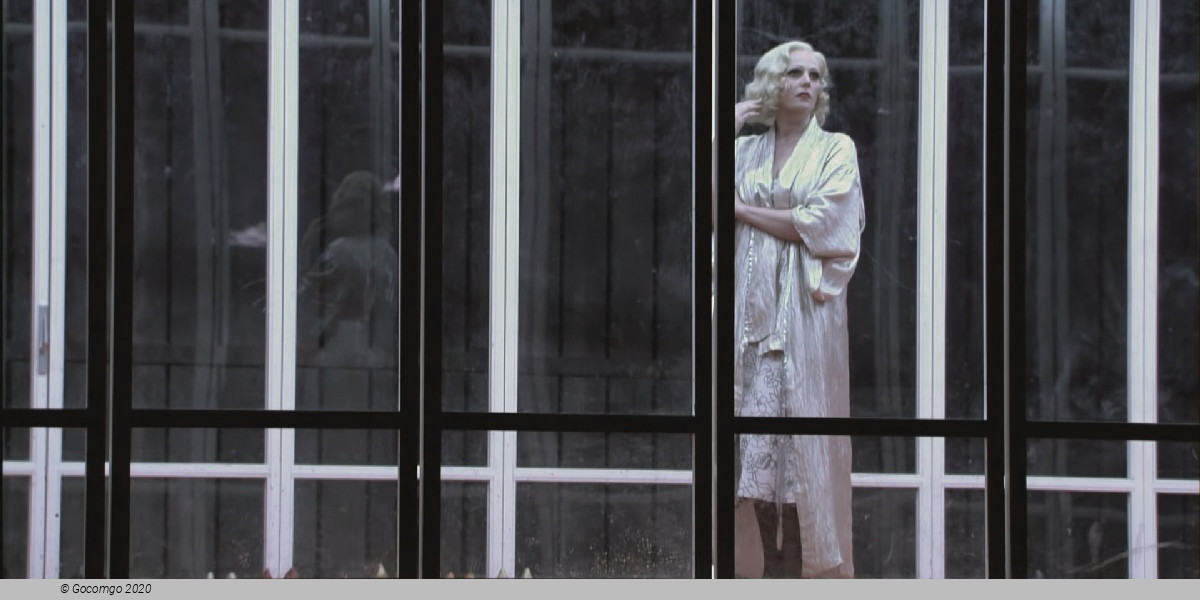
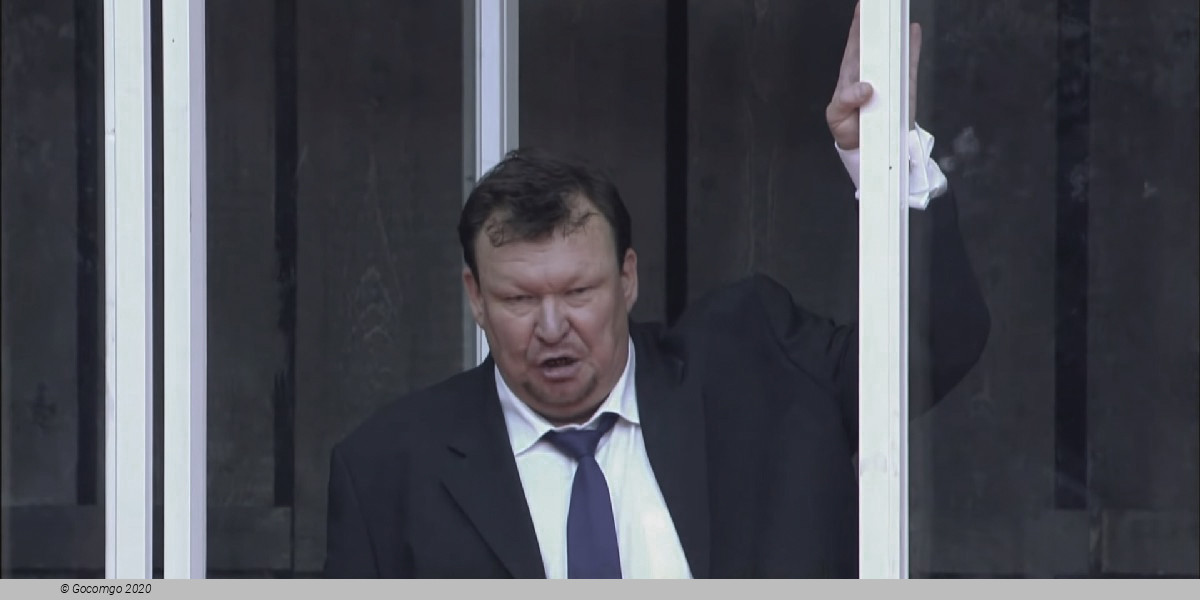
Katerina is unhappily married to Zinovy, a provincial flour-merchant. She complains to herself of her loneliness. Her father-in-law Boris, angered at her attitude in response to his saying that mushrooms are his favourite dish, says it is her fault for not producing an heir. She replies that Zinovy cannot give her a child – which Boris disdains; he then threatens her if she decides to seduce some youthful lover. Zinovy is called away on business, and Boris – against his son's inclinations – makes Katerina swear before an icon to be faithful. A servant, Aksinya, tells Katerina about the womanising new clerk, Sergei.

Scene 2: The Izmailovs' yard

Sergei and his comrades are sexually harassing Aksinya. Katerina intervenes. She berates him for his machismo and asserts that women are as brave and capable as men. Sergei is willing to prove her wrong and they wrestle; she is thrown down and Sergei falls on top of her. Boris appears. She says that she tripped and Sergei in trying to help her, fell down also. The other peasants back her up. Boris however is suspicious and roars at the peasants, telling them to get back to work before ordering Katerina to fry some mushrooms for him and threatening to tell Zinovy all about her behaviour.

Scene 3: Katerina's room

Katerina prepares to go to bed. Sergei knocks on her door with the excuse that he wants to borrow a book because he cannot sleep, but Katerina has none; she cannot read. As she is about to close the door he continues attempting to seduce her by remembering their wrestling match earlier that day. He gets into the room and forces himself on her. After this is done, she tells him to leave, but he refuses and she agrees to embark on an affair with him. Boris knocks on the door and confirms that Katerina is in bed and locks her in. Sergei is trapped in the room, and the two make love.

Act 2
Scene 4: The yard

One night a week later. Boris, unable to sleep due to unease about thieves being on the prowl, is walking in the courtyard in the pre-dawn darkness. He, remembering his own youthful days as a rake and knowing Zinovy's low libido, is considering seducing Katerina himself to fulfill his son's marital duties. He spots Sergei climbing out of Katerina's window. He catches him and publicly whips him as a burglar, then has him locked up. Katerina witnesses this but cannot stop him because she remains locked in her room. When finally she manages to climb down the eavestrough-drainpipe the other servants restrain her on Boris' order. After being exhausted by beating Sergei, Boris demands some dinner, saying that he will whip Sergei again the next day and dispatches a servant to call Zinovy back, saying that Zinovy is to be told that there's trouble at home. Katerina adds rat-poison to some mushrooms and gives them to him. As he is dying, calling for a priest, she retrieves the keys to free Sergei. The priest, called by the arriving morning shift of workers who find Boris in agony, arrives: Boris vainly tries to tell him that he was poisoned and falls back dead pointing at Katerina. Katerina, weeping crocodile tears, convinces him that Boris has accidentally eaten poisonous mushrooms and he says a prayer over Boris' body.

Scene 5: Katerina's room

Katerina and Sergei are together. Sergei querulously says that their affair will have to end due to Zinovy's impending return and wishes he and Katerina could marry – Katerina assures him that they'll marry but refuses to tell him how she'll arrange it. Sergei then falls asleep; Katerina is then tormented by Boris' ghost and cannot sleep. Later she hears Zinovy returning. He has been called back by one of the servants with the news of his father's death. Although Sergei hides, Zinovy sees Sergei's trousers and belt and guesses the truth. As he and Katerina quarrel, he whips her with the belt. Hearing Katerina's cries, Sergei emerges and confronts Zinovy, who then tries to escape and call the servants. Katerina stops Zinovy: she and Sergei then proceed to strangle Zinovy, who's finally finished off by Sergei with a blow on the head with a heavy candlestick. The lovers hide the corpse in the wine-cellar.

Act 3
Scene 6: Near the cellar

Following Zinovy's disappearance he has been presumed dead. Katerina and Sergei prepare to get married, but she is tormented by the fact that Zinovy's corpse is hidden in the wine cellar. Sergei reassures her and they leave for the wedding ceremony. A drunken peasant breaks into the cellar, finds Zinovy's body and goes to fetch the police.

Scene 7: The police station

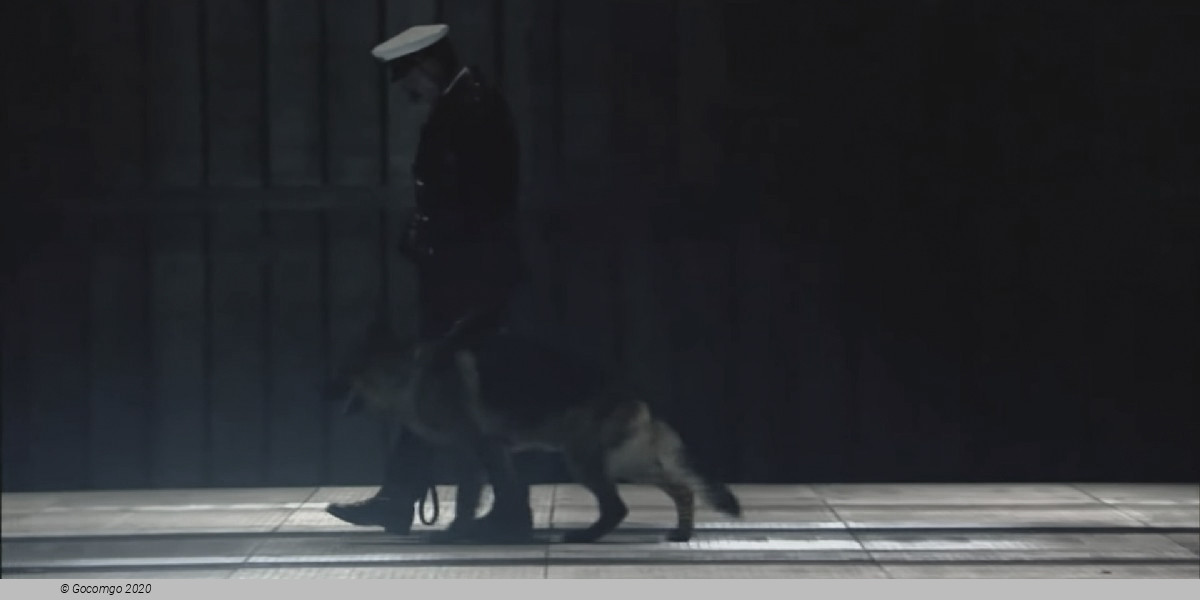
The police are complaining about not being invited to the wedding and vainly try to distract themselves by tormenting a "nihilist" schoolteacher because of atheism when the peasant arrives and gives them the opportunity for revenge.

Scene 8: The Izmailov garden

Everyone is drunk at the wedding. Katerina sees that the cellar door is open, but the police arrive as she and Sergei are trying to escape.

Act 4
Scene 9. A temporary convict camp near a bridge

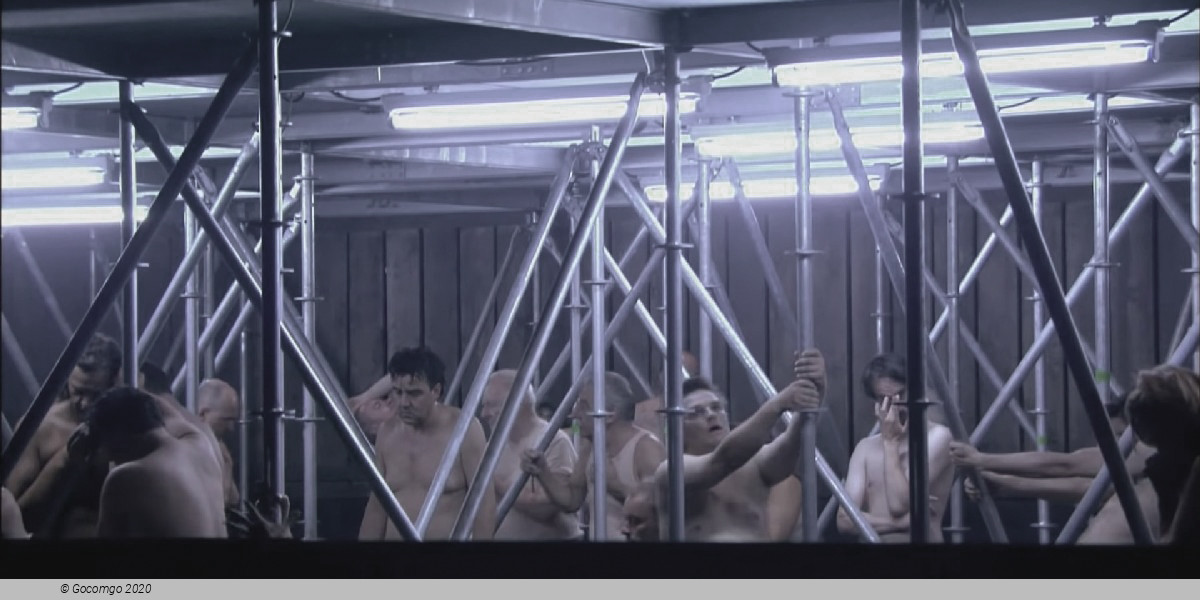
On the way to penal labour to Siberia, Katerina bribes a guard to allow her to meet Sergei. He blames her for everything. After she leaves, Sergei tries to seduce another convict, Sonyetka. She demands a pair of stockings as her price. Sergei tricks Katerina into giving him hers, whereupon he gives them to Sonyetka. Sonyetka and the other convicts taunt Katerina, who pushes Sonyetka into an icy river – also, herself, falling in. They are swept away and the convict train moves on.

Venue Info

Bolshoi Theatre - Moscow
Location   Teatralnaya Square 1

The Bolshoi Theatre is one of the world’s most iconic cultural landmarks, renowned for its grandeur, history, and artistic excellence. Located in the heart of Moscow, this legendary theatre has been home to unforgettable performances of opera and ballet for over two centuries. Its majestic architecture, world-class acoustics, and rich tradition make every event at the Bolshoi a truly unforgettable experience.

On 28 March (17 according to the old style) 1776, Catherine II granted the prosecutor, Prince Pyotr Urusov, the "privilege" of "maintaining" theatre performances of all kinds, including masquerades, balls and other forms of entertainment, for a period of ten years. And it is from this date that Moscow’s Bolshoi Theatre traces its history.

The Bolshoi building, which for many years now has been regarded as one of Moscow’s main sights, was opened on 20 October 1856, on Tsar Alexander II’s coronation day.

On 29 October 2002 the Bolshoi was given a New Stage and it was here it presented its performances during the years the Main Stage was undergoing massive reconstruction and refurbishment.

The reconstruction project lasted from l July 2005 to 28 October 2011. As a result of this reconstruction, many lost features of the historic building were reinstated and, at the same time, it has joined the ranks of most technically equipped theatre buildings in the world.

The Bolshoi Theatre is a symbol of Russia for all time. It was awarded this honor due to the major contribution it made to the history of the Russian performing arts. This history is on-going and today Bolshoi Theatre artists continue to contribute to it many bright pages.

The Bolshoi Ballet and Bolshoi Opera are among the oldest and best known ballet and opera companies in the world. It is by far the world's biggest ballet company, with more than 200 dancers.

Important Info
Type: Opera
City: Moscow, Russia
Starts at: 19:00
Acts: 4
Intervals: 1
Duration: 3h 25min
Sung in: Russian
Titles in: English
Top of page