Part One
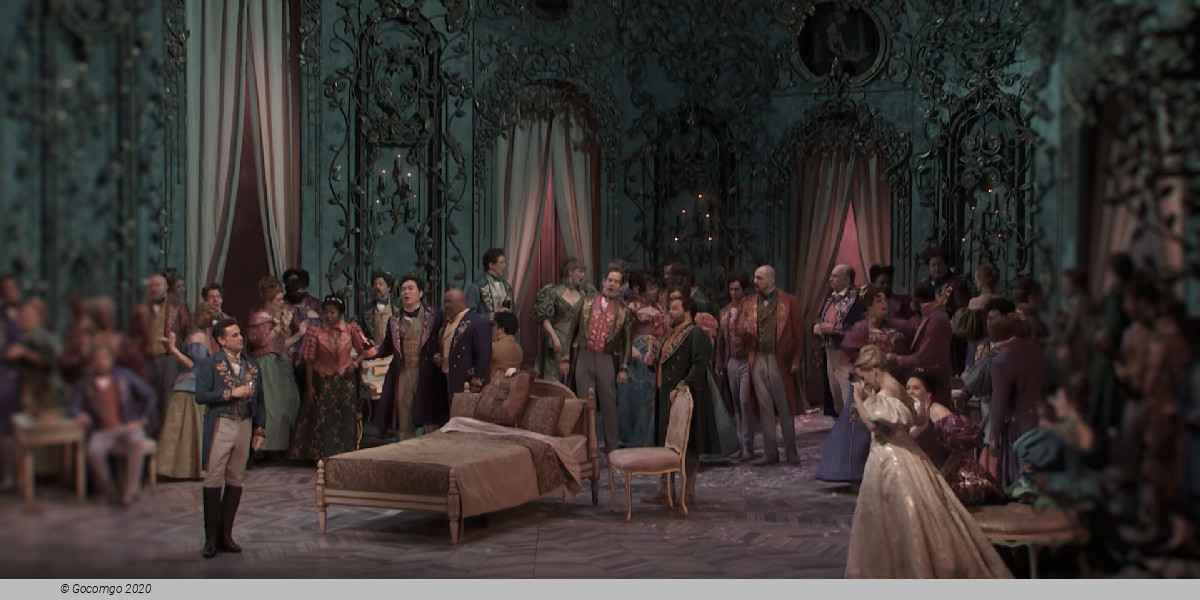
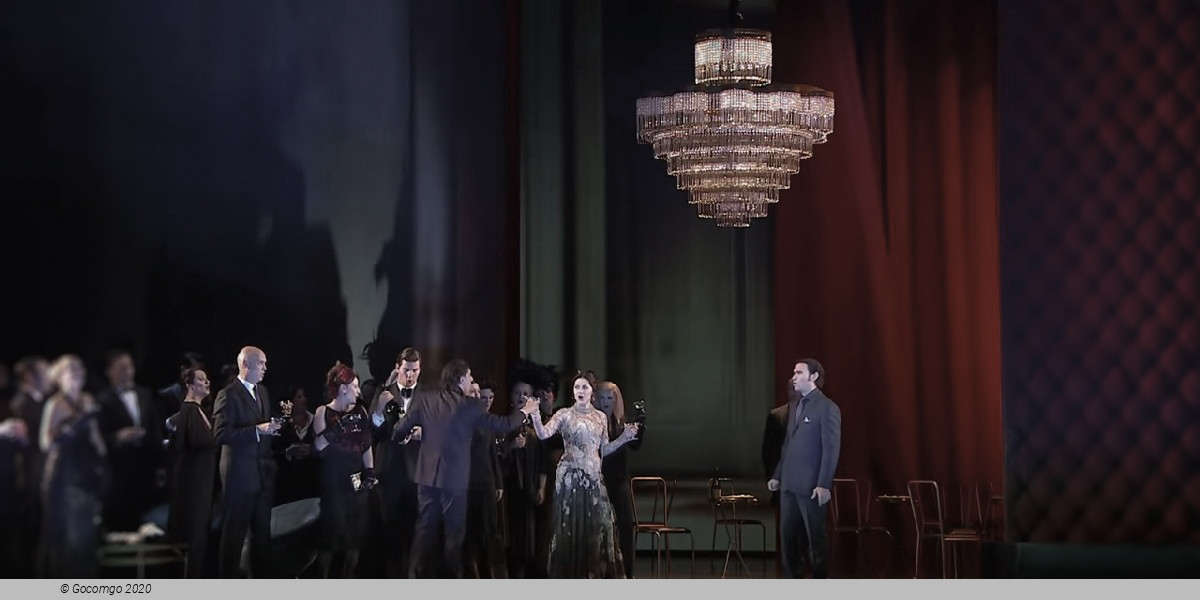
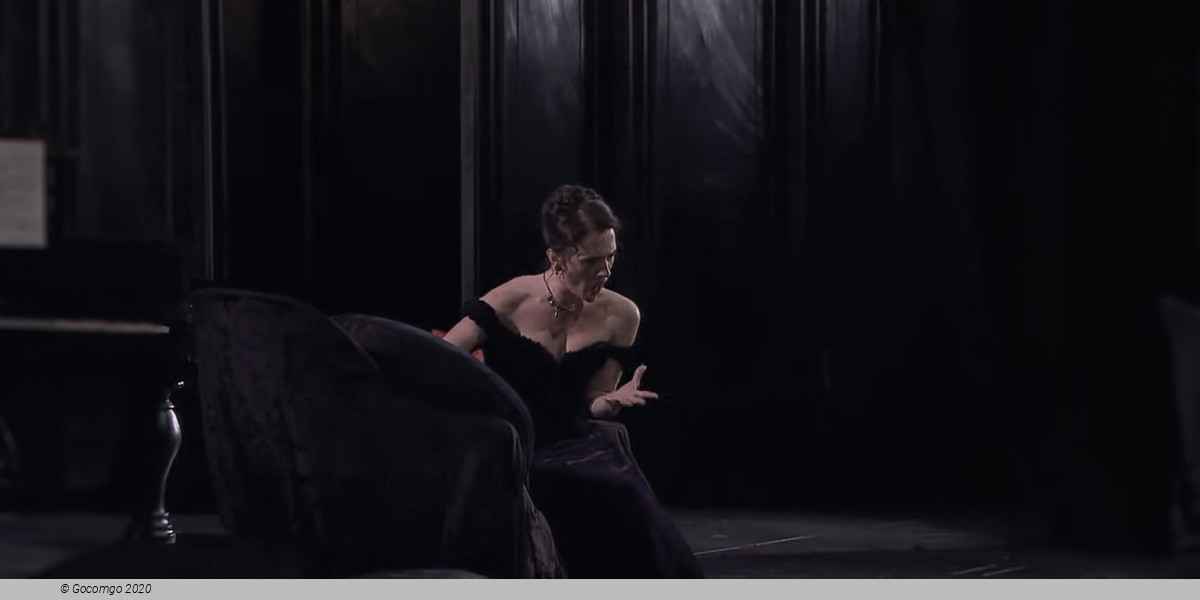
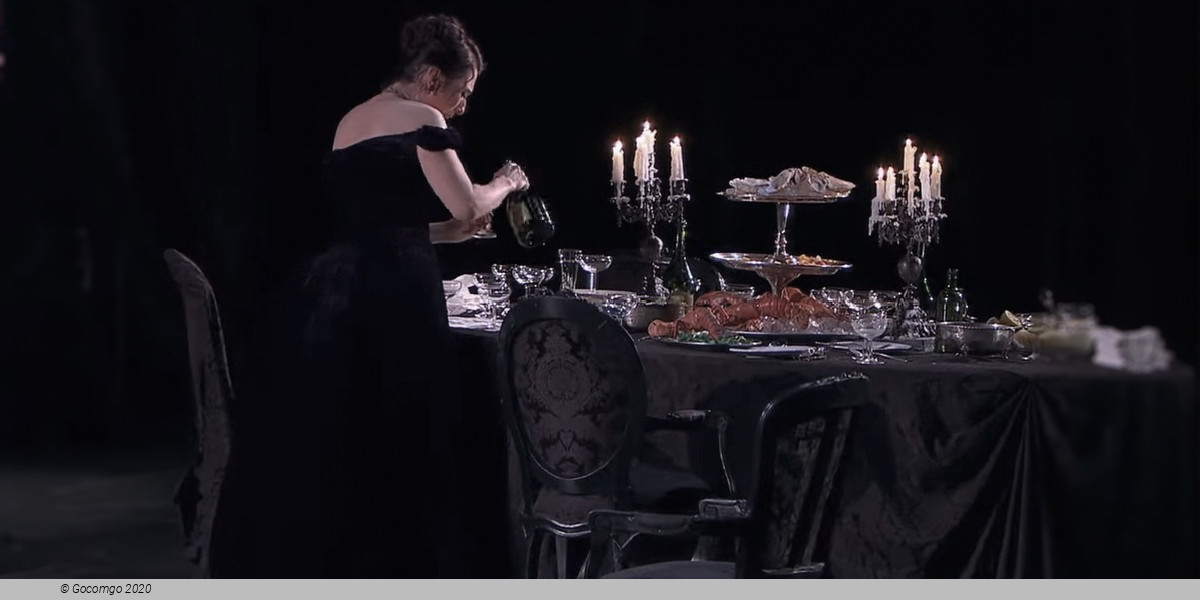
Alfredo Germont arrives at a party at the home of Violetta Valéry, a renowned courtesan. She is surprised to learn of his devotion to her, and of his concern during her recent illness. Alfredo leads a toast to love; Violetta responds with a toast to pleasure and excitement. Feeling faint, she excuses herself to rest. Alfredo follows and begs her to allow him to love and care for her. She tells him she is not interested in such heroic commitment, but invites him to return the next day. Alone, she wonders if she is capable of experiencing love. Dismissing the idea as nonsense, she determines to live for freedom and pleasure alone.
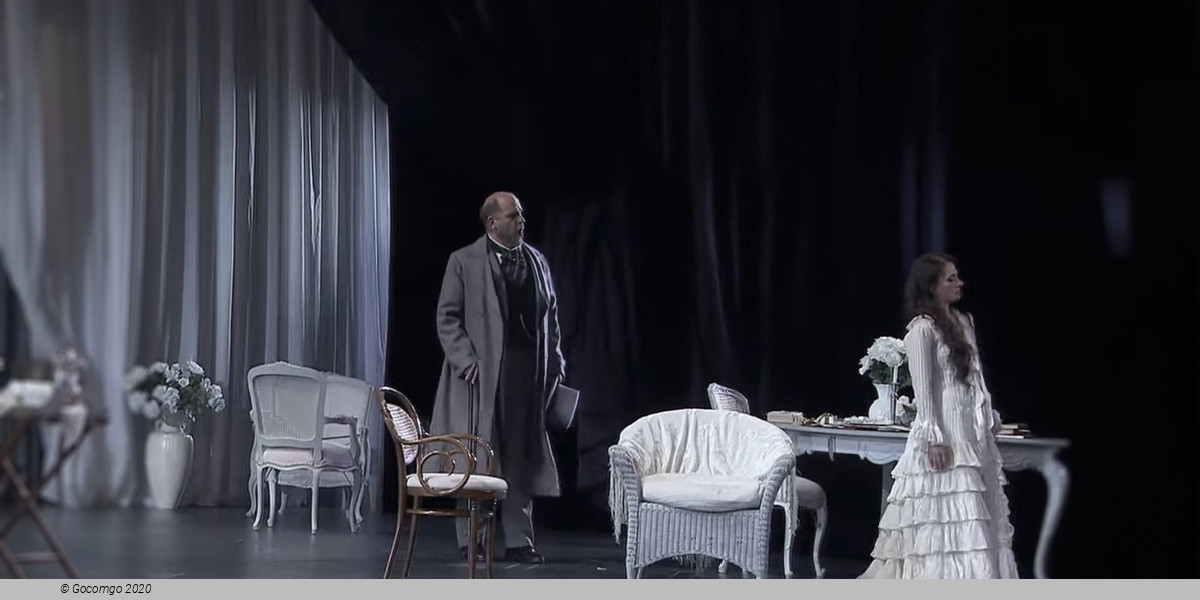
Violetta flees her extravagant life in Paris to be with Alfredo. After learning that she plans to sell her belongings to maintain their country retreat, Alfredo goes to Paris to pay their debts. While he is away, Giorgio Germont visits Violetta. He tells her that Alfredo, his son, intends to give her all his possessions. She tells the elder Germont that she would never accept and reveals that she is making sacrifices to maintain their life together. Although impressed by her nobility, Germont begs her to leave his son, as her association with the family will ruin his daughter’s future prospects. Violetta finally agrees, asking only that, after her death, Germont tell his daughter the truth. Later, when Alfredo receives a letter from Violetta, claiming she no longer loves him, he is devastated.
Part Two
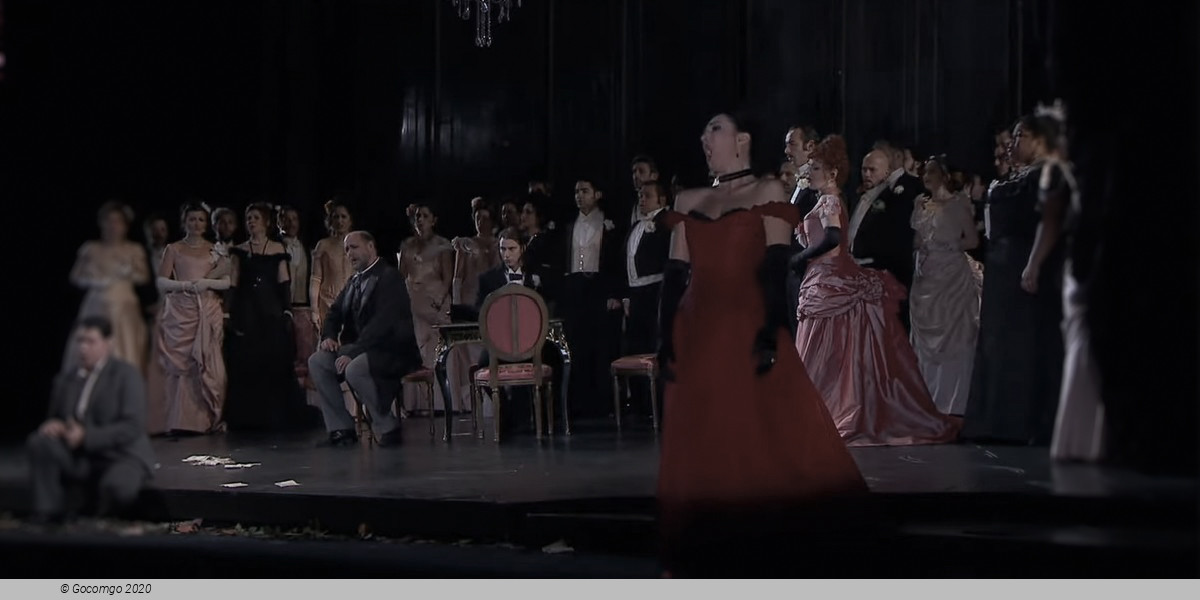
Violetta attends a party with her new protector, Baron Douphol. The men gamble, and Alfredo is the winner. Violetta pulls Alfredo aside and begs him to leave; he refuses and threatens to duel with the Baron. Unable to break her promise to the elder Germont, Violetta insists that she loves the Baron. Furious and hurt, Alfredo calls the guests together and publicly insults Violetta.
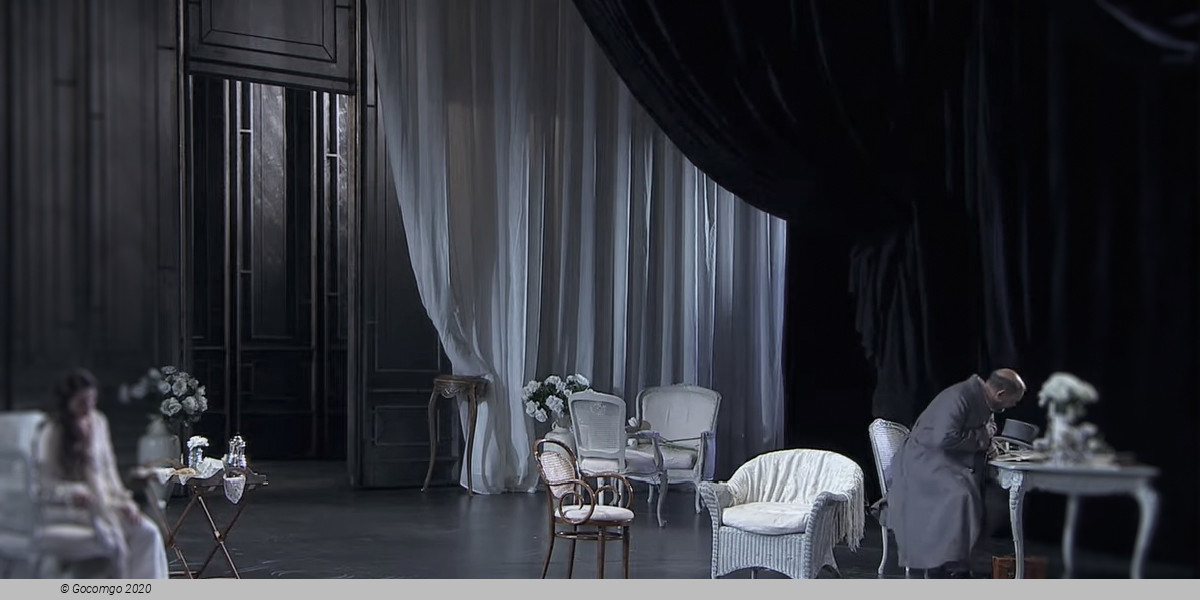
Now on her deathbed and tended by Annina, Violetta re-reads a letter from Giorgio Germont. According to the letter, Alfredo went abroad after dueling with the Baron; his father wrote to him there, explaining Violetta’s sacrifice. Alfredo arrives, asking forgiveness and pledging eternal love. Violetta expresses hope for their future together, but she is very weak. Alfredo sends Annina for the Doctor. He arrives with Giorgio Germont, who reproaches himself for his earlier behavior toward Violetta. He asks forgiveness and pledges to accept her as a daughter, but he is too late.
Set in and around Paris in about 1850.
Act I
Violetta Valéry, a Parisian courtesan, greets the guests at her salon. Among them are Flora Bervoix, the Marchese D’Obigny, Baron Douphol and Gastone, who introduces Violetta to a new admirer of hers, Alfredo Germont. The young Germont, who has been admiring her from afar, joins her in a drinking song. An orchestra strikes up in an adjacent room, inviting the guests to dance. As the guests make their way to the ballroom, Violetta, who is suffering from consumption, feels faint; she therefore sends the guests on ahead and retires to her boudoir to recover. Alfredo enters and, realising that they are alone, admits his love for her. She replies that love means nothing to her. She
is, however, touched by the young man’s sincerity and promises to meet him the following day.
When the guests have departed, she asks herself whether Alfredo is the man she could love. Despite
the strains of Alfredo’s love song drifting in from outside, she decides she prefers her freedom.
Act II
scene 1
A few months later: Alfredo and Violetta have set up house together in the country, outside Paris. Alfredo says how happy they are, but when Violetta’s maid Annina lets on that Violetta has been selling her belongings to pay for the house, he hastens into town to raise the money himself. Violetta comes in search of him and discovers an invitation from her friend Flora to a soirée that very night. Violetta has no intention of returning to her former life, but she is forced to reconsider
on encountering Alfredo’s father. He is very taken with Violetta and her civilised manners but orders her to renounce Alfredo: his son’s scandalous liaison with Violetta is threatening his daughter’s forthcoming marriage. Violetta considers his demand unreasonable, but before long Germont succeeds in persuading her. Alone and desolate, Violetta sends a reply to Flora accepting her invitation and sits down to write a farewell letter to Alfredo. His return takes her by surprise, and she can barely restrain herself as she passionately reminds him how much she loves him before
rushing out. As the maid brings him Violetta’s farewell letter, Germont returns to console his son and reminds him of life in their family home in Provence. Alfredo spots Flora’s invitation and suspects that Violetta has left him for another man. In a rage, he decides to confront her at the soirée.
scene 2
At the soirée, Flora hears from the Marchese that Violetta and Alfredo have parted. Flora asks the guests to make way for a visiting troupe of performing gypsies. They are followed by matadors and a song about Piquillo and his sweetheart. Alfredo rushes in and delivers some bitter comments about love and gambling. Violetta appears on the arm of Baron Douphol, who challenges Alfredo to a game of cards and loses a small fortune to him. As the guests go in to supper, Violetta asks to have a word with Alfredo in private. She is afraid the Baron will be enraged by his loss and urges Alfredo to leave. Alfredo misunderstands her and orders her to admit she loves the Baron. Disappointed by Alfredo’s reaction, Violetta lies and confesses that yes, she does. Alfredo calls the other guests to gather round in order to denounce his former beloved in public and throws the money he has won at her feet. Germont, arriving at that very moment, expresses his disapproval of his son’s behaviour. The guests likewise rebuke Alfredo and Douphol challenges him to a duel.
Act III
Violetta’s bedroom, six months later. Dr Grenvil tells Annina that her mistress has not long to live –
the consumption has taken its toll. Alone, Violetta rereads a letter from Germont saying that the Baron was only slightly wounded in his duel with Alfredo, that Alfredo has heard the truth and is
coming to beg her pardon. But Violetta realises it is too late. It is carnival time in Paris and, the sounds of the revellers having passed, Annina rushes in to announce Alfredo. The lovers ecstatically plan to leave Paris. Germont enters with the doctor just as Violetta rises from her bed with the last of her strength. Feeling a sudden rush of life, she sways and falls dead at her lover’s feet.




 Teatralnaya Square 1