Time: The year 1682
Place: Moscow
In some performances and recordings of the opera some segments are deleted, depending on the interpretation of the original notes, which are described in.
Act 1
Moscow, Red Square
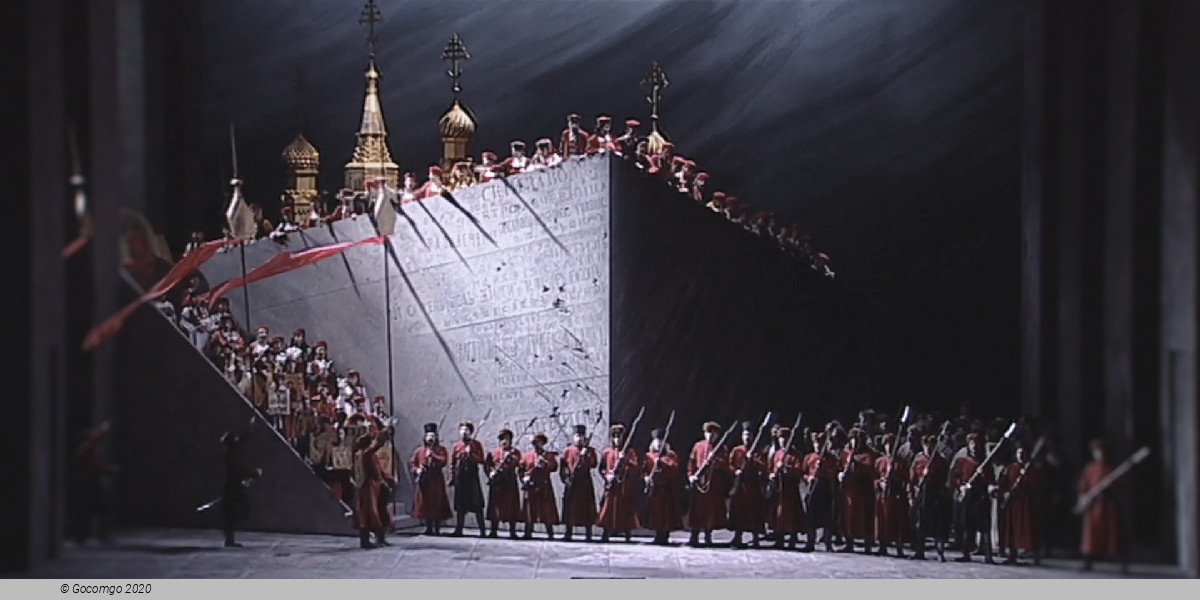
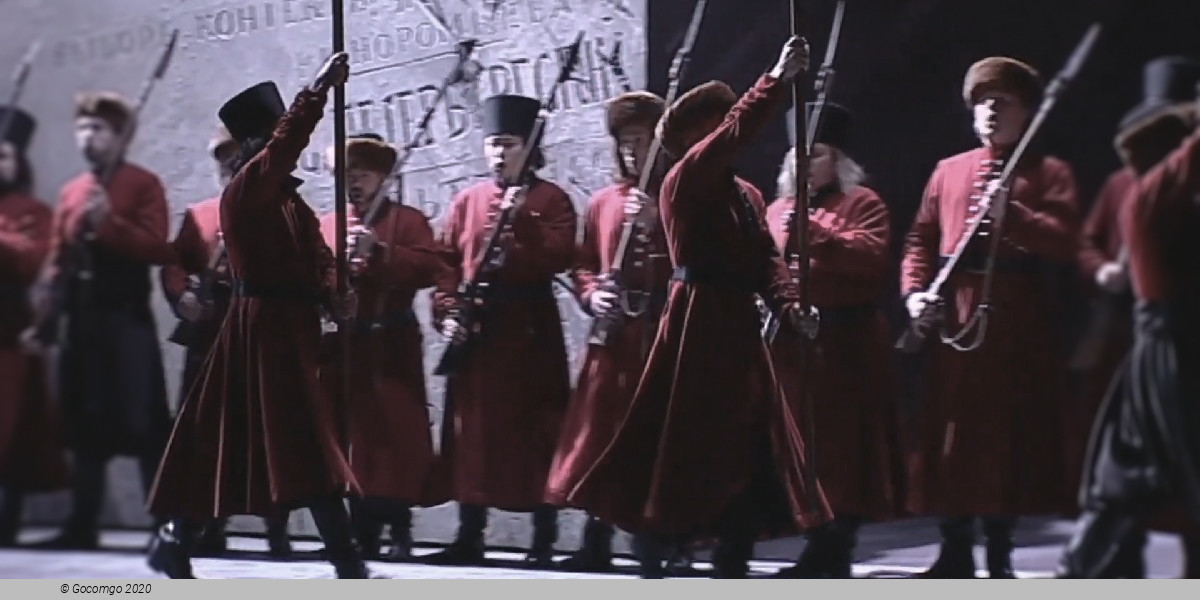
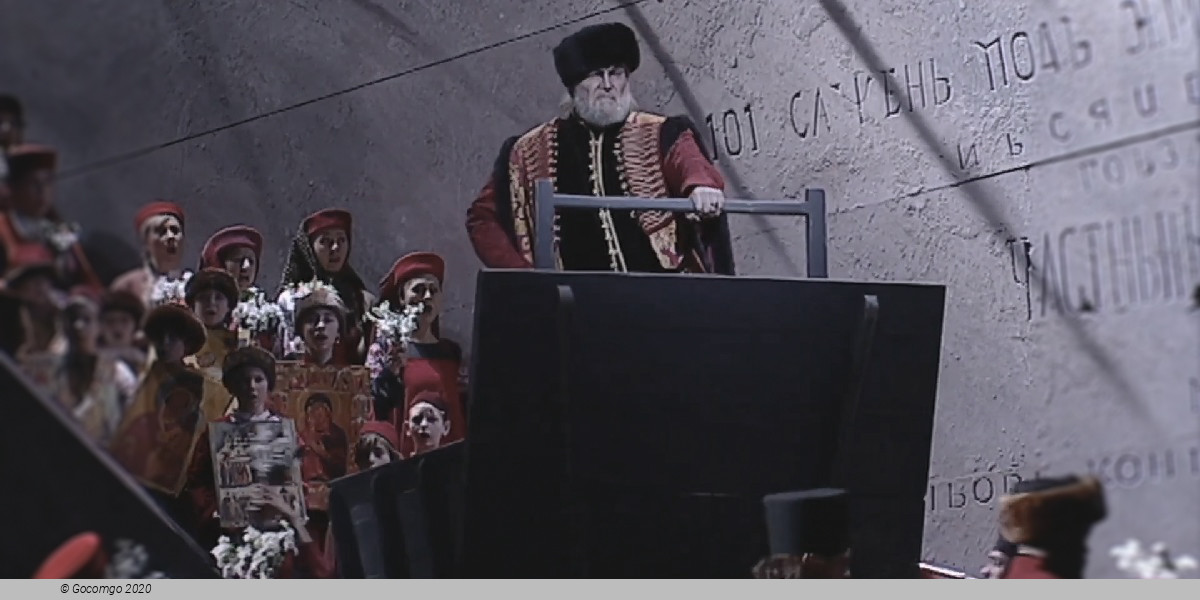
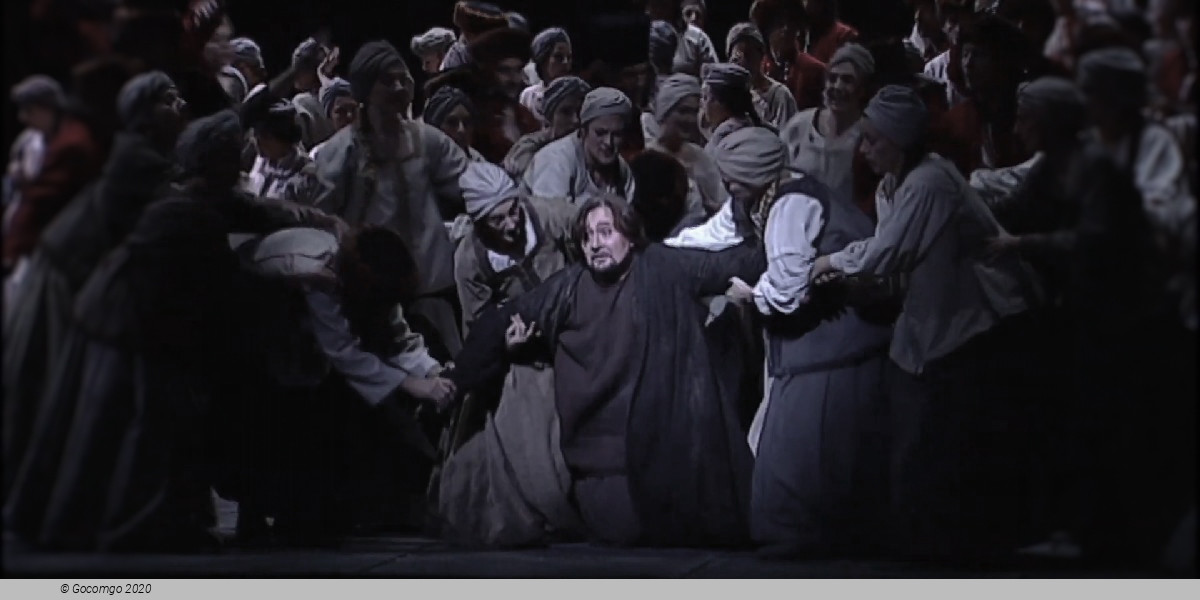
In the morning in the Red Square, a member of the Streltsy (named Kuzka) sings his drunkenness off while two other Streltsy talk about their rowdy activities the night before. A scribe arrives; they all pick on him and then leave. Shaklovity, a Boyar and agent for the regent and the Tsars, enters and dictates a letter to the court, warning of a rebellion planned by Prince Ivan Khovansky (captain of the Streltsy Guards) and the Old Believers. After finishing the letter he warns the scribe not to repeat what he heard. The scribe, terrified by the prospect of being involved in a political intrigue, signs the letter with a false name. [The crowd enters and they force the scribe to read a new proclamation that has been published in the public square, which describes the atrocities committed by the Streltsy.] The crowd laments the state of Russia. Prince Ivan Khovansky enters promising an adoring crowd that he will defend the "young Tsars" (Ivan V and Peter I). He and the crowd exit.
Prince Andrey, Khovansky's son, chases in Emma, a German girl, intending to assault her. Marfa, an Old Believer and Andrey's former fiancée, interferes. Andrey threatens to kill Marfa, but Prince Ivan returns and decides to capture Emma himself. The ensuing quarrel between father and son is interrupted by the arrival of Dosifey, the leader of the Old Believers. Dosifey berates everyone for being so quarrelsome and un-Christian, and asks them all to join the Old Believers in reuniting Russia. Prince Ivan Khovansky leaves with Prince Andrey Khovansky. Marfa leaves with Emma. Dosifey, left alone, prays for the future of Russia.
Act 2
Summer study of Prince Vasily Golitsin
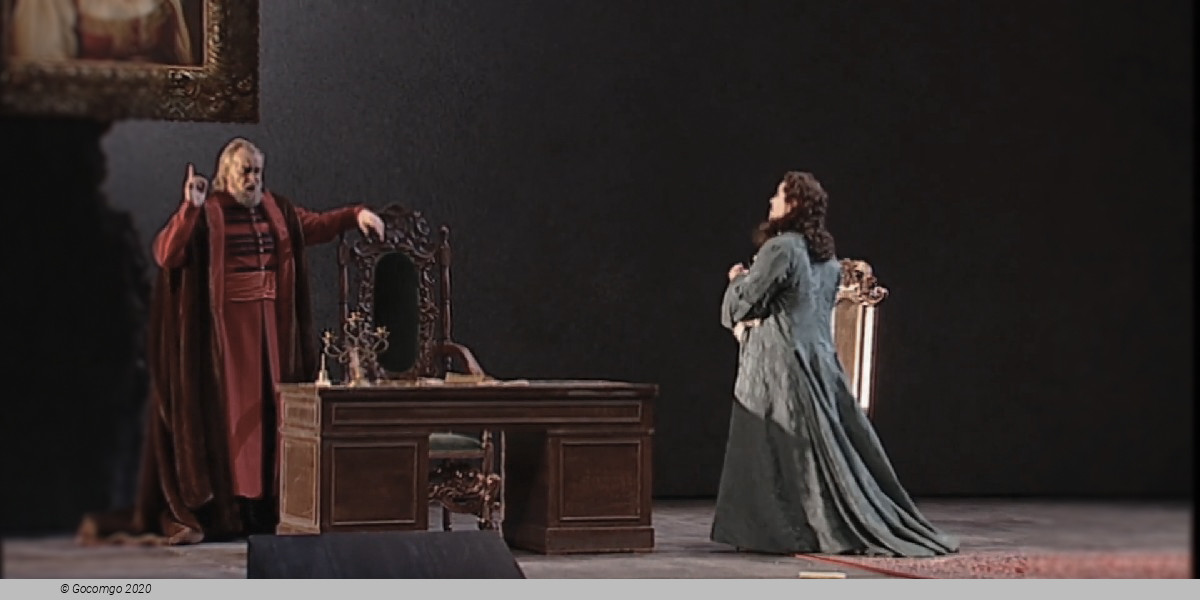
Golitsin, a nervous progressive nobleman, reads letters from his lover [and his mother, who warns him to keep himself pure]. [A German Lutheran pastor enters to complain of the murder of one of the scribes in his community by the Streltsy and Prince Andrey Khovansky's pursuit of Emma. Prince Golitsin tries to appease the pastor and offers some form of political advantage that the pastor promises to collect later, although Golitsin flatly refuses to let him build another church; then the Prince wonders about the true motives behind the pastor's actions]. The Prince hires Marfa to tell his fortune in secret. She predicts that he will fall from power and face exile; he dismisses her and orders his servant to kill her. Once alone he ponders on all the acts that he has made to advance Russia, but is interrupted when Prince Ivan Khovansky enters without being announced. (Ivan is ironically disrespecting Golitsin, who himself reformed the tradition of announcing noble visitors.) Prince Khovansky complains that Golitsin has been interfering with his friends in the nobility and diminishing the privileges of nobility, and states that only Tartars believe that all men are equal, and questions whether Russia shall become "tartarized". A quarrel ensues, [each making insulting remarks about the other's military campaigns,] but Dosifey enters and draws their attention away from their argument by criticising both of them: Golitsin for his modern views, and Prince Ivan for letting the Streltsy get drunk and run around making trouble all the time. [ In the discussion with Dosifey it turns out that he was once Prince Myshetsky who renounced all worldly matters, to which Prince Ivan Khovansky says that a Prince must die a Prince.] Marfa comes back, there has been an attempt on her life but she was saved by the Petrovskiy (the Tsar's personal army). After her enters Shaklovity, who menacingly announces that the Tsar has been warned of the planned rebellion and has issued orders to arrest the Princes Khovansky. Without resolving the drama, the act ends.
Act 3
The Streltsy Quarter, south of the Moscow River
As Old Believers chant a hymn for the future of Russia, Marfa sings of her lost love for Prince Andrey Khovansky. [Susanna, a fellow Old Believer, scolds Marfa until Dosifey appears and drives Susanna away.] Marfa admits to Dosifey that she still loves Prince Andrey Khovansky. Dosifey tells her to pray for relief. They exit and Shaklovity, who until now had been presented as a purely threatening character, sings a haunting prayer for troubled Russia's protection from the Streltsy (he refers to them as "mercenaries") and from the rebellious powers they obey. Hearing them coming he exits; some of the Streltsy enter and sing a drinking chorus followed by their wives who scold them about their drinking. [The soldiers ask Kuzka to help them with their wives; he ends up organizing an entire celebration with all the Streltsy and their women.] The scribe arrives and informs them that Tsar Peter's troops have initiated an attack on Streltsy—Russian soldiers. The Streltsy call their leader, Prince Ivan Khovansky, who enters and begs their forgiveness for declining to lead them into retaliation; the new Tsar is very powerful, he explains, and their time of power is over.
Act 4
Scene 1: A richly furnished chamber in Prince Ivan Khovansky's palace
Prince Ivan Khovansky is being entertained by the women in his retinue but they are interrupted by a servant of Golitsin (Varsonofyev) who has come to warn him that he is in danger. Prince Ivan Khovansky ignores the warning and has the messenger flogged. He orders his Persian slaves to dance for him. Shaklovity enters and stabs Khovansky to death. Shaklovity scornfully imitates the servants' song over the Prince's corpse.
Scene 2: Moscow. The square before the Cathedral of Vasiliy the Blessed
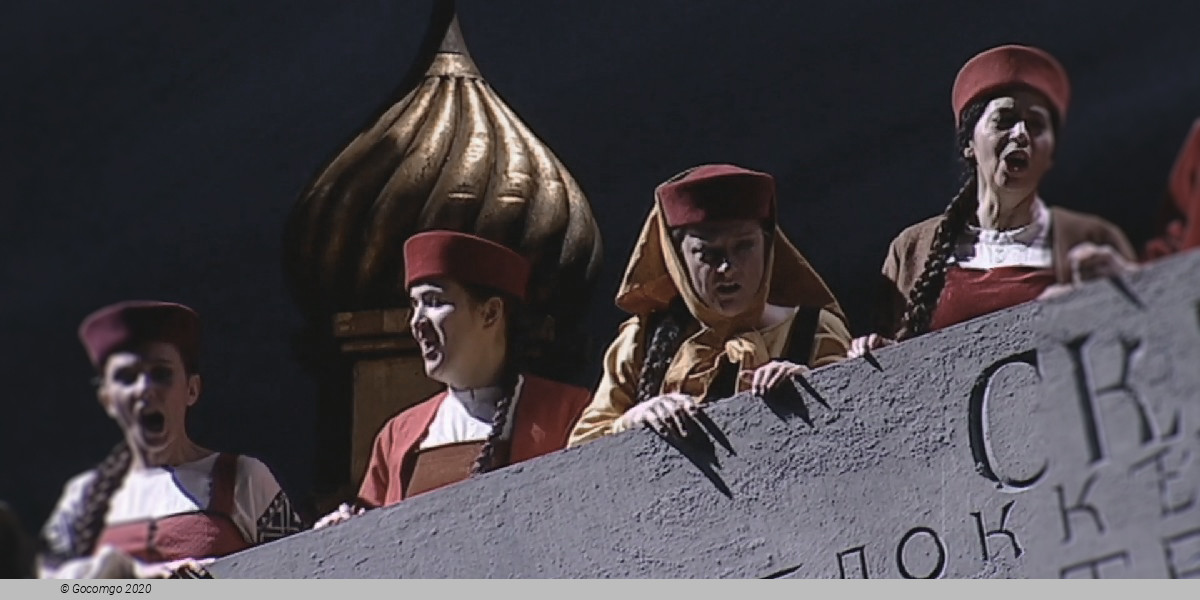
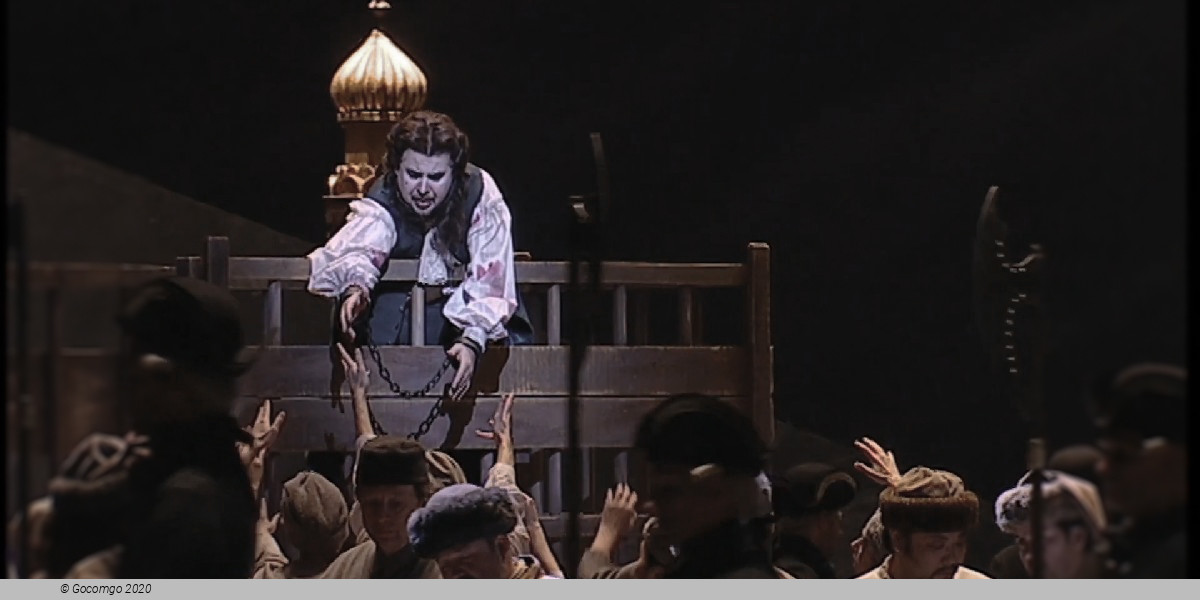
Prince Golitsin is led into exile. Dosifey mourns the conspirators' downfall and the success of Tsar Peter and learns that the Imperial Council has decreed that the Old Believers are next. He discusses with Marfa that an everlasting example must be set by the Old Believers and agree that they shall immolate themselves. Prince Andrey Khovansky enters and confronts Marfa about where she hid Emma, but Marfa tells him that she is safely on her way back to Germany, her father and fiancé. Prince Andrey Khovansky threatens that he will have her burnt as a witch and calls for the Streltsy with his horn but instead a menacing sound is heard. Marfa offers sanctuary to Prince Andrey Khovansky with the Old Believers after she tells him of his father's murder. The Streltsy are led to their execution. Tsar Peter, through an agent, intervenes to pardon them.
Act 5
A pine forest, a secluded monastery, a moonlit night
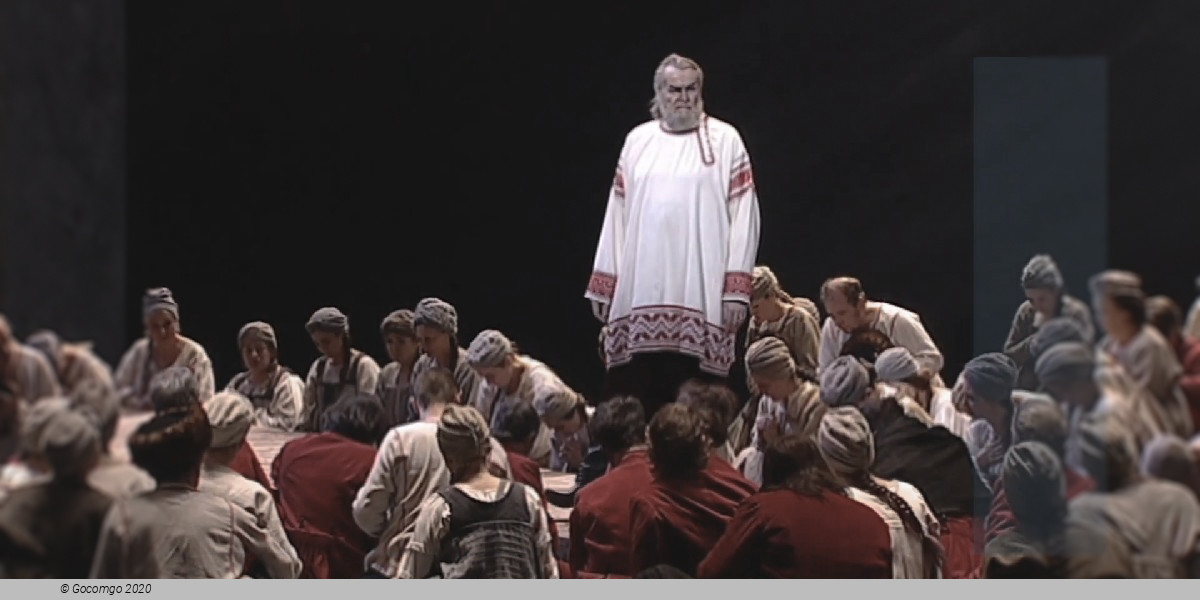
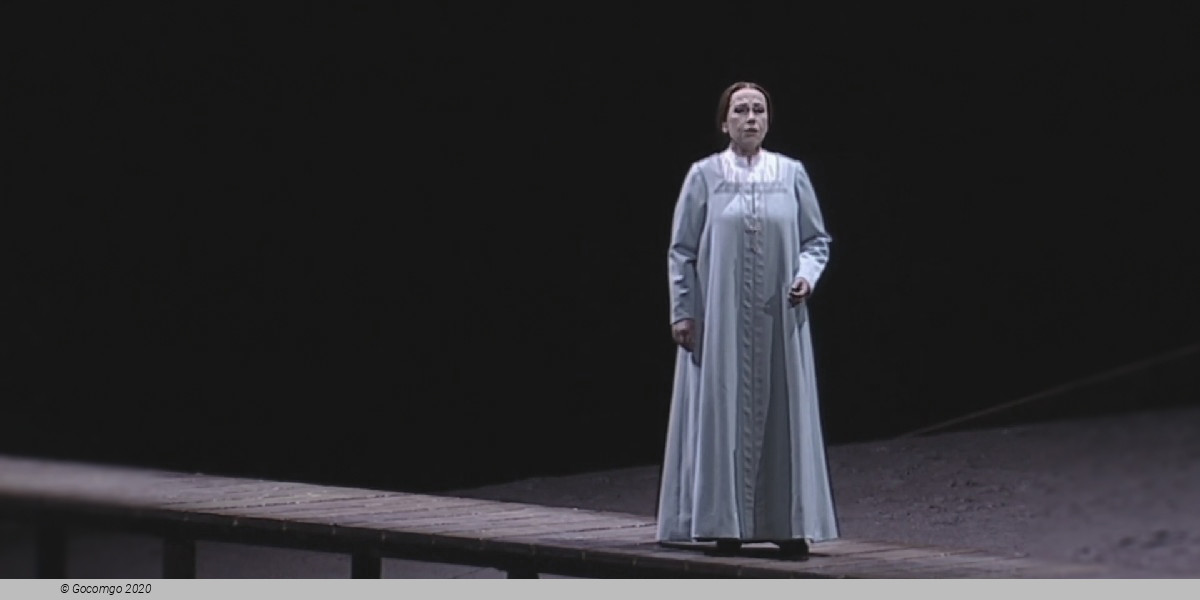
Dosifey and his followers have taken refuge in a hermitage in the forest. Although he is weighed down by the sorrows and sufferings of the brethren, he remains defiant and determined to win a "crown of glory" in fire and flame ("Here, in this holy place"). He exhorts the brethren to don white clothing and light candles, preparing for immolation. They enter the hermitage. Prince Andrey Khovansky enters, singing of his lost love, still seeking Emma. Marfa sings to him, reminding him of their own love, and assuring him that she will not leave him. Dosifey and the brethren return, dressed in white and carrying candles. They build a funeral pyre. Offstage trumpet calls herald the approach of Tsar Peter's soldiers. Marfa sings to Andrey of the hopelessness of their situation. The trumpet calls sound again. Dosifey exhorts the brethren to remain strong one last time. Marfa lights the pyre. The schismatics sing a final hymn ("God will save me"). As Dosifey, Marfa, Prince Andrey Khovansky, and the Old Believers perish in the flames, [Tsar Peter's Preobrazhensky soldiers arrive in a vain attempt to capture them.]
Mussorgsky's original vocal score remained unfinished. The final portion of the libretto must be reconstructed from Mussorgsky's themes. The Rimsky-Korsakov edition (1883) adds to the final hymn figures representing flames, trumpet fanfares, and a final reprise of the "March of the Preobrazhensky Regiment" that concludes Act 4. The Stravinsky version of the finale (1913) follows Mussorgsky's notes more closely regarding the key of the chant (A-flat minor) and that the ending must fade away. The Shostakovich version attempts to provide a musical conclusion of the opera by bringing back the theme of the sunrise from the Prelude to the opera.


 Teatralnaya Square 1