Act I
Scene 1
A suburb of Marseilles, the town which gave its name to the French National anthem. Through the forest a large group of people are on the move. This is the battalion of the Marseillais who are on their way to Paris. A cannon which they are taking with them indicates their intentions. Among the men of Marseilles is Philippe.
It is by the cannon that Philippe makes the acquaintance of the peasant girl Jeanne. He kisses her on parting. Jeanne’s brother, Jerome, longs to join the Marseillais.
In the distance is the castle of the Marquis Costa de Beauregard, the local seigneur. Hunters are returning to the castle, among whom are the Marquis and his daughter, Adeline.
The ’noble’ Marquis makes advances to the pretty peasant girl, Jeanne. The latter tries to free herself from his pawing, but only manages to do so with the help of Jerome, who comes to hissister’s defense.
Jerome is beaten up by the hunters from the Marquis’s suite, and thrown into a prison cellar. Adeline, who has observed the scene, frees Jerome, and in their hearts a mutual feeling for each other is born. The sinister, old woman Jarcasse, who has been employed by the Marquis to keep an eye on his daughter, informs her adored master of the escape. The Marquis slaps his daughter and orders her to get into a carriage, accompanied by Jarcasse. They are going to Paris.
Jerome bids farewell to his parents. It is not safe for him to remain on the Marquis’s estate. He and Jeanne go off with a detachment of the Marseillais. Their parents are inconsolable.
Volunteers are enrolling in the detachment. Together with the crowd, the men of Marseilles dance a farandola. The men put on red caps in place of their old headwear. Jerome is given a gun by the leader of the insurgents, Gilbert. Jerome and Philippe ’harness’ themselves to the cannon. The detachment moves off to Paris to the strains of the Marseillaise.
Scene 2
The sound of the Marseillaise gives way to an elegant minuet. The royal palace. The Marquis and Adeline have arrived here. The Master of Ceremonies announces the start of the ball.
Rinaldo and Armida, a court ballet, with the Paris stars Mireille de Poitiers and Antoine Mistral:
Sarabande — Armida and her friends. Armida’s forces return from a campaign. Prisoners are led in. Among them is Prince Rinaldo.
Amour aims an arrow at the hearts of Armida and Rinaldo. Variation — Amour. Armida frees Rinaldo.
Pas de deux Rinaldo and Armida.
The phantom of Rinaldo’s bride appears. Rinaldo abandons Armida and sails off in a boat after the phantom. Armida conjures up a storm. Waves cast Rinaldo onto the seashore, he is surrounded by furies.
Dance — Furies. Rinaldo falls dead at Armida’s feet.
King Louis XVI and Marie Antoinette make their entrance. Greetings, oaths of loyalty and toasts to the prosperity of the monarchy follow.
The tipsy Marquis chooses the Actress as his next ’victim’, and starts to ’court’ her in the same way as he had Jeanne, the peasant girl. The strains of the Marseillaise are heard from the street. The courtiers and officers panic. Making use of this, Adeline escapes from the palace.
Act II
Scene 3
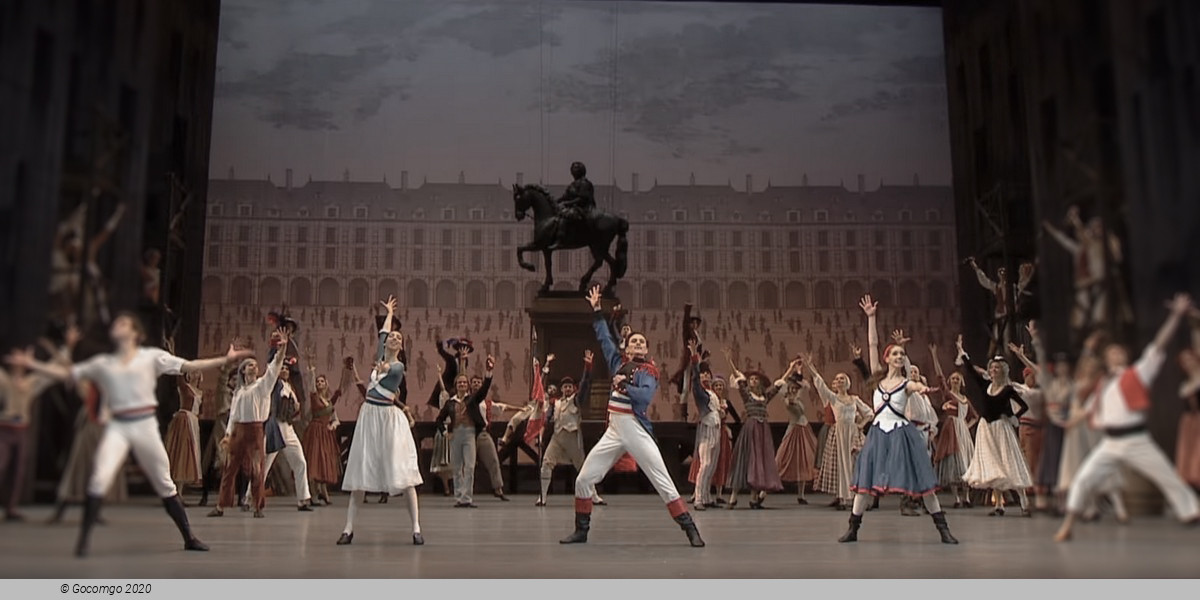
A square in Paris, into which the men of Marseilles march, among whom are Philippe, Jerome and Jeanne. A shot from their cannon is to give the signal for the start of the assaulton the Tuileries.
Suddenly, in the square, Jerome catches sight of Adeline. He rushes over to her. The sinister, old woman Jarcasse spies on their meeting.
In the meantime, in honor of the arrival of the detachment of men from Marseilles, a barrel of wine is rolled out into the square. Dances get underway: the Auvergne dance gives way to theMarseillaise dance, then the temperamental dance of the Basques starts up, in which all the chief characters take part: Jeanne, Philippe, Adeline, Jerome and Gilbert, the captain of the Marseillais.
In the crowd, flushed with wine, petty brawls break out here and there. Stuffed dolls of Louis and Marie Antoinette are torn to pieces. Jeanne with a spear in her hands dances the carmagnole to the singing of the crowd. Philippe, who is drunk, lights the fuse, there is volley of cannon fire, after which the crowd dashes off to storm the Tuileries.
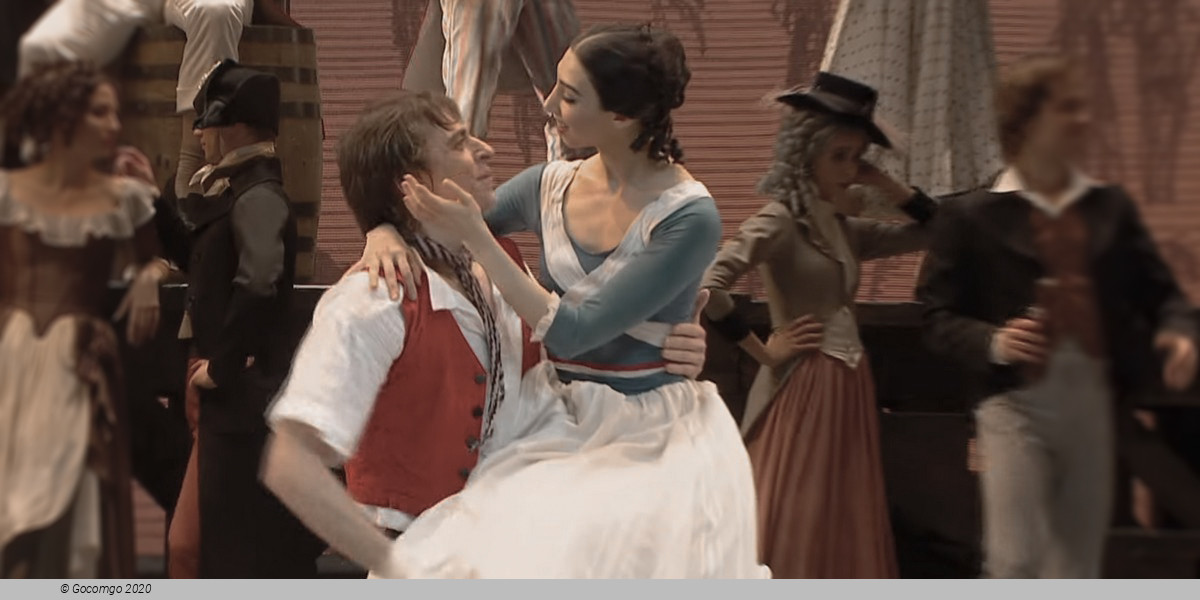
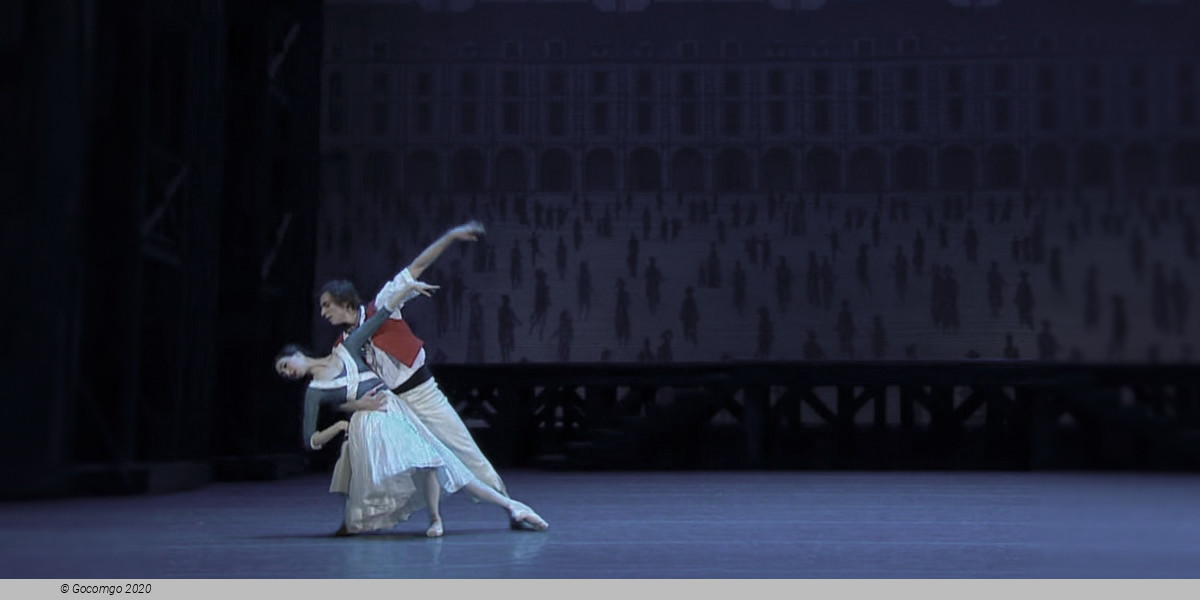
Against a background of shots being fired and the beating of drums, Adeline and Jerome declare their love for each other. They are oblivious to what is going on around them.
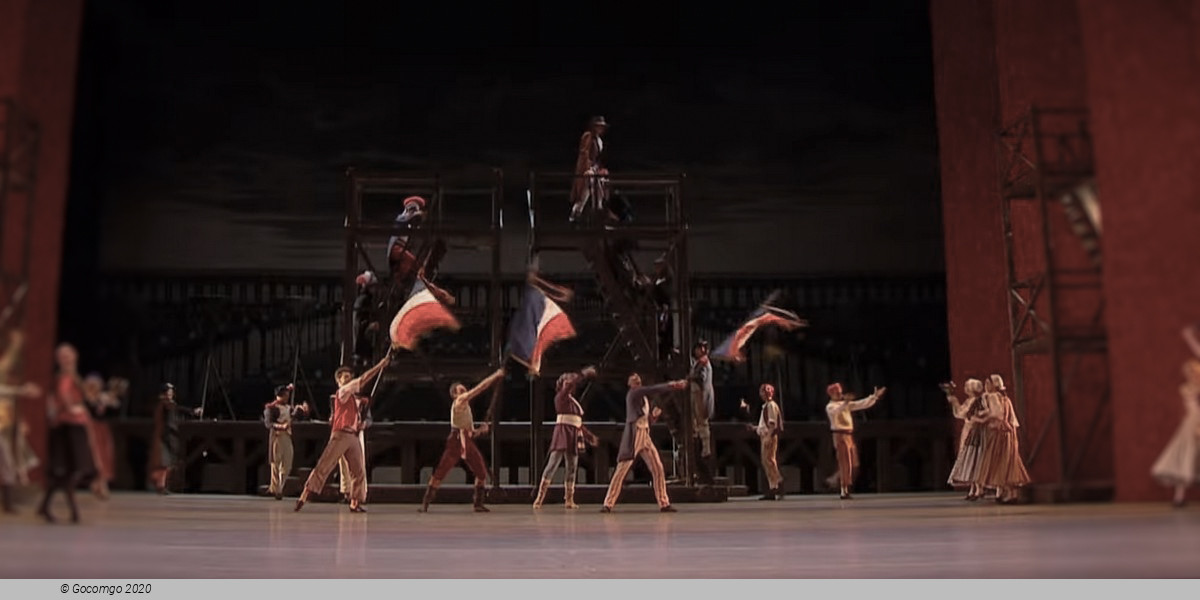
The Marseillais break into the palace. They are led by Jeanne, waving a flag. Fighting. The palace is taken.
Scene 4
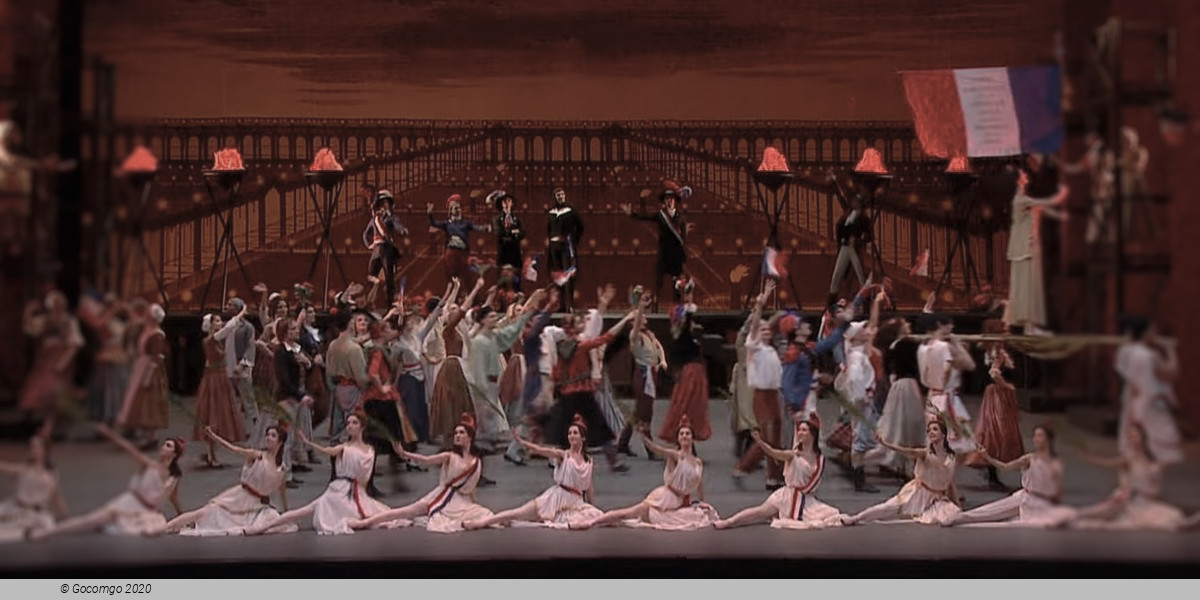
The crowd fills the square which is decorated with lanterns. Members of the Convention and new government mount the tribune.
The crowd rejoices. The famous artists, Mireille de Poitiers and Antoine Mistral, who before had entertained the king and his courtiers, now perform the Freedom dance for the people. The new dance is little different to the old, only now, the actress holds the Republican flag in her hands. Artist David is sketching the celebration.
By the cannon, from which the first volley had been fired, the President of the Convention unites the hands of Jeanne and Philippe. These are the first young newly weds of the new Republic
The sound of Jeanne and Philippe’s betrothal dance gives way to the muffled thuds of the falling knife of the guillotine.
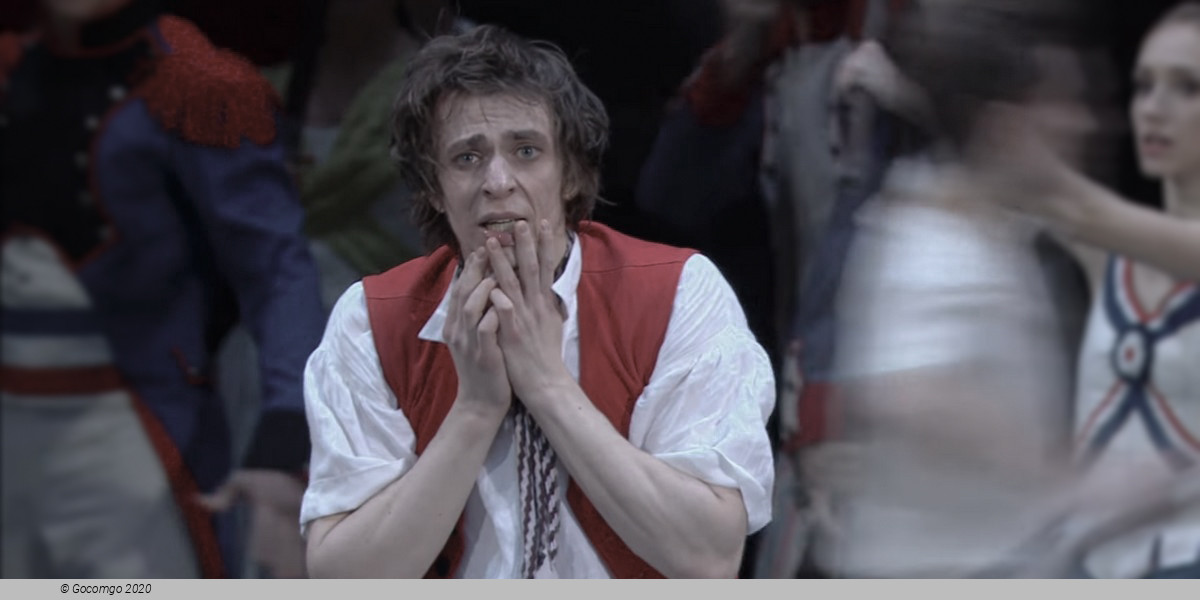
The condemned Marquis is led in. Seeing her father, Adeline rushes over to him, but Jerome, Jeanne and Philippe beg her not to give herself away. In order to revenge the Marquis, Jarcasse betrays Adeline, revealing her true origins. Roused to fury, the crowd demands her death. Beside himself with despair, Jerome tries to save Adeline, but to no avail. She is guillotined. Frightened for their lives, Jeanne and Philippe restrain the struggling Jerome.
The celebration continues. To the strains of Ca ira, the triumphant populace moves downstage towards the audience.
This outline is different from the plot of the ballet version revived by Alexei Ratmansky for the Bolshoi Ballet.
The ballet opens in a forest near Marseilles, where the peasant Gaspard and his children, Jeanne and Pierre, are gathering firewood. When a Count and his hunting party arrive, the peasants disperse, but Jeanne attracts the attention of the Count, who attempts to embrace her. When her father intervenes, he is beaten up by the Count's servant and taken away. Next, in the city square in Marseilles Jeanne tells the people what has happened to her father and the people's indignation over the injustices of the aristocracy grows. They storm the prison and free the prisoners of the Marquis de Beauregard.
At the court of Versailles a performance of the court theatre is followed by a lush banquet. The officials of the court present a formal petition to the king, requesting permission to deal with the unruly revolutionaries. Antoine Mistral, an actor in the theatre, on discovering this secret document is killed by the Marquis de Beauregard, but before he dies he manages to pass the petition on to Mireille de Poitiers, who escapes the palace as the sound of the Marseillaise is heard through the windows.
The scene shifts to a square in Paris, where an uprising and the storming of the palace is prepared. Mireille rushes in with the document revealing the conspiracy against the revolution, and her bravery is applauded. At the height of this scene, the officers of the Marquis arrive in the square; Jeanne, recognizing the man who insulted her in the woods, runs up and slaps his face. Following this, the crowd attacks the aristocrats. To the sound of revolutionary songs, the people storm the palace and burst into the staircase of the front hall. Jeanne attacks the Marquis, who is then killed by her brother, and the Basque girl Thérèse is shot to death.
Finally, back in the Paris square, the people celebrate their victory over the defenders of the Old Regime.


 Teatralnaya Square 1