Bolshoi Theatre tickets 13 January 2026 - Christmas Eve. Mariinsky Theatre presents | GoComGo.com

Christmas Eve. Mariinsky Theatre presents

Bolshoi Theatre, New Stage, Moscow, Russia
All photos (12)
Select date and time
11 AM 3 PM 7 PM
Request for Tickets
Important Info
Type: Opera
City: Moscow, Russia
Starts at: 11:00
Acts: 4
Intervals: 1
Duration: 2h 50min
Sung in: Russian
Titles in: Russian,English

E-tickets: Print at home or at the box office of the event if so specified. You will find more information in your booking confirmation email.

You can only select the category, and not the exact seats.
If you order 2 or 3 tickets: your seats will be next to each other.
If you order 4 or more tickets: your seats will be next to each other, or, if this is not possible, we will provide a combination of groups of seats (at least in pairs, for example 2+2 or 2+3).

Cast
Performers
Orchestra: Mariinsky Orchestra
Chorus: Mariinsky Chorus
Ensemble: of Young Opera Singers Ensemble of soloists of the Mariinsky Academy
Creators
Composer: Nikolai Rimsky-Korsakov
Choreographer: Ilya Zhivoi
Music Director: Valery Gergiev
Light: Gleb Filshtinsky
Musical Preparation: Irina Soboleva
Author: Nikolai Gogol
Video designer: Victoria Zlotnikova
Overview

One might ask "what do opera and koliadki have in common?" Can an ancient magical ritual and musical theatre be successfully combined? Rimsky-Korsakov set himself this fantastic task when he set his sights on Gogol's fairytale story Christmas Eve. The result was a "koliadka-story", as the composer himself defined the genre of his opus. The koliadka as a ritual song, koliadka-singing as a community activity, Koliada as a divine sun being – these are the things that particularly interested Nikolai Andreyevich. He wove archaic melodies into the opera's musical fabric, he created a merry, vibrant and noisy crowd of carol-singers from the opera's chorus, and he presented Koliada and her brother-in-arms Ovsen on the imperial stage as themselves.

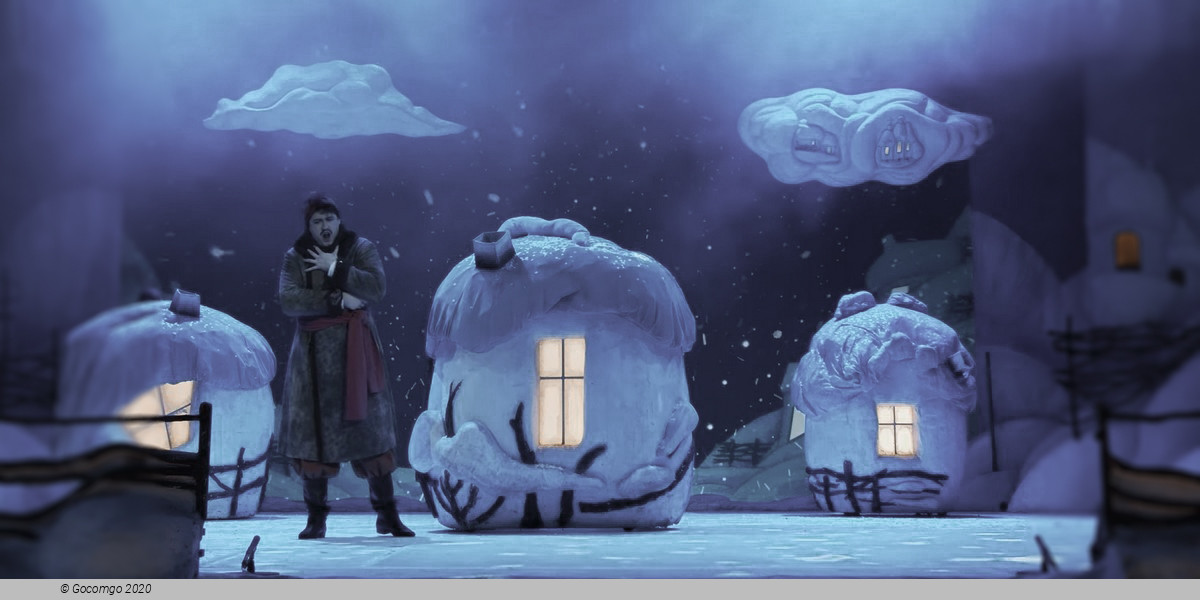
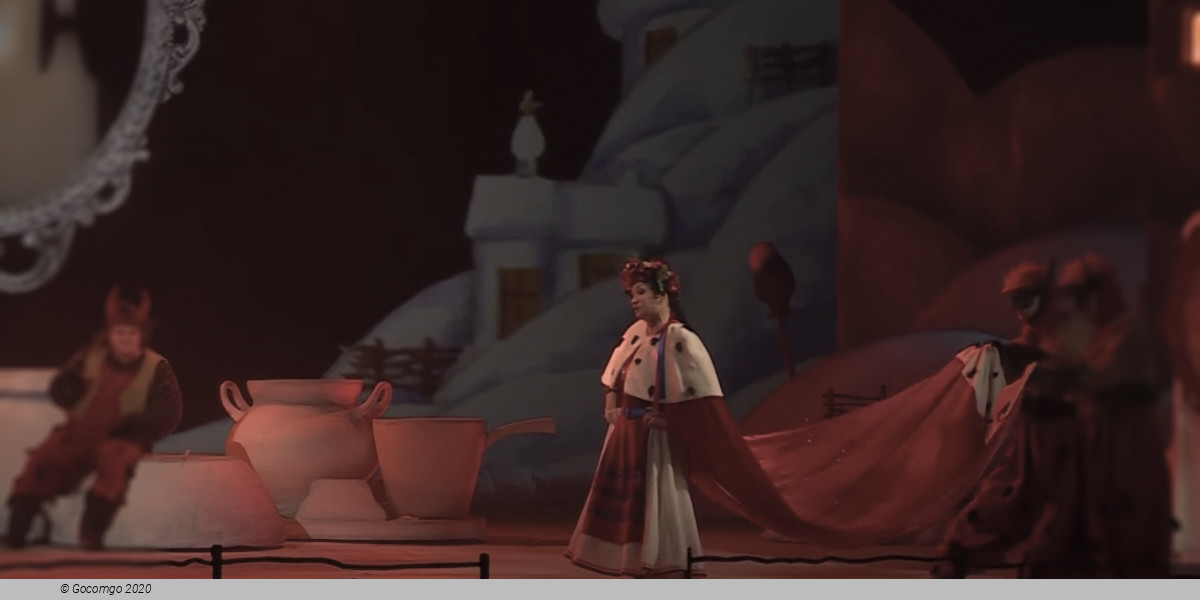
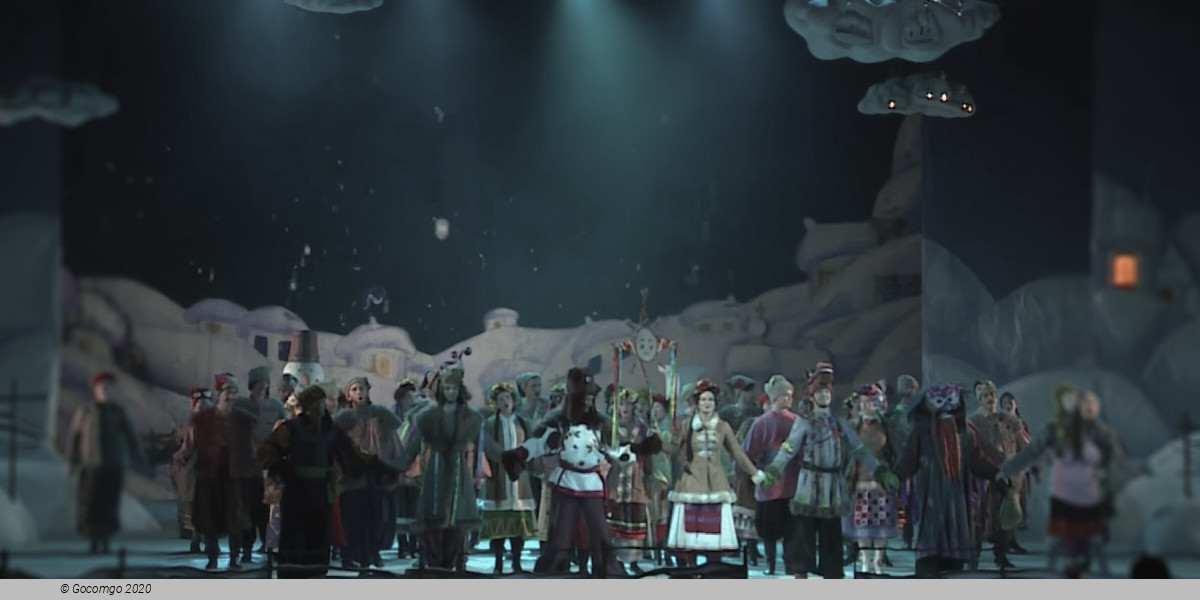
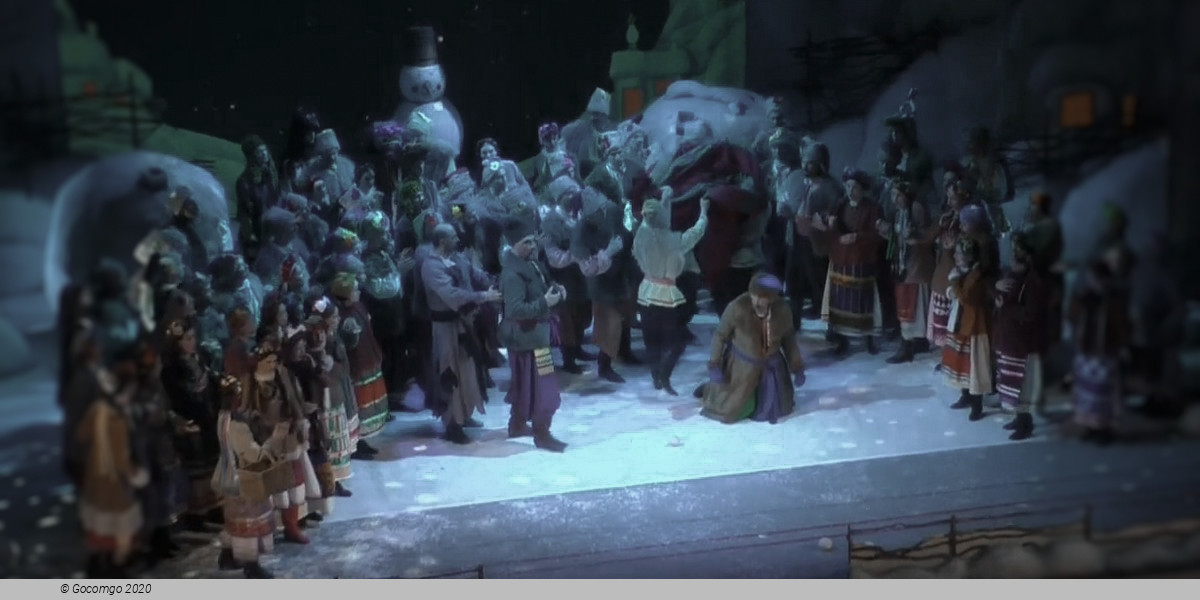
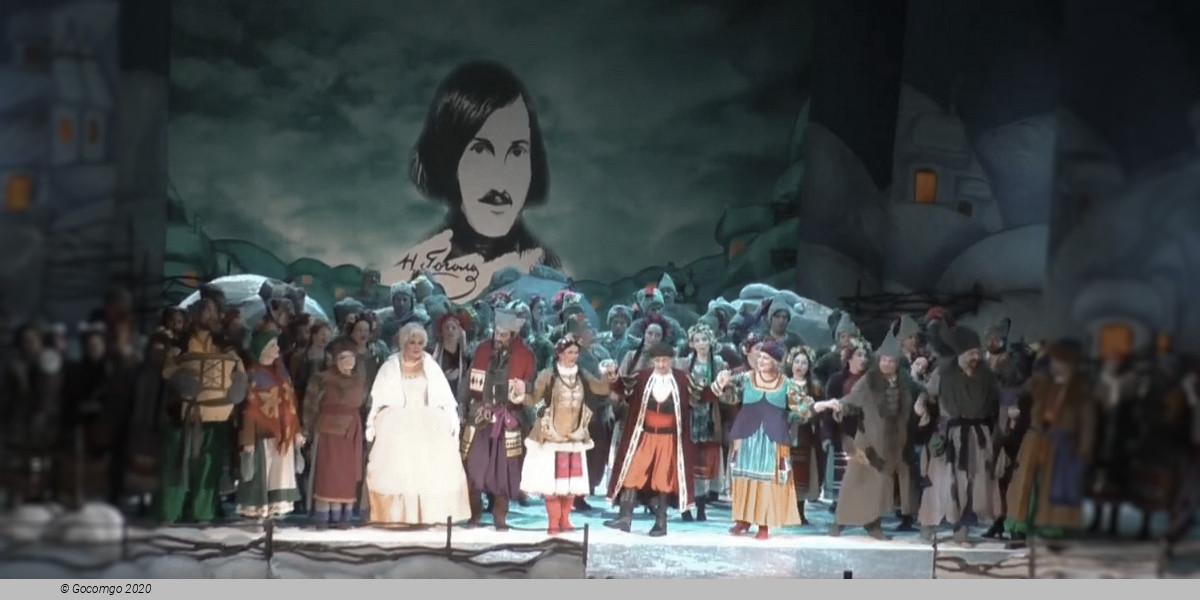
The production of Christmas Eve at the Mariinsky Theatre was already remarkable for its visual impact, and this revived version has taken on even more striking colours. The 2008 production has spruced itself up and become more elaborate: Dikanka has a larger population and the dances and games of the young people are more impassioned. At the same time, the previous production's sense of almost domestic comfort has been retained, radiated by the on-stage imagery of a snowy Ukrainian village with lights at the little windows. In such a village, whichever peasant house one might enter when lost in a blizzard, one will always find oneself among friends. And the sweet vareniki that fly straight into the mouth of the village witch to the witty accompaniment of Rimsky-Korsakov's orchestra are something one yearns to taste...

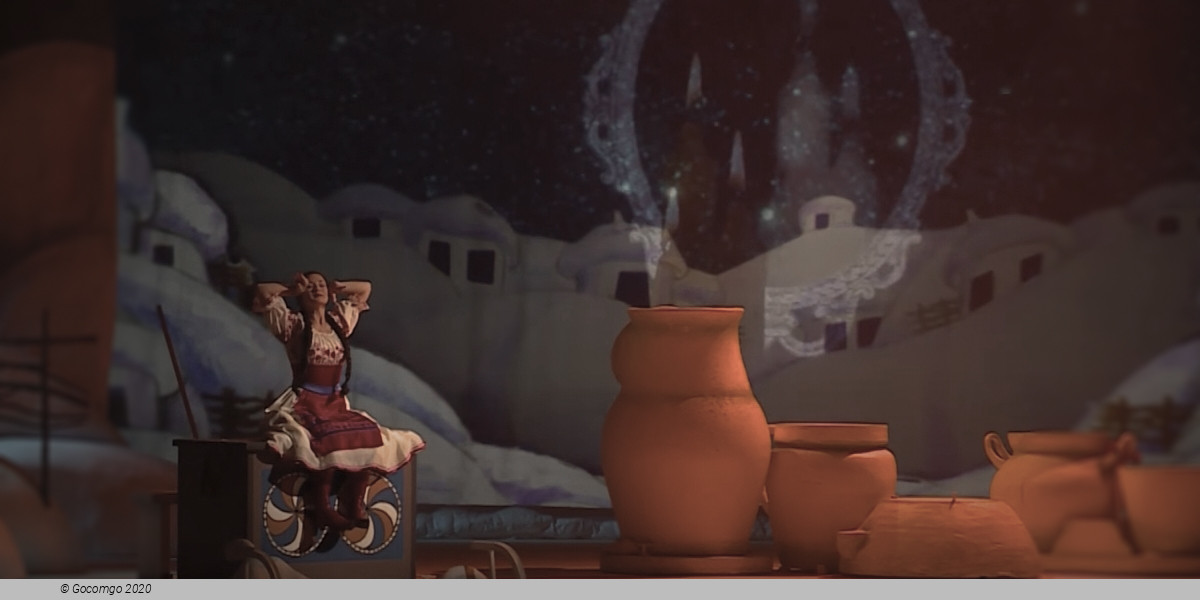
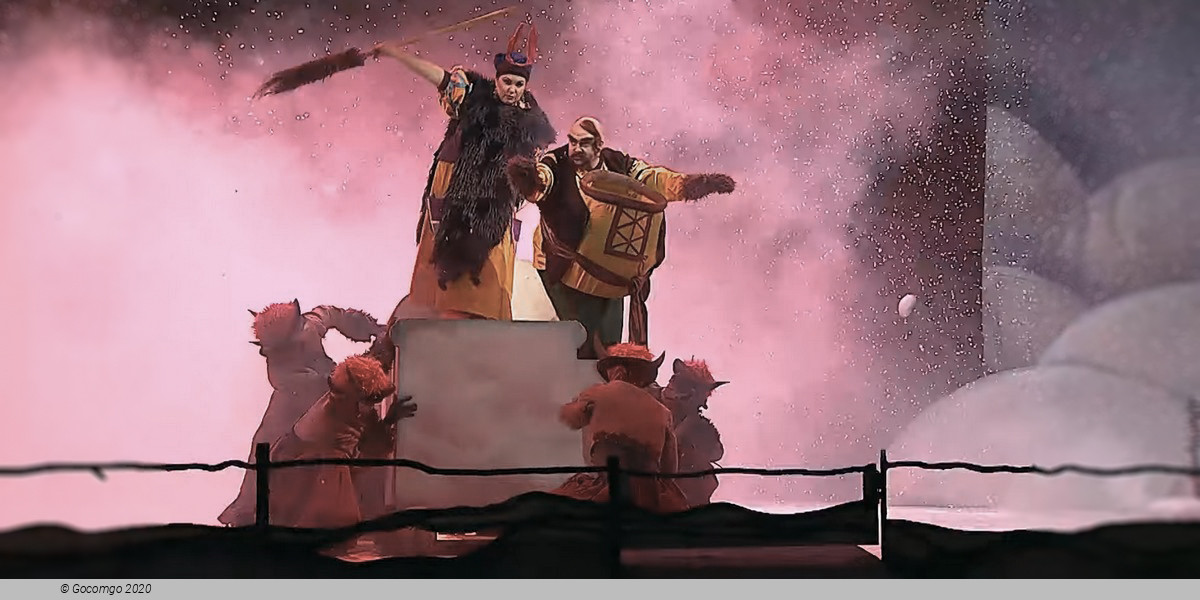
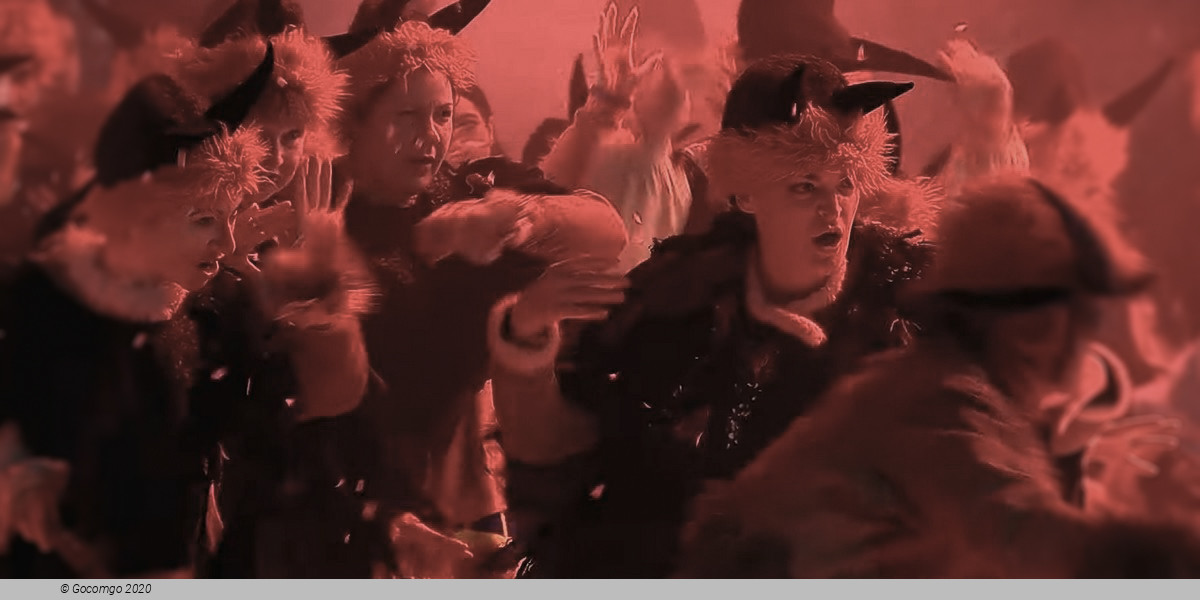
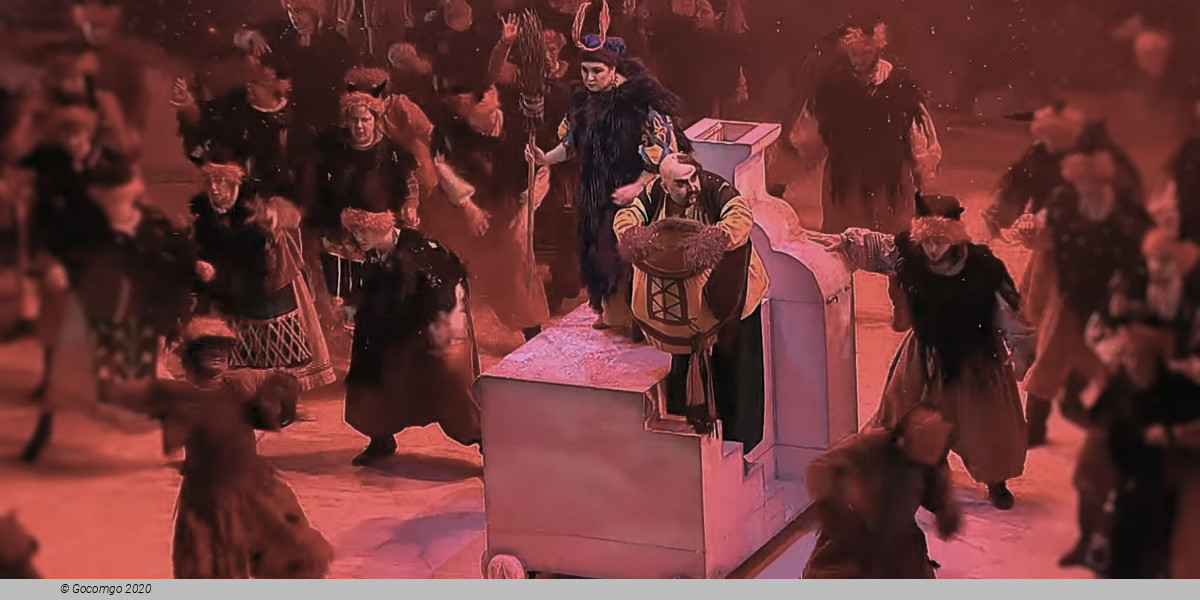
The transition from winter to summer is something on a truly cosmic scale, and the entire universe comes into motion: the earth, the underworld and the heavens. And so the opera involves not just people but also "peripheral" beings – hags and witches – as well as residents of the other world and even heavenly bodies led by Venus the Morning Star. Their movements have been conceived by Ilya Zhivoi who has staged the dances and is appearing as stage director of the revived production. The new embodiment of "the role of lighting" in the production is magnificent. Gleb Filshtinsky and Viktoria Zlotnikova have produced impressive visual images: at times the stage is flooded with infernal red light, at others with fathomless indigo, flakes of snow fall on the audience, heavenly bodies fly before them, and entire galaxies open up... The performing cast has also been renewed: the soloists include many who are making their debuts, each of them embodying Rimsky-Korsakov's characters in their own way, looking for their own artistic solutions.

Rimsky-Korsakov's fairytale operas are not infrequently difficult for children to grasp, but Christmas Eve can delight audiences of any age. From the orchestra's first cold chords, creating the sensation of an icy blue colour, to Gogol's final national song of praise, this "koliadka-story" never fails to amaze, cheer, touch and delight. Khristina Batyushina

History
Premiere of this production: 10 December 1895, Mariinsky Theatre

Christmas Eve is an opera in four acts with music and libretto by Nikolai Rimsky-Korsakov. Composed between 1894 and 1895, Rimsky-Korsakov based his opera on a short story, "Christmas Eve", from Nikolai Gogol's Evenings on a Farm Near Dikanka.

Synopsis

Act 1

Tableau 1: Christmas Eve in the hamlet of Dikanka

The widow Solokha agrees to help the Devil steal the moon. The Devil is annoyed with Solokha's son Vakula, who painted an icon mocking him. The Devil decides to create a snowstorm to prevent Vakula from seeing his beloved Oksana. While the storm rages, Solokha rides up to the sky and steals the moon, while the Deacon and Oksana's father, Chub, are unable to find their way.

Tableau 2: Interior of Chub's house

Oksana is alone and lonely at home. She passes through several moods and the music follows her with gradually accelerating tempos. At one point, Vakula enters and watches her admiring herself. She teases him, and he says he loves her, but she replies that she will only marry him if he brings her a pair of the Empress's slippers. Chub comes back out of the storm, and Vakula, not recognizing him and taking him for a rival, chases him out by striking him. Seeing what he has done, Oksana sends Vakula away in a miserable state. Young people from the village come around singing Ukrainian Christmas carols. Oksana realizes she still loves Vakula.

Act 2

Tableau 3: Solokha's house

The Devil is just getting cosy at Solokha's hut when in succession the mayor, the priest and Chub arrive to seduce her each hiding in a sack when the next arrives. Vakula hauls the four heavy sacks to his smithy.

Tableau 4: Vakula's smithy

Vakula puts down his sacks. Young men and women, including Oksana, gather singing Kolyadki and having fun. Vakula, however, is bored and dejected. Oksana taunts Vakula one last time about the Tsaritsa's slippers. Vakula gives his farewell to the lads and to Oksana, exclaiming that he will perhaps meet them in another world. He leaves the sacks - from which the four men emerge.

Act 3

Tableau 5: Inside Patsyuk's house

Patsyuk makes magic vareniki jump into his mouth. Vakula has come to request assistance from him. Patsyuk advises him that in order to obtain the help of the devil, he must go to the devil. Vakula puts down his sack, and the devil jumps out and tries to get his soul in exchange for Oksana. Vakula, however, grabs him by his neck, and climbs on his back. He forces the devil to fly him to St. Petersburg.

Tableau 6: Space. Moon and stars

We witness the charming "Games and Dances of the Stars". This is followed by the "Diabolical Kolyadka" in which Patsyuk, riding a mortar, and Solokha, on her broom, attempt to stop Vakula. He succeeds, however, in getting through, and the lights of St. Petersburg become visible through the clouds.

Tableau 7: A palace. A sumptuous room, brightly lit

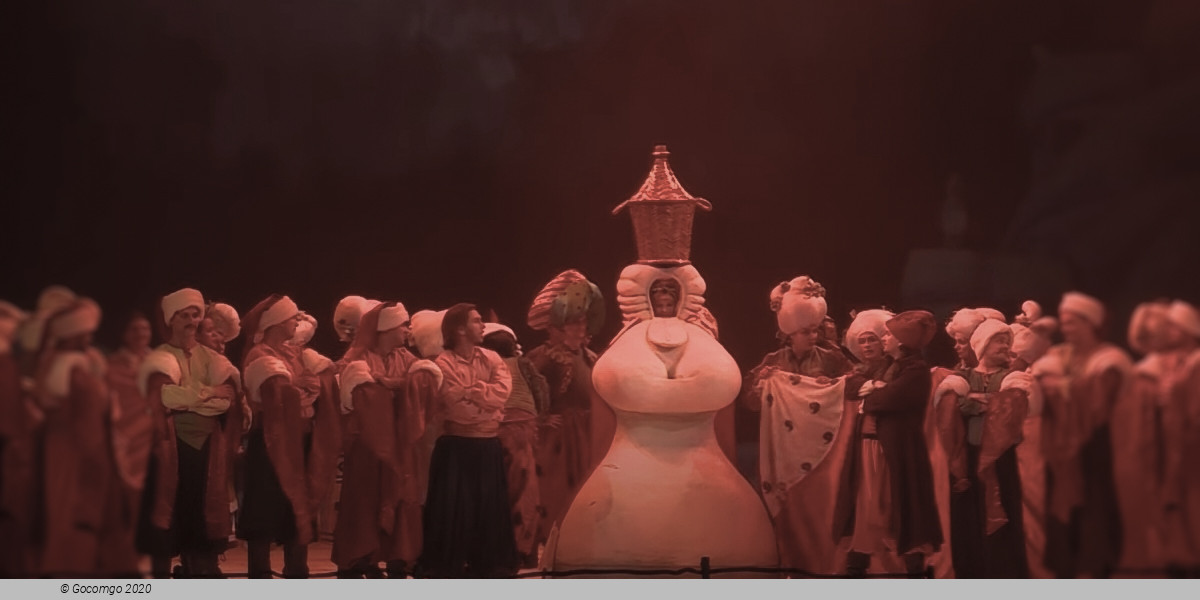
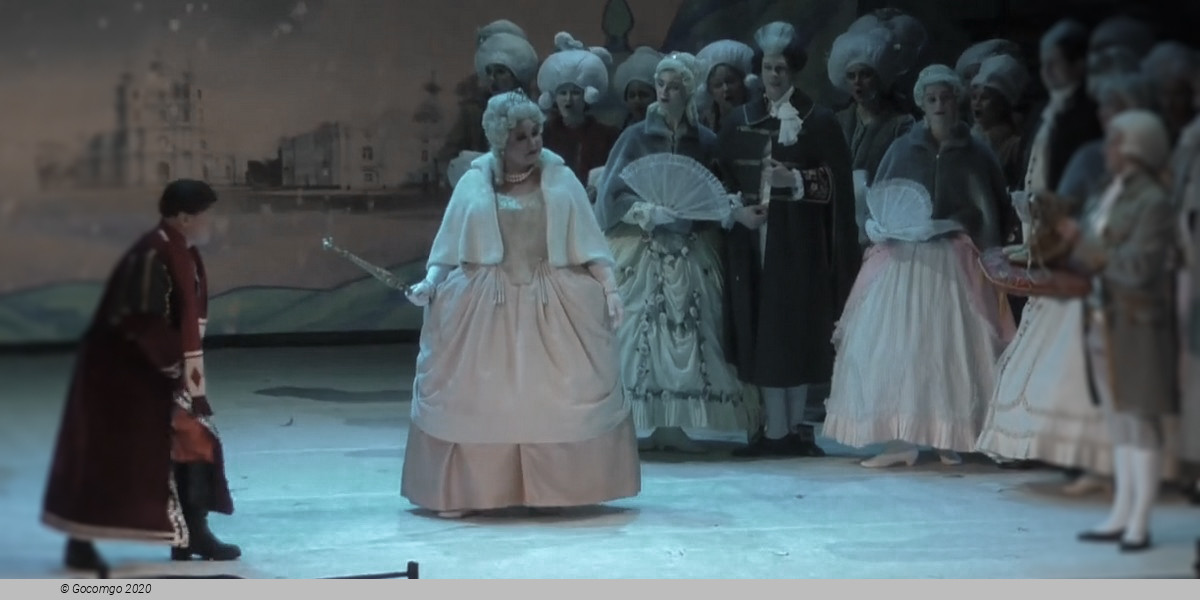
The Devil puts down Vakula in the tsaritsa's court and disappears into the fireplace. Vakula joins a group of Zaporozhian Cossacks who are petitioning the tsaritsa. A chorus sings the tsaritsa's praises in a magnificent polonaise. The tsaritsa addresses the Cossacks. Vakula requests the tsaritsa's boots to the music of a minuet, and his wish is granted because of its unusual and amusing nature. The Devil takes Vakula away as Russian and Cossack dances commence.

Tableau 8: Space. Night

Vakula returns home on the devil's back. We witness the procession of Kolyada (young girl in a carriage) and Ovsen (boy on a boar's back). On approaching Dikanka, we hear church bells and a choir.

Act 4

Tableau 9: Christmas Day. Courtyard beside Chub's house

Oksana listens to some women exchanging gossip about Vakula, who is believed to have committed suicide. Alone, Oksana sings an aria expressing her regret that she had treated Vakula harshly, and wishing for his return. He appears with the boots, followed by Chub. Vakula asks Chub for Oksana's hand in marriage and Chub assents. Vakula and Oksana sing a duet. Other characters enter and ask Vakula about his disappearance.

Epilogue: In memory of Gogol

Vakula announces that he will relate his story to the beekeeper Panko the Gingerhead (i.e., Gogol), who will write a story of Christmas Eve. There is general rejoicing.


Venue Info

Bolshoi Theatre - Moscow
Location   Teatralnaya Square 1

The Bolshoi Theatre is one of the world’s most iconic cultural landmarks, renowned for its grandeur, history, and artistic excellence. Located in the heart of Moscow, this legendary theatre has been home to unforgettable performances of opera and ballet for over two centuries. Its majestic architecture, world-class acoustics, and rich tradition make every event at the Bolshoi a truly unforgettable experience.

On 28 March (17 according to the old style) 1776, Catherine II granted the prosecutor, Prince Pyotr Urusov, the "privilege" of "maintaining" theatre performances of all kinds, including masquerades, balls and other forms of entertainment, for a period of ten years. And it is from this date that Moscow’s Bolshoi Theatre traces its history.

The Bolshoi building, which for many years now has been regarded as one of Moscow’s main sights, was opened on 20 October 1856, on Tsar Alexander II’s coronation day.

On 29 October 2002 the Bolshoi was given a New Stage and it was here it presented its performances during the years the Main Stage was undergoing massive reconstruction and refurbishment.

The reconstruction project lasted from l July 2005 to 28 October 2011. As a result of this reconstruction, many lost features of the historic building were reinstated and, at the same time, it has joined the ranks of most technically equipped theatre buildings in the world.

The Bolshoi Theatre is a symbol of Russia for all time. It was awarded this honor due to the major contribution it made to the history of the Russian performing arts. This history is on-going and today Bolshoi Theatre artists continue to contribute to it many bright pages.

The Bolshoi Ballet and Bolshoi Opera are among the oldest and best known ballet and opera companies in the world. It is by far the world's biggest ballet company, with more than 200 dancers.

Important Info
Type: Opera
City: Moscow, Russia
Starts at: 11:00
Acts: 4
Intervals: 1
Duration: 2h 50min
Sung in: Russian
Titles in: Russian,English
Top of page