
Beijing National Grand Theater (NCPA) 16 September 2024 - Gansu Dance Troupe: Flower Rain on the Silk Road | GoComGo.com

Gansu Dance Troupe: Flower Rain on the Silk Road

Beijing National Grand Theater (NCPA), Opera House, Beijing, China
All photos (5)
Select date and time
7 PM

E-tickets: Print at home or at the box office of the event if so specified. You will find more information in your booking confirmation email.

You can only select the category, and not the exact seats.
If you order 2 or 3 tickets: your seats will be next to each other.
If you order 4 or more tickets: your seats will be next to each other, or, if this is not possible, we will provide a combination of groups of seats (at least in pairs, for example 2+2 or 2+3).

Important Info
Type: Show
City: Beijing, China
Starts at: 19:00
Duration: 1h 30min

E-tickets: Print at home or at the box office of the event if so specified. You will find more information in your booking confirmation email.

You can only select the category, and not the exact seats.
If you order 2 or 3 tickets: your seats will be next to each other.
If you order 4 or more tickets: your seats will be next to each other, or, if this is not possible, we will provide a combination of groups of seats (at least in pairs, for example 2+2 or 2+3).

Overview

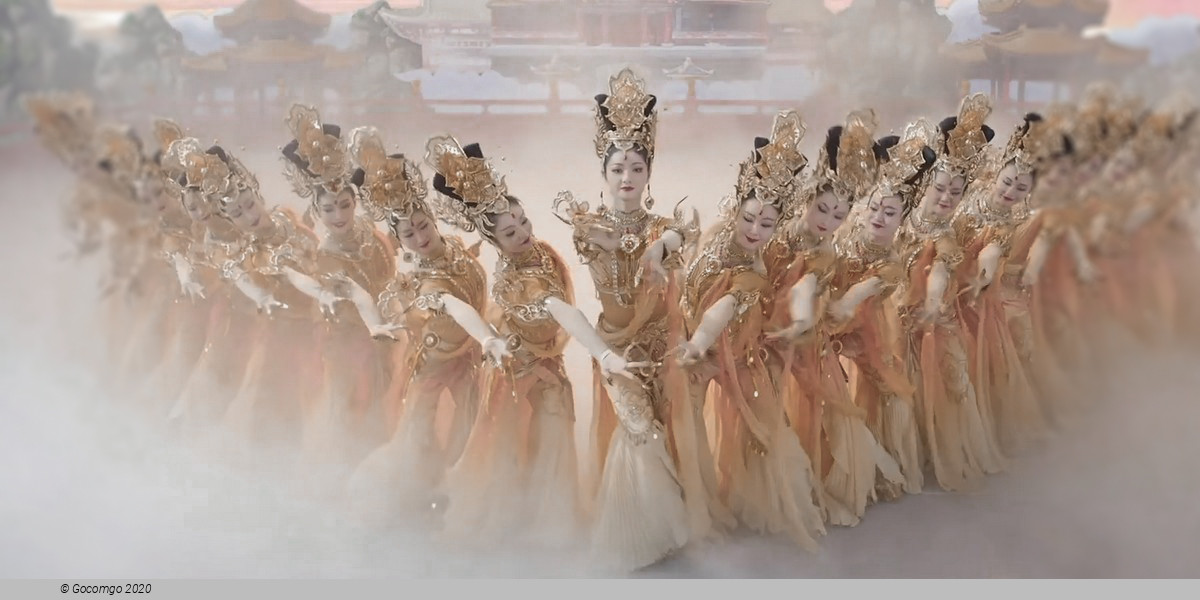
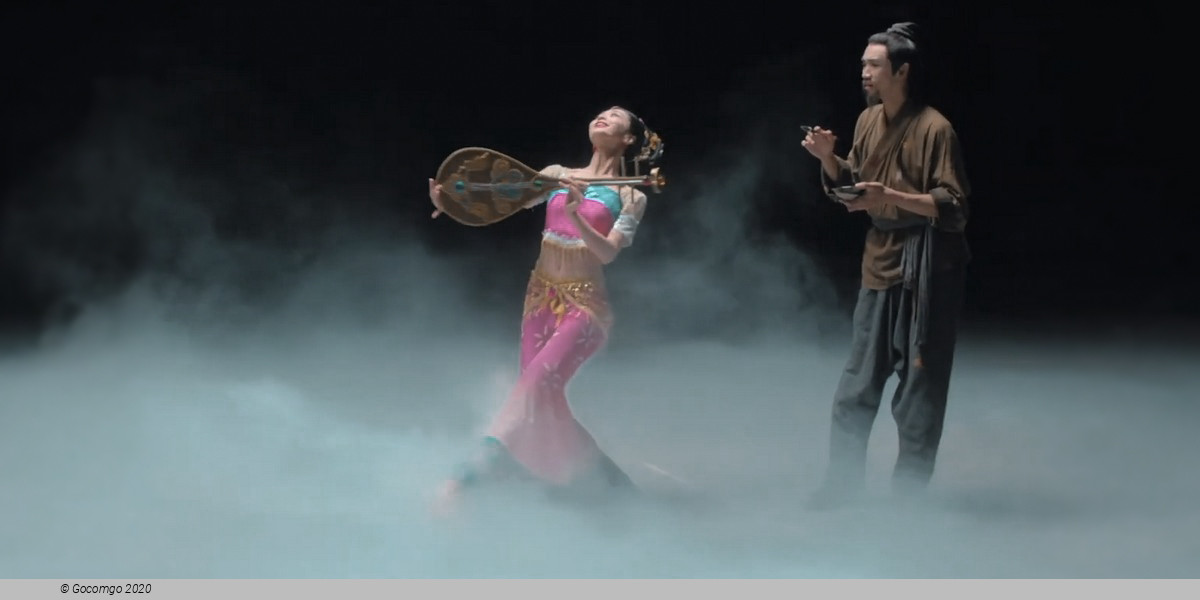
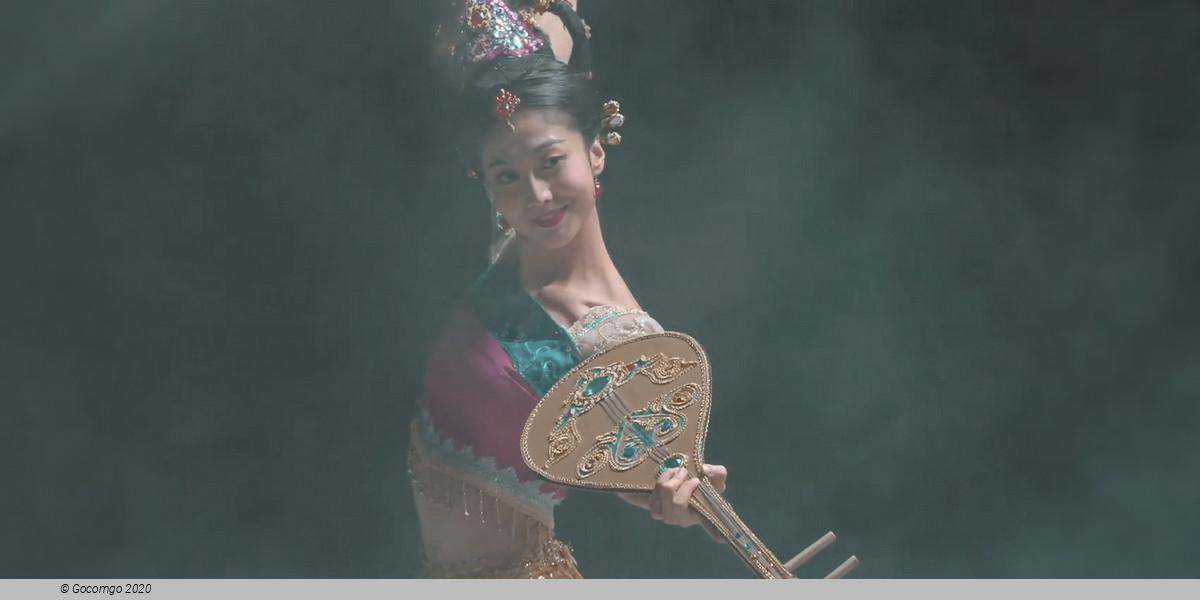
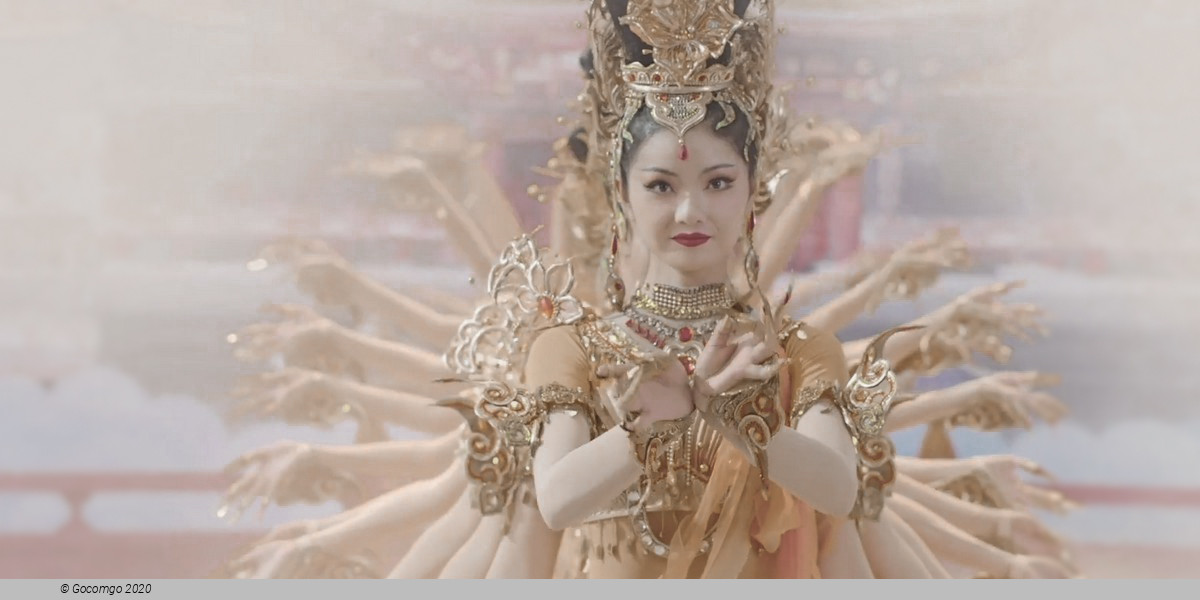
Flower Rain on the Silk Road, a classical Chinese dance drama produced by the Gansu Song and Dance Theatre Co., Ltd., is an ode to Sino-foreign friendship that carries forward the Silk Road spirit of friendly commercial intercourse and win-win cooperation. The drama, which has a unique artistic style, is a stage version of the magnificent Dunhuang frescoes. Artistically and vividly, it reproduces Dunhuang culture along with the splendid, prosperous ancient Silk Road.

Flower Rain on the Silk Road was premiered in 1979 in celebration of the 30th anniversary of the founding of the PRC, winning the “First Prize for Creation” and “First Prize for Performance” by the Ministry of Culture. In 1982, the Xi’an Film Studio made it into a colour art film. That same year, it was staged at the Teatro alla Scala, Italy, so that the performing arts troupe became Asia’s first troupe to enter a top-level arts centre in the world. In 1994, the drama won the Classic Award at the 20th Century Classic Dance Festival of Chinese Nation, honoured as a milestone in the history of Chinese dance drama. In 2004, the drama was identified as the Best of All Chinese Dance Dramas by the Shanghai China Guinness Headquarters. In 2008, a new version of Flower Rain on the Silk Road (2008 Version) was launched and performed to celebrate the opening ceremony of the 2008 Beijing Summer Olympics. The 2008 version was staged in major national celebrations including the 2008 Beijing Summer Olympics, Shanghai World Expo and the 60th National Day. The 2016 version of Flower Rain on the Silk Road was put on at the Dunhuang Grand Theatre on September 20th, 2016 as a key piece in the repertoire for the opening ceremony of the First Silk Road (Dunhuang) International Cultural Expo, offering a feast of art and receiving high praise from the audience, including the representatives of various countries.

In the Chinese and international dancing circles, the dance drama Flower Rain on the Silk Road enjoys a reputation as “a paragon of Chinese folk dance drama art”, “Swan Lake of the East”, and “the best of all Chinese dance dramas”. It has been staged 3,874 times over the past 43 years, watched by over 5.068 million people. In 2009, Flower Rain on the Silk Road won the First Excellent Repertoire Award by the Ministry of Culture. In October 2020, the dance drama was included in the List of Key Works supported by the “A hundred Classics for A hundred Years” Traditional Art Revival Plan for celebrating the 100th anniversary of the founding of the CPC. In 2021, the dance drama won the “National Project to the Distillation of the Stage Art for celebrating the 100th Anniversary of the Founding of the CPC” Award, exerting a far-reaching influence in Chinese dance history.

Chief Producer: LI Jinjiang
Supervisors: WANG Qiong, AN Ning
Stage Manager: AN Ning
Coordinators: XIANG Yu, GUO Yi

Creatives for 1979 Version
Librettist: Gansu Dance Troupe’s Creation Group for Flower Rain on the Silk Road
Script: ZHAO Zhixun (deceased)
Choreographers: LIU Shaoxiong (deceased), ZHANG Qiang (deceased), ZHU Jiang, XU Qi, YAN Jianzhong
Assistant Choreographers: ZHANG Jufang, AN Jian, XU Chenghua
Composers: HAN Zhongcai (deceased), HUYAN Tianzhu (deceased), JIAO Kai (deceased)
Consultant: CHANG Shuhong (deceased), DUAN Wenjie (deceased)
Artistic Coaches: YI Yan (deceased), CHEN Hong
Set Designer: LI Mingqiang

Creatives for 2008 Version
Artistic Coach: FENG Shuangbai
Chief Choreographers: SHEN Chen, XU Chenhua
Script Modifiers.: HU Yuchuan, LU Jinlong, MU Yu
Music Arr. & Orch.: DU Ming
Set Designer: LONG Hua
Set Producer: JIN Taihong
Costume Designers: XU Ming, JIN Wei
Lighting Designer: WU Wei

Leading Cast
Yingniang: KANG Qi/ ZHOU Hong/ XI Jiali
Magic Brush ZHANG: LUO Zhiwei/ SUN Shaodong/ SHEN Haotian
Commissioner: MA Jun/ ZHANG Dongdong/ WANG Yongtao
Commissioner's Wife: WEI Xiaoyi/ ZHANG Bo
Inus: WANG Luying

Cast
Market Administrator: LIU Hailong
Young Yingniang: HAN Lu/ GUO Chenling
Military Governor: MA Jun/ ZHANG Dongdong
Military Governor’s Wife: WEI Xiaoyi/ ZHANG Bo
Inus’ Wife: WANG Luoying

Synopsis

Prologue

The Sanwei Mountain and Mogao Caves are enveloped in the sacred atmosphere of Buddhism. Holding a pipa or flowers, the flying Apsaras sprinkle a shower of auspicious flowers and recount an old yet moving story…

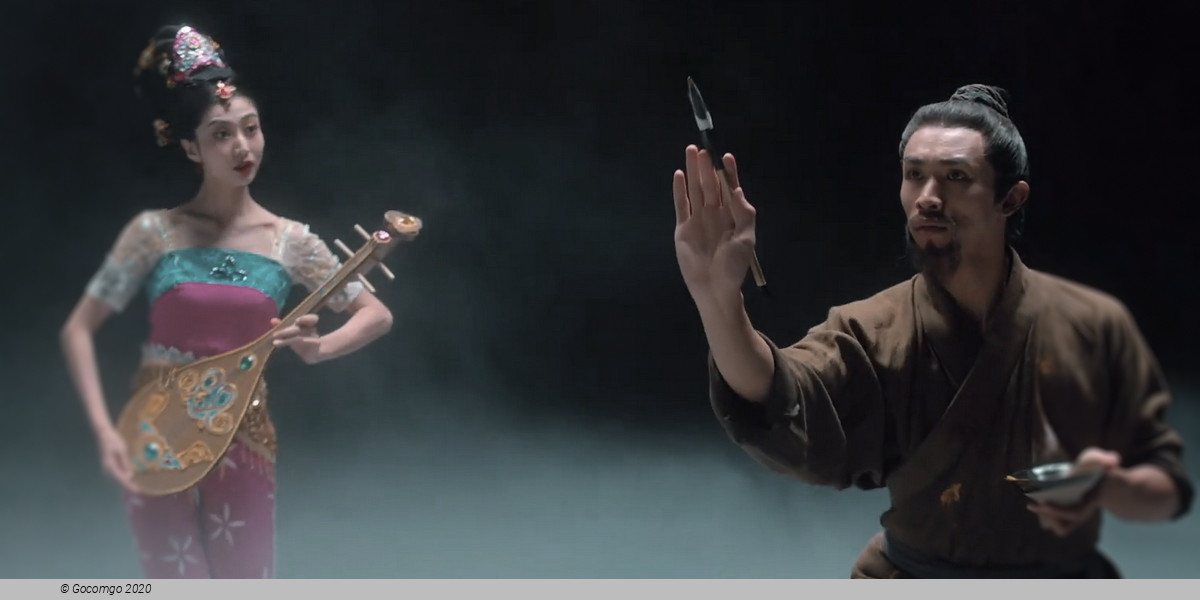
In the TANG Dynasty, the painter ZHANG and his daughter rescue the foreign merchant Inus, who has fainted in the desert. Later, they have the misfortune to encounter robbers. To protect Inus, the daughter Yingniang is taken away.

Act I

A few years later, ZHANG finds his much-missed daughter in the bustling Dunhuang market. Yingniang has been reduced to a troupe dancer. Inus redeems Yingniang with his own money. The father and daughter get reunited, and the old friends meet each other.

Act II

In the Mogao Caves, ZHANG is inspired by his daughter’s dance and creates a masterpiece of Dunhuang murals, the Apsaras playing a pipa behind the back. In order to avoid placing his daughter at risk, ZHANG sends Yingniang away with Inus to a foreign country. The corrupt official punishes him with a lifetime of servitude, to paint murals in the caves.

Act III

As she spends time with foreigners, Yingniang develops a deep friendship with them. Inus is ordered to go to China; he decides to bring Yingniang back to her homeland. With her heart full of love, Yingniang bids farewell to the foreign land and returns to China.

Act IV

In a painted cave, ZHANG plays his guqin while thinking of his daughter. In a trance, he is reunited with Yingnian in paradise he has painted. Suddenly, the sound of rushing footsteps from outside the cave wakes him from a dream. With a bad feeling in his heart, ZHANG hurriedly goes to Yangguan Pass…

Act V

Beyond the Yangguan Pass, under the beacon tower, the corrupt official instigates the robber DOU Hu to intercept and rob the foreign caravan. To save Inus, ZHANG ignites the fire beacon.

The father and daughter meet each other, but it is time for a final goodbye. The immortal soul of ZHANG, whose blood has been spilled on the Silk Road, ascends to heaven.

Act VI

At a gathering of 27 nations in Dunhuang, the Chinese military governor meets with guests from other countries. Yingniang dresses up and presents a performance, then takes the opportunity to expose the corrupt official. The governor is outraged and orders that the official be severely punished, thus eliminating a potential problem on the Silk Road. Friendship spreads along the Silk Road, and the flower rain dances like a rainbow. The friendship between Chinese and foreign people will last for thousands of years.

Venue Info

Beijing National Grand Theater (NCPA) - Beijing
Location   2 W Chang'an Ave

The National Centre for the Performing Arts (NCPA) is an arts centre containing an opera house in Beijing, People's Republic of China. The Centre, an ellipsoid dome of titanium and glass surrounded by an artificial lake, seats 5,452 people in three halls and is almost 12,000 m² in size. It was designed by French architect Paul Andreu. Construction started in December 2001 and the inaugural concert was held in December 2007.

The exterior of the theater is a titanium-accented glass dome that is completely surrounded by a man-made lake. It is said to look like an egg floating on water, or a water drop. It was designed as an iconic feature, something that would be immediately recognizable.

The dome measures 212 meters in east–west direction, 144 meters in north–south direction, and is 46 meters high. The main entrance is at the north side. Guests arrive in the building after walking through a hallway that goes underneath the lake. The titanium shell is broken by a glass curtain in north–south direction that gradually widens from top to bottom.

The location, immediately to the west of Tiananmen Square and the Great Hall of the People, and near the Forbidden City, combined with the theatre's futuristic design, created considerable controversy. Paul Andreu countered that although there is indeed value in ancient traditional Chinese architecture, Beijing must also include modern architecture, as the capital of the country and an international city of great importance. His design, with large open space, water, trees, was specially designed to complement the red walls of ancient buildings and the Great Hall of the People, in order to melt into the surroundings as opposed to standing out against them.

Internally, there are three major performance halls:

The Opera Hall is used for operas, ballet, and dances and seats 2,416 people.
The Music Hall is used for concerts and recitals and seats 2,017 people.
The Theatre Hall is used for plays and the Beijing opera. It has 1,040 seats.
The NCPA also distributes filmed and recorded performances of its concerts, plays and operas through the in-house label NCPA Classics, established in 2016.

The initial planned cost of the theatre was 2.688 billion yuan. When the construction had completed, the total cost rose to more than CNY3.2 billion. The major cause of the cost increase was a delay for reevaluation and subsequent minor changes as a precaution after a Paris airport terminal building collapsed. The cost has been a major source of controversy because many believed that it is nearly impossible to recover the investment. When the cost is averaged out, each seat is worth about half a million CNY. The Chinese government answered that the theater is not a for profit venture.

The government sanctioned study completed in 2004 by the Research Academy of Economic & Social Development of the Dongbei University of Finance and Economics, of the upkeep costs of the building were publicized in domestic Chinese media:

The water and electricity bills and the cleaning cost for the external surface would be at least tens of millions CNY, and with another maintenance cost, the total could easily exceed one billion CNY. Therefore, at least 80 percent of the annual operational costs must be subsidized by the government for at least the first three years after the opening, and for the rest of its operational life, at least 60 percent of the annual operational cost must be subsidized by the government.

The director of the art committee of the National Centre for the Performing Arts and the standing committee member of the Standing Committee of the Chinese People's Political Consultative Conference, Mr Wu Zuqiang (吴祖强) and the publicist / deputy director of the National Centre for the Performing Arts Mr Deng (邓一江) have announced that 70 percent of the tickets would be sold at low price for ordinary citizens, while 10% of the tickets would be sold at relatively expensive prices for separate market segments, and the 60% of annual operating cost needed to be subsidized by the government would be divided between the central government and the Beijing municipal government.

Important Info
Type: Show
City: Beijing, China
Starts at: 19:00
Duration: 1h 30min
Top of page