




Bavarian State Opera: Werther Tickets | Event Dates & Schedule | GoComGo.com

Werther Tickets

Bavarian State Opera, Munich, Germany
All photos (5)
1 / 5
Available Dates: 15 May - 29 Jun, 2027 (6 events)
Important Info
Type: Opera
City: Munich, Germany
Sung in: French
Titles in: English,German

E-tickets: Print at home or at the box office of the event if so specified. You will find more information in your booking confirmation email.

You can only select the category, and not the exact seats.
If you order 2 or 3 tickets: your seats will be next to each other.
If you order 4 or more tickets: your seats will be next to each other, or, if this is not possible, we will provide a combination of groups of seats (at least in pairs, for example 2+2 or 2+3).

Cast
Performers
Choose the date to see the peformers
Creators
Composer: Jules Massenet
Librettist: Édouard Blau
Stage Designer: Fabien Teigné
Librettist: Georges Hartmann
Dramaturge: Louis Geisler
Stage Director: Marie-Ève Signeyrole
Librettist: Paul Milliet
Light: Sascha Zauner
Dramaturge: Saskia Kruse
Costume designer: Yashi -
Overview

The premiere of Werther by Jules Massenet at the Nationaltheater München presents a powerful tale of love and longing, brought to life through Massenet’s lyrical and deeply expressive music.

The premiere of Werther by Jules Massenet at the Nationaltheater München brings one of the most emotionally intense operas of the Romantic repertoire to the stage. Based on Johann Wolfgang von Goethe’s novel The Sorrows of Young Werther, the work explores themes of unfulfilled love, inner conflict, and the destructive power of passion.

Massenet’s music is rich in lyricism and psychological nuance, capturing the fragile emotional world of Werther as he falls hopelessly in love with Charlotte, who is bound by duty to another man. Through sweeping orchestration and intimate vocal lines, the opera unfolds as a deeply personal трагедия, where longing and restraint ultimately lead to heartbreak.

Presented as a premiere at the Nationaltheater, this production offers a fresh interpretation of a timeless story, highlighting both the poetic beauty and the emotional depth that make Werther one of the most moving works in the French operatic repertoire.

History
Premiere of this production: 16 February 1892, Hofoper, Vienna (in German)

Werther is an opera (drame lyrique) in four acts by Jules Massenet to a French libretto by Édouard Blau, Paul Milliet and Georges Hartmann (who used the pseudonym Henri Grémont). It is loosely based on the German epistolary novel The Sorrows of Young Werther by Johann Wolfgang von Goethe, which was based both on fact and on Goethe's own early life. Earlier examples of operas using the story were made by Kreutzer (1792) and Pucitta (1802).

Synopsis

Time: Within the period July to December, in an undefined year in the 1780s.
Place: Wetzlar in Germany.

Act 1

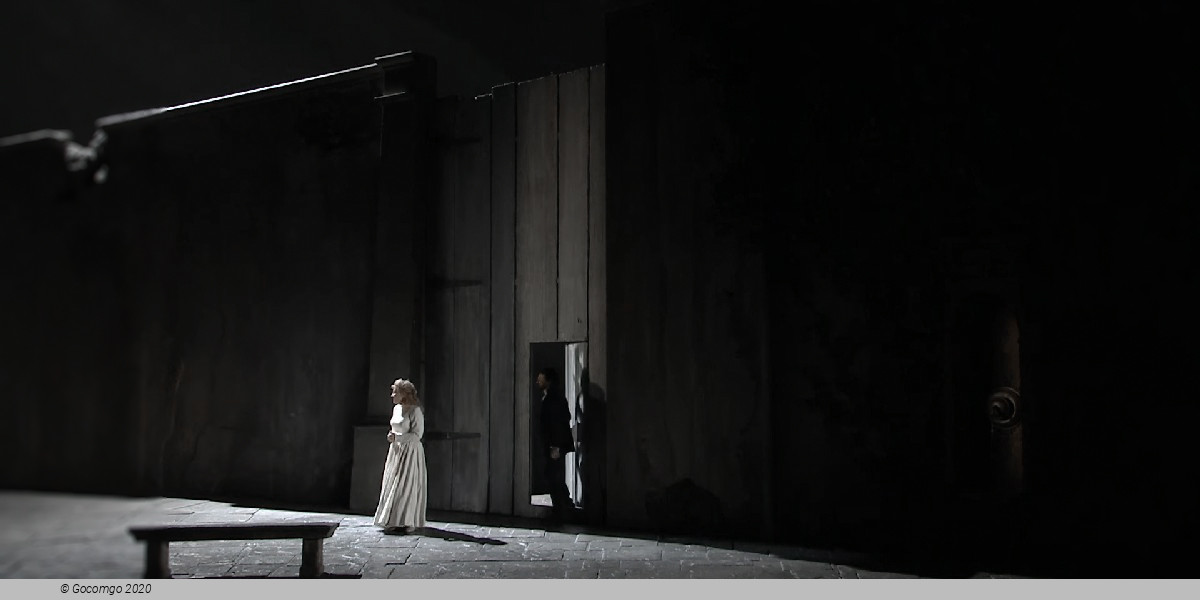
In July, the widowed Bailiff (a Magistrate, rather than one who comes to seize property), is teaching his six youngest children a Christmas carol ("Noël! Jésus vient de naître"). His drinking companions, Johann and Schmidt, arrive as Charlotte, the eldest daughter, dresses for a ball. Since her fiancé Albert is away, she is to be escorted by Werther, whom the Bailiff and his companions find gloomy. Werther arrives ("O Nature, pleine de grâce"), and watches as Charlotte prepares her young siblings' supper, just as her mother had before she died. He greets her and they leave for the ball. Albert returns unexpectedly after a six-month trip. He is unsure of Charlotte's intentions and disappointed not to find her at home, but is reassured and consoled by Charlotte's younger sister Sophie. He leaves after promising to return in the morning. After an orchestral interlude, Werther and Charlotte return very late; he is already enamoured of her. His declaration of love is interrupted by the announcement of Albert's return. Charlotte recalls how she promised her dying mother she would marry Albert. Werther is in despair.

Act 2

It is three months later, and Charlotte and Albert are now married. They walk happily to church to celebrate the minister's 50th wedding anniversary, followed by the disconsolate Werther ("Un autre est son époux!"). First Albert and then Sophie ("Du gai soleil, plein de flamme") try to cheer him up. When Charlotte exits the church, he speaks to her of their first meeting. Charlotte begs Werther to leave her, though she indicates that she would be willing to receive him again on Christmas Day. Werther contemplates suicide ("Lorsque l'enfant revient d'un voyage"). He encounters Sophie but the tearful girl does not understand his distressing behavior. Albert now realizes that Werther loves Charlotte.

Act 3

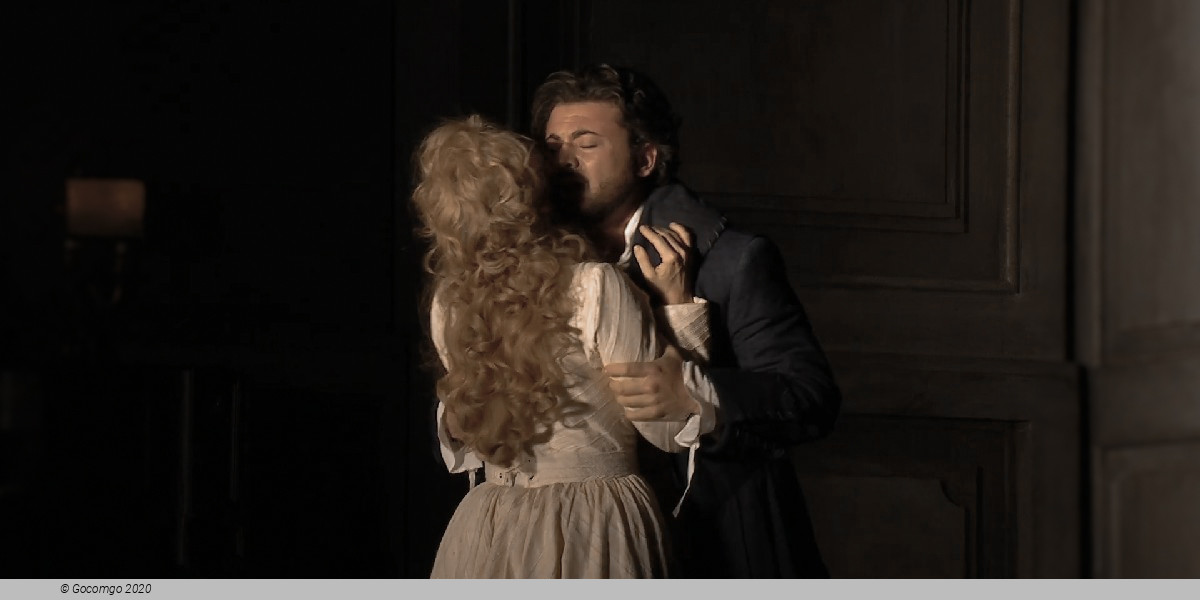
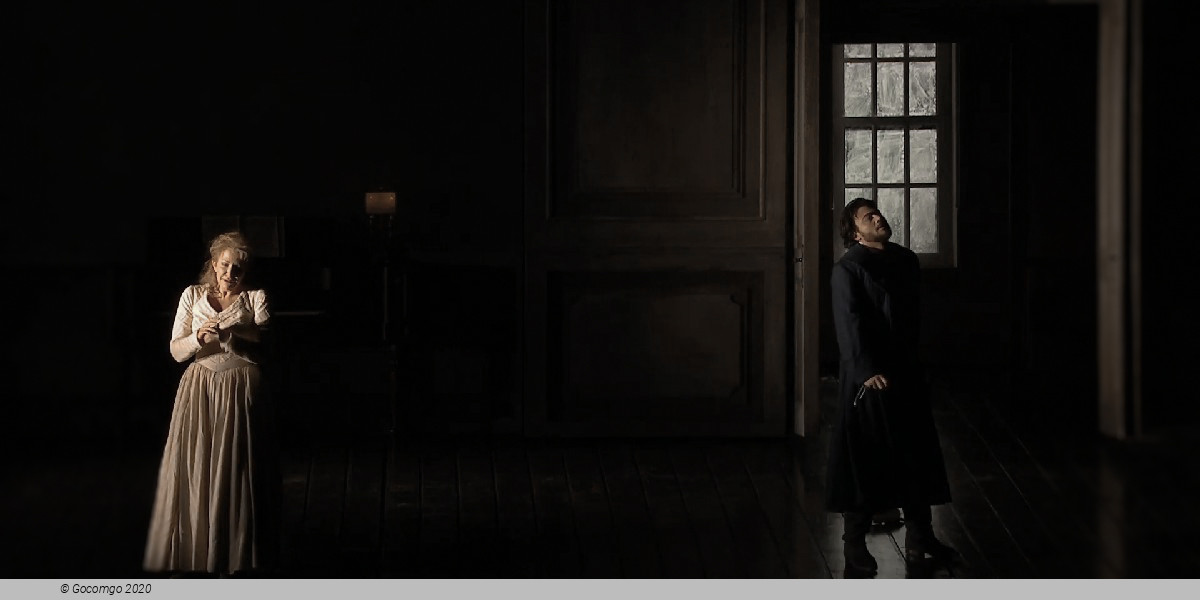
Charlotte is at home alone on Christmas Eve. She spends time rereading the letters that she has received from Werther ("Werther! Qui m'aurait dit ... Ces lettres!"), wondering how the young poet is and how she had the strength to send him away. Sophie comes in and tries to cheer up her older sister ("Ah! le rire est béni"), though Charlotte is not to be consoled ("Va! laisse couler mes larmes"). Suddenly Werther appears, and while he reads to her some poetry of Ossian ("Pourquoi me réveiller?"), he realizes that she does indeed return his love. They embrace for a moment, but she quickly bids him farewell. He leaves with thoughts of suicide. Albert returns home to find his wife distraught. Werther sends a messenger to Albert, requesting to borrow his pistols, explaining he is going on an extended trip. After the servant has taken them, Charlotte has a terrible premonition and hurries to find Werther. An orchestral intermezzo ("La nuit de Noël") leads without a break into the final Act.

Act 4

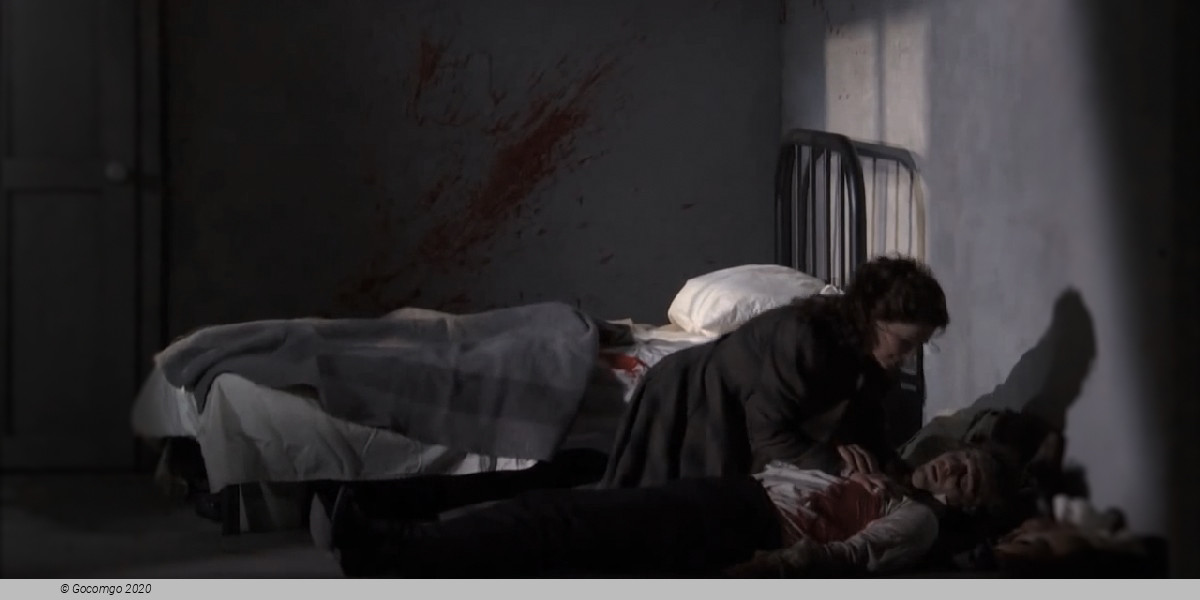
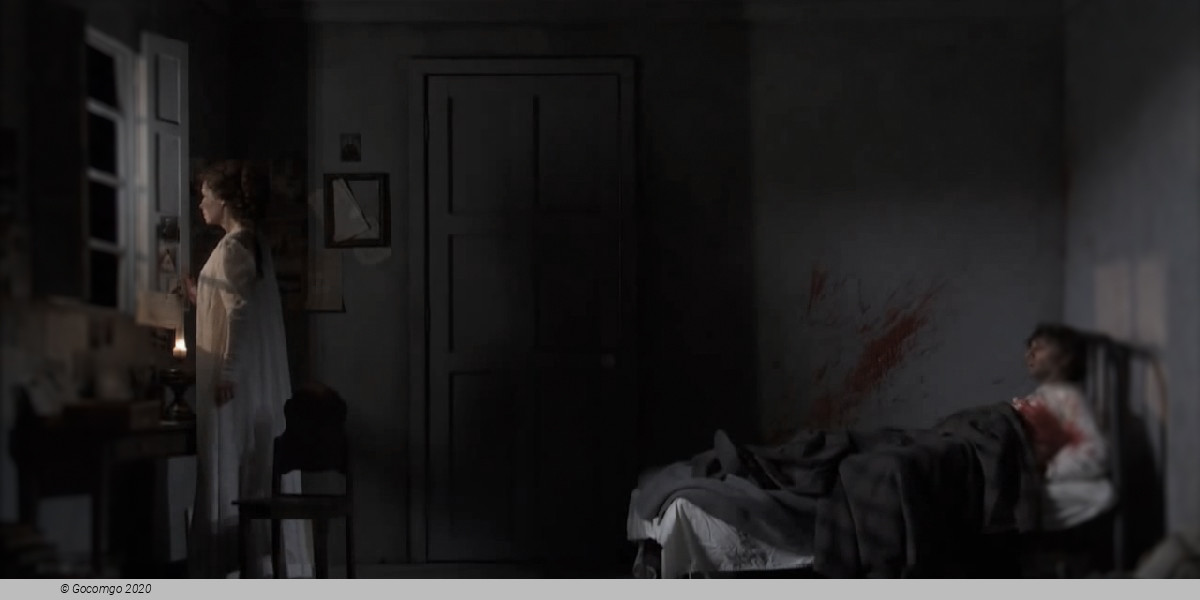
"The death of Werther": At Werther's apartment, Charlotte has arrived too late to stop him from shooting himself; he is dying. She consoles him by declaring her love. He asks for forgiveness. After he dies, Charlotte faints. Outside children are heard singing the Christmas carol.

Venue Info

Bavarian State Opera - Munich
Location   Max-Joseph-Platz 2

The Bavarian State Opera or the National Theatre (Nationaltheater) on Max-Joseph-Platz in Munich, Germany, is a historic opera house and the main theatre of Munich, home of the Bavarian State Opera, Bavarian State Orchestra, and the Bavarian State Ballet.

During its early years, the National Theatre saw the premières of a significant number of operas, including many by German composers. These included Wagner’s Tristan und Isolde (1865), Die Meistersinger von Nürnberg (1868), Das Rheingold (1869) and Die Walküre (1870), after which Wagner chose to build the Festspielhaus in Bayreuth and held further premières of his works there.

During the latter part of the 19th century, it was Richard Strauss who would make his mark on the theatre in the city in which he was born in 1864. After accepting the position of conductor for a short time, Strauss returned to the theatre to become principal conductor from 1894 to 1898. In the pre-War period, his Friedenstag (1938) and Capriccio were premièred in Munich. In the post-War period, the house has seen significant productions and many world premieres.

First theatre – 1818 to 1823
The first theatre was commissioned in 1810 by King Maximilian I of Bavaria because the nearby Cuvilliés Theatre had too little space. It was designed by Karl von Fischer, with the 1782 Odéon in Paris as architectural precedent. Construction began on 26 October 1811 but was interrupted in 1813 by financing problems. In 1817 a fire occurred in the unfinished building.

The new theatre finally opened on 12 October 1818 with a performance of Die Weihe by Ferdinand Fränzl, but was soon destroyed by another fire on 14 January 1823; the stage décor caught fire during a performance of Die beyden Füchse by Étienne Méhul and the fire could not be put out because the water supply was frozen. Coincidentally the Paris Odéon itself burnt down in 1818.

Second theatre – 1825 to 1943
Designed by Leo von Klenze, the second theatre incorporated Neo-Grec features in its portico and triangular pediment and an entrance supported by Corinthian columns. In 1925 it was modified to create an enlarged stage area with updated equipment. The building was gutted in an air raid on the night of 3 October 1943.

Third theatre – 1963 to present
The third and present theatre (1963) recreates Karl von Fischer's original neo-classical design, though on a slightly larger, 2,100-seat scale. The magnificent royal box is the center of the interior rondel, decorated with two large caryatids. The new stage covers 2,500 square meters (3,000 sq yd), and is thus the world's third largest, after the Opéra Bastille in Paris and the Grand Theatre, Warsaw.

Through the consistent use of wood as a building material, the auditorium has excellent acoustics. Architect Gerhard Moritz Graubner closely preserved the original look of the foyer and main staircase. It opened on 21 November 1963 with an invitation-only performance of Die Frau ohne Schatten under the baton of Joseph Keilberth. Two nights later came the first public performance, of Die Meistersinger von Nürnberg, again under Keilberth.

Important Info
Type: Opera
City: Munich, Germany
Sung in: French
Titles in: English,German

E-tickets: Print at home or at the box office of the event if so specified. You will find more information in your booking confirmation email.

You can only select the category, and not the exact seats.
If you order 2 or 3 tickets: your seats will be next to each other.
If you order 4 or more tickets: your seats will be next to each other, or, if this is not possible, we will provide a combination of groups of seats (at least in pairs, for example 2+2 or 2+3).

From
$ 100
Top of page