
Bavarian State Opera 11 May 2024 - The Nose | GoComGo.com

The Nose

Bavarian State Opera, National Theatre, Munich, Germany
All photos (6)
Select date and time
8 PM

E-tickets: Print at home or at the box office of the event if so specified. You will find more information in your booking confirmation email.

You can only select the category, and not the exact seats.
If you order 2 or 3 tickets: your seats will be next to each other.
If you order 4 or more tickets: your seats will be next to each other, or, if this is not possible, we will provide a combination of groups of seats (at least in pairs, for example 2+2 or 2+3).

Important Info
Type: Opera
City: Munich, Germany
Starts at: 20:00
Acts: 3
Sung in: Russian
Titles in: English

E-tickets: Print at home or at the box office of the event if so specified. You will find more information in your booking confirmation email.

You can only select the category, and not the exact seats.
If you order 2 or 3 tickets: your seats will be next to each other.
If you order 4 or more tickets: your seats will be next to each other, or, if this is not possible, we will provide a combination of groups of seats (at least in pairs, for example 2+2 or 2+3).

Overview

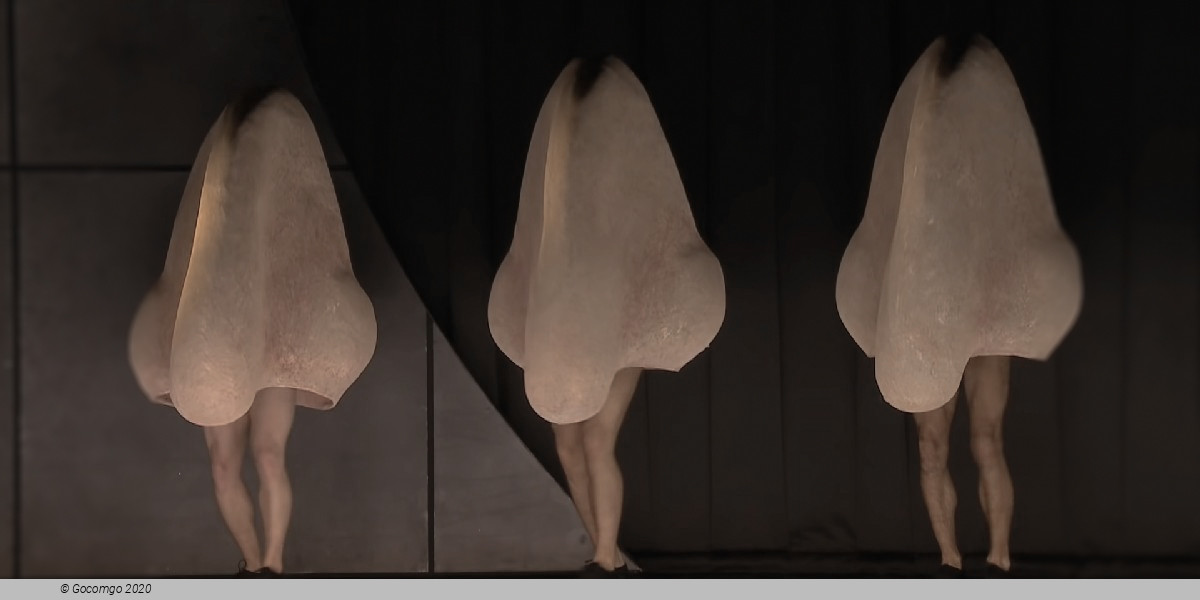
A nose goes independent. It leaves an embarrassing empty space on its owner’s face, arrogates a social position for itself and struts in its State Councillor uniform along Nevsky Avenue in Saint Petersburg. Its tattered owner, Kovalyov, loses himself in a ludicrous search for his status symbol.

The 21-year-old Shostakovich’s first opera is a searing critique of post-Tsarist Russia, shaken by world war, bloody civil war and rising state terror. The image of a brutal society filled with physically and spiritually distorted moral cowards and perpetrators of violence is musically captured in the grotesque interchange of the most diverse style levels – circus music and Russian-orthodox church music, gallops, polkas, marches and fugues are intercut in filmic radicalism. Behind the caustic wit lurk fear and violence.

History
Premiere of this production: 18 January 1930, Leningrad Maly Operny

The Nose is Dmitri Shostakovich's first opera, a satirical work completed in 1928 based on Nikolai Gogol's story of the same name (1836).

Synopsis

Opera in 3 acts and 10 scenes, without intermission

Act 1

Prologue

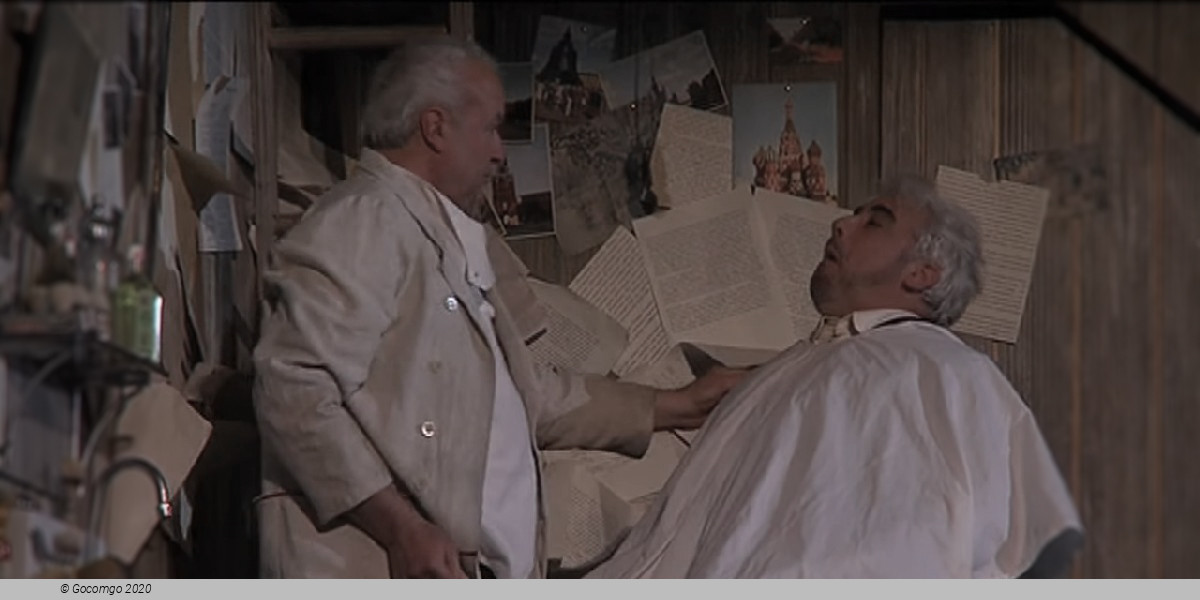
St Petersburg. Kovalyov, a Collegiate Assessor is being shaved by Ivan Yakovlevich (a barber). He is one of Yakovlevich's regular customers.

The next morning, Yakovlevich finds a nose in his bread. His wife, believing he has cut off one of his customers' noses, requests him to dispose of it. He tries to dispose of it in the street, but is foiled by running into people he knows, then he throws it into the Neva River, but he is seen by a police officer and taken away for questioning. Meanwhile, Kovalyov wakes and finds his nose missing. His first reaction is disbelief, then shock, and he sets out to find it. He later sees his nose praying in the Kazan Cathedral, now the size of a human being. Since the nose has acquired a higher rank (State Councillor) than he, it refuses to have any dealings with him, and leaves.

Act 2

In his search, Kovalyov finds himself at the Chief of Police's apartment, but he is not at home. Next he visits the newspaper office to place an advertisement about the loss of his nose, where they are dealing with a missing dog. After explaining his loss, his request is refused on the grounds of the newspaper's reputation. Upon demonstrating his loss, the clerk suggests he tell his story. Kovalyov feels insulted and leaves.

He returns to his apartment, where his servant is playing the balalaika, he dismisses him and wallows in self-pity.

Act 3

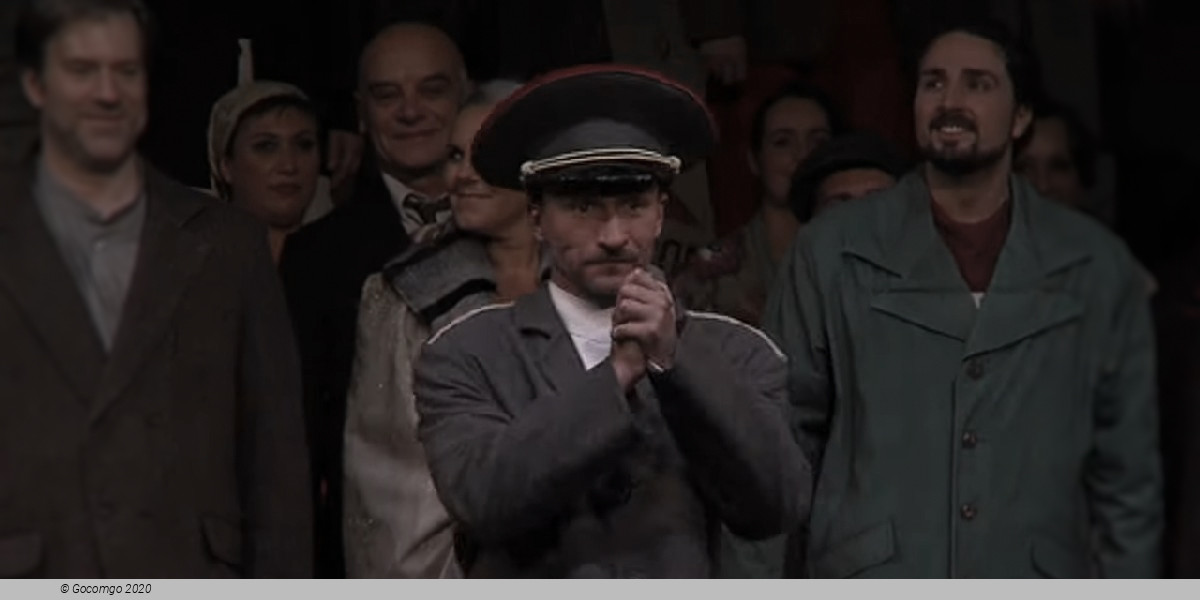
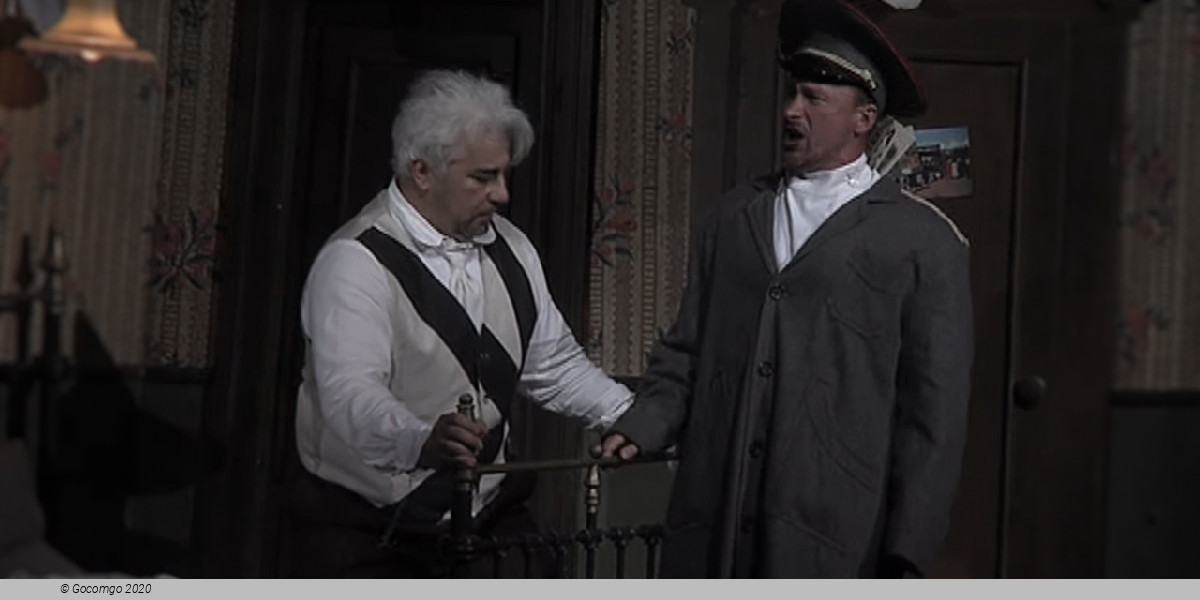
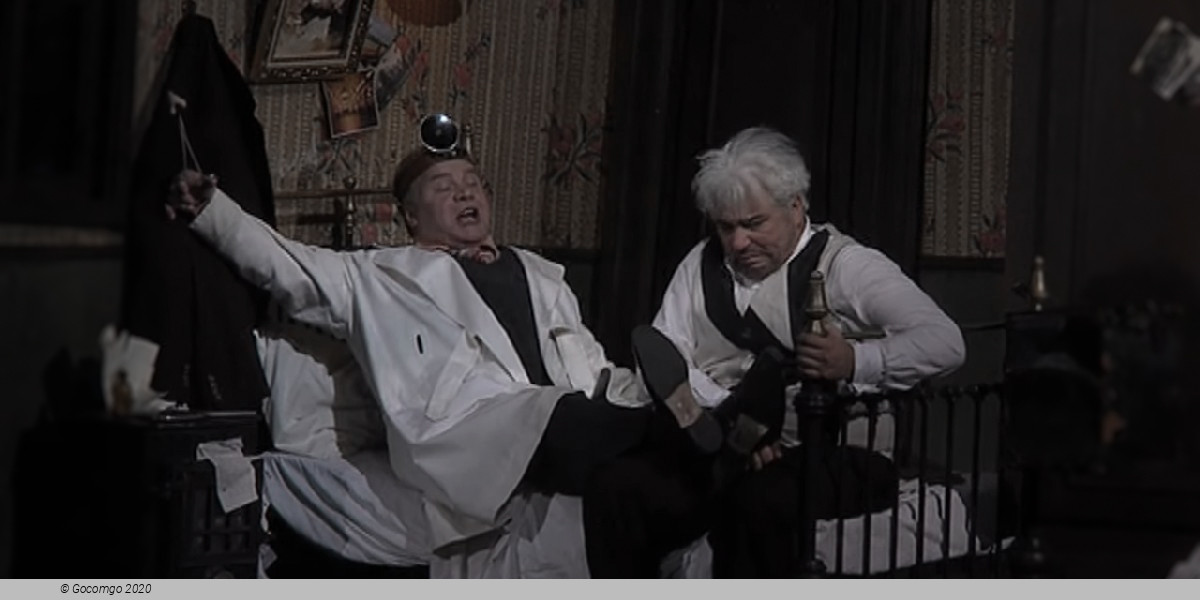
The police take up the search. A group of policemen are at a railway station, in order to prevent the nose from escaping, where an inspector rallies them. The nose runs in and tries to stop the train, and a general pursuit ensues, resulting in its capture. The nose is then beaten into its normal size, wrapped and returned to Kovalyov by the inspector, but Kovalyov is unable to reattach it. Nor can a doctor. He then suspects that he has been placed under a spell by a woman called Madame Podtochina, because he would not marry her daughter. He writes to ask her to undo the spell, but she misinterprets the letter as a proposal to her daughter. She convinces him that she is innocent. In the city, crowds fuelled by rumours gather in search of the nose till the police restore order.

Epilogue

Kovalyov wakes up with his nose reattached, and dances a polka in joy. Yakovlevich has been released from prison and arrives to shave him. Afterwards Kovalyov wanders along Nevsky Prospekt greeting acquaintances, while people discuss the story.

Venue Info

Bavarian State Opera - Munich
Location   Max-Joseph-Platz 2

The Bavarian State Opera or the National Theatre (Nationaltheater) on Max-Joseph-Platz in Munich, Germany, is a historic opera house and the main theatre of Munich, home of the Bavarian State Opera, Bavarian State Orchestra, and the Bavarian State Ballet.

During its early years, the National Theatre saw the premières of a significant number of operas, including many by German composers. These included Wagner’s Tristan und Isolde (1865), Die Meistersinger von Nürnberg (1868), Das Rheingold (1869) and Die Walküre (1870), after which Wagner chose to build the Festspielhaus in Bayreuth and held further premières of his works there.

During the latter part of the 19th century, it was Richard Strauss who would make his mark on the theatre in the city in which he was born in 1864. After accepting the position of conductor for a short time, Strauss returned to the theatre to become principal conductor from 1894 to 1898. In the pre-War period, his Friedenstag (1938) and Capriccio were premièred in Munich. In the post-War period, the house has seen significant productions and many world premieres.

First theatre – 1818 to 1823
The first theatre was commissioned in 1810 by King Maximilian I of Bavaria because the nearby Cuvilliés Theatre had too little space. It was designed by Karl von Fischer, with the 1782 Odéon in Paris as architectural precedent. Construction began on 26 October 1811 but was interrupted in 1813 by financing problems. In 1817 a fire occurred in the unfinished building.

The new theatre finally opened on 12 October 1818 with a performance of Die Weihe by Ferdinand Fränzl, but was soon destroyed by another fire on 14 January 1823; the stage décor caught fire during a performance of Die beyden Füchse by Étienne Méhul and the fire could not be put out because the water supply was frozen. Coincidentally the Paris Odéon itself burnt down in 1818.

Second theatre – 1825 to 1943
Designed by Leo von Klenze, the second theatre incorporated Neo-Grec features in its portico and triangular pediment and an entrance supported by Corinthian columns. In 1925 it was modified to create an enlarged stage area with updated equipment. The building was gutted in an air raid on the night of 3 October 1943.

Third theatre – 1963 to present
The third and present theatre (1963) recreates Karl von Fischer's original neo-classical design, though on a slightly larger, 2,100-seat scale. The magnificent royal box is the center of the interior rondel, decorated with two large caryatids. The new stage covers 2,500 square meters (3,000 sq yd), and is thus the world's third largest, after the Opéra Bastille in Paris and the Grand Theatre, Warsaw.

Through the consistent use of wood as a building material, the auditorium has excellent acoustics. Architect Gerhard Moritz Graubner closely preserved the original look of the foyer and main staircase. It opened on 21 November 1963 with an invitation-only performance of Die Frau ohne Schatten under the baton of Joseph Keilberth. Two nights later came the first public performance, of Die Meistersinger von Nürnberg, again under Keilberth.

Important Info
Type: Opera
City: Munich, Germany
Starts at: 20:00
Acts: 3
Sung in: Russian
Titles in: English
Top of page