Jupiter, King of the gods, takes the mortal Princess Semele to a secret hiding place on a mountain to be his mistress. When Jupiter's wife, Juno, hears of her husband's adultery she is enraged, and plots to ensure Semele's downfall. In disguise, Juno appeals to the girl's vanity and persuades her to insist on seeing her lover in his divine form. Jupiter reluctantly agrees but his thunderbolts burn and consume Semele. From her ashes, though, arise her unborn child by Jupiter—Bacchus, god of wine and ecstasy.
Act 1
Scene: Greece, in legendary antiquity
The scene is the temple of Juno. Near the altar is a golden image of the goddess
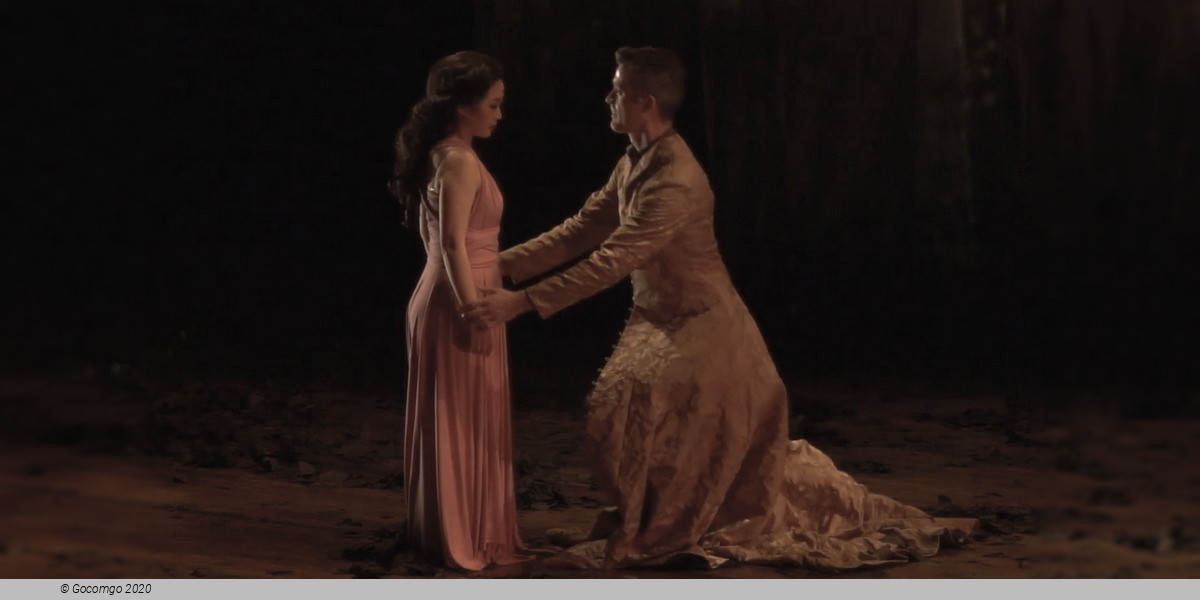
In the temple of Juno, Cadmus, King of Thebes, is preparing for the marriage of his daughter Semele to Athamas, Prince of Boeotia. Signs from the goddess indicate she approves of the match (Accompanied recitative: Behold! Auspicious flashes rise and chorus: Lucky omens bless our rites.) However, the bride has been inventing one excuse after the other to put off the wedding and her father and would-be bridegroom urge her to hesitate no longer (Duet: Daughter, hear! Hear and obey!) To herself, Semele reflects on her dilemma—she does not wish to marry Prince Athamas as she is in love with Jove himself and calls on him to assist her (Accompanied recitative: Ah me!What refuge now is left me?, arioso: O Jove! In pity teach me which to choose and aria: The morning lark). Athamas, observing her, takes her physical signs of emotional upheaval as evidence she is in love with him (Aria: Hymen, haste, thy torch prepare). Ino, Semele's sister, now appears, also in a state of distress as she is in love with Athamas (Quartet: Why dost thou thus untimely grieve?) Jupiter has heard Semele's prayer and his thunderbolts interrupt the proceedings and alarm the observers (Chorus: Avert these omens, all ye pow'rs). The priests of Juno order the wedding abandoned and everyone to leave the temple (Chorus: Cease, cease your vows), which all do except for Athamas, in despair at his wedding being cancelled, and Ino, hopelessly in love with him (Aria: Turn, hopeless lover). Athamas can see she is upset, without guessing why, and he can feel for her in her distress because he is upset too (Aria: Your tuneful voice my tale would tell). Athamas is astonished when she tells him bluntly that she loves him (Duet: You've undone me). Cadmus interrupts their confusion and describes the extraordinary event he has just witnessed: as they fled the temple Semele was suddenly carried off by an eagle (Accompanied recitative: Wing'd with our fears). The priests and augurs identify this eagle as Jupiter himself (Chorus: Hail Cadmus, hail!). As the act ends, Semele is seen enjoying her role as the god's new mistress (Aria: Endless pleasure, endless love).
Act 2
Scene One
A pleasant country, the prospect terminated by a beautiful mountain adorn'd with woods and waterfalls. Juno and Iris descend in different machines. Juno in a chariot drawn by peacocks; Iris on a rainbow; they alight and meet.
Juno, suspicious of her husband's conduct, has sent her helper Iris to find out what she can. Iris reports that Jove has installed Semele as his mistress in a palace atop a mountain (Aria: There, from mortal cares retiring). The outraged Juno swears to have revenge (Accompanied recitative: Awake, Saturnia, from thy lethargy!). Iris warns her it will not be an easy task—the palace is guarded by dragons that never sleep (Accompanied recitative: With adamant the gates are barr'd). Juno decides that she and Iris will pay a visit to the god of sleep in his cave, in order to get magical assistance to put the dragons to sleep (Aria:Hence, Iris, hence away).
Scene Two
An apartment in the palace of Semele. She is sleeping, Loves and Zephyrs waiting.
Semele awakes and regrets that the dream she was having of being with her lover has ended (Aria: O sleep, why dost thou leave me?). When Jupiter enters, in the form of a young man, she tells him how difficult it is for her when he is absent. He explains that she is a mortal, unlike him, and needs to rest from their love-making from time to time. He attempts to assure her of his fidelity (Aria: Lay your doubts and fears aside). Semele sings of her passionate love for him (Aria: With fond desiring). The chorus of Loves and Zephyrs sing of lovers' joys (Chorus: How engaging, how endearing). Semele, however, is beginning to be unhappy that her lover is a god and she a mere mortal. This sign of an ambition to immortality from Semele worries Jupiter who decides he must distract her from such thoughts (Aria: I must with speed amuse her). The Loves and Zephyrs advise Semele to put aside worries and enjoy the delights of love while she can (Chorus: Now Love that everlasting boy invites). Jupiter has arranged for Semele's sister Ino to be magically transported to the palace, to keep her company, and promises that the gardens and environs will be paradise (Aria: Where'er you walk). He leaves, and Ino appears, describing the wondrous experience of being flown there by winged zephyrs (Aria: But hark, the heav'nly sphere turns round). The sisters sing of the joy they are experiencing, hearing the music of the spheres (Duet: Prepare then, ye immortal choir) and nymphs and swains declare that this part of the earth has become a heaven (Chorus: Bless the glad earth).
Act 3
Scene One
The Cave of Sleep. The God of Sleep lying on his bed.
Juno and Iris arrive and wake Somnus (Accompanied recitative:Somnus, awake), to his displeasure (Aria: Leave me, loathsome light). He only gets out of bed when he hears Juno mention the beautiful nymph Pasithea (Aria: More sweet is that name). Juno promises he will have the nymph if he will lend her magical aid to put the dragons that guard the palace where Semele is ensconced as her husband's mistress to sleep and transform her into the likeness of Semele's sister Ino. Somnus agrees (Duet: Obey my will).
Scene Two
An Apartment. Semele alone
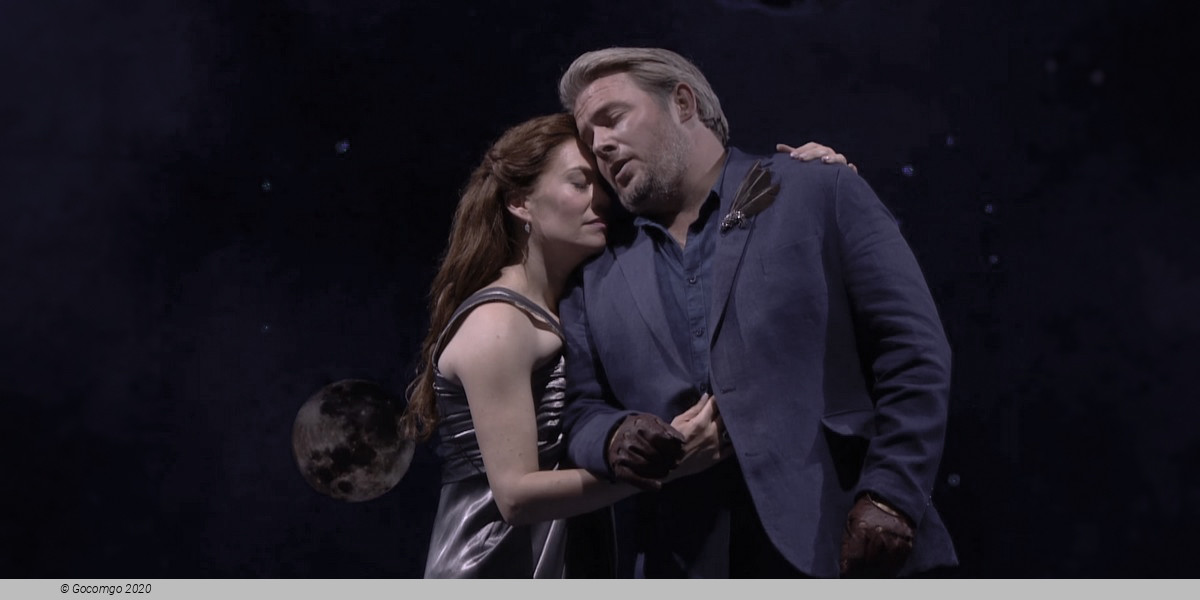
Semele is still feeling rather unhappy about the discrepancy between herself and her lover (Aria: My racking thoughts). Juno, in the form of Semele's sister Ino, enters and feigns astonishment at Semele's increased beauty. She exclaims that Semele must have become a goddess herself and gives her a mirror (Behold in this mirror). Semele is enraptured by her own beauty (Aria: Myself I shall adore). "Ino" advises Semele to insist that Jupiter appear to her in his real, godlike form, and that will make her immortal herself (Accompanied recitative: Conjure him by his oath). Semele is very grateful for this advice (Aria: Thus let my thanks be paid). "Ino" leaves and Jupiter enters, eager to enjoy Semele (Aria: Come to my arms, my lovely fair) but she puts him off (Aria: I ever am granting). He swears to give her whatever she desires (Accompanied recitative: By that tremendous flood, I swear) and she makes him promise to appear to her in his godlike form (Accompanied recitative: Then cast off this human shape). He is alarmed and says that would harm her (Aria: Ah, take heed what you press), but she insists he keep his oath (Aria: No, no, I'll take no less) and leaves. Jupiter knows this will mean her destruction and mourns her impending doom (Accompanied recitative: Ah, whither is she gone). Juno triumphs in the success of her scheme (Aria: Above measure is the pleasure).
Scene Three
The scene discovers Semele under a canopy, leaning pensively, while a mournful symphony is playing. She looks up and sees Jupiter descending in a cloud; flashes of lightning issue from either side, and thunder is heard grumbling in the air.
Semele, granted her wish to see Jupiter in his true godlike form, is consumed by his thunderbolts, and as she dies she regrets her own foolishness and ambition (Accompanied recitative: Ah me! Too late I now repent). Watching this, the priests of Juno express their amazement (Chorus: Oh, terror and astonishment!). Athamas is now glad to accept Ino as his bride (Aria: Despair no more shall wound me). The god Apollo descends on a cloud and announces that the unborn child of Semele and Jupiter will arise from her ashes (Accompanied recitative: Apollo comes, to relieve your care). The child will be Bacchus, god of wine and ecstasy, a god "more mighty than love". All celebrate the fortunate outcome (Chorus: Happy, happy shall we be).



 Max-Joseph-Platz 2