
Astana Opera tickets 5 April 2026 - La Traviata | GoComGo.com

La Traviata

Astana Opera, Main Hall, Nur-Sultan (Astana), Kazakhstan
All photos (7)
Select date and time
5 PM
From
US$ 30

E-tickets: Print at home or at the box office of the event if so specified. You will find more information in your booking confirmation email.

You can only select the category, and not the exact seats.
If you order 2 or 3 tickets: your seats will be next to each other.
If you order 4 or more tickets: your seats will be next to each other, or, if this is not possible, we will provide a combination of groups of seats (at least in pairs, for example 2+2 or 2+3).

Important Info
Type: Opera
City: Nur-Sultan (Astana), Kazakhstan
Starts at: 17:00
Duration: 2h 40min
Sung in: Italian
Titles in: Kazakh,Russian

E-tickets: Print at home or at the box office of the event if so specified. You will find more information in your booking confirmation email.

You can only select the category, and not the exact seats.
If you order 2 or 3 tickets: your seats will be next to each other.
If you order 4 or more tickets: your seats will be next to each other, or, if this is not possible, we will provide a combination of groups of seats (at least in pairs, for example 2+2 or 2+3).

Cast
Performers
Conductor: Giuseppe Acquaviva
Orchestra: Astana Opera Symphony Orchestra
Creators
Composer: Giuseppe Verdi
Author: Alexandre Dumas (fils)
Librettist: Francesco Maria Piave
Director: Henning Brockhaus
Chorus Master: Yerzhan Dautov
Overview

La Traviata is Giuseppe Verdi’s timeless opera about love, sacrifice, and social conventions. Performed at Astana Opera, this masterpiece captivates audiences with its lyrical beauty, emotional intensity, and unforgettable melodies.

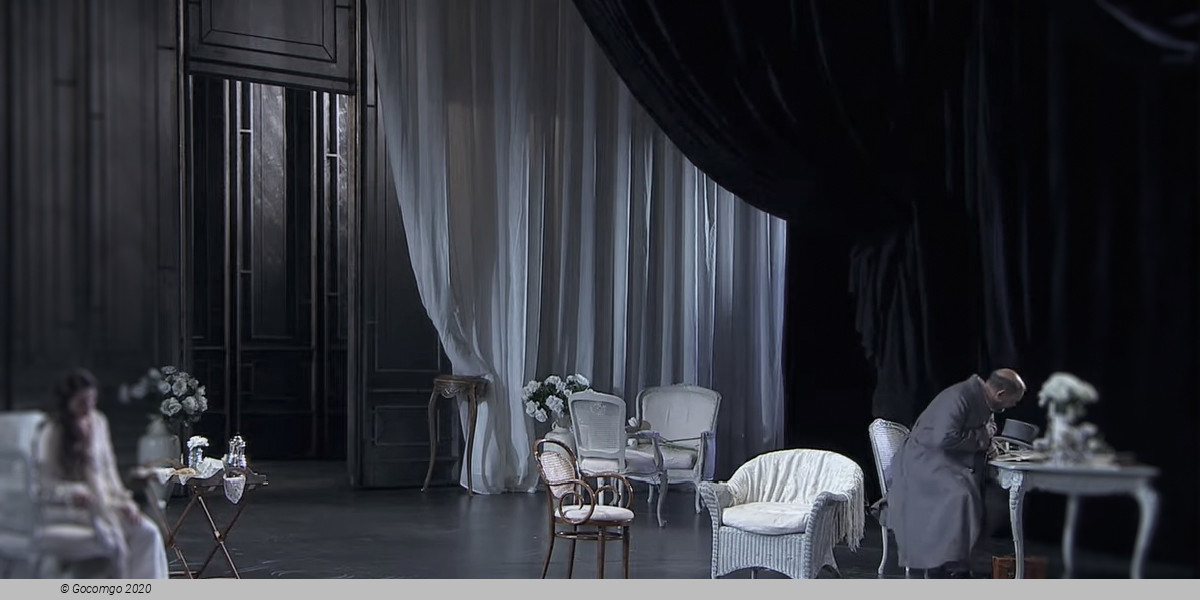
La Traviata is one of the most beloved operas by Giuseppe Verdi, inspired by Alexandre Dumas fils’ novel La Dame aux Camélias. The opera tells the tragic story of Violetta Valéry, a Parisian courtesan who sacrifices her happiness for the sake of true love and social morality.

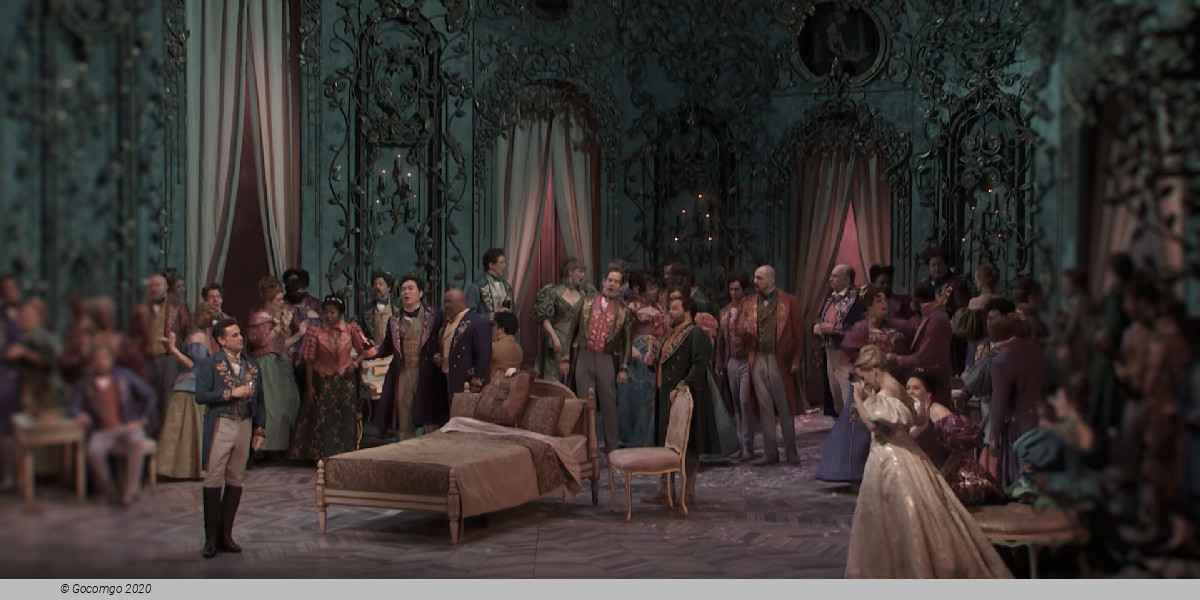
Set in the elegant salons of 19th-century Paris, the drama unfolds through Verdi’s richly expressive score, filled with iconic arias, intimate duets, and vibrant ensembles. The music captures both the brilliance of high society and the fragile inner world of the heroine. Presented at Astana Opera, La Traviata offers a refined and emotionally powerful performance that highlights the timeless relevance of Verdi’s masterpiece.

History
Premiere of this production: 06 March 1853, Teatro La Fenice, Venice

La traviata is an opera in three acts by Giuseppe Verdi set to an Italian libretto by Francesco Maria Piave. It is based on La Dame aux camélias (1852), a play adapted from the novel by Alexandre Dumas fils. The opera was originally titled Violetta, after the main character. It was first performed on 6 March 1853 at the La Fenice opera house in Venice.

Synopsis

Set in and around Paris in about 1850.

Act I

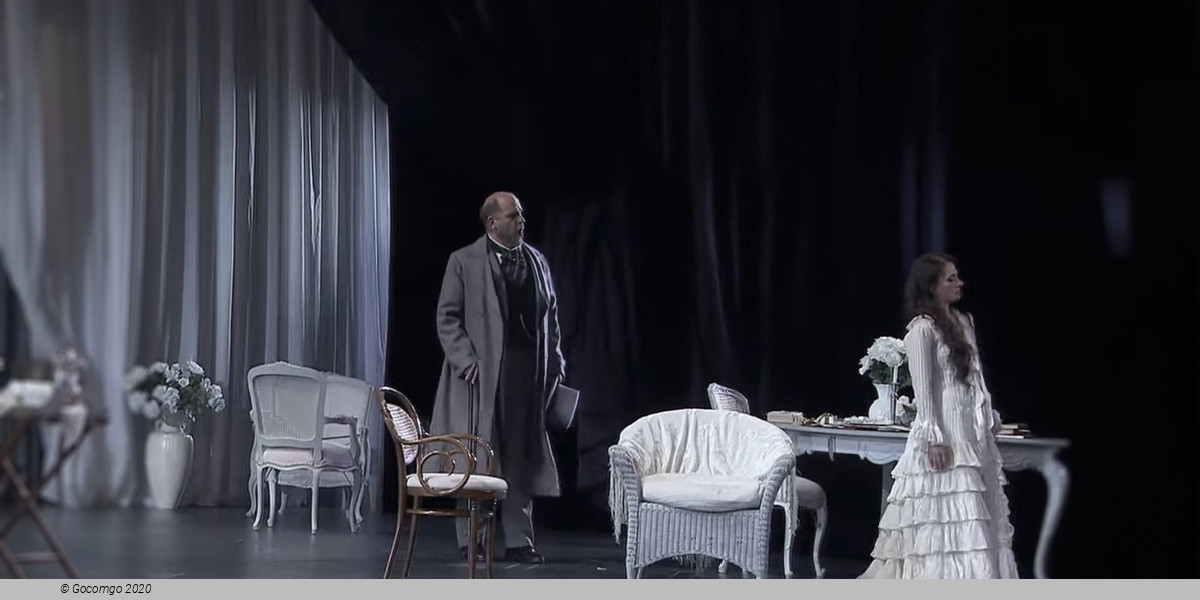
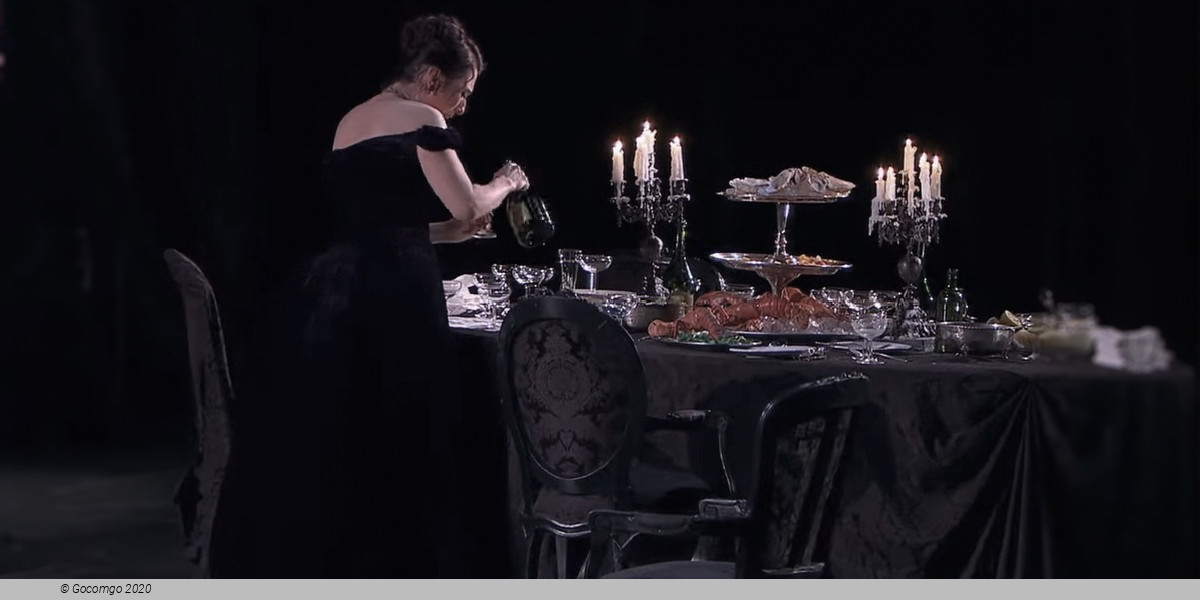
Violetta Valéry, a Parisian courtesan, greets the guests at her salon. Among them are Flora Bervoix, the Marchese D’Obigny, Baron Douphol and Gastone, who introduces Violetta to a new admirer of hers, Alfredo Germont. The young Germont, who has been admiring her from afar, joins her in a drinking song. An orchestra strikes up in an adjacent room, inviting the guests to dance. As the guests make their way to the ballroom, Violetta, who is suffering from consumption, feels faint; she therefore sends the guests on ahead and retires to her boudoir to recover. Alfredo enters and, realising that they are alone, admits his love for her. She replies that love means nothing to her. She
is, however, touched by the young man’s sincerity and promises to meet him the following day.
When the guests have departed, she asks herself whether Alfredo is the man she could love. Despite
the strains of Alfredo’s love song drifting in from outside, she decides she prefers her freedom.

Act II

scene 1
A few months later: Alfredo and Violetta have set up house together in the country, outside Paris. Alfredo says how happy they are, but when Violetta’s maid Annina lets on that Violetta has been selling her belongings to pay for the house, he hastens into town to raise the money himself. Violetta comes in search of him and discovers an invitation from her friend Flora to a soirée that very night. Violetta has no intention of returning to her former life, but she is forced to reconsider
on encountering Alfredo’s father. He is very taken with Violetta and her civilised manners but orders her to renounce Alfredo: his son’s scandalous liaison with Violetta is threatening his daughter’s forthcoming marriage. Violetta considers his demand unreasonable, but before long Germont succeeds in persuading her. Alone and desolate, Violetta sends a reply to Flora accepting her invitation and sits down to write a farewell letter to Alfredo. His return takes her by surprise, and she can barely restrain herself as she passionately reminds him how much she loves him before
rushing out. As the maid brings him Violetta’s farewell letter, Germont returns to console his son and reminds him of life in their family home in Provence. Alfredo spots Flora’s invitation and suspects that Violetta has left him for another man. In a rage, he decides to confront her at the soirée.

scene 2
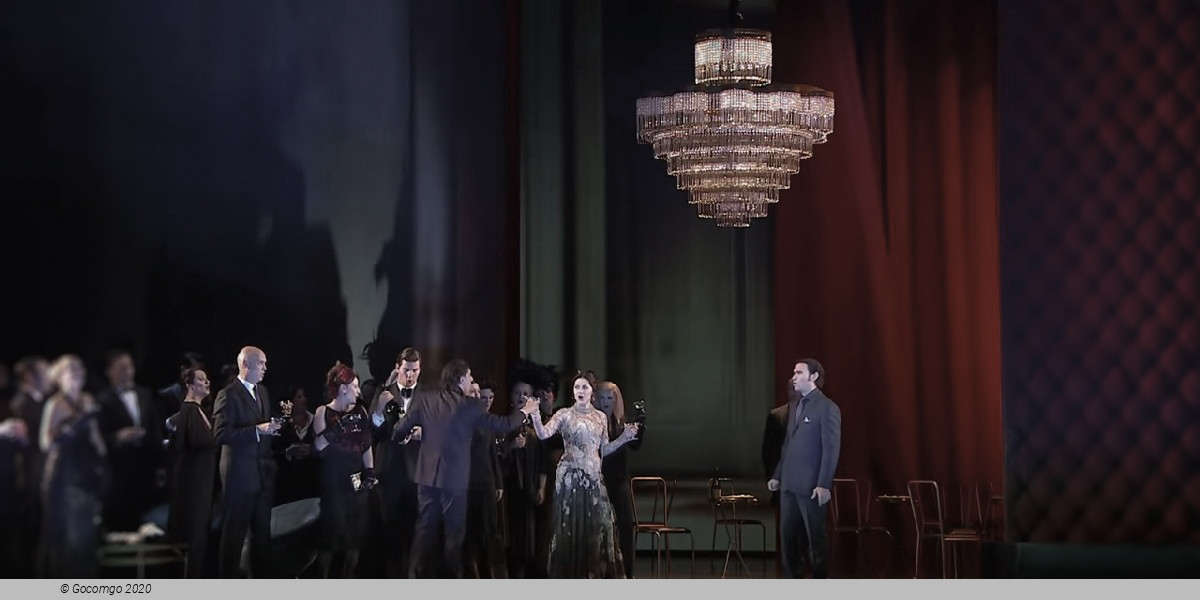
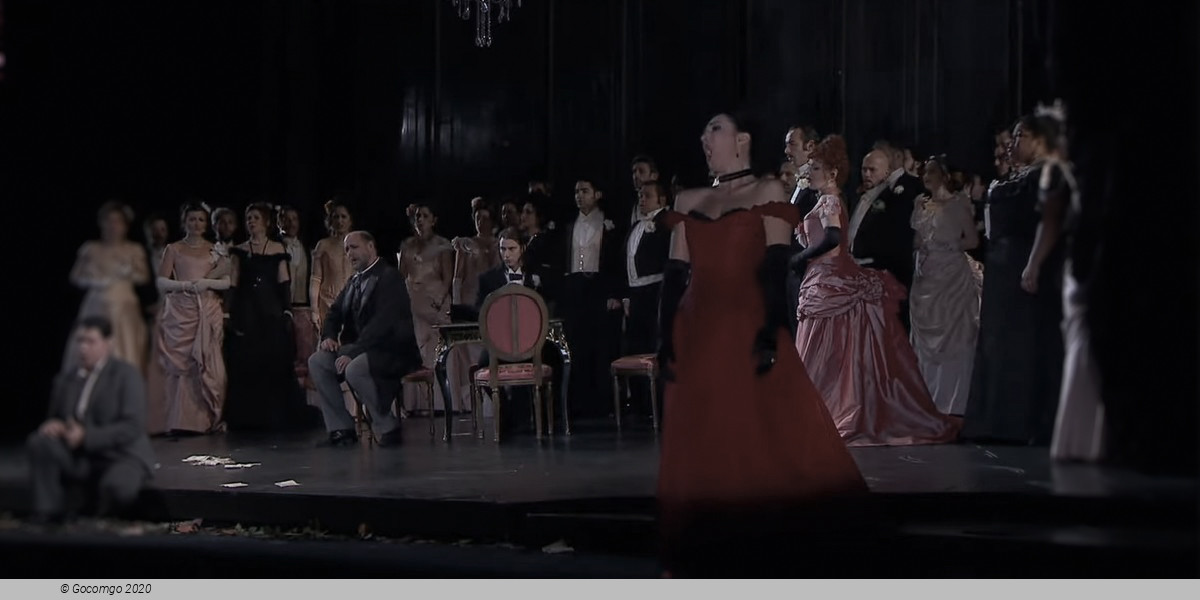
At the soirée, Flora hears from the Marchese that Violetta and Alfredo have parted. Flora asks the guests to make way for a visiting troupe of performing gypsies. They are followed by matadors and a song about Piquillo and his sweetheart. Alfredo rushes in and delivers some bitter comments about love and gambling. Violetta appears on the arm of Baron Douphol, who challenges Alfredo to a game of cards and loses a small fortune to him. As the guests go in to supper, Violetta asks to have a word with Alfredo in private. She is afraid the Baron will be enraged by his loss and urges Alfredo to leave. Alfredo misunderstands her and orders her to admit she loves the Baron. Disappointed by Alfredo’s reaction, Violetta lies and confesses that yes, she does. Alfredo calls the other guests to gather round in order to denounce his former beloved in public and throws the money he has won at her feet. Germont, arriving at that very moment, expresses his disapproval of his son’s behaviour. The guests likewise rebuke Alfredo and Douphol challenges him to a duel.

Act III

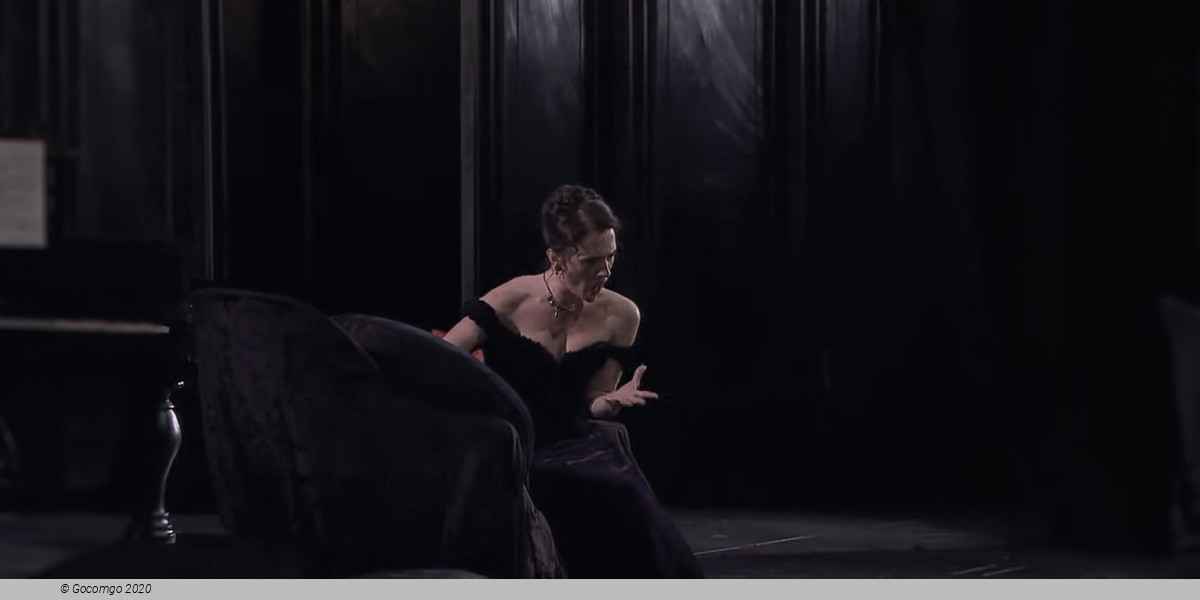
Violetta’s bedroom, six months later. Dr Grenvil tells Annina that her mistress has not long to live –
the consumption has taken its toll. Alone, Violetta rereads a letter from Germont saying that the Baron was only slightly wounded in his duel with Alfredo, that Alfredo has heard the truth and is
coming to beg her pardon. But Violetta realises it is too late. It is carnival time in Paris and, the sounds of the revellers having passed, Annina rushes in to announce Alfredo. The lovers ecstatically plan to leave Paris. Germont enters with the doctor just as Violetta rises from her bed with the last of her strength. Feeling a sudden rush of life, she sways and falls dead at her lover’s feet.

Venue Info

Astana Opera - Nur-Sultan (Astana)
Location   st. D. Kunaeva, 1

The State Opera and Ballet Theatre “Astana Opera” was founded in 2013 on the initiative of the First President of Kazakhstan N. Nazarbayev. The largest theatre in Central Asia, Astana Opera is constructed according to the best classical architectural traditions. The technical capabilities of the theatre conform to international standards. The Main Hall is designed for 1250 seats, the Chamber Hall - for 250.

The repertoire of the Astana Opera House includes works by the renowned national composers, including the operas Birzhan – Sara by Tulebayev, Abai by Zhubanov and Khamidi, Kyz Zhibek by Brusilovsky, along with the ballet Karagoz to the music of Zhubanova. The world classics presented at the Astana Opera include operas such as Verdi’s AidaLa traviata and Don Carlos, Puccini’s La bohèmeTosca, Madama Butterfly and Turandot, Bizet’s Carmen, Rossini’s Il barbiere di Siviglia and operatic farsa comica La scala di seta, and Tchaikovsky’s Eugene Onegin; ballets such as Tchaikovsky’s The Sleeping Beauty, Swan Lake and The Nutcracker, Prokofiev’s Romeo and Juliet, Khachaturian’s Spartacus, Asafyev’s The Fountain of Bakhchisarai, Minkus’s La Bayadère and Don Quixote, and Adam’s Le Corsaire and Giselle, Delibes’ Coppélia; productions such as Fokine’s Chopiniana and Scheherazade, Eifman’s Rodin, Petit’s Notre-Dame de Paris, MacMillan’s Manon, etc.

Principal Conductor is Alan Buribayev; Artistic Director of the Ballet Company is Altynai Asylmuratova.

Celebrated foreign and Kazakhstani artists who have staged performances include Franco Zeffirelli, Yury Grigorovich, Boris Eifman, Giancarlo del Monaco, Alan Buribayev and others; with the participation of set designer Ezio Frigerio and costume designer Franca Squarciapino.

Along with the famed Kazakhstani artists such as Bibigul Tulegenova, Alibek Dnishev, Aiman Mussakhajayeva, Nurzhamal Ussenbayeva and others, the world-famous stars appeared on the stage of the Astana Opera House, including Plácido Domingo, Zubin Mehta, Elena Obraztsova, Valery Gergiev, José Carreras, Anna Netrebko, Marcelo Álvarez, Svetlana Zakharova, Ildar Abdrazakov...

The Teatro alla Scala in Milan, the Teatro di San Carlo di Naples, the Genoese Teatro Carlo Felice, the Opéra National de Paris, the St. Petersburg’s Mariinsky Theatre and others have performed on tour at the Astana Opera.

As part of the EXPO-2017, the 25th Plácido Domingo's Operalia took place at the Astana Opera House.

In 2014, the Astana Opera went on the world tour (New York - Toronto - Paris - Antwerpen - Rotterdam); and additionally, the theatre had tours at the Royal Opera House Muscat (Oman), Graz Opera (Austria); Mariinsky Theater (Russia), Theatro Municipal (Brazil), Teatro dell'Opera di Roma (Italy), Teatro Carlo Felice (Italy), Palau de les Arts Reina Sofia (Valencia, Spain) and other theatres. In September, the Astana Opera is going to perform at the Bolshoi Theatre of Russia.

The Astana Opera House received two awards: the State Prize of the Republic of Kazakhstan in the field of literature and art for staging the opera Abai by A.Zhubanov and L.Khamidi (2018) and the International Professional Music BraVo Award in the field of classical art, in which the Astana Opera became the leader in the category “The Concert / Theatre Venue of the Year” (Moscow, the Bolshoi Theatre of Russia, 2019).

Important Info
Type: Opera
City: Nur-Sultan (Astana), Kazakhstan
Starts at: 17:00
Duration: 2h 40min
Sung in: Italian
Titles in: Kazakh,Russian
Top of page