

Astana Opera: La Sylphide(Astana Opera) Tickets | Event Dates & Schedule | GoComGo.com

La Sylphide(Astana Opera) Tickets

Astana Opera, Nur-Sultan (Astana), Kazakhstan
All photos (8)
1 / 8
Available Dates: 27 - 28 Feb, 2026 (2 events)
Important Info
Type: Ballet
City: Nur-Sultan (Astana), Kazakhstan
Duration: 1h 40min with 1 interval
Acts: 2
Intervals: 1

E-tickets: Print at home or at the box office of the event if so specified. You will find more information in your booking confirmation email.

You can only select the category, and not the exact seats.
If you order 2 or 3 tickets: your seats will be next to each other.
If you order 4 or more tickets: your seats will be next to each other, or, if this is not possible, we will provide a combination of groups of seats (at least in pairs, for example 2+2 or 2+3).

Cast
Performers
Choose the date to see the peformers
Creators
Composer: Herman Severin Levenskiold
Choreographer: Altynai Asylmuratova
Librettist: Adolphe Nourrit
Choreography: August Bournonville
Librettist: Philippo Taglioni
Costume designer: Vyacheslav Okunev
Overview

La Sylphide is a poetic Romantic ballet that tells a story of impossible love between a mortal man and a mysterious forest spirit. Performed at Astana Opera, this timeless masterpiece enchants audiences with its ethereal atmosphere, lyrical choreography, and classical elegance.

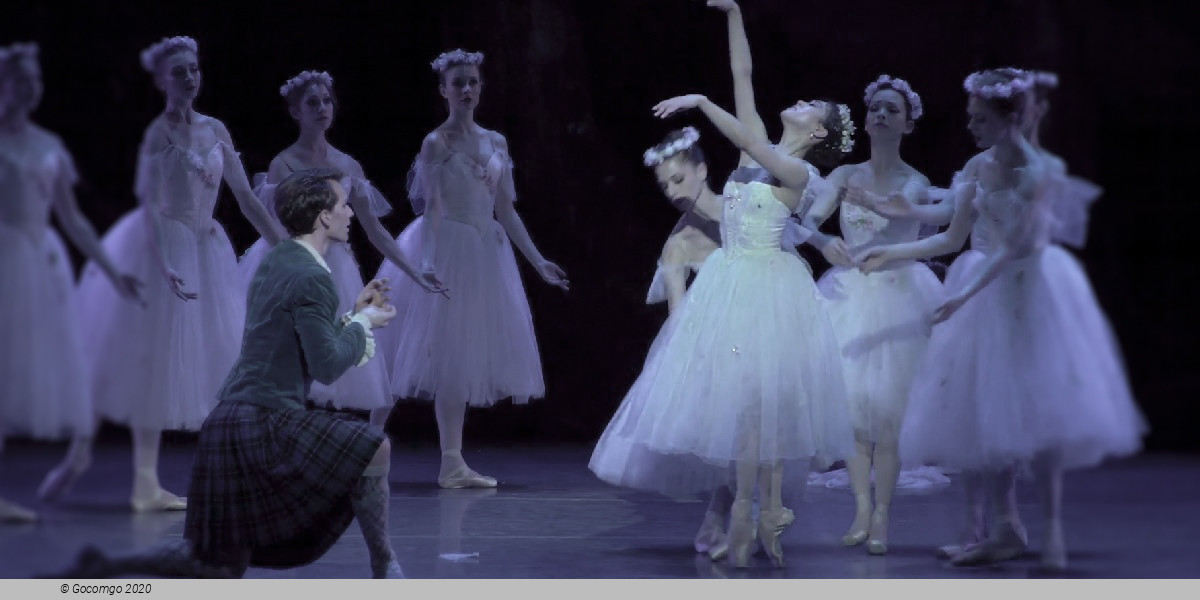
La Sylphide is one of the earliest and most important ballets of the Romantic era, symbolizing the contrast between the real world and the world of dreams. The ballet tells the story of James, a young Scotsman who is tempted by the beautiful Sylph — an ethereal creature representing freedom, fantasy, and unattainable love — on the eve of his wedding to Effie.

Set to music by Herman Løvenskiold, the ballet is renowned for its light, expressive choreography, delicate pointe work, and poetic imagery. Themes of desire, illusion, and loss unfold through graceful solos and ensemble scenes. Presented at Astana Opera, La Sylphide offers a refined and emotionally resonant interpretation of a Romantic ballet classic, celebrating the beauty of longing and the tragedy of chasing an ideal beyond reach.

There were two versions of the ballet; the original choreographed by Filippo Taglioni in 1832, and a second version choreographed by August Bournonville in 1836. Bournonville's is the only version known to have survived and is one of the world's oldest surviving ballets.

The Danish ballet master August Bournonville had intended to present a revival of Taglioni's original version in Copenhagen with the Royal Danish Ballet, but the Paris Opera demanded too high a price for Schneitzhoeffer's score. In the end, Bournonville mounted his own production of La Sylphide based on the original libretto, with music by Herman Severin Løvenskiold. The premiere took place on 28 November 1836, with the prodigy Lucile Grahn and Bournonville in the principal roles.

The Bournonville version has been danced in its original form by the Royal Danish Ballet ever since its creation and remains one of Bournonville's most celebrated works.

History
Premiere of this production: 28 November 1836, Royal Danish Theatre, Copenhagen, Denmark

La Sylphide is a romantic ballet in two acts. There were two versions of the ballet; the original choreographed by Filippo Taglioni in 1832, and a second version choreographed by August Bournonville in 1836. Bournonville's is the only version known to have survived and is one of the world's oldest surviving ballets.

Synopsis

Act 1

In the hall of a Scottish farmhouse, James Ruben, a young Scotsman, sleeps in a chair by the fireside. A sylph gazes lovingly upon him and dances about his chair. She kisses him and then vanishes when he suddenly wakes. James rouses his friend Gurn from sleep, and questions him about the sylph. Gurn denies having seen such a creature and reminds James that he is shortly to be married. James dismisses the incident and promises to forget it.

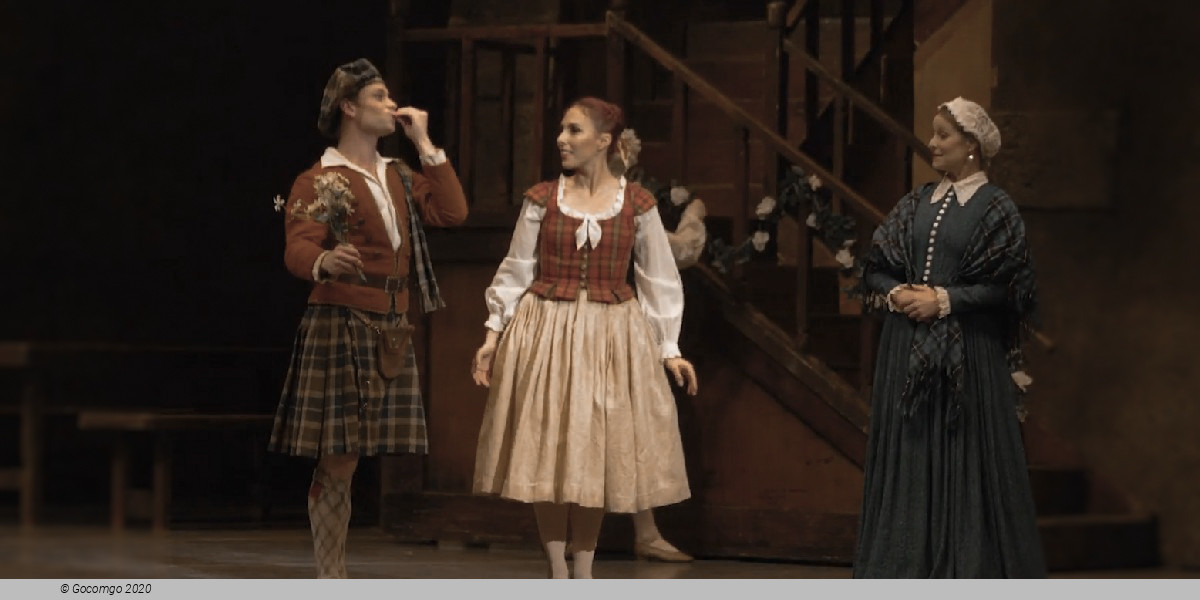
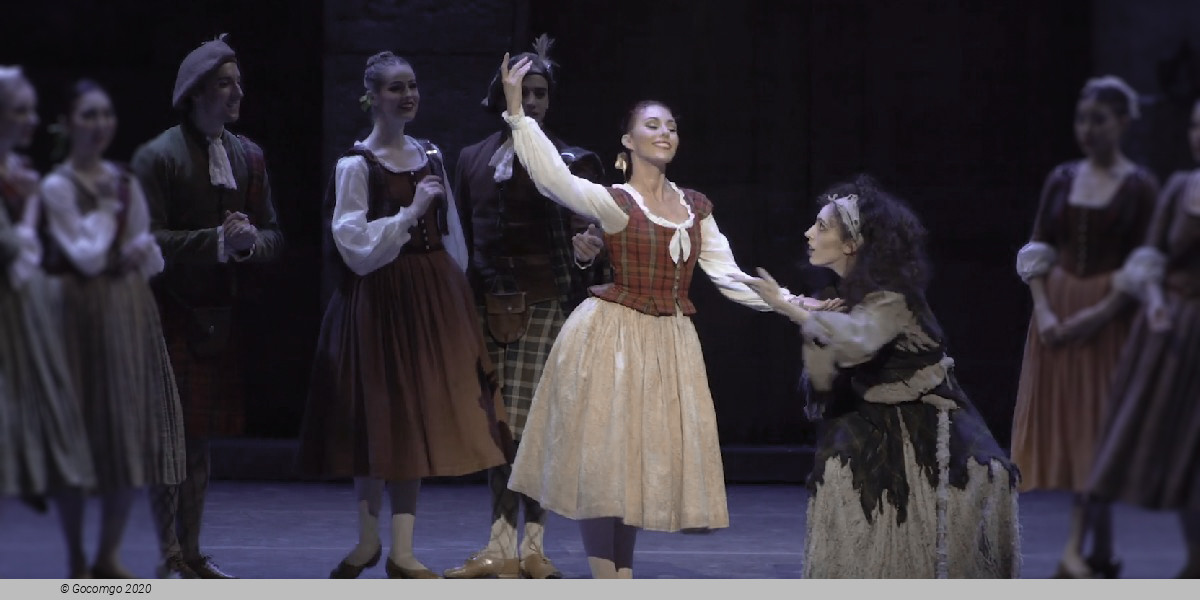
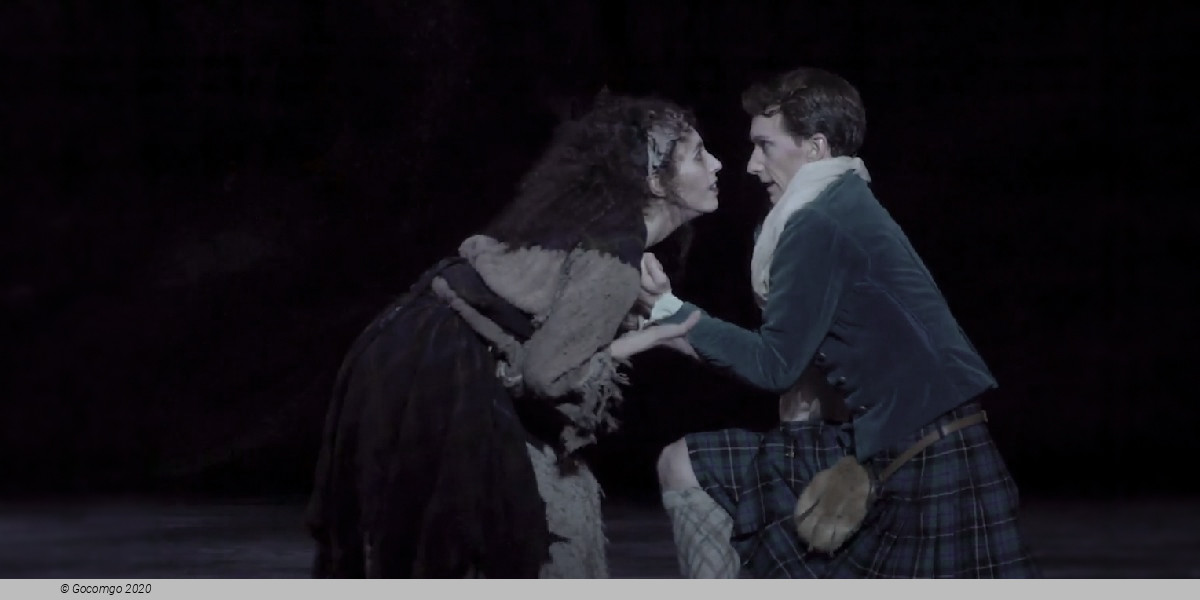
James' bride-to-be, Effie, arrives with her mother and bridesmaids. James dutifully kisses her, but is startled by a shadow in the corner. Thinking his sylph has returned, he rushes over, only to find the witch, Old Madge, kneeling at the hearth to warm herself. James is furious with disappointment.

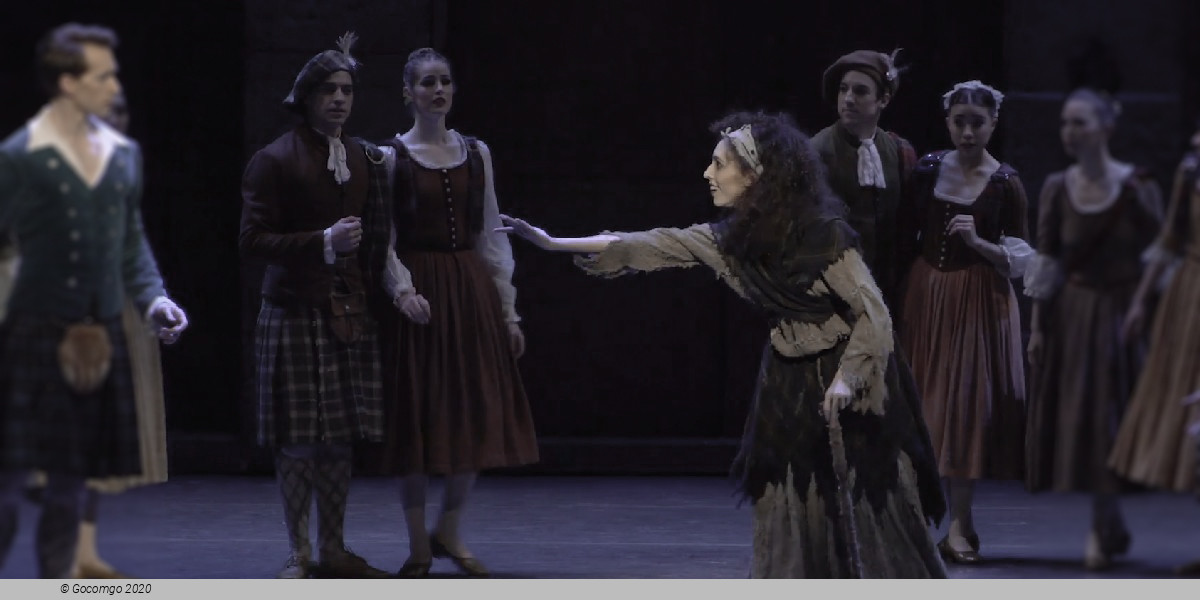
Effie and her friends beg Old Madge to tell their fortunes, and the witch complies. She gleefully informs Effie that James loves someone else and she will be united with Gurn. James is furious. He forces Madge from the hearth and throws her out of the house. Effie is delighted that James would tangle with a witch for her sake.

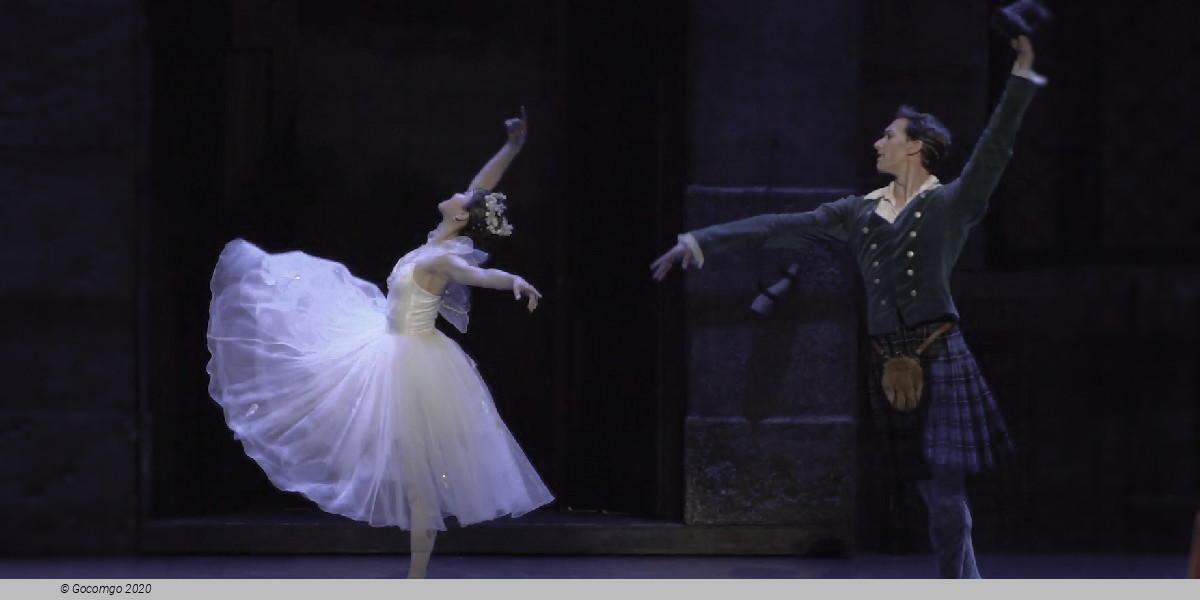
Effie and her bridesmaids hurry upstairs to prepare for the wedding, and James is left alone in the room. As he stares out the window, the sylph materializes before him and confesses her love. She weeps at his apparent indifference. James resists at first, but, captivated by her ethereal beauty, capitulates and kisses her tenderly. Gurn, who spies the moment from the shadows, scampers off to tell Effie what has happened.

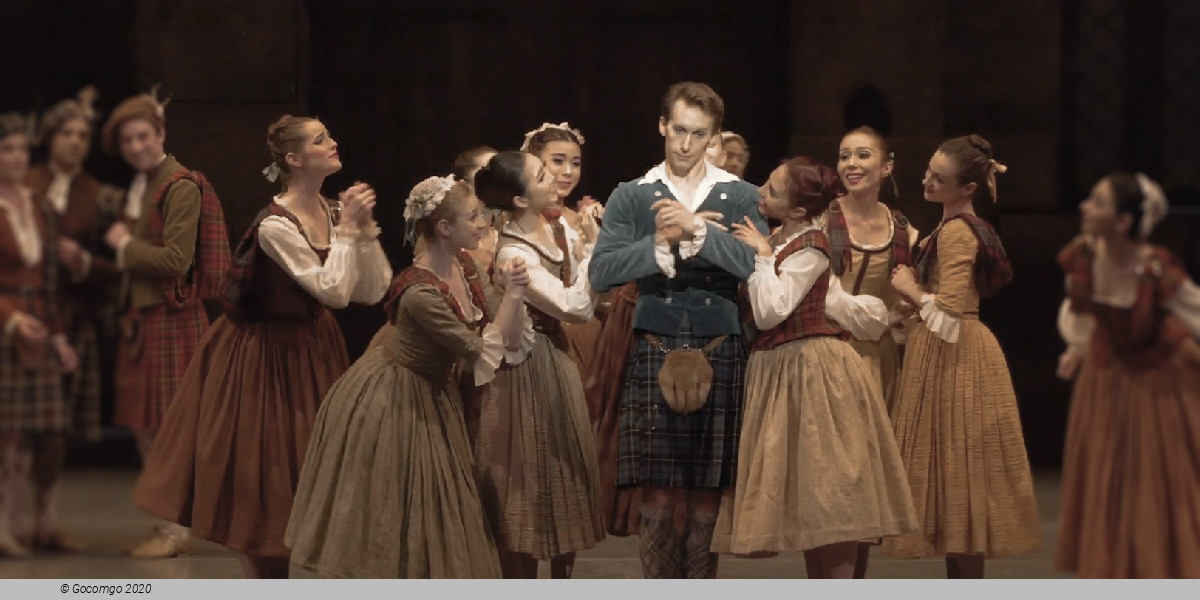
When the distressed Effie and her friends enter after hearing Gurn's report, the sylph disappears. The guests assume Gurn is simply jealous and laugh at him. Everyone dances. The sylph enters during the midst of the revelry and attempts to distract James.

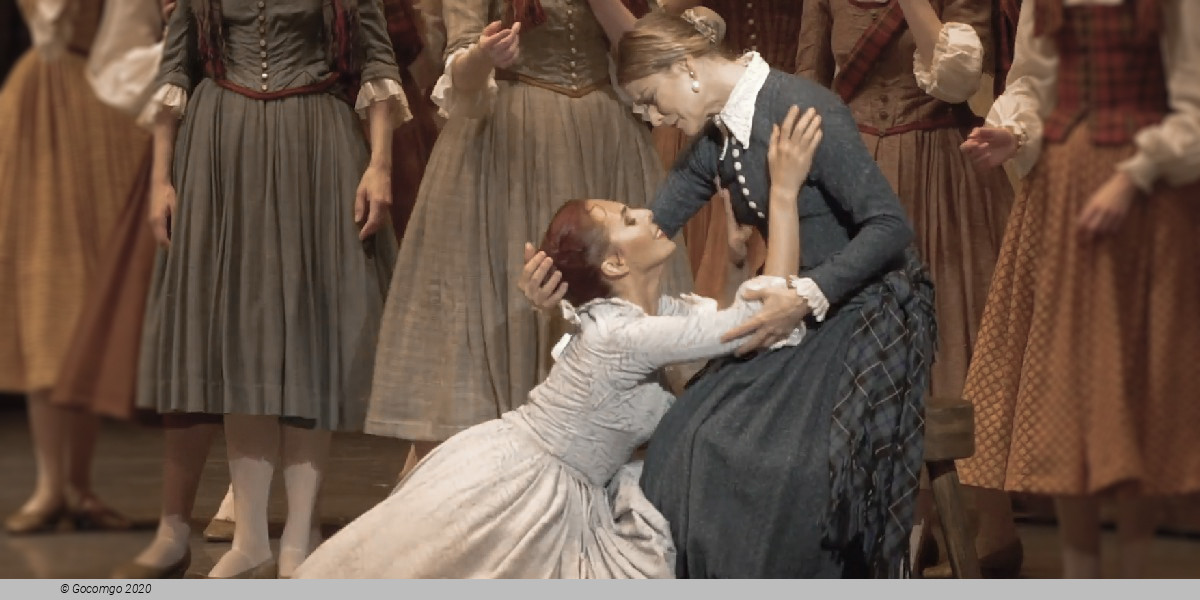
As the bridal procession forms, James stands apart and gazes upon the ring he is to place on Effie's finger. The Sylph snatches the ring, places it on her own finger, and, smiling enticingly, rushes into the forest. James hurries after her in ardent pursuit. The guests are bewildered with James' sudden departure. Effie is heartbroken. She falls into her mother's arms sobbing inconsolably.

Act 2

In a fog-shrouded part of the forest, Madge and her companion witches dance grotesquely about a cauldron. The revellers add all sorts of filthy ingredients to the brew. When the contents glow, Madge reaches into the cauldron and pulls a diaphanous, magic scarf from its depths. The cauldron then sinks, the witches scatter, the fog lifts, and a lovely glade is revealed.

James enters with the sylph who shows him her charming, woodland realm. She brings him berries and water for refreshment but avoids his embrace. To cheer him, she summons her ethereal sisters who shyly enter and perform their airy dances. The young Scotsman is delighted and joins the divertissement before all flee for another part of the forest.

Meanwhile, the wedding guests have been searching the woodland for James. They enter the glade. Gurn finds his hat, but Madge convinces him to say nothing. Effie enters, weary with wandering about the forest. Madge urges Gurn to propose. He does and Effie accepts his proposal.

When they all have left, James enters the glade. Madge meets him, and tosses him the magic scarf. She tells the young farmer the scarf will bind the sylph to him so she cannot fly away. She instructs him to wind the scarf about the sylph's shoulders and arms for full effect. James is ecstatic. When the sylph returns and sees the scarf, she allows James to place it around her trembling form.

As James embraces the sylph passionately, her wings fall off, she shudders, and dies in James' arms. Sorrowfully, her sisters enter and lift her lifeless form. Suddenly, a joyful wedding procession led by Effie and Gurn crosses the glade. James is stunned. James directs his gaze heavenward; he sees the sylph borne aloft by her sisters. James collapses. Madge exults over his lifeless body. Justice has triumphed.

Venue Info

Astana Opera - Nur-Sultan (Astana)
Location   st. D. Kunaeva, 1

The State Opera and Ballet Theatre “Astana Opera” was founded in 2013 on the initiative of the First President of Kazakhstan N. Nazarbayev. The largest theatre in Central Asia, Astana Opera is constructed according to the best classical architectural traditions. The technical capabilities of the theatre conform to international standards. The Main Hall is designed for 1250 seats, the Chamber Hall - for 250.

The repertoire of the Astana Opera House includes works by the renowned national composers, including the operas Birzhan – Sara by Tulebayev, Abai by Zhubanov and Khamidi, Kyz Zhibek by Brusilovsky, along with the ballet Karagoz to the music of Zhubanova. The world classics presented at the Astana Opera include operas such as Verdi’s AidaLa traviata and Don Carlos, Puccini’s La bohèmeTosca, Madama Butterfly and Turandot, Bizet’s Carmen, Rossini’s Il barbiere di Siviglia and operatic farsa comica La scala di seta, and Tchaikovsky’s Eugene Onegin; ballets such as Tchaikovsky’s The Sleeping Beauty, Swan Lake and The Nutcracker, Prokofiev’s Romeo and Juliet, Khachaturian’s Spartacus, Asafyev’s The Fountain of Bakhchisarai, Minkus’s La Bayadère and Don Quixote, and Adam’s Le Corsaire and Giselle, Delibes’ Coppélia; productions such as Fokine’s Chopiniana and Scheherazade, Eifman’s Rodin, Petit’s Notre-Dame de Paris, MacMillan’s Manon, etc.

Principal Conductor is Alan Buribayev; Artistic Director of the Ballet Company is Altynai Asylmuratova.

Celebrated foreign and Kazakhstani artists who have staged performances include Franco Zeffirelli, Yury Grigorovich, Boris Eifman, Giancarlo del Monaco, Alan Buribayev and others; with the participation of set designer Ezio Frigerio and costume designer Franca Squarciapino.

Along with the famed Kazakhstani artists such as Bibigul Tulegenova, Alibek Dnishev, Aiman Mussakhajayeva, Nurzhamal Ussenbayeva and others, the world-famous stars appeared on the stage of the Astana Opera House, including Plácido Domingo, Zubin Mehta, Elena Obraztsova, Valery Gergiev, José Carreras, Anna Netrebko, Marcelo Álvarez, Svetlana Zakharova, Ildar Abdrazakov...

The Teatro alla Scala in Milan, the Teatro di San Carlo di Naples, the Genoese Teatro Carlo Felice, the Opéra National de Paris, the St. Petersburg’s Mariinsky Theatre and others have performed on tour at the Astana Opera.

As part of the EXPO-2017, the 25th Plácido Domingo's Operalia took place at the Astana Opera House.

In 2014, the Astana Opera went on the world tour (New York - Toronto - Paris - Antwerpen - Rotterdam); and additionally, the theatre had tours at the Royal Opera House Muscat (Oman), Graz Opera (Austria); Mariinsky Theater (Russia), Theatro Municipal (Brazil), Teatro dell'Opera di Roma (Italy), Teatro Carlo Felice (Italy), Palau de les Arts Reina Sofia (Valencia, Spain) and other theatres. In September, the Astana Opera is going to perform at the Bolshoi Theatre of Russia.

The Astana Opera House received two awards: the State Prize of the Republic of Kazakhstan in the field of literature and art for staging the opera Abai by A.Zhubanov and L.Khamidi (2018) and the International Professional Music BraVo Award in the field of classical art, in which the Astana Opera became the leader in the category “The Concert / Theatre Venue of the Year” (Moscow, the Bolshoi Theatre of Russia, 2019).

Important Info
Type: Ballet
City: Nur-Sultan (Astana), Kazakhstan
Duration: 1h 40min with 1 interval
Acts: 2
Intervals: 1

E-tickets: Print at home or at the box office of the event if so specified. You will find more information in your booking confirmation email.

You can only select the category, and not the exact seats.
If you order 2 or 3 tickets: your seats will be next to each other.
If you order 4 or more tickets: your seats will be next to each other, or, if this is not possible, we will provide a combination of groups of seats (at least in pairs, for example 2+2 or 2+3).

From
$ 31
Top of page